Category: Great Blue Herons

How’s Your Heron?

It won’t be long until the great blue herons return to the Wachusett Meadow in March.

Herons are important for the environment as they act as “indicator species”. Scientists monitor heron populations to detect environmental contamination, such as toxins in the water or mercury levels in eggs, which reflects the health of the entire ecosystem.

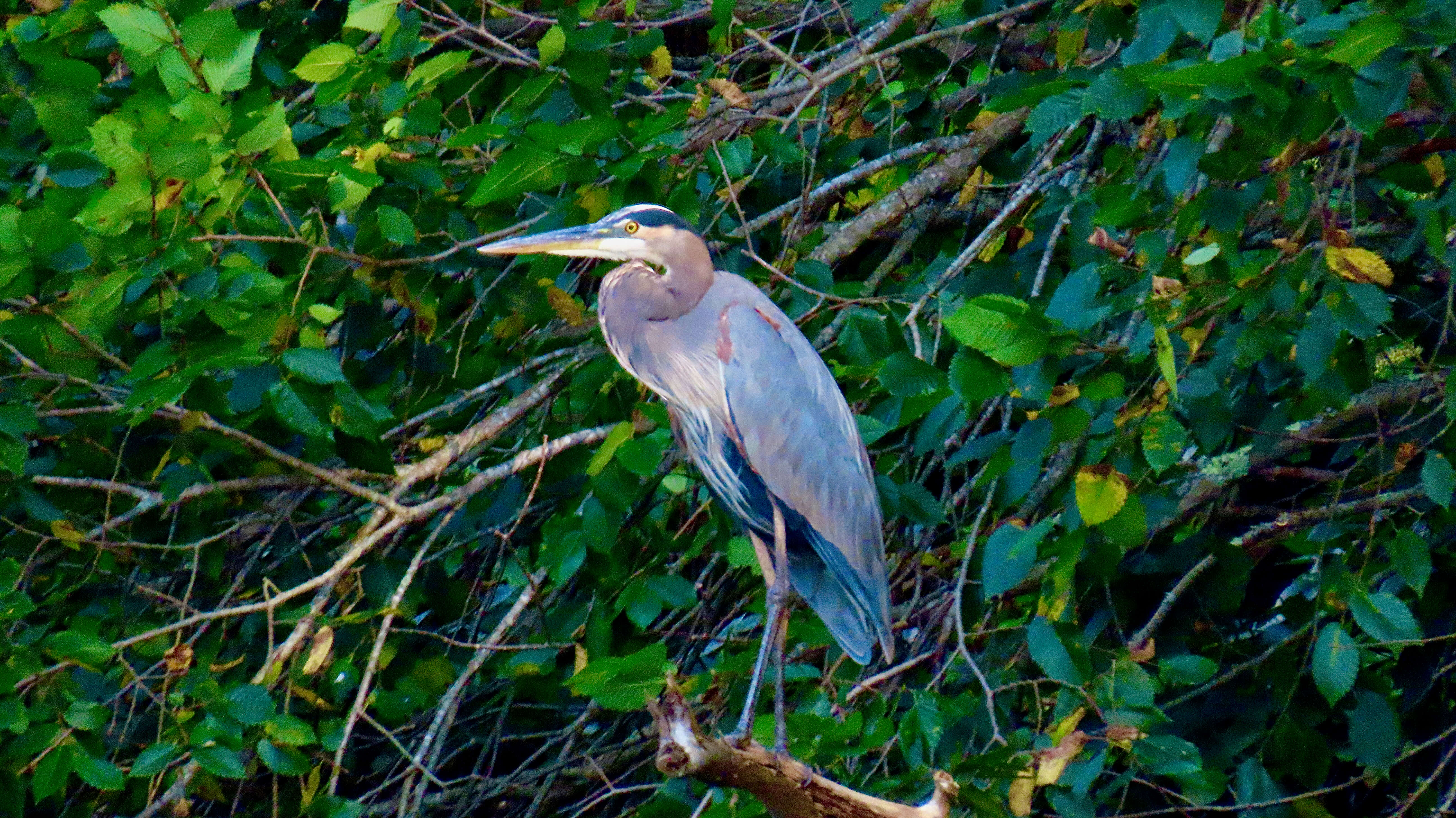
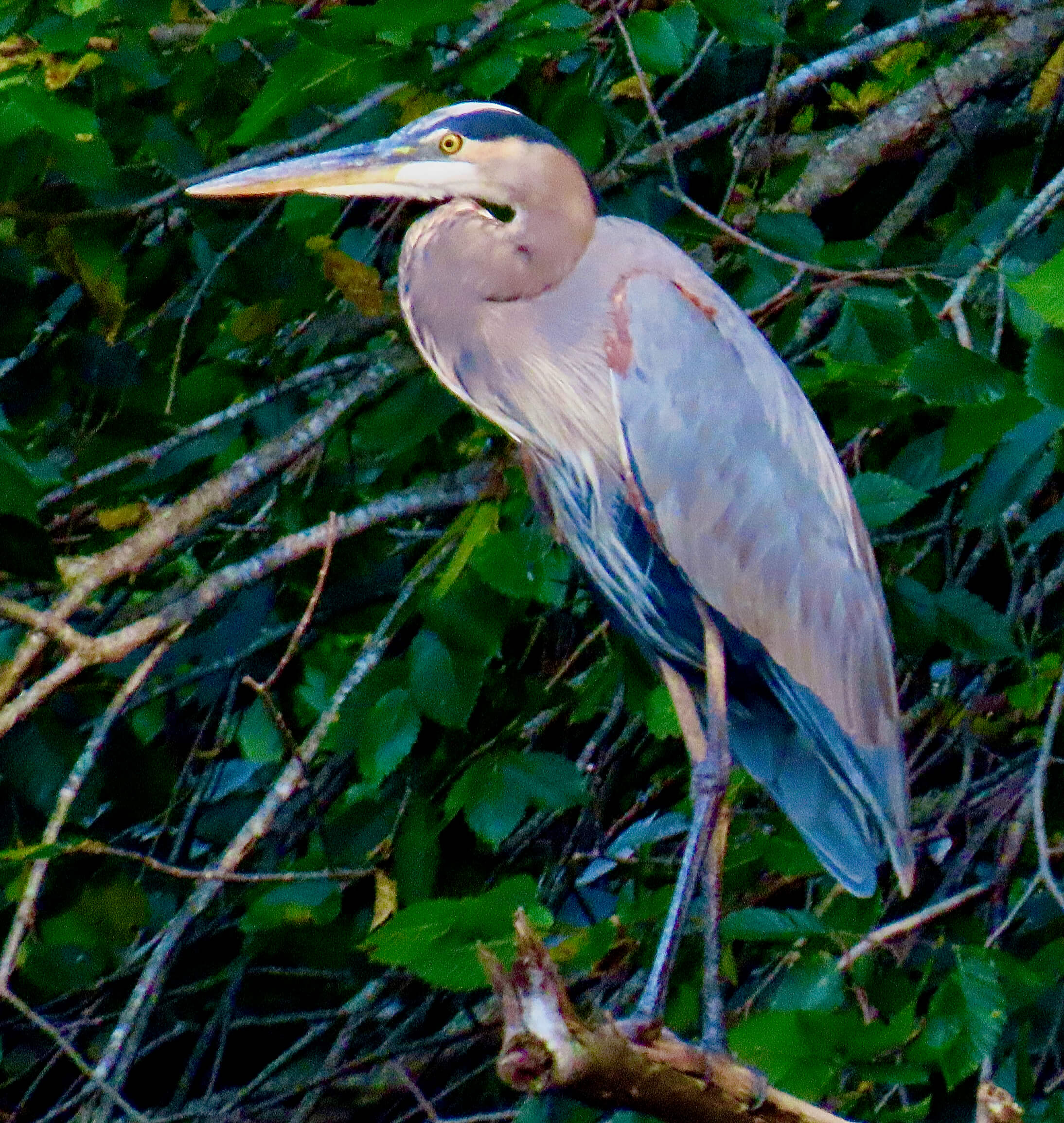
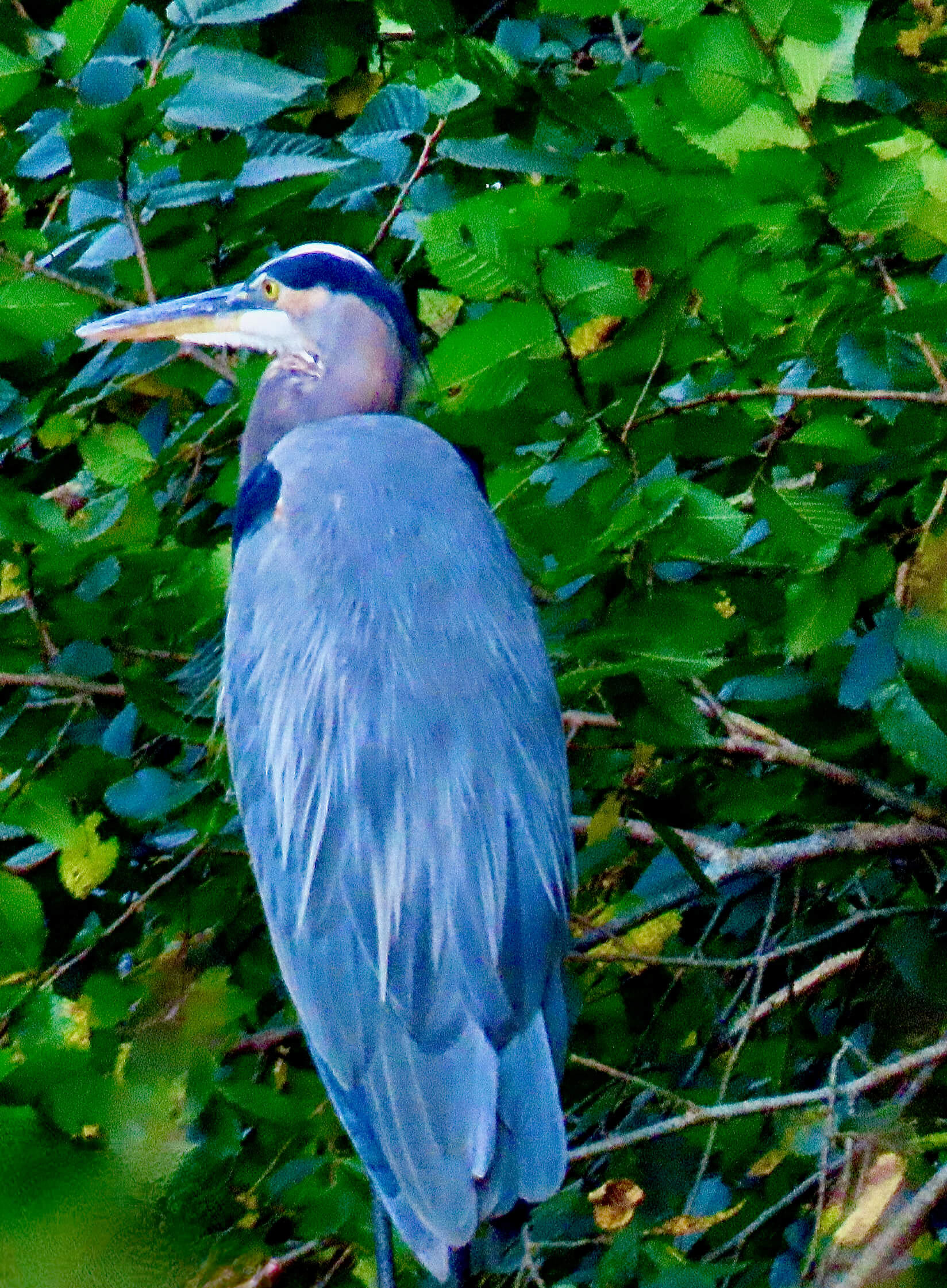
Although they are named “great blue”, herons can look grey or brown depending on the light conditions.

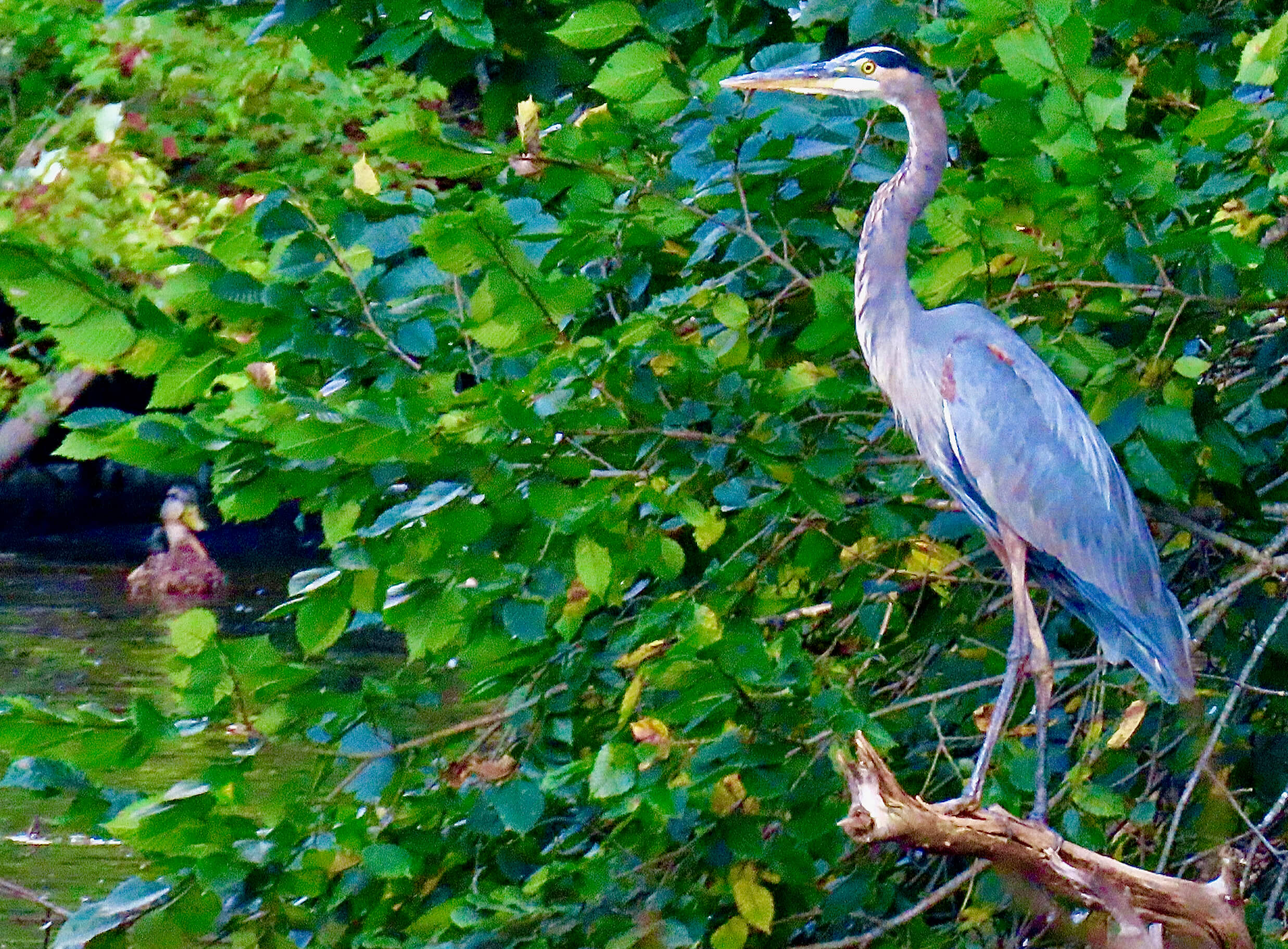
This great blue heron does look blue. Herons appear bluest in low light, fog, or shadows, which reflect cooler, blue tones.

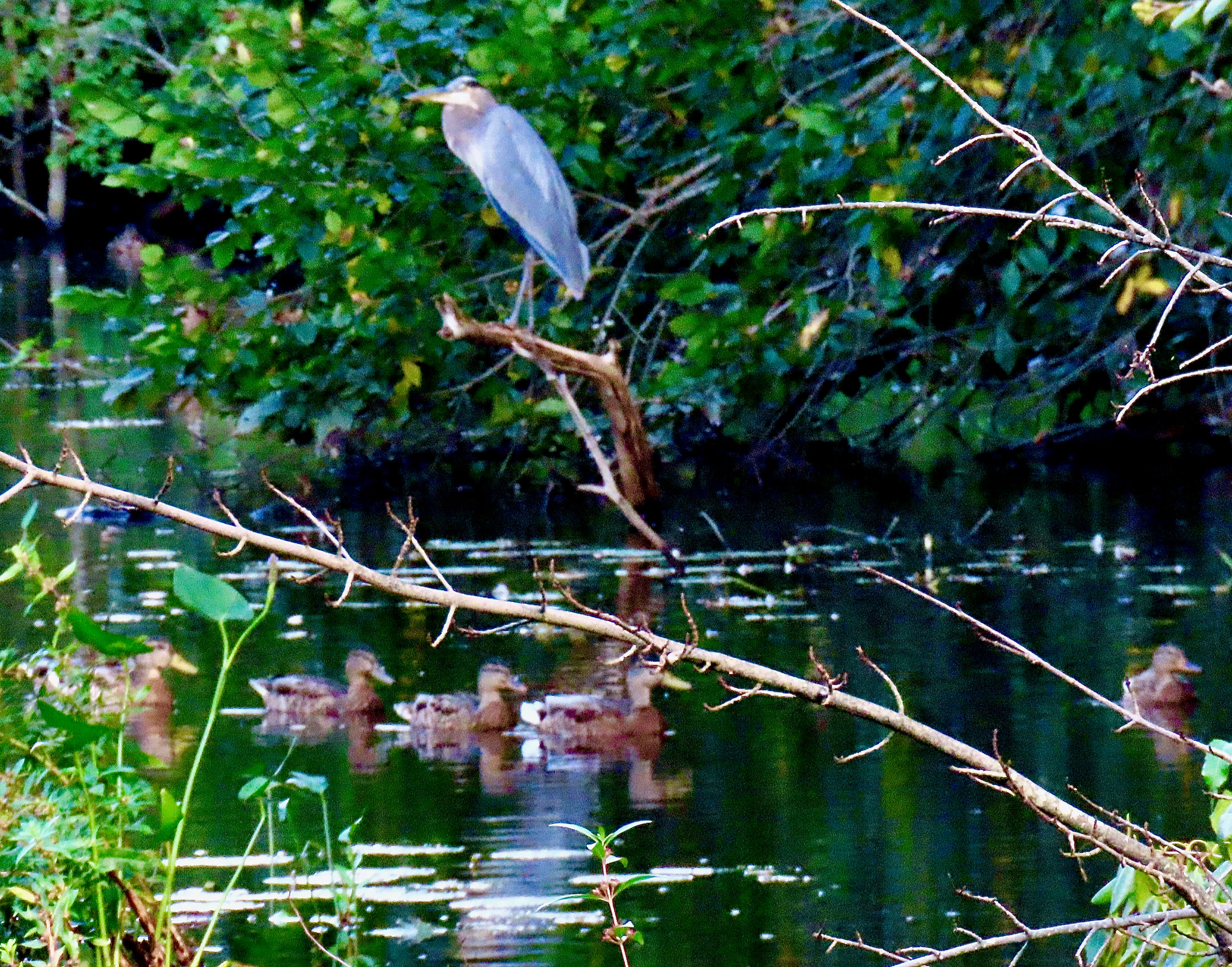
This heron is taking advantage of the All-Persons Observation Deck.

Herons are known for their exceptional camouflage, often appearing nearly invisible when perched among dead branches, or debris.

This heron can see well from high up in the tree. Its eyesight is estimated to be about three times more detailed than a human’s. From this high perch, a heron can spot small movements below.

Great Blue Herons are expert fishers, but they will eat almost anything they can catch and swallow. In a meadow, herons hunt for small mammals, which can make up a large portion of its diet, especially in winter when waterways freeze . 

The Great Blue Heron is widely considered one of the most prehistoric-looking birds alive today. While all birds are living descendants of dinosaurs, herons appear more like dinosaurs because of their large size, sharp angles and guttural sounds.

Herons possess specialized flexible necks with 19 to 21 vertebrae.

They can form their necks into an S-shaped curve which acts like a coiled, spring-loaded mechanism. This allows them to catch prey in the water with high speed and precision.

Heron Hike 2

The foliage in Central Massachusetts is becoming more brilliant each day. Swamp maples surrounding the beaver lodge at Wachusett Wildlife Sanctuary are nearly at peak color.

Meanwhile, the juvenile Great Blue Heron featured in the previous post is still roaming the sanctuary. It seems in no rush to migrate, perhaps because of the warm weather this week.

Beaver Lodge, Wildlife Pond, Wachusett Meadow Wildlife Sanctuary

Juvenile Great Blue Heron, South Meadow

Heron Celebration With Bonuses

Statuary from a local yard sale celebrates the recent surprising visit of a Great Blue Heron to our Zen garden.

A few weeks ago, a Great Blue Heron graced our Zen garden for a few moments before flying into the nearby woods. We began hunting for a heron statue to commemorate that event.
Serendipitously, a friend spied a pair of small heron statues at a yard sale shortly after the extraordinary visit.
In pride of place, the first heron now stands patiently in the “reeds” of the white stone river .
The second heron found a home in the zinnia garden.
As another bonus, a pair of wandering ducks was also found at the sale.
They are energetic and curious.
We never know where the ducks will wander. Hurrah for yard sales!

Heron Hang Out

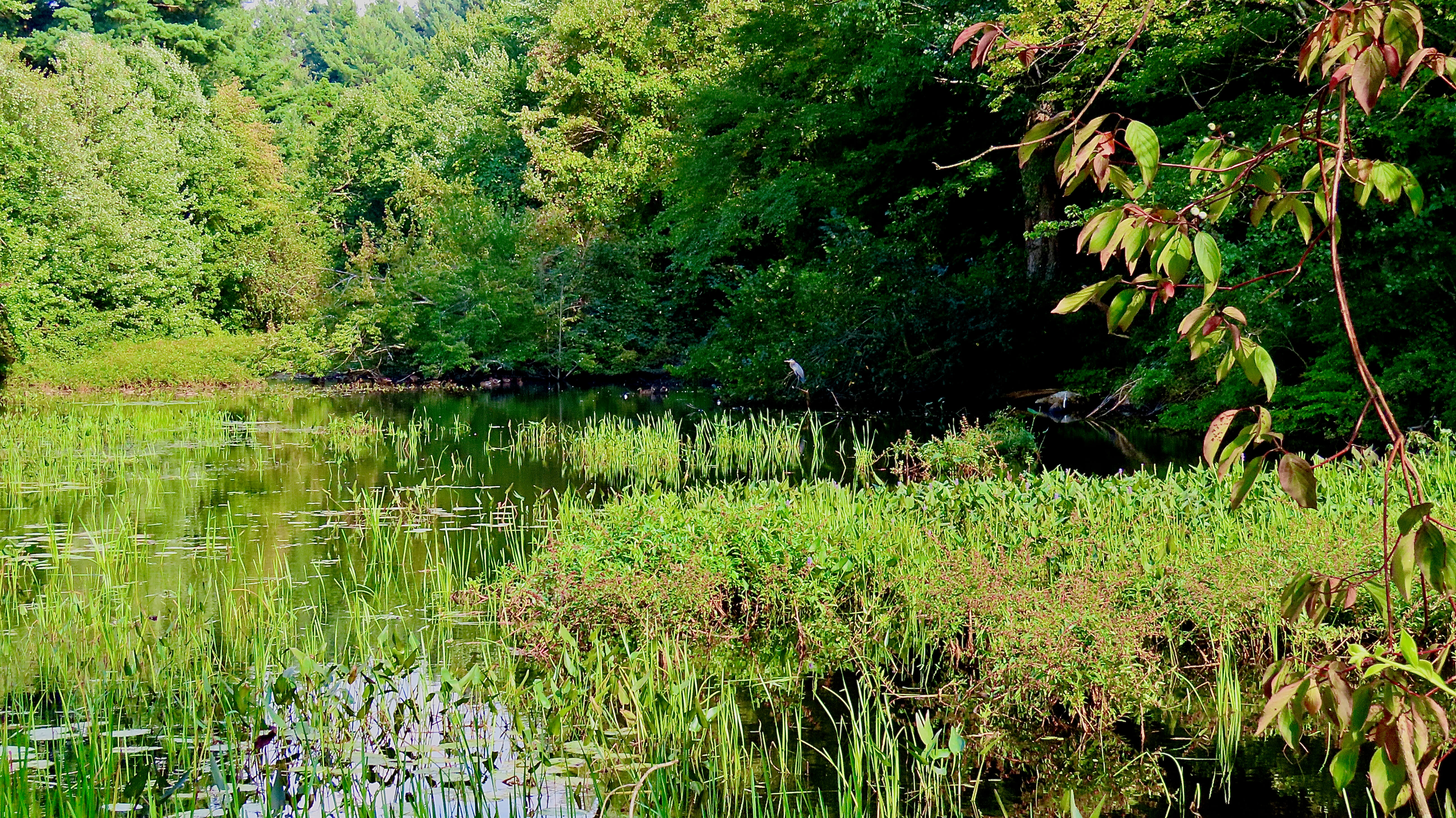
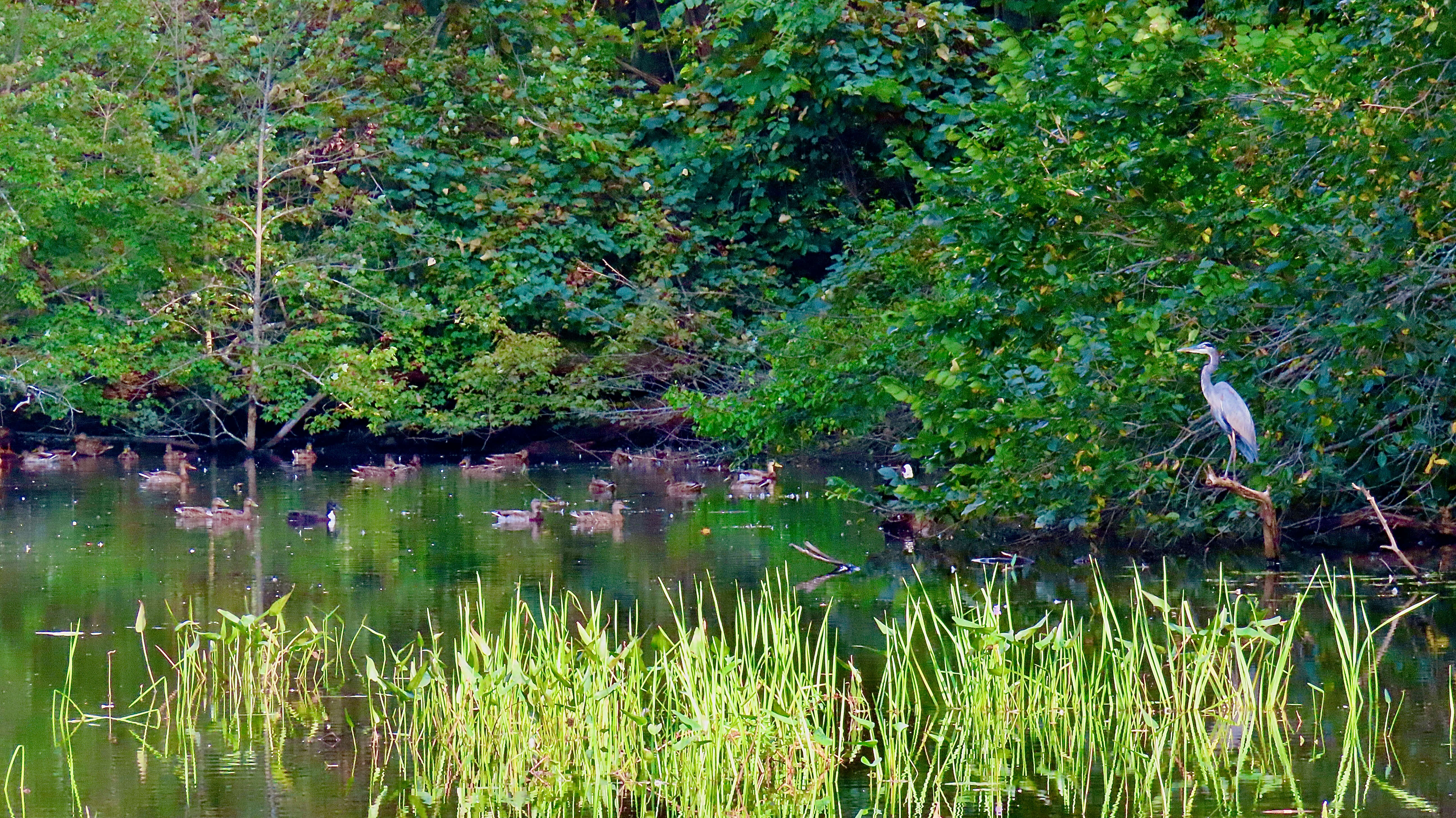
A Great Blue Heron and its habitat.

Great Blue Heron, Wildlife Pond, Wachusett Meadow Audubon, Princeton, MA
It’s common to see a heron on or around the dead tree branches during the summer, especially during the late afternoon.
The water is unusually high due to the record-breaking rain in Central Massachusetts. Plenty of fish here to attract a Great Blue.
It can be easy to miss a heron, as they often blend in so well with their environment, and remain motionless for long periods of time.