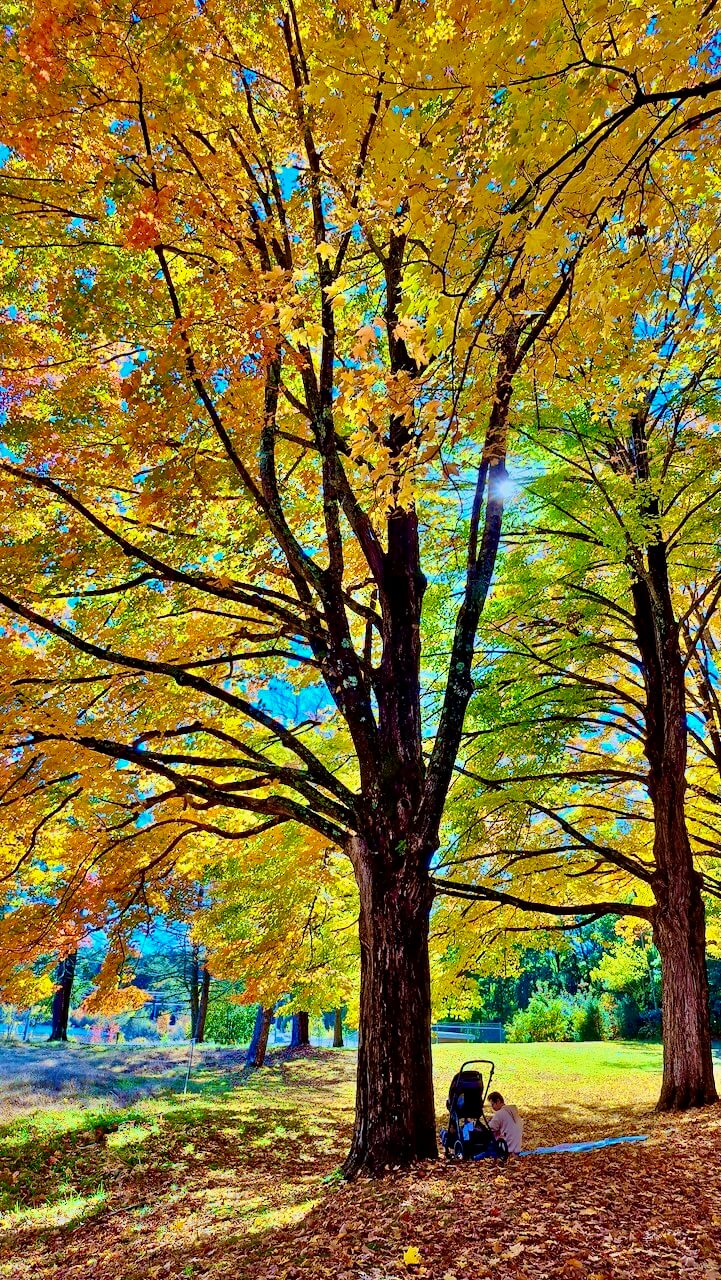
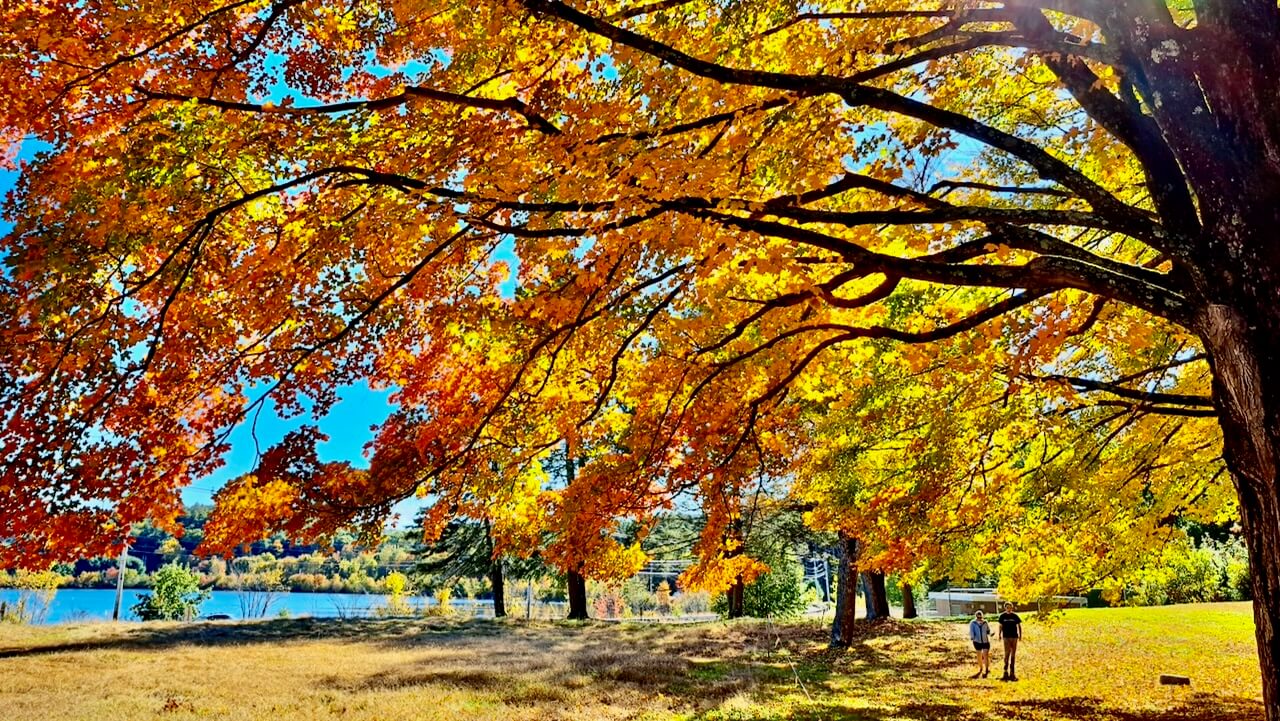
Photographs taken with a bridge camera journaling nature and everyday life in Central Massachusetts and beyond.

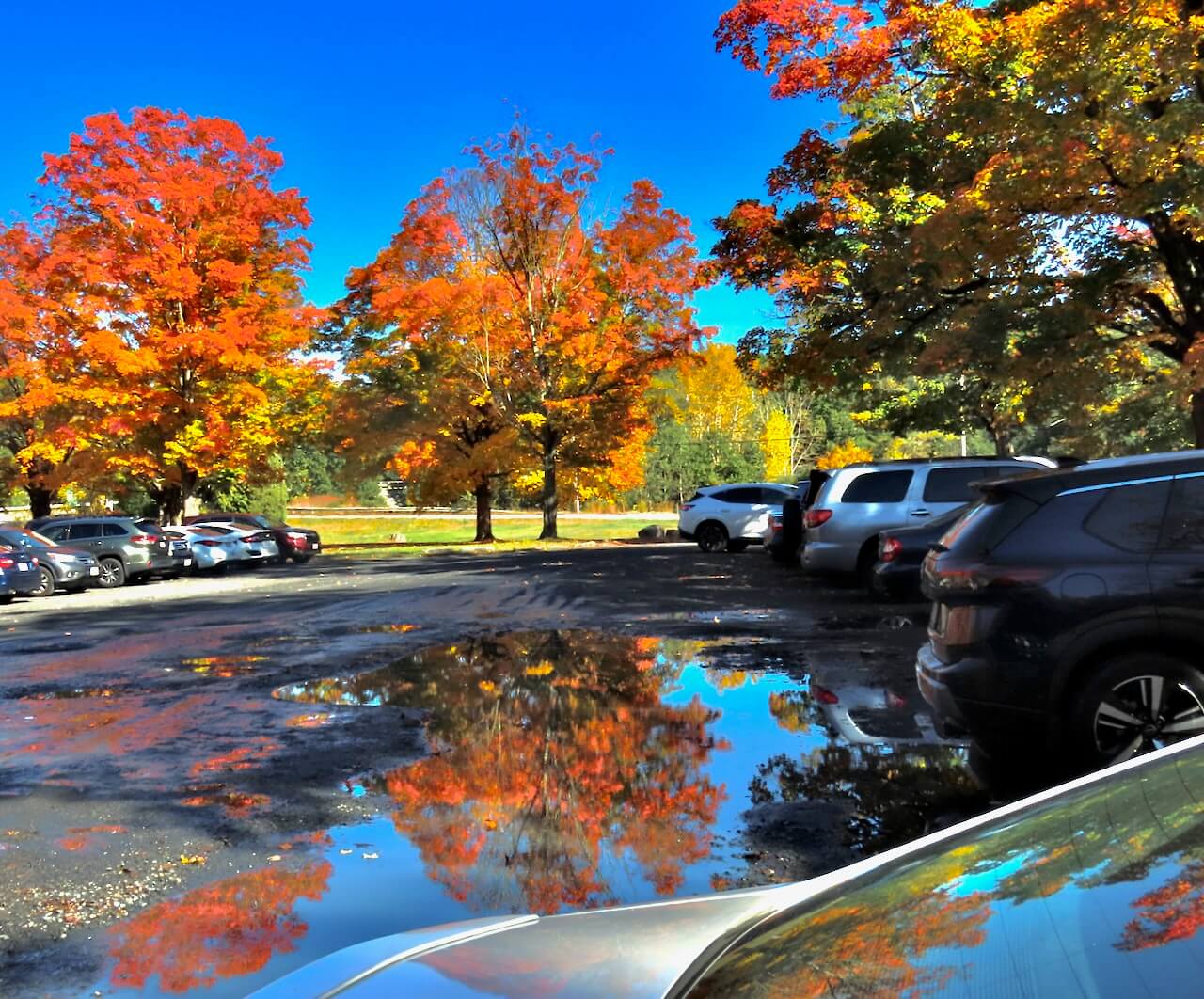
West Boylston, Massachusetts
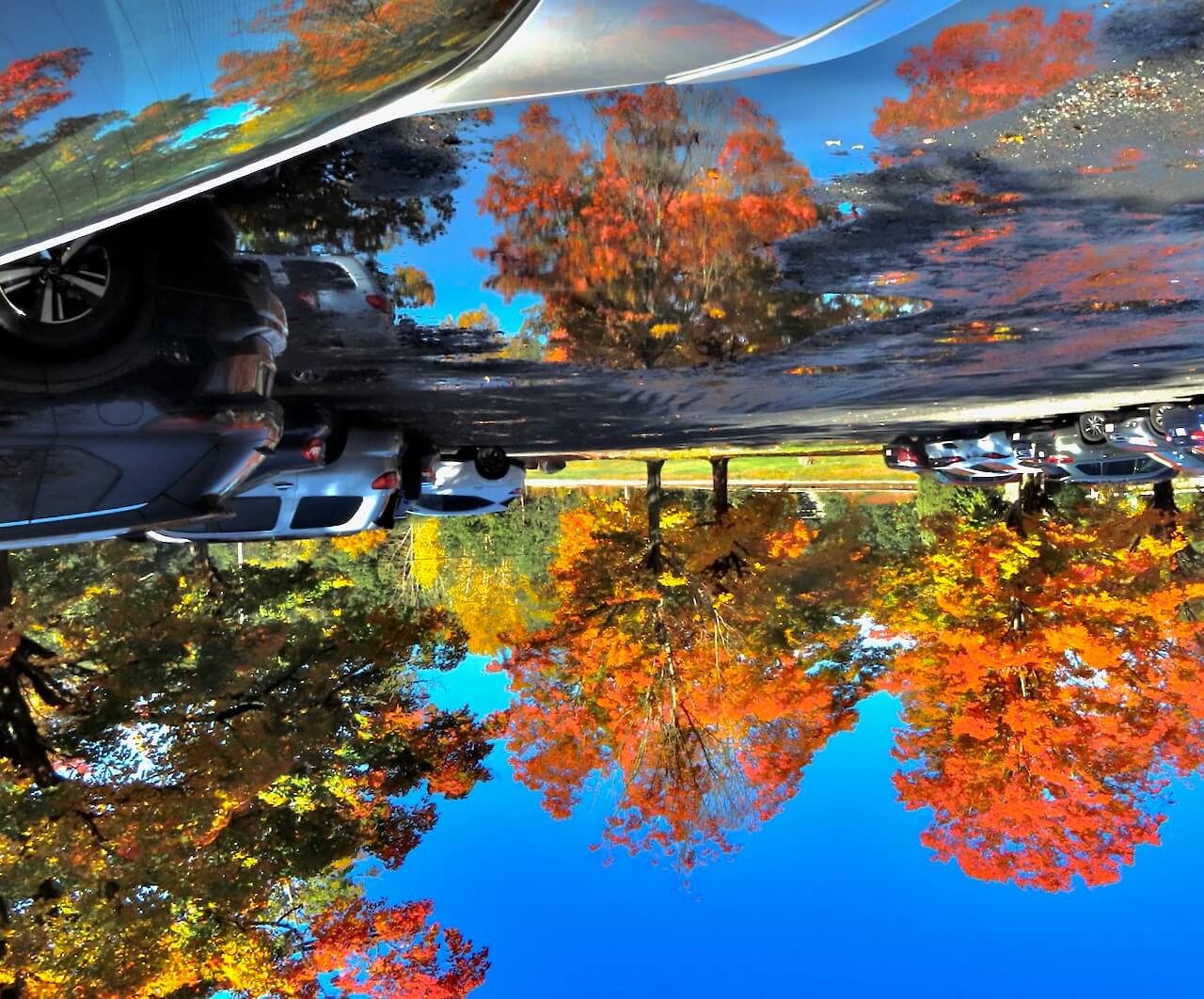

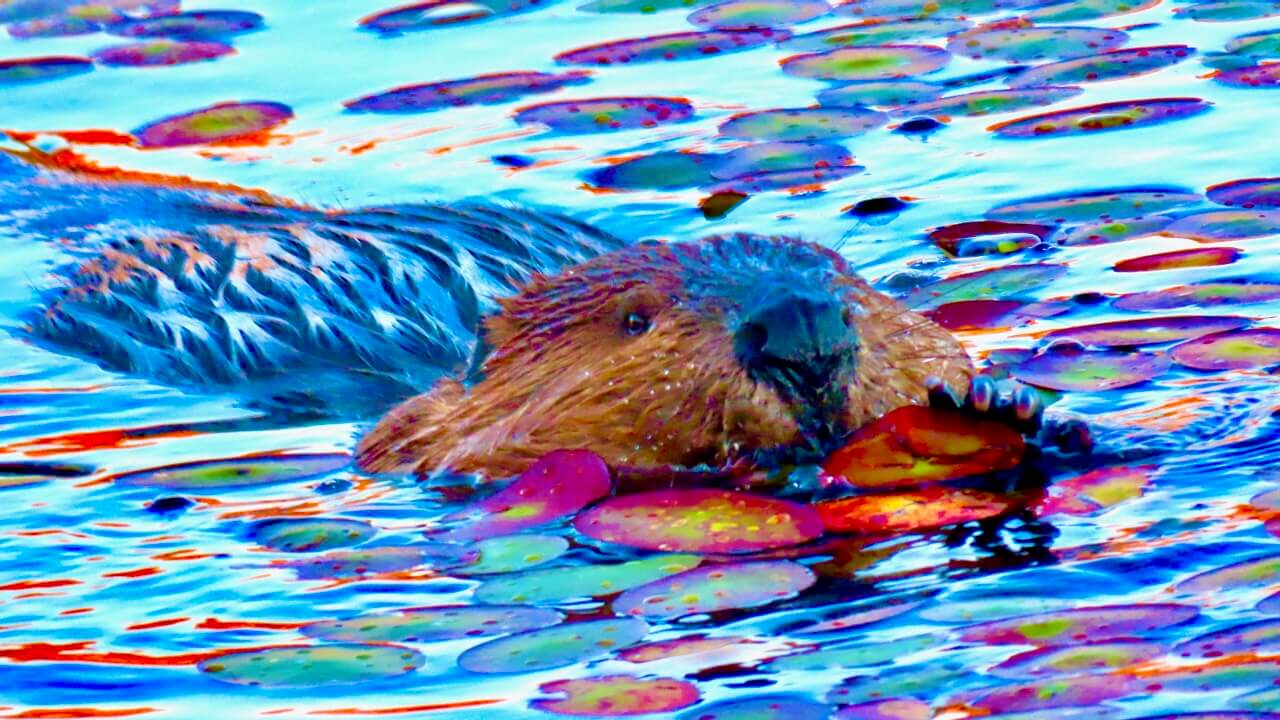
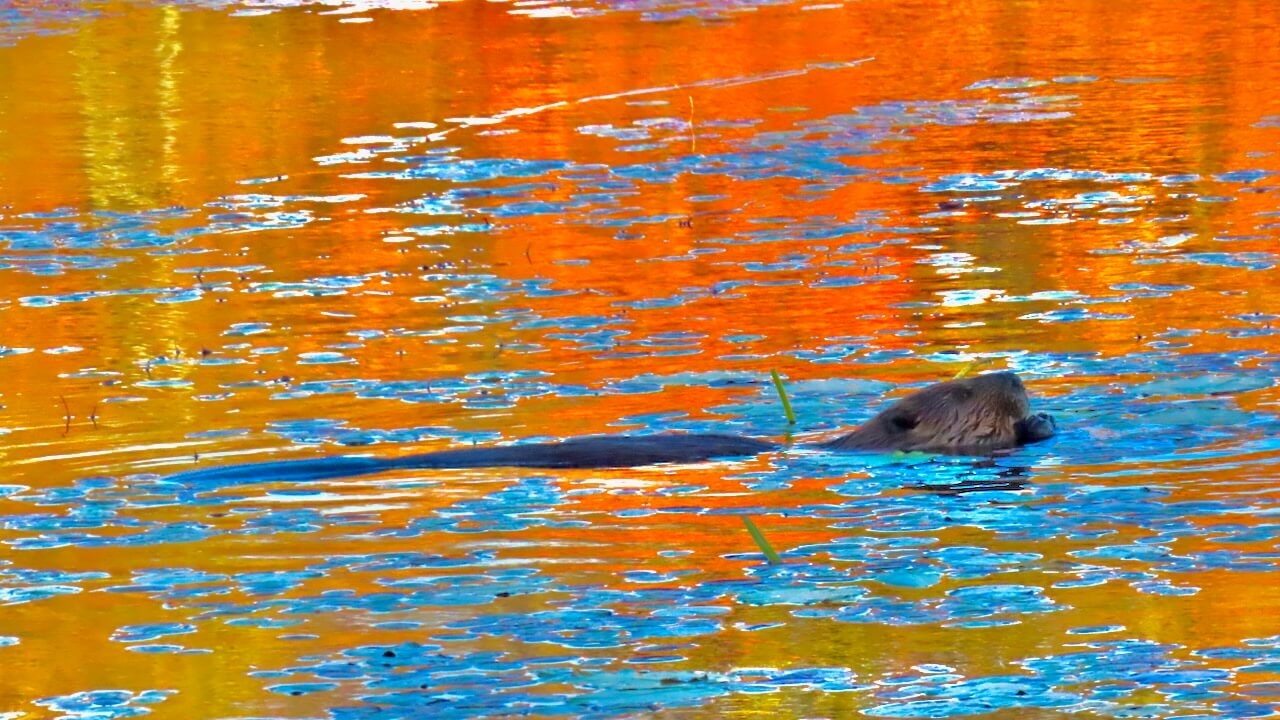
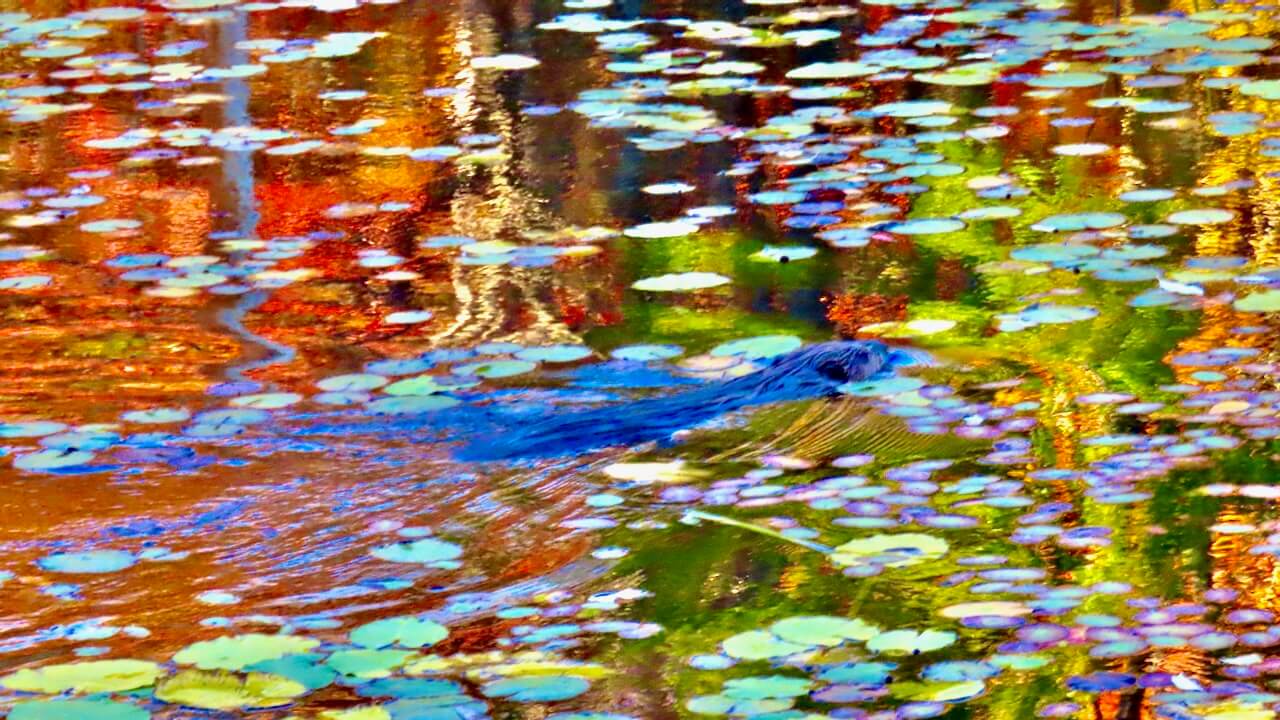
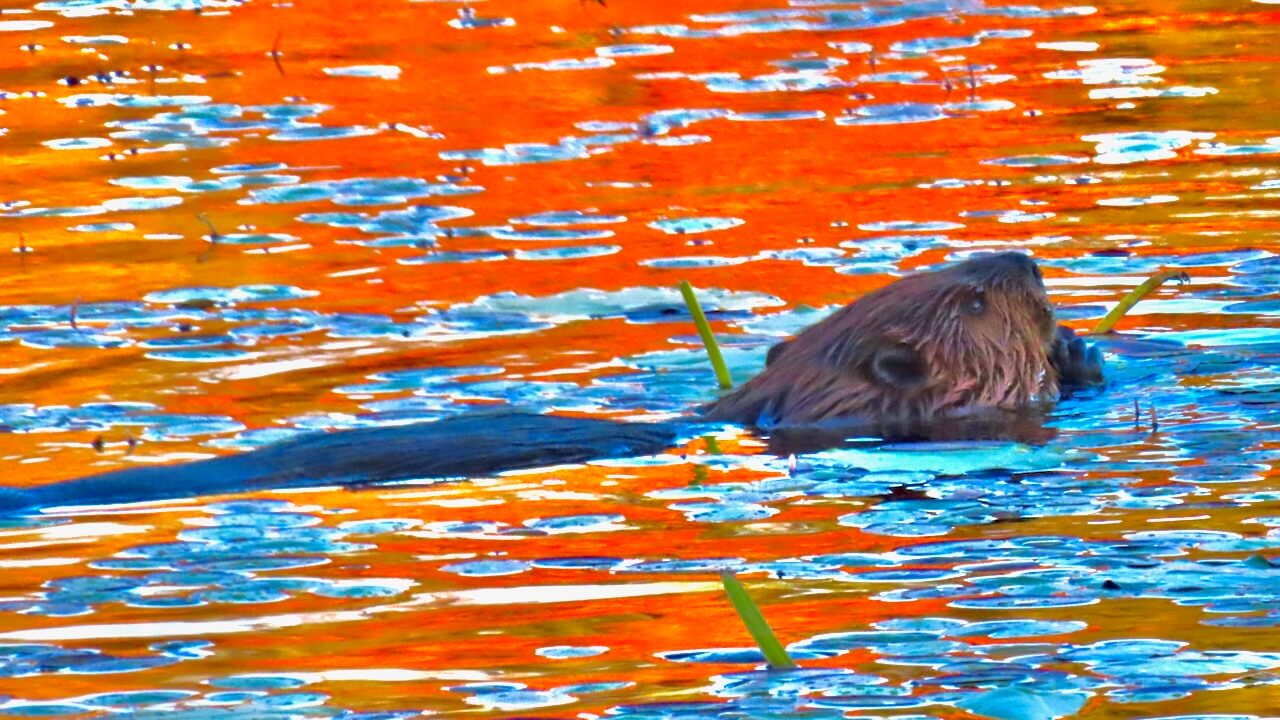
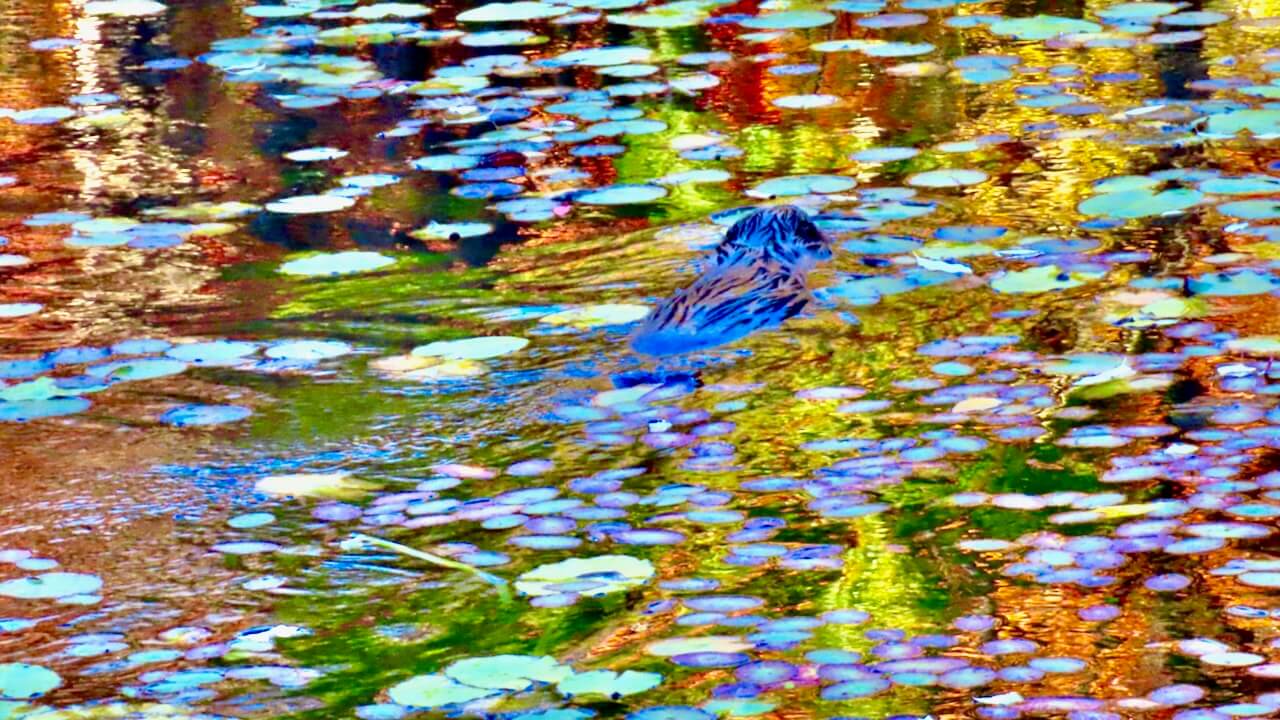
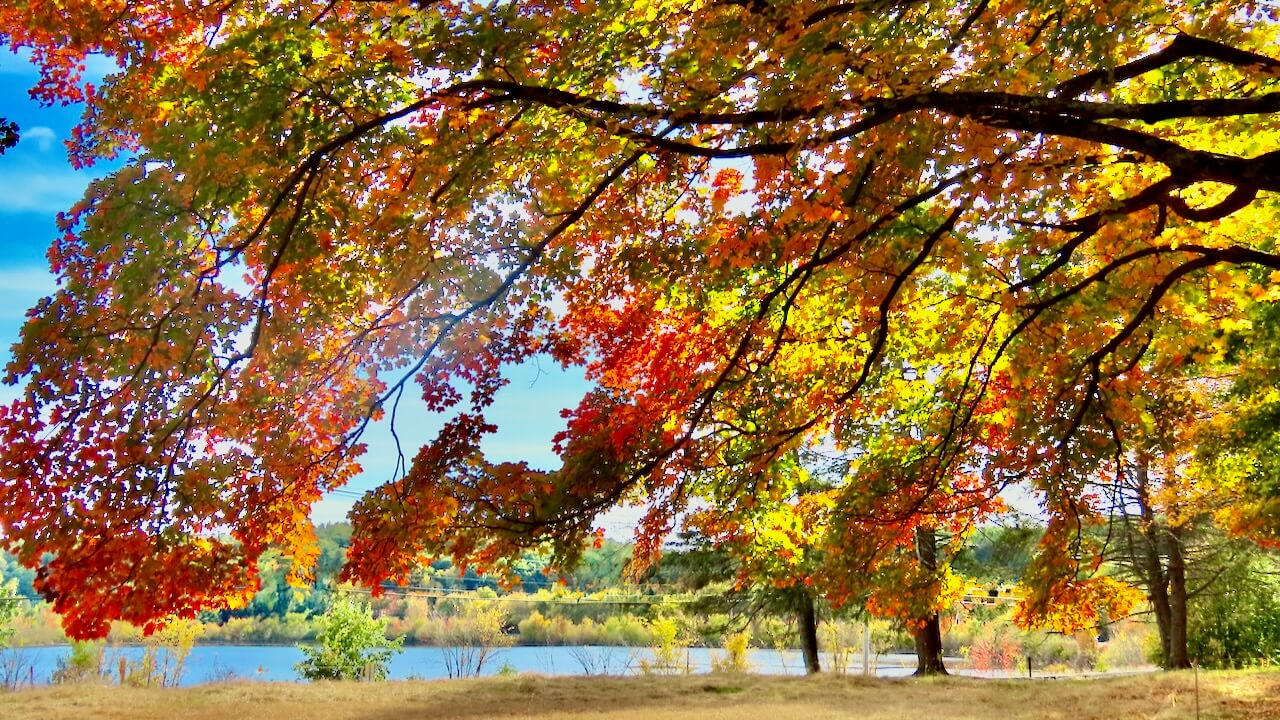
…enjoys the New England foliage as it swims through reflected colors on the pond in the late afternoon.


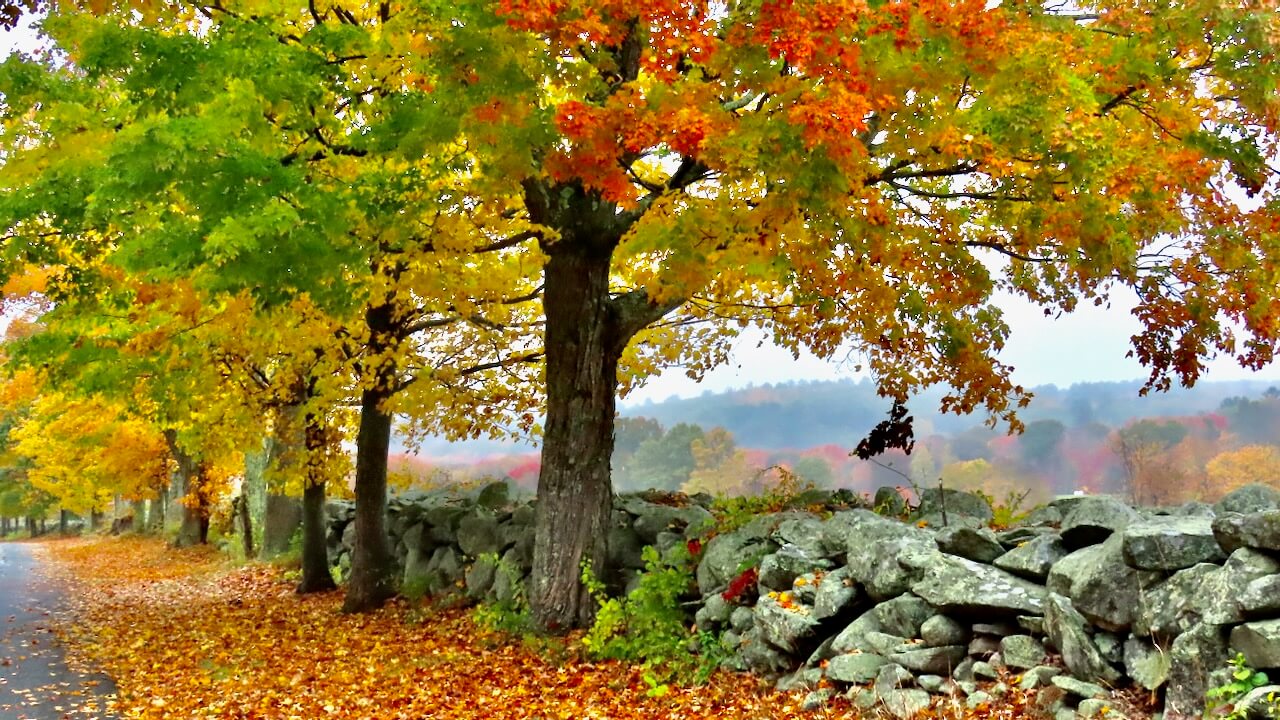
Great Meadowbrook Farm, Hardwick, Massachusetts
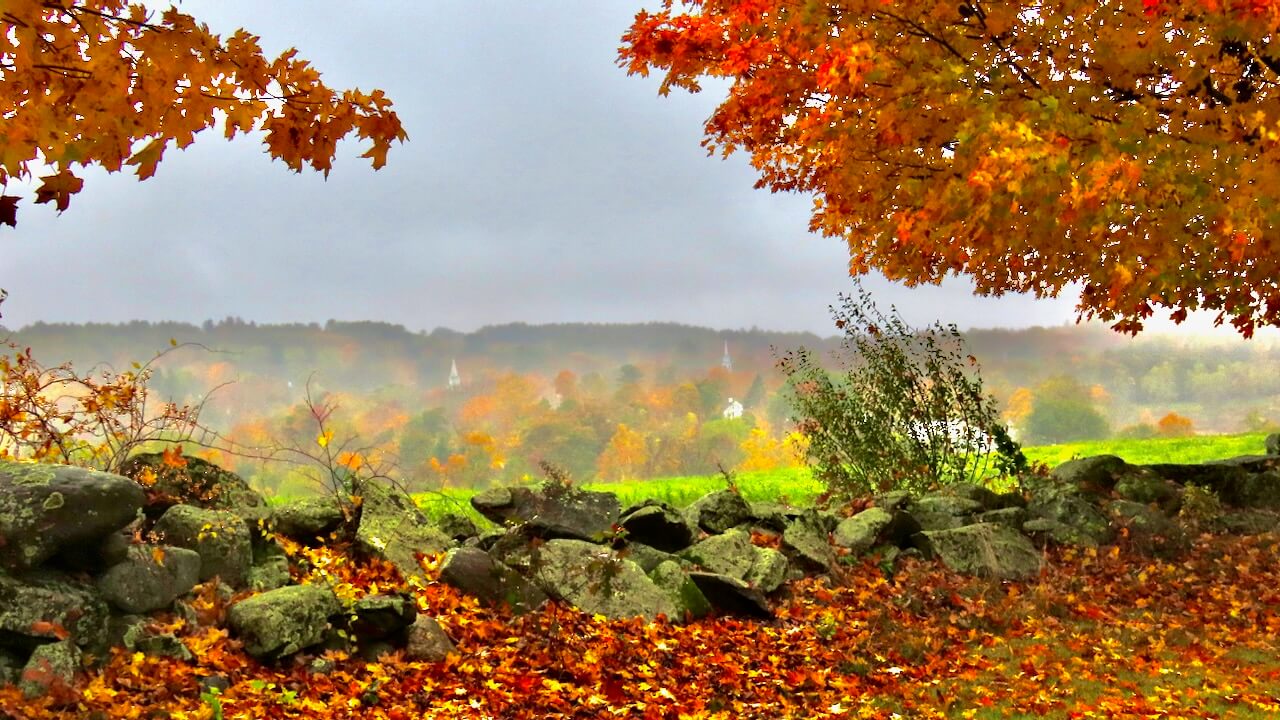
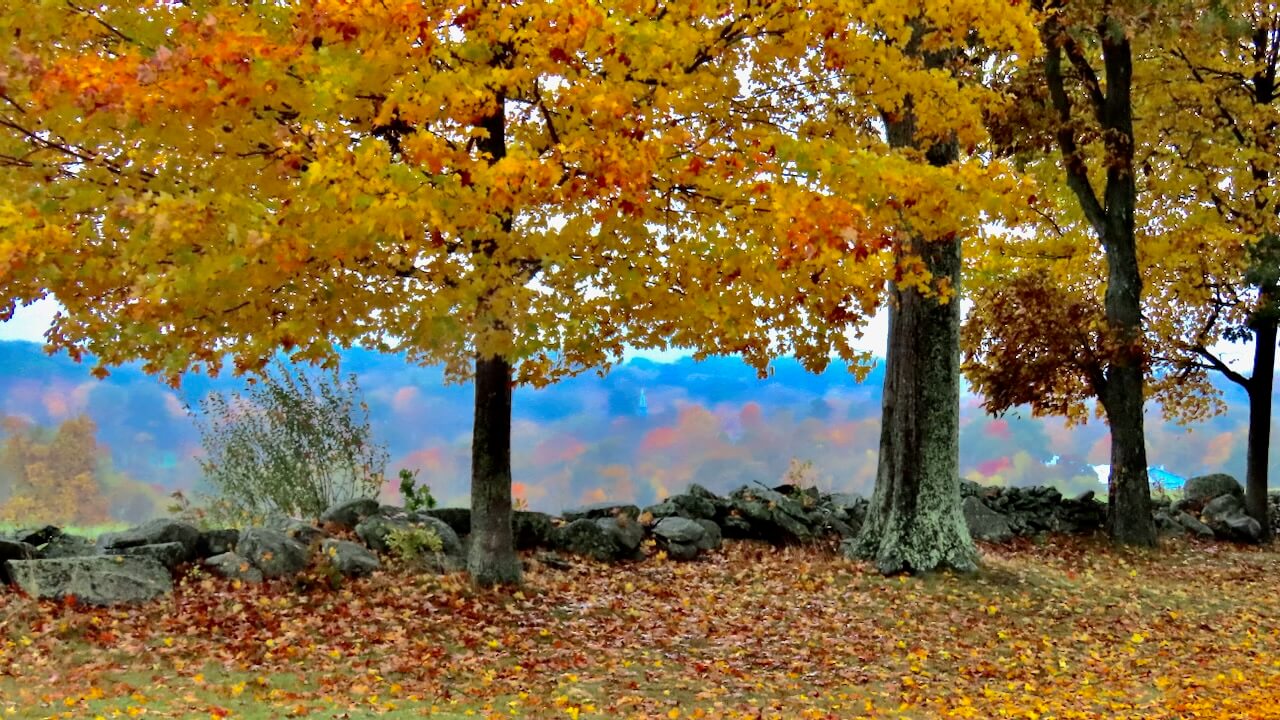
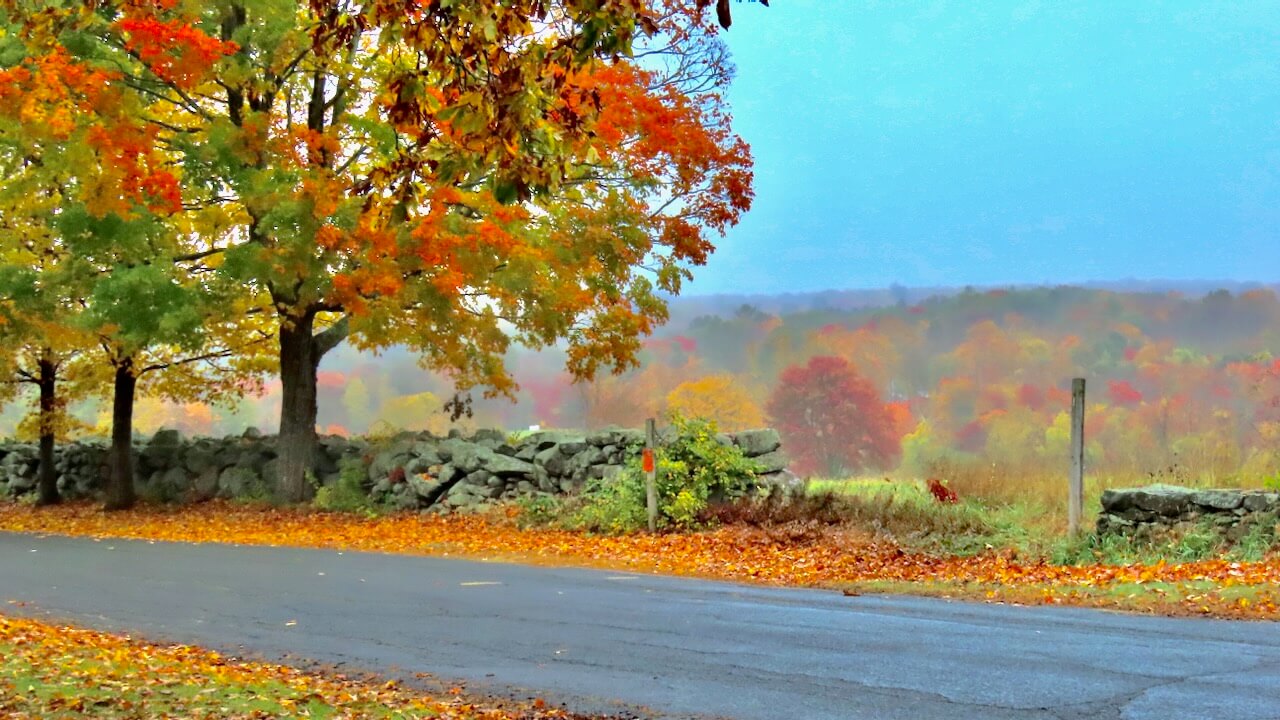
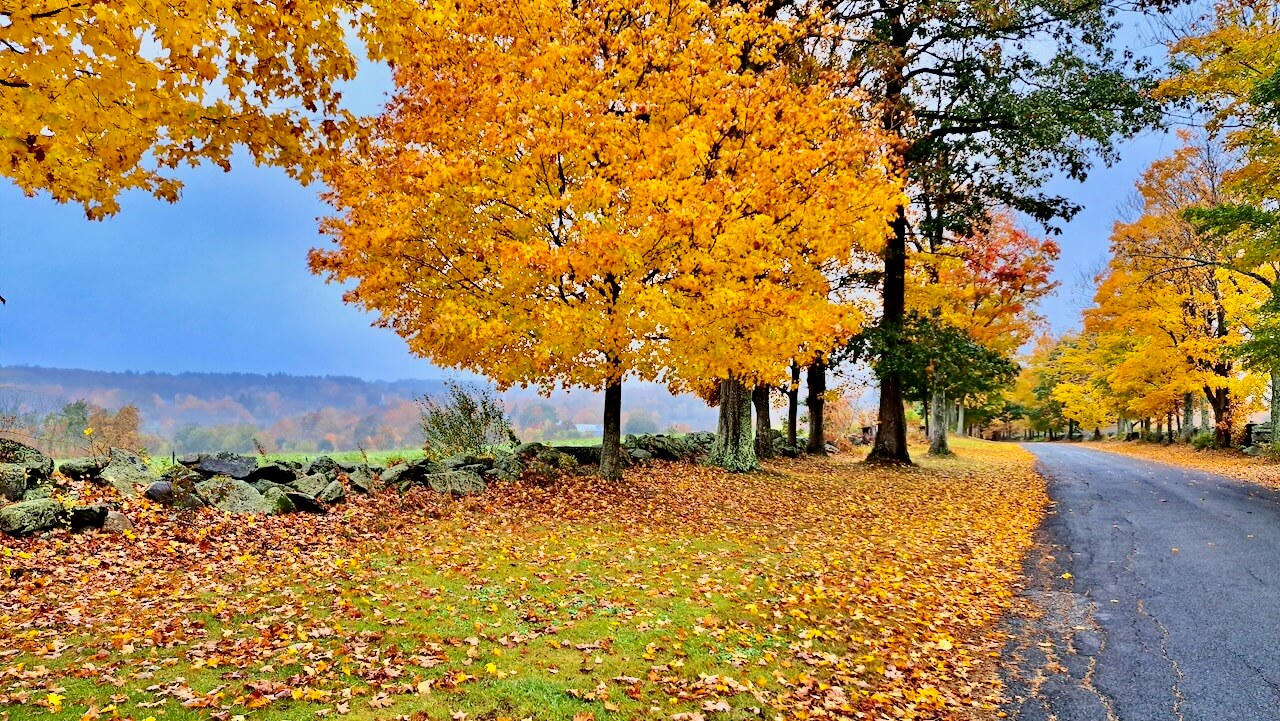

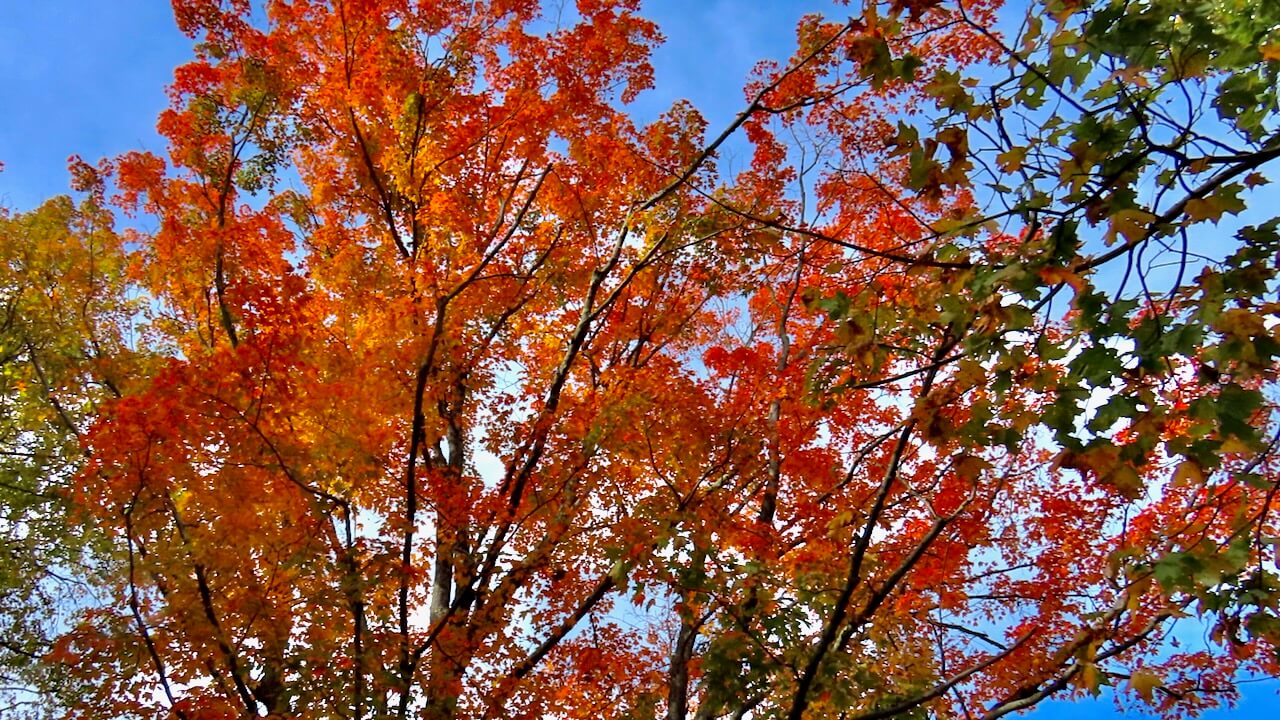
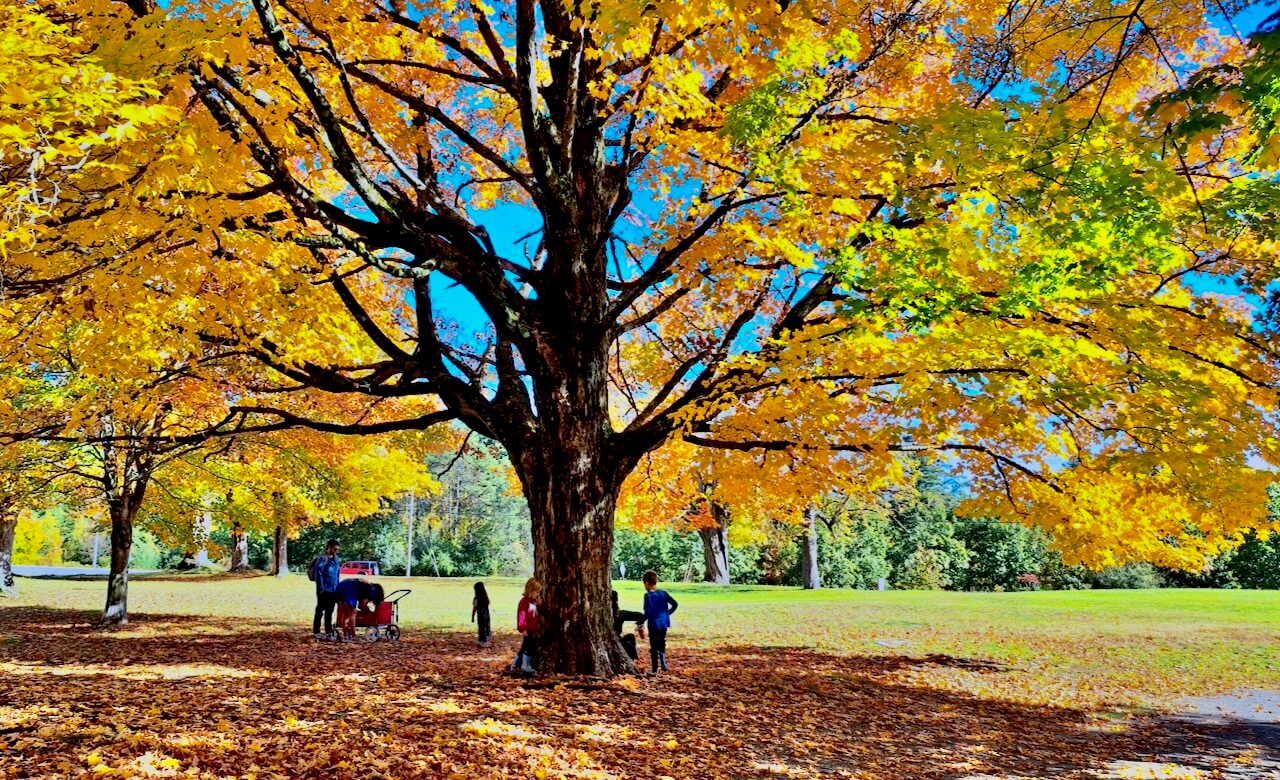
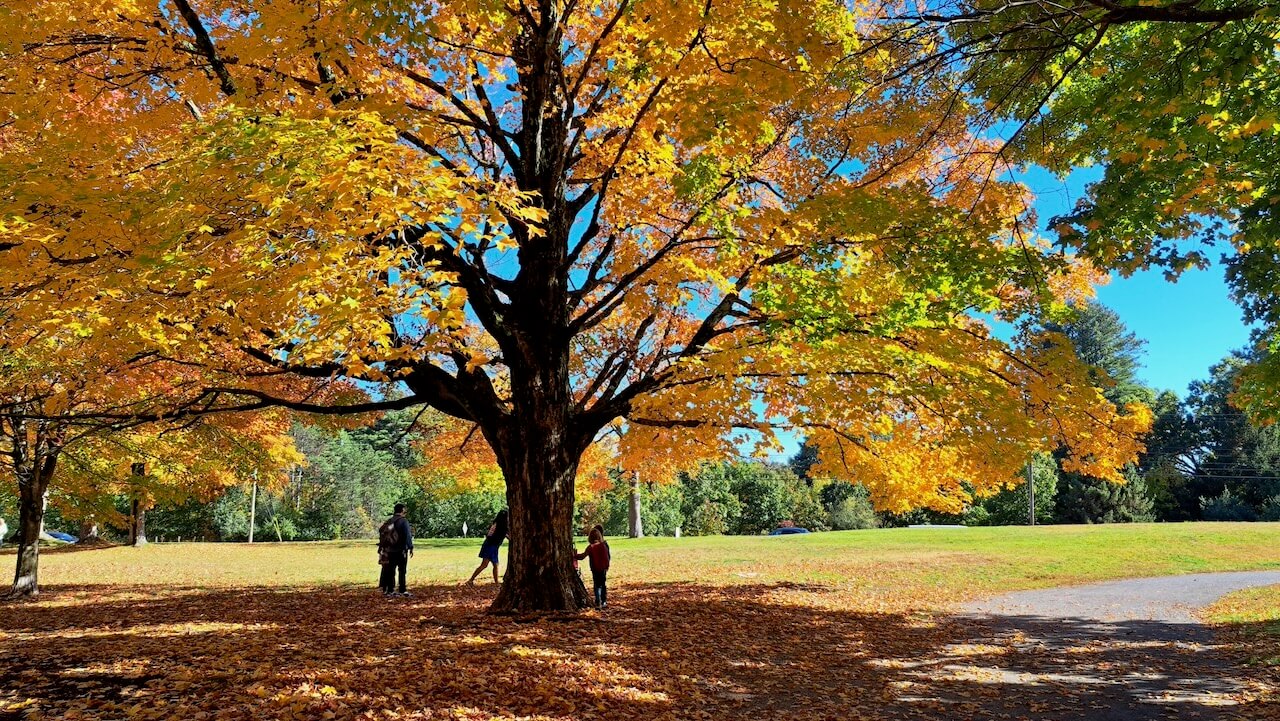
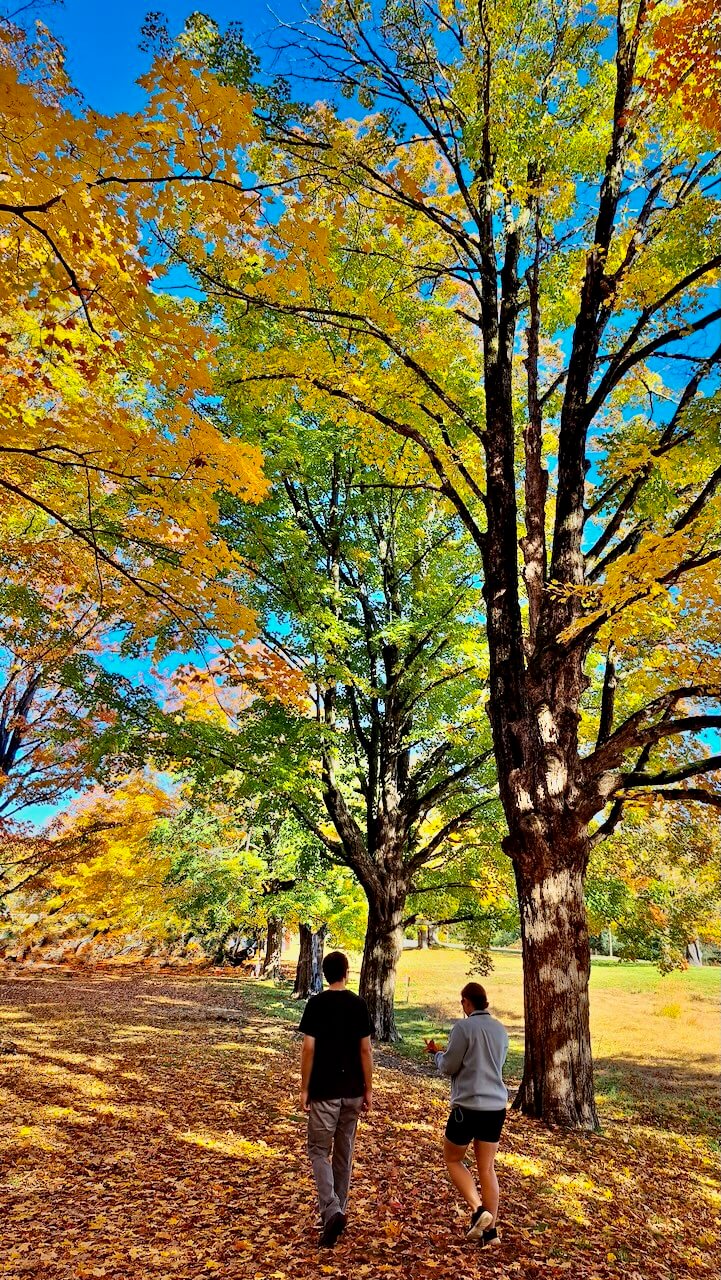
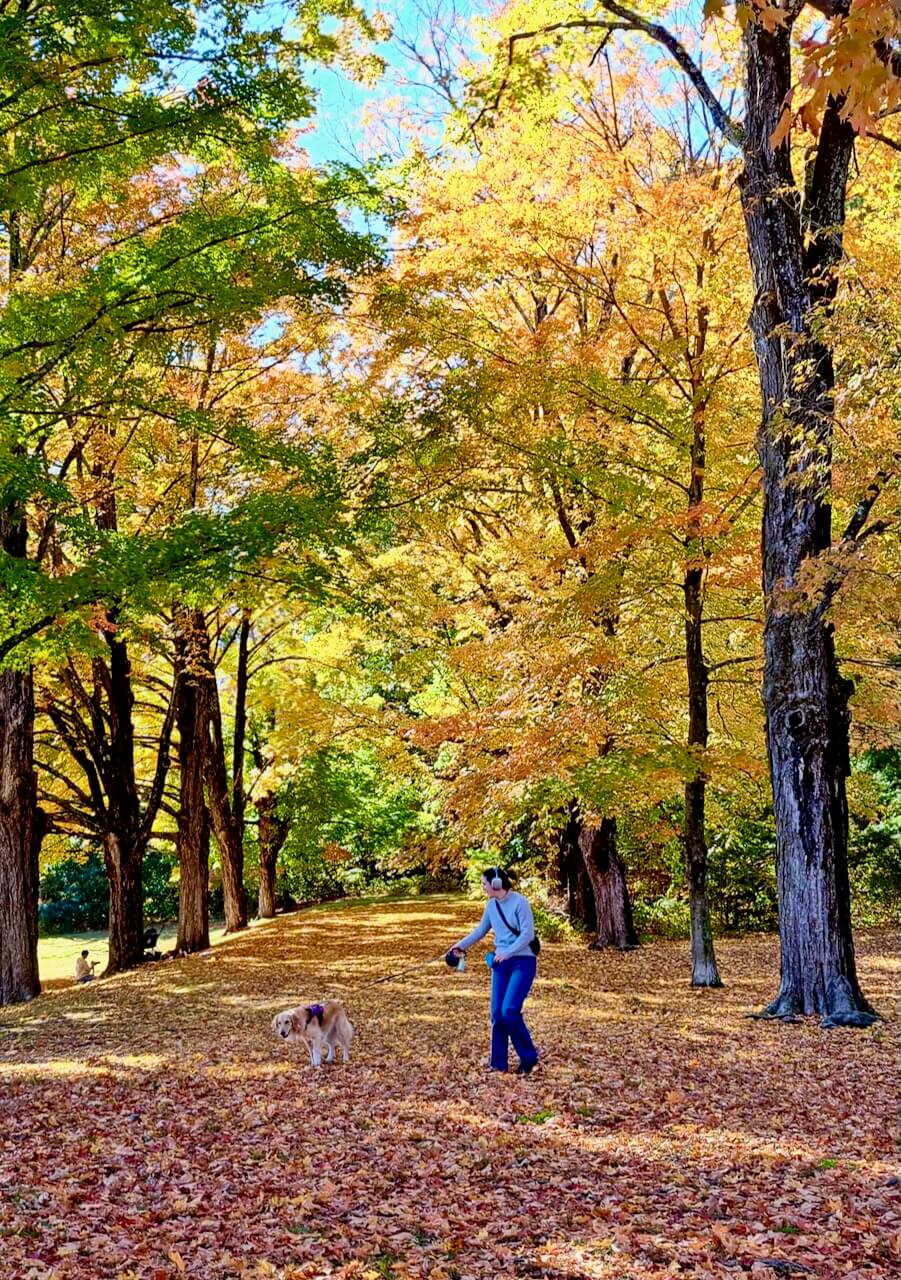
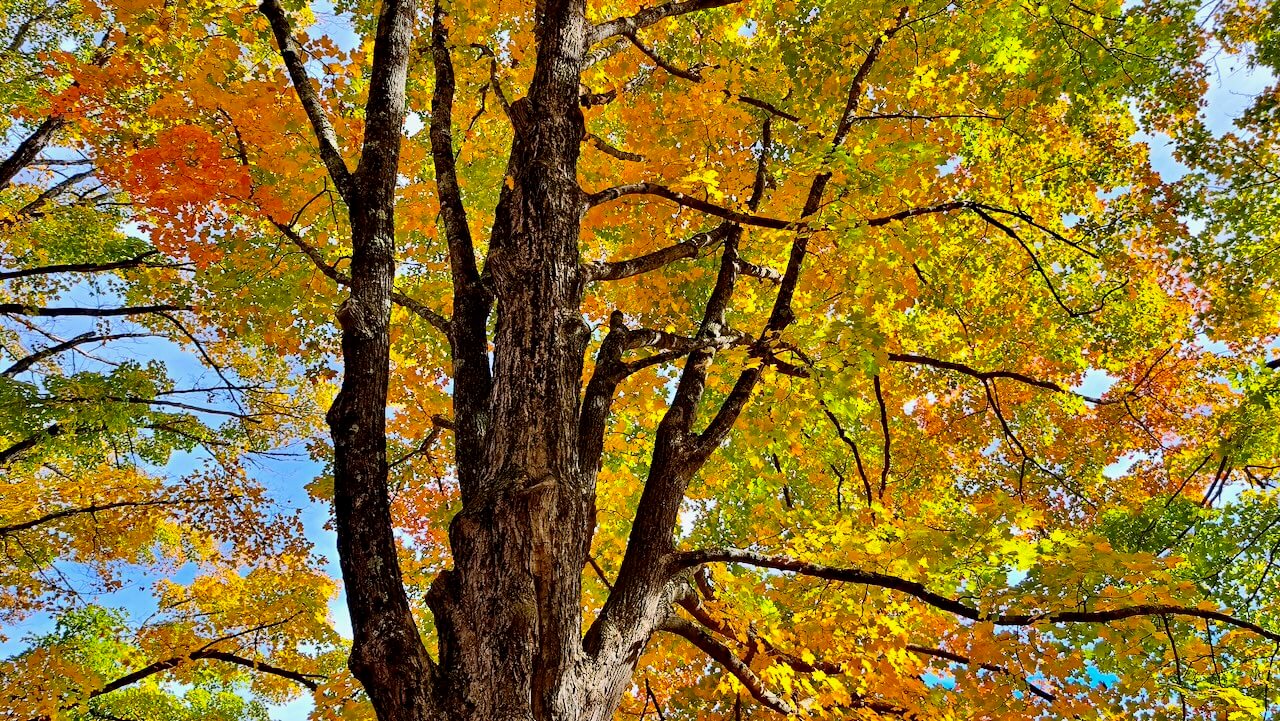
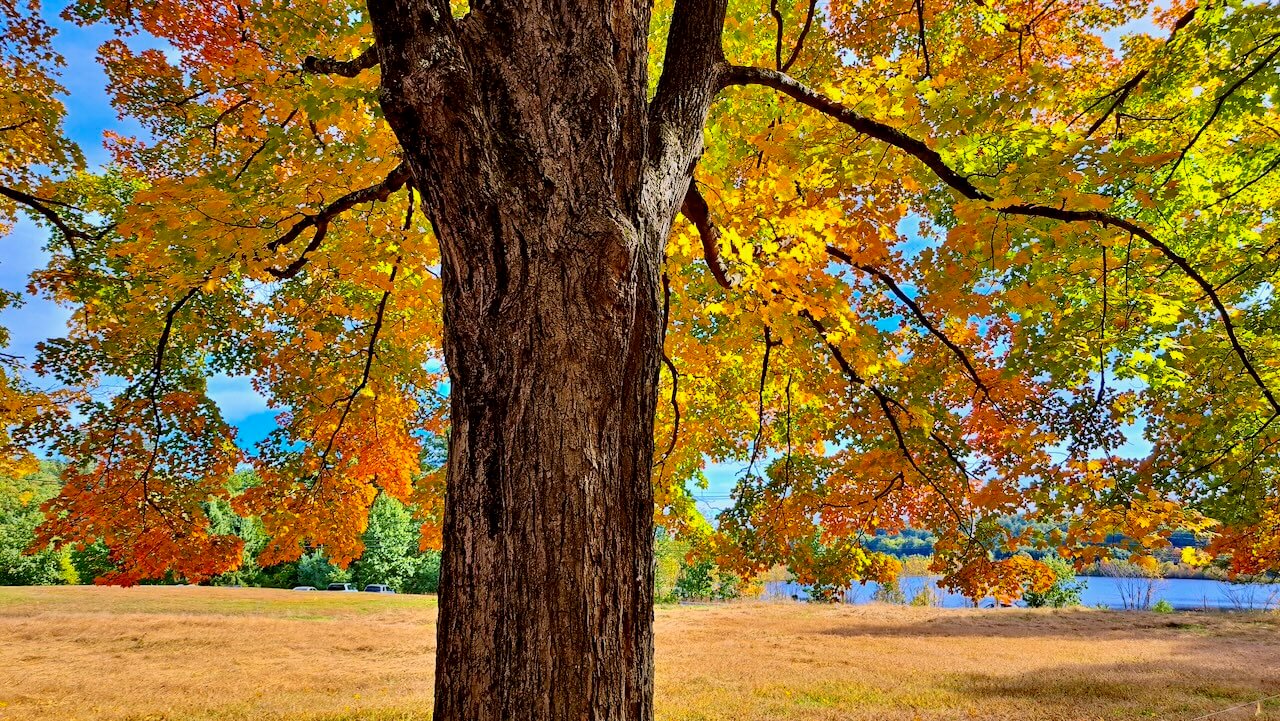
Maples trees in West Boylston, Massachusetts
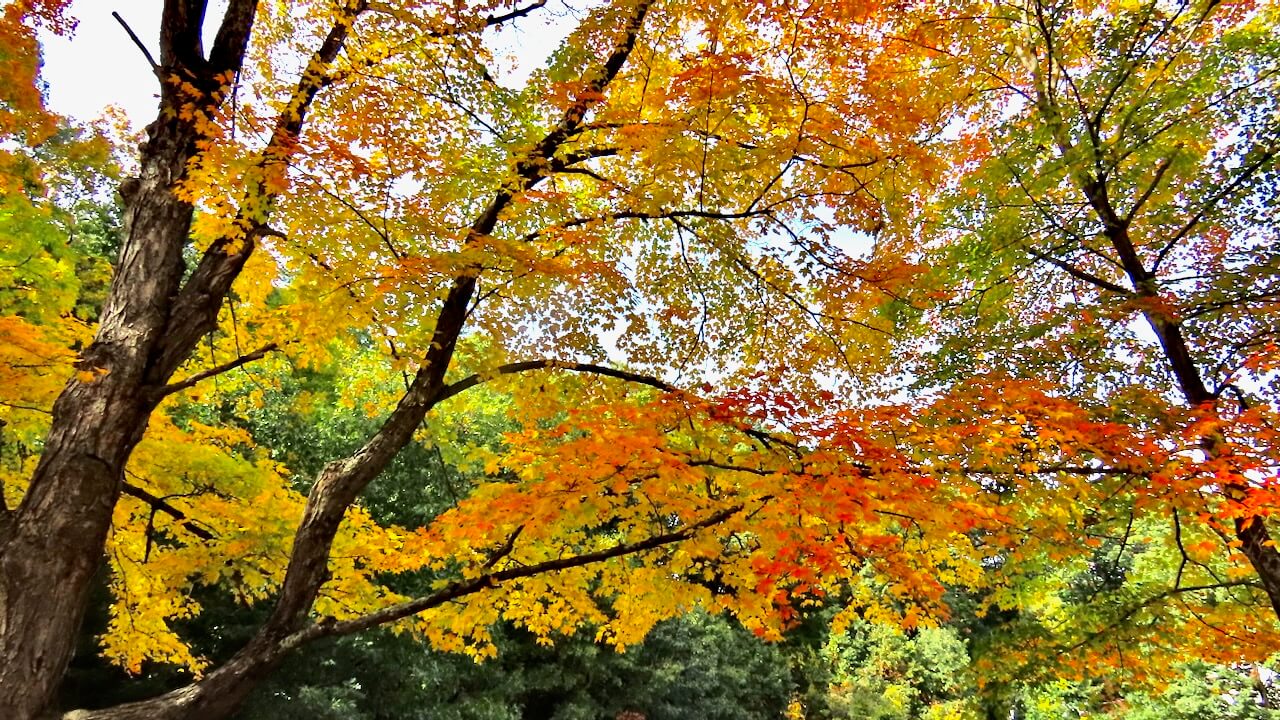

The Prospect Hill Overlook in Harvard, Massachusetts is a popular destination known for its sweeping panoramic views of Central Massachusetts. This area is also of historical importance, as Fruitlands, the short-lived 1843 agrarian Utopian project, is a National Historic Landmark there. Begun by Bronson Alcott and his family, this transcendental experiment included the then 10 year old Louisa May Alcott. For photographs of Fruitlands featured in an earlier blog, click here.
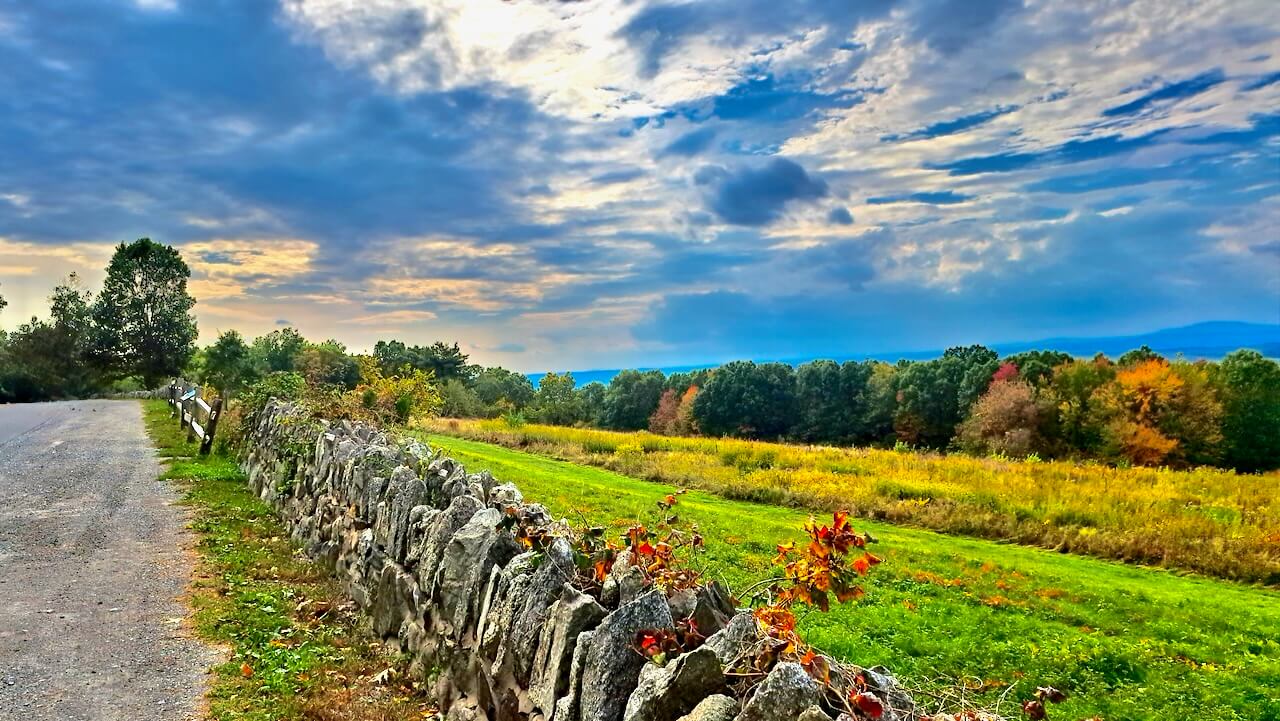
The overlook is a favorite destination for photographers, especially during foliage season. Last week, I viewed the foliage just beginning to turn.
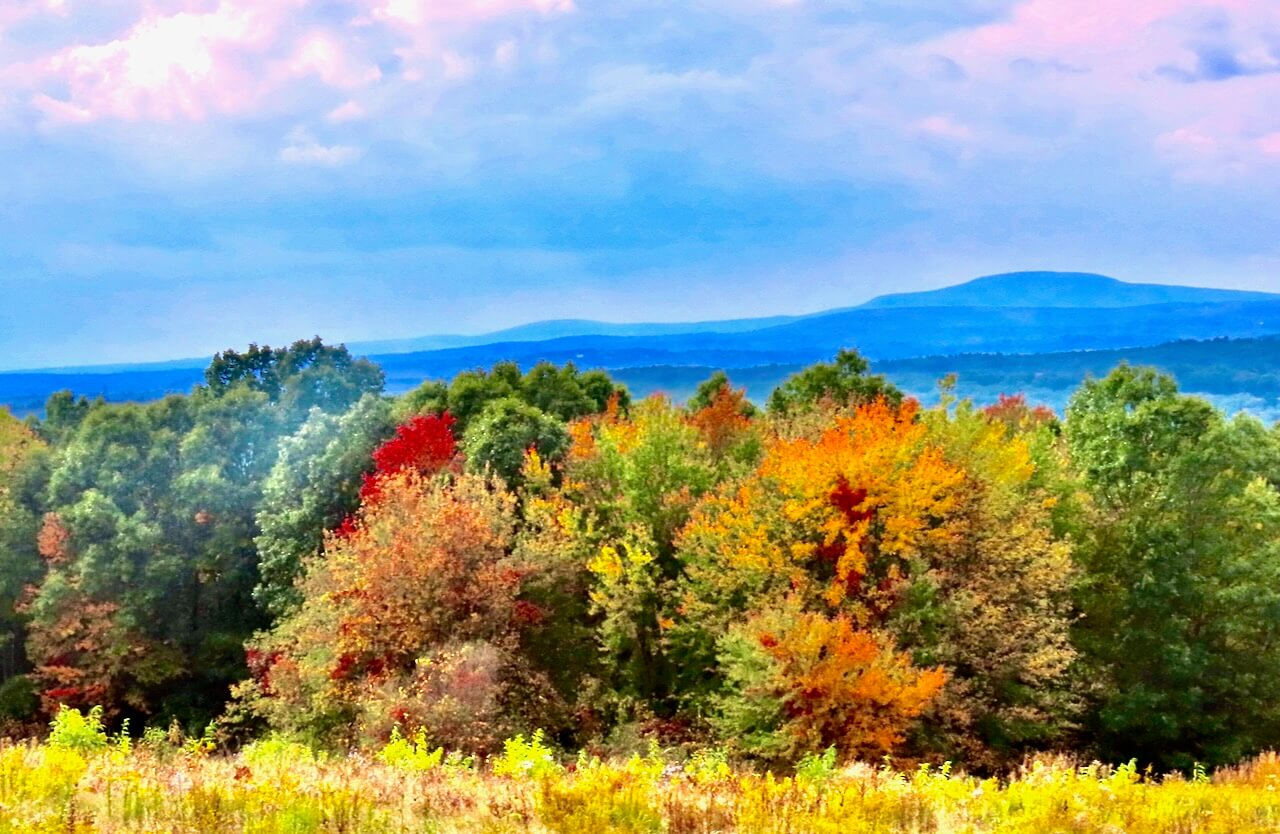
Mt. Wachusett, the highest point in Massachusetts east of the Connecticut River, can be seen on clear days.
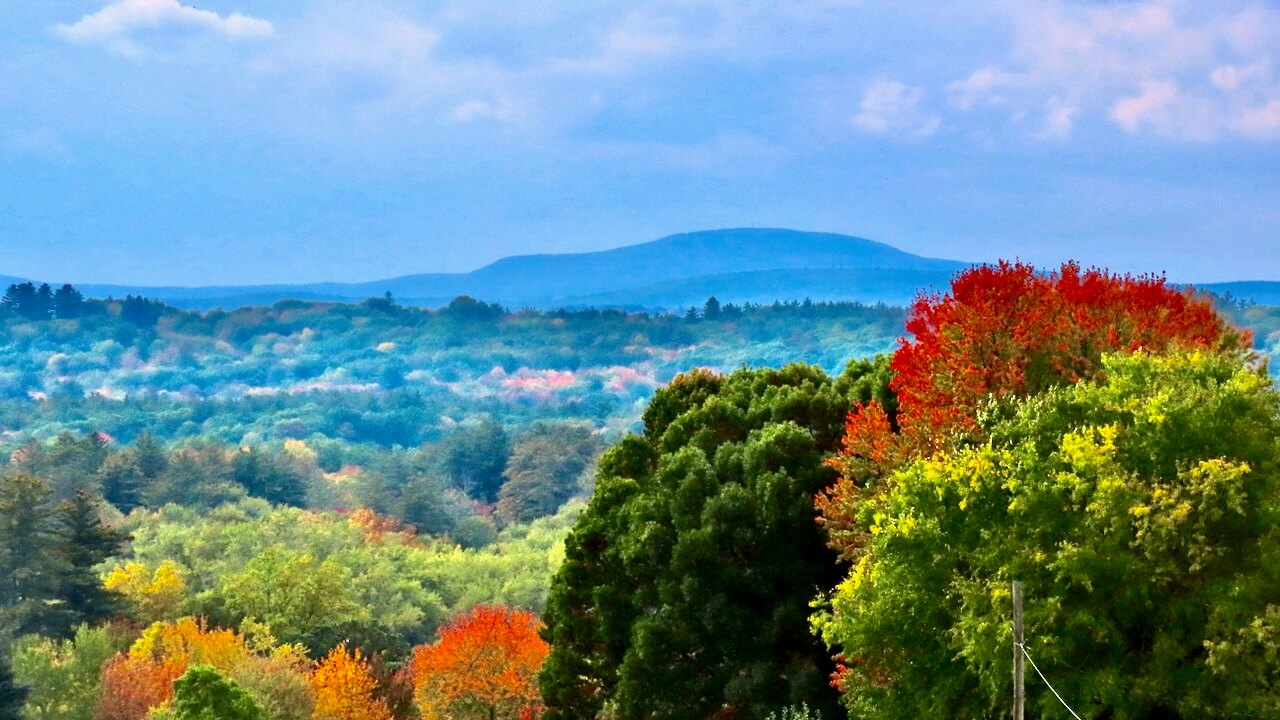
This conservation land also includes popular hiking trails.
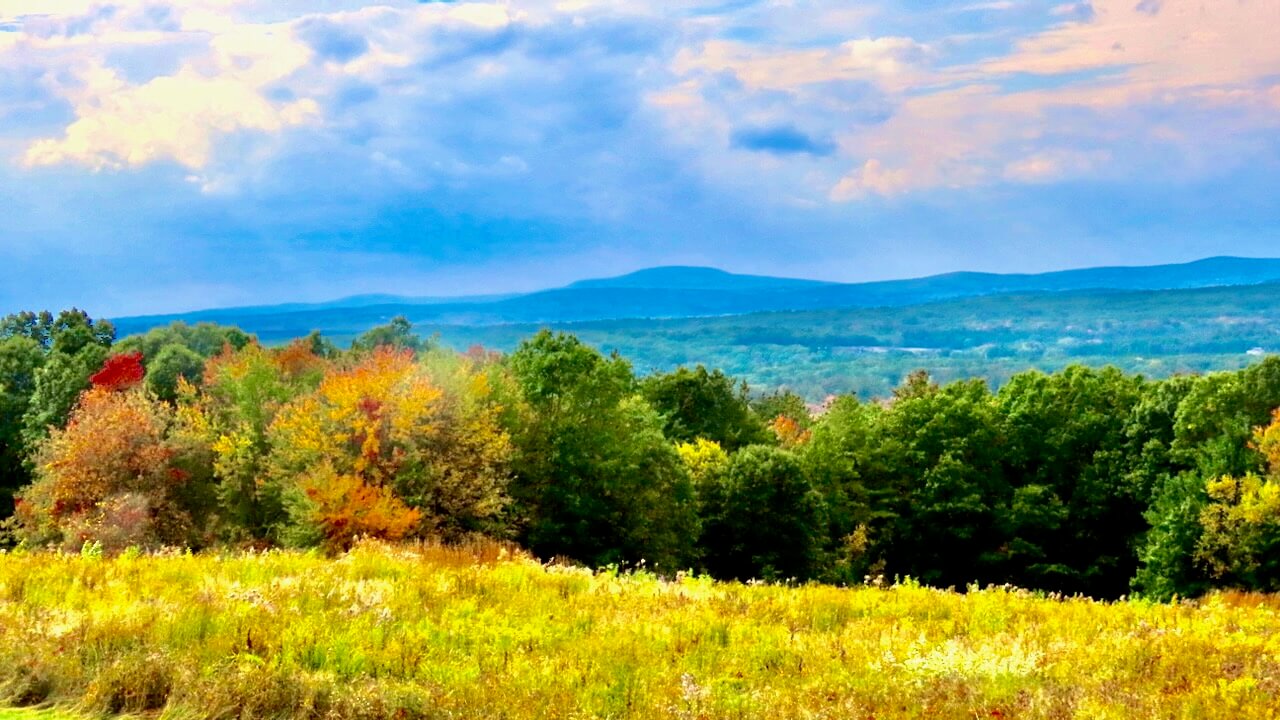
A 75-acre agricultural area on this property donates over 100,000 pounds of fresh fruit annually to regional hunger relief.
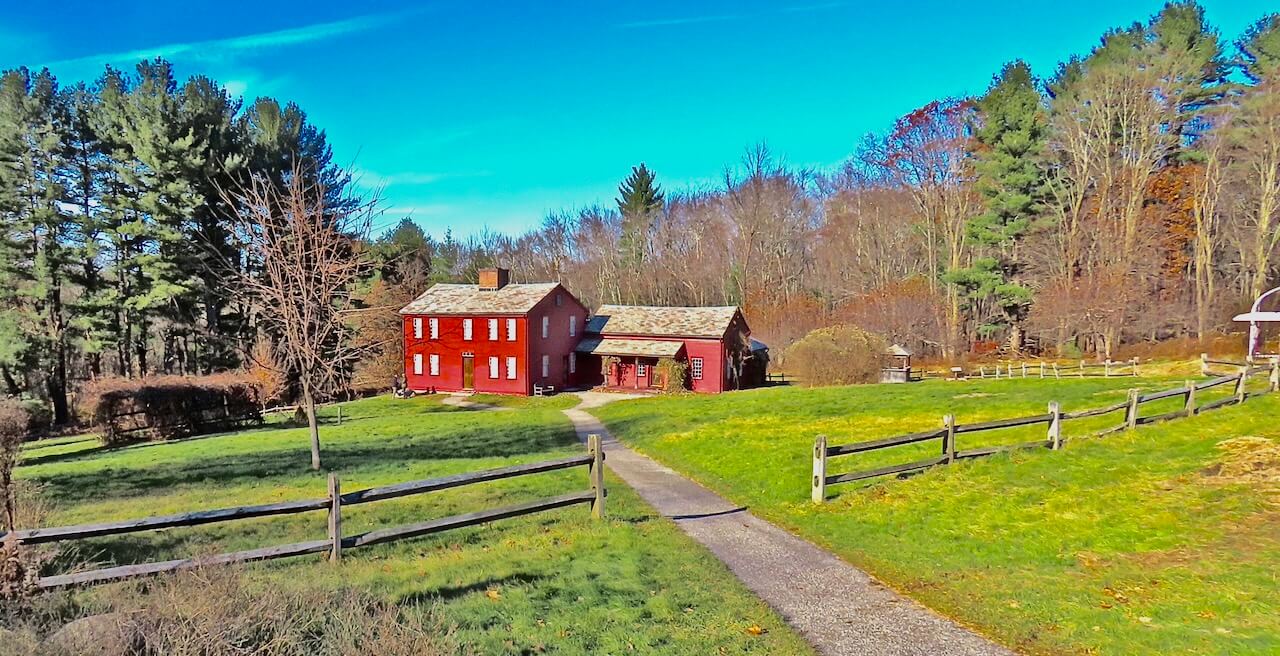
This photograph of the Fruitlands farmhouse was taken a few years ago. Louisa May Alcott wrote about her difficult time here in both Little Women, and in a satirical essay Transcendental Wild Oats.

According to the Harvard Press:
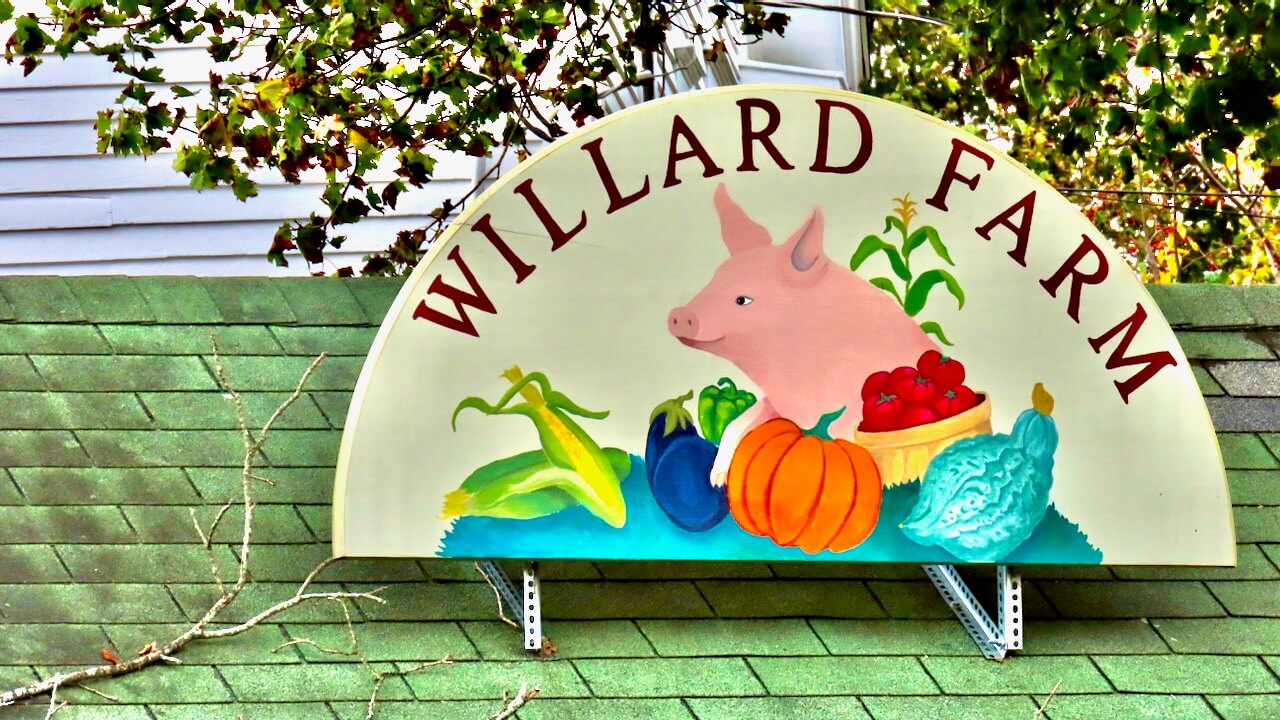
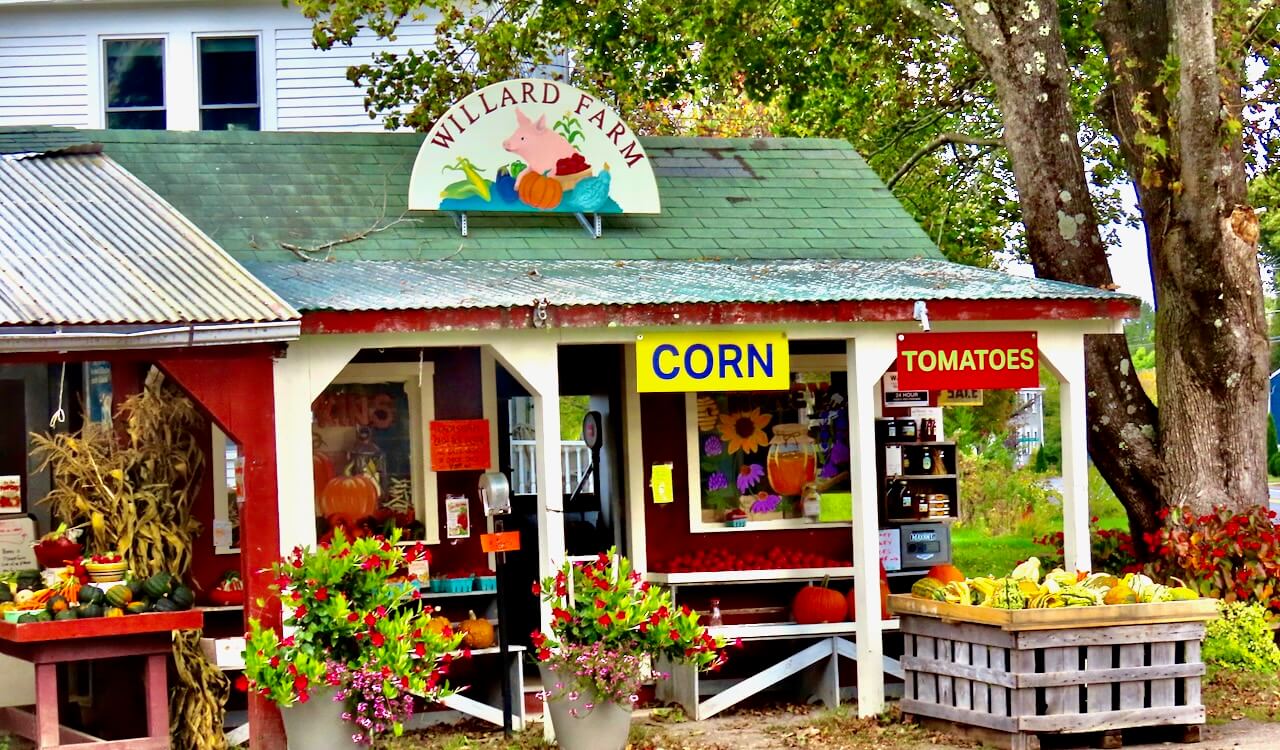
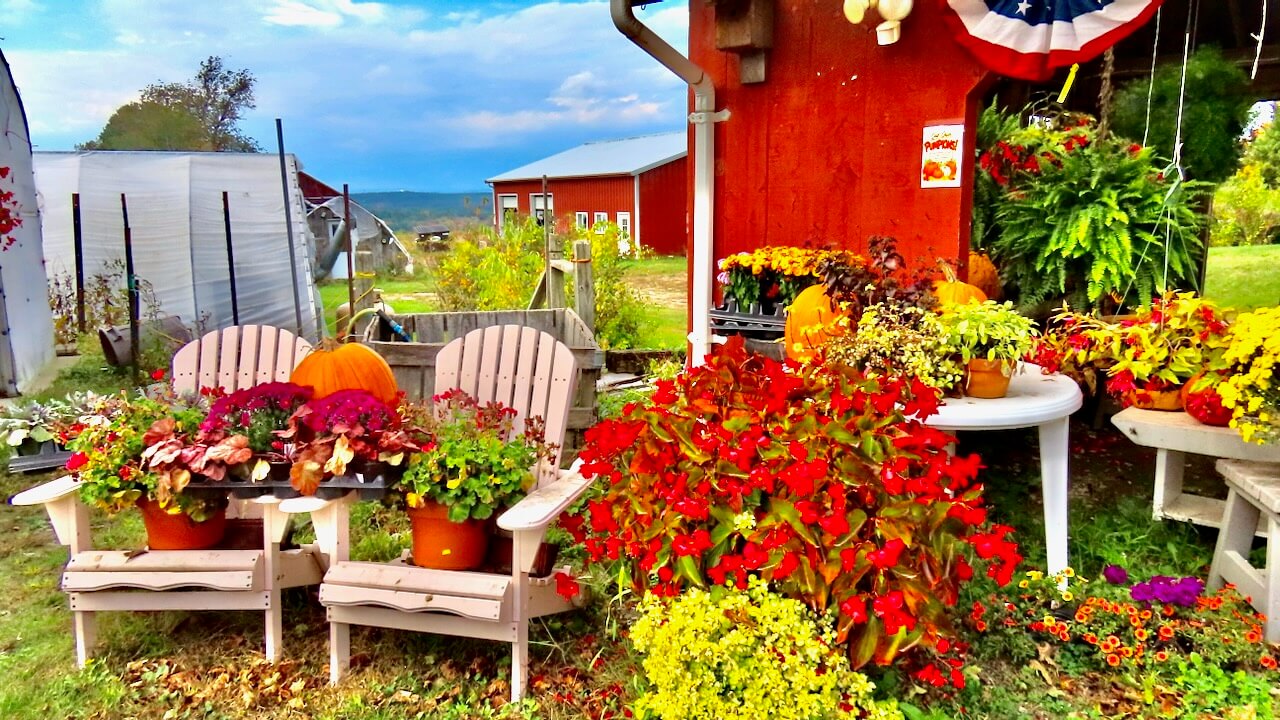
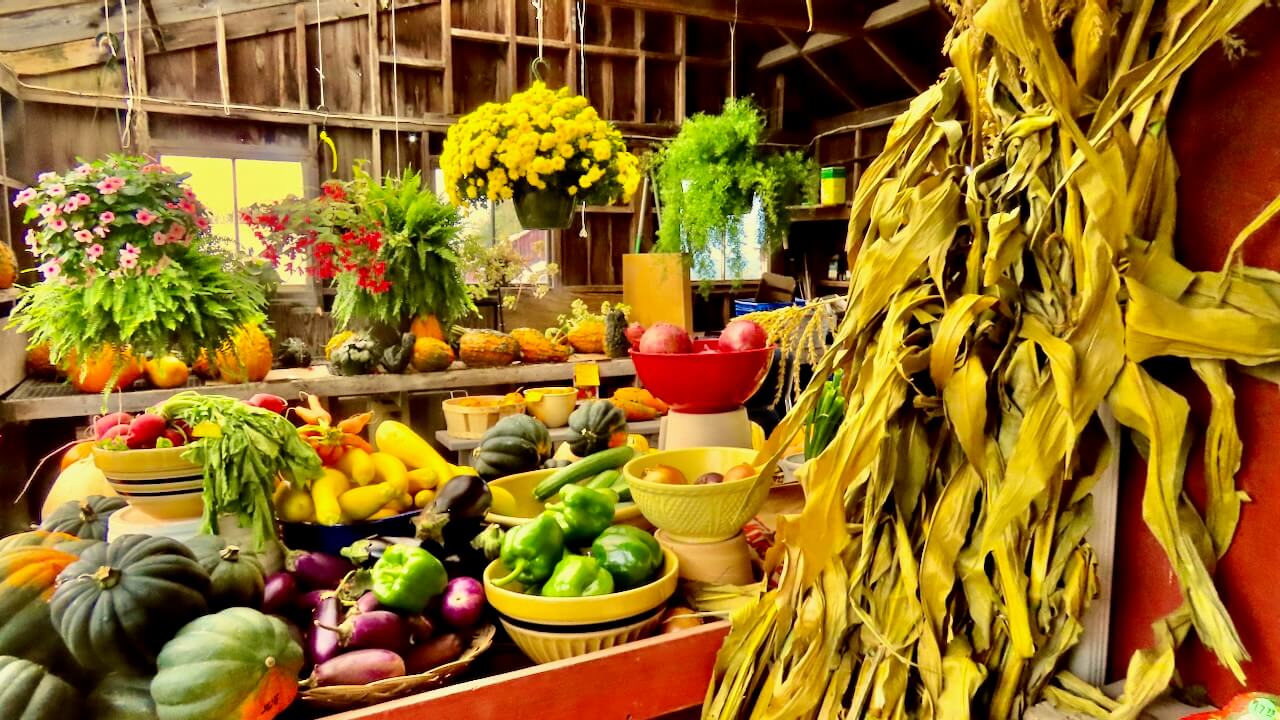
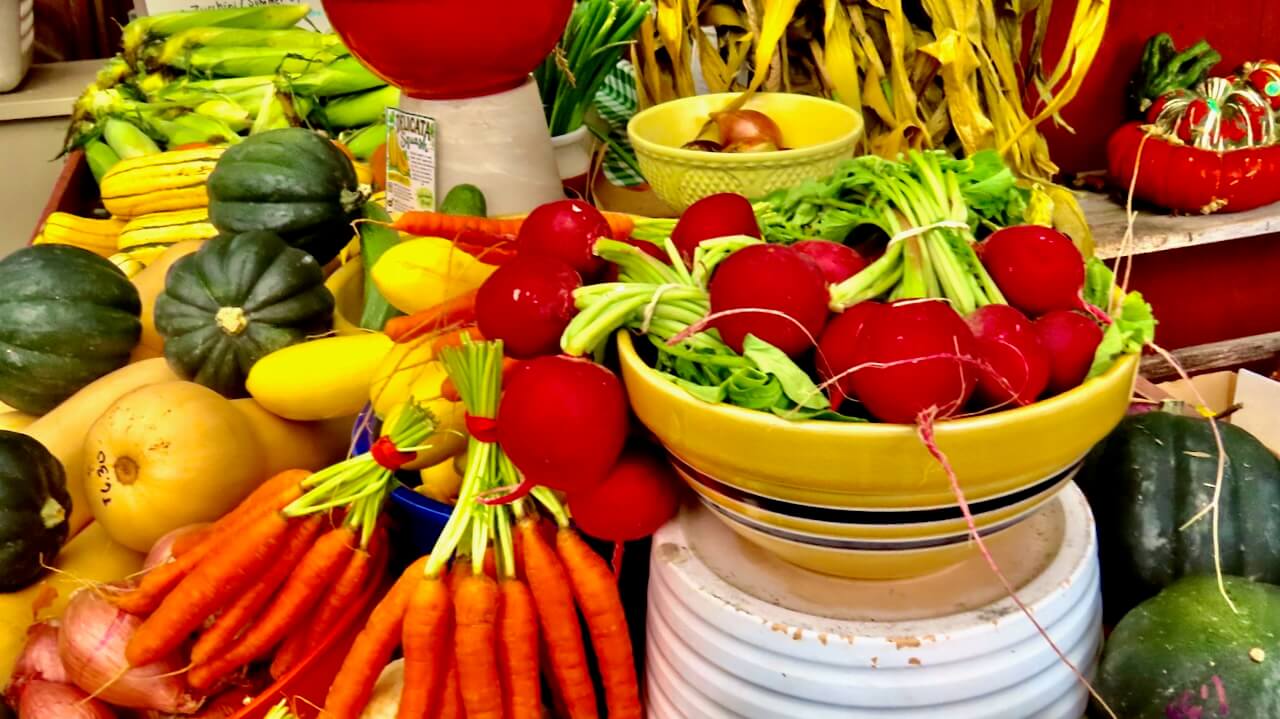
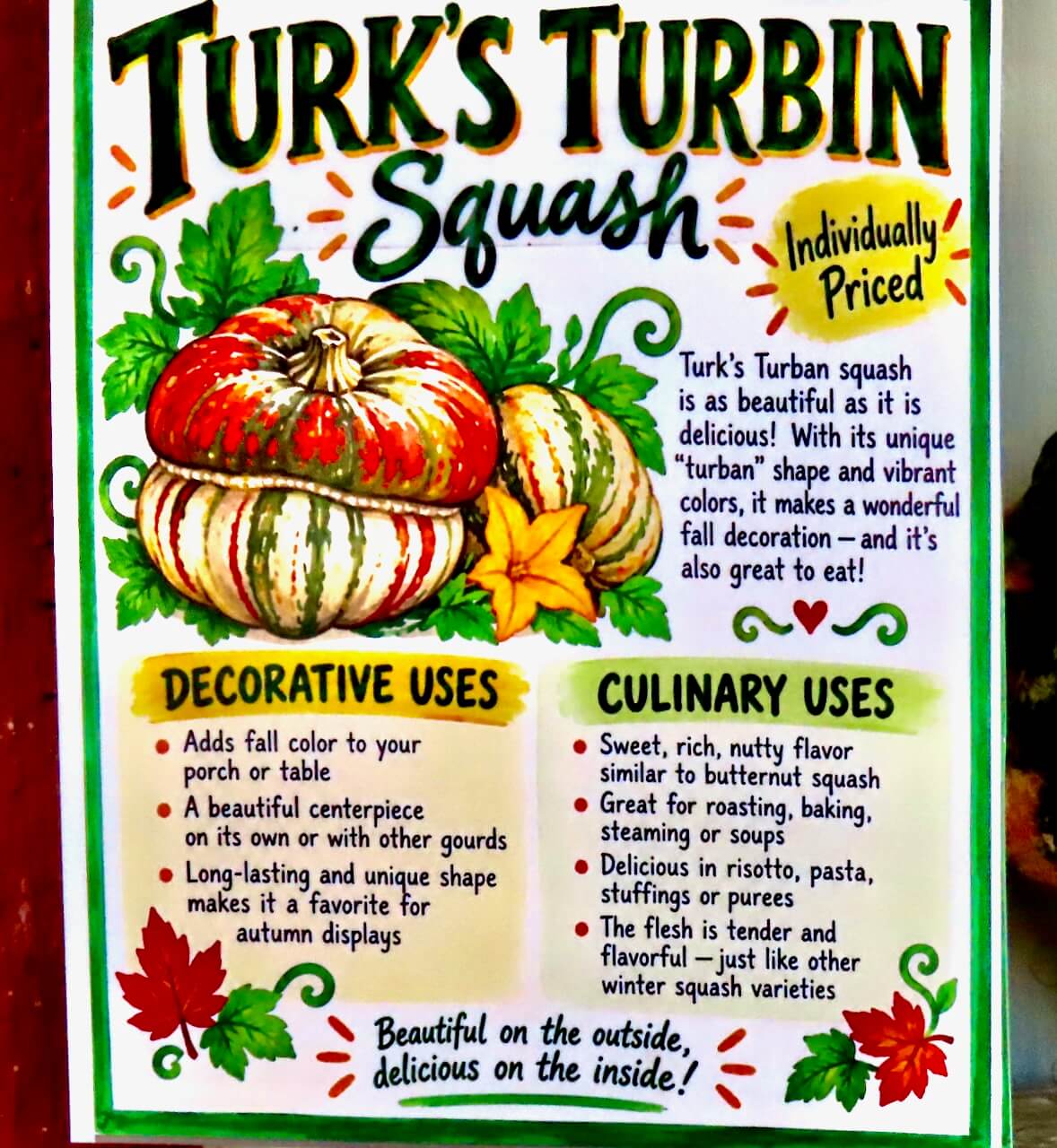
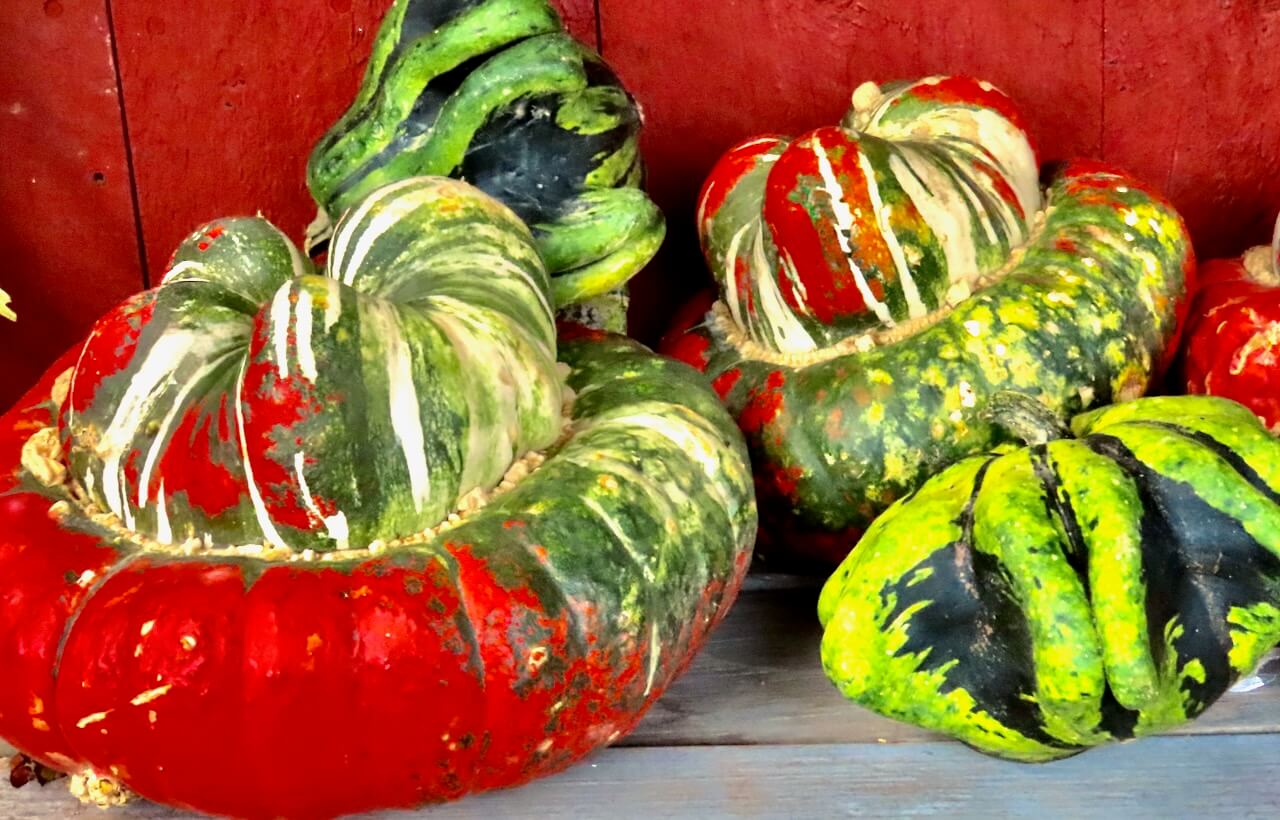
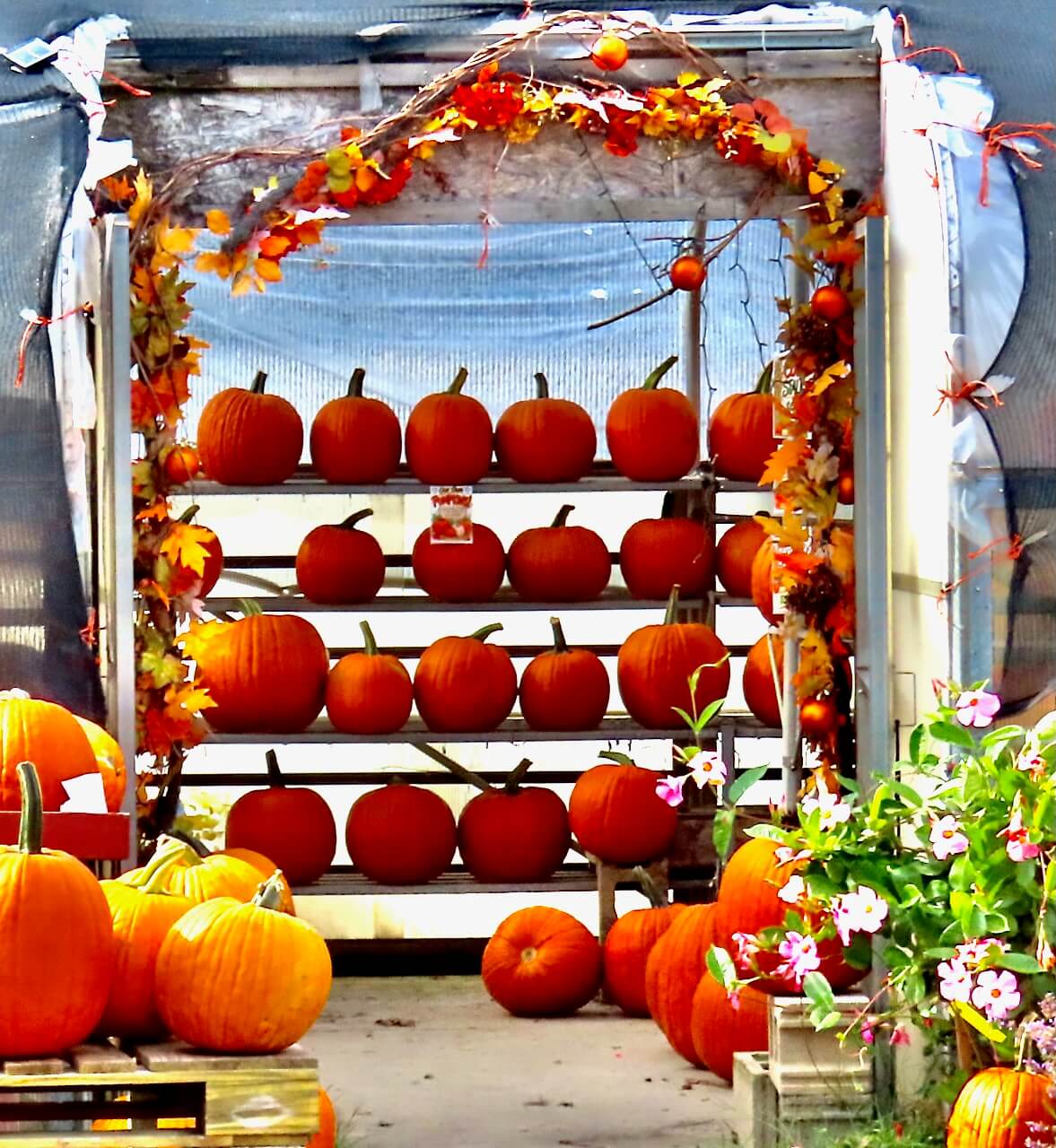
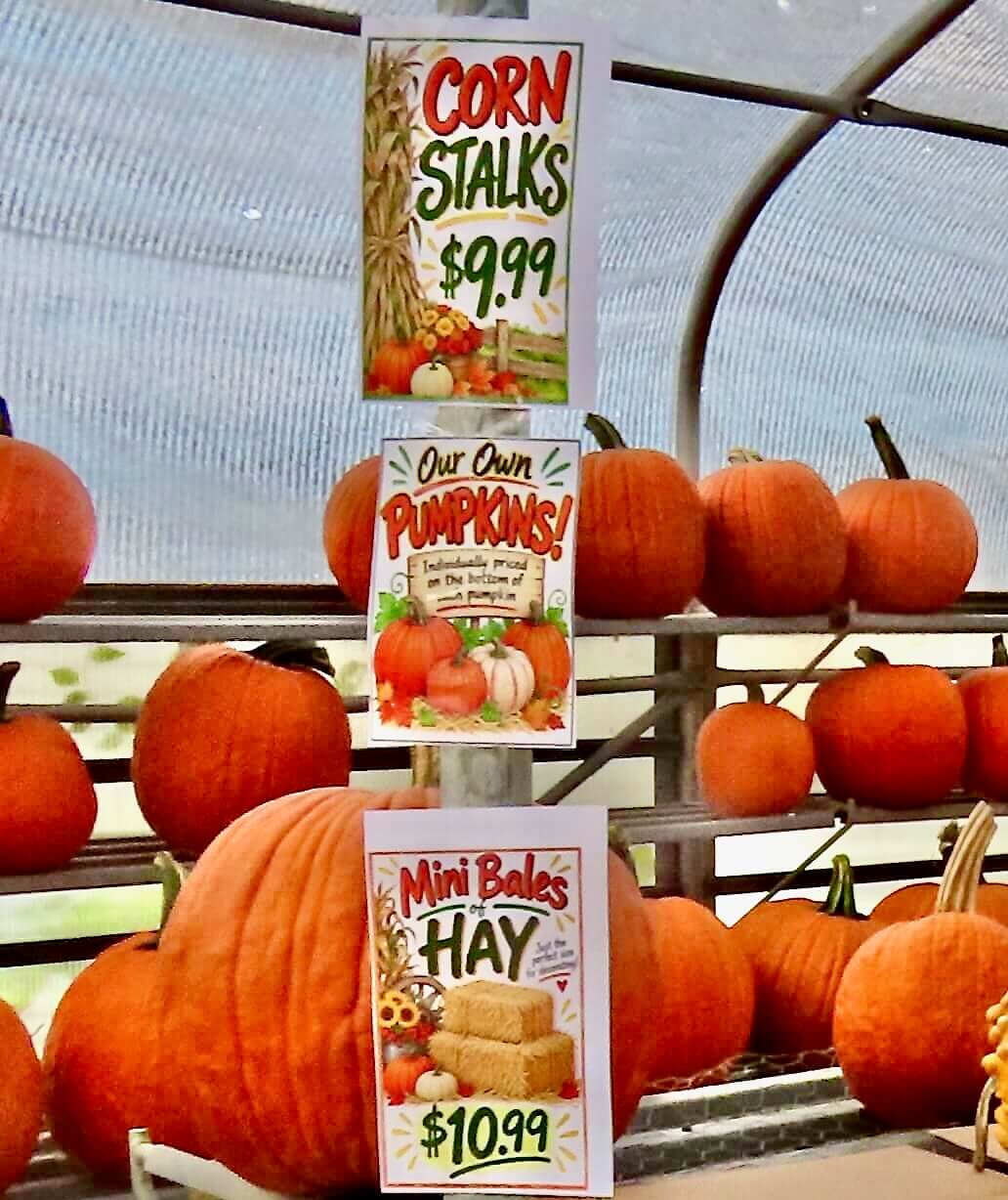
Willard Farm in Harvard, MA, is a legendary, family-owned country landmark revered by locals as the epitome of a classic New England roadside farm stand. Located in the scenic village of Still River, the Willard family has stewarded and farmed this land for hundreds of years.
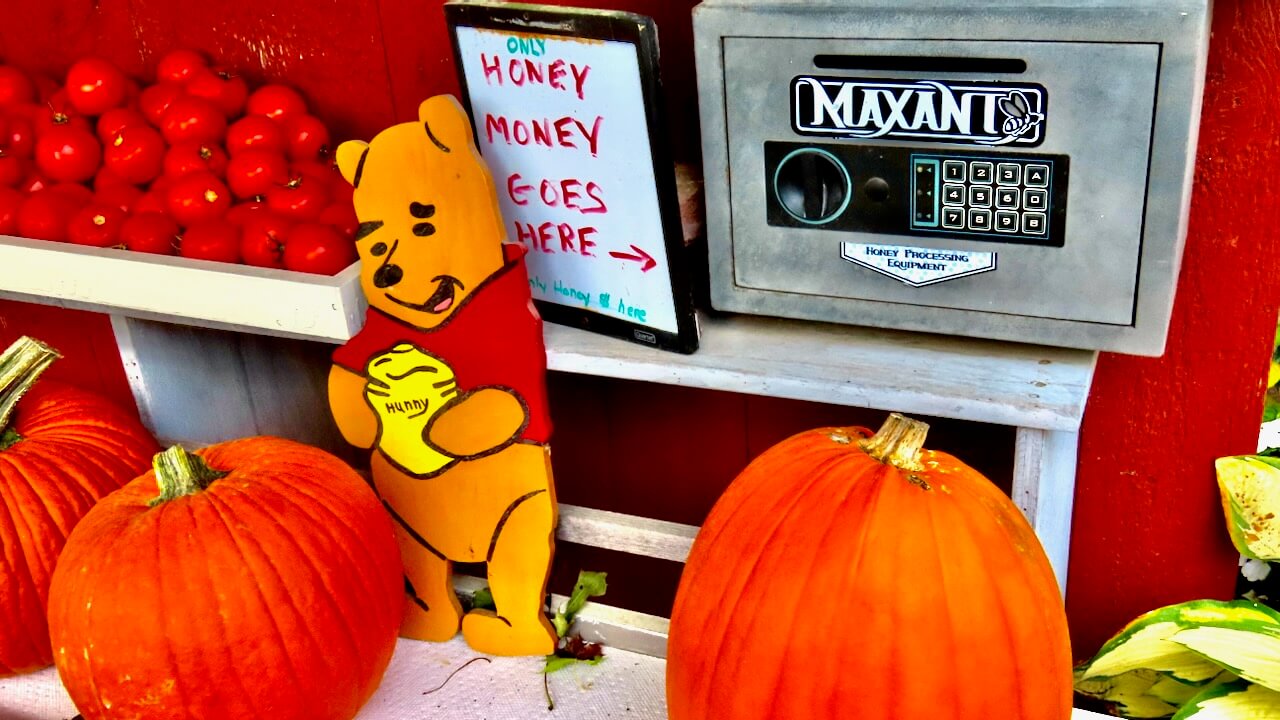
This abundant stand has always run on the honor system. There are no clerks; customers choose their produce and leave cash in a locked box. Today the stand is still unattended, but in addition to cash, checks or Venmo are also accepted. And in a comment on the times, in a far corner sits a sign, “Smile, You’re On Camera”.



Holden, Massachusetts

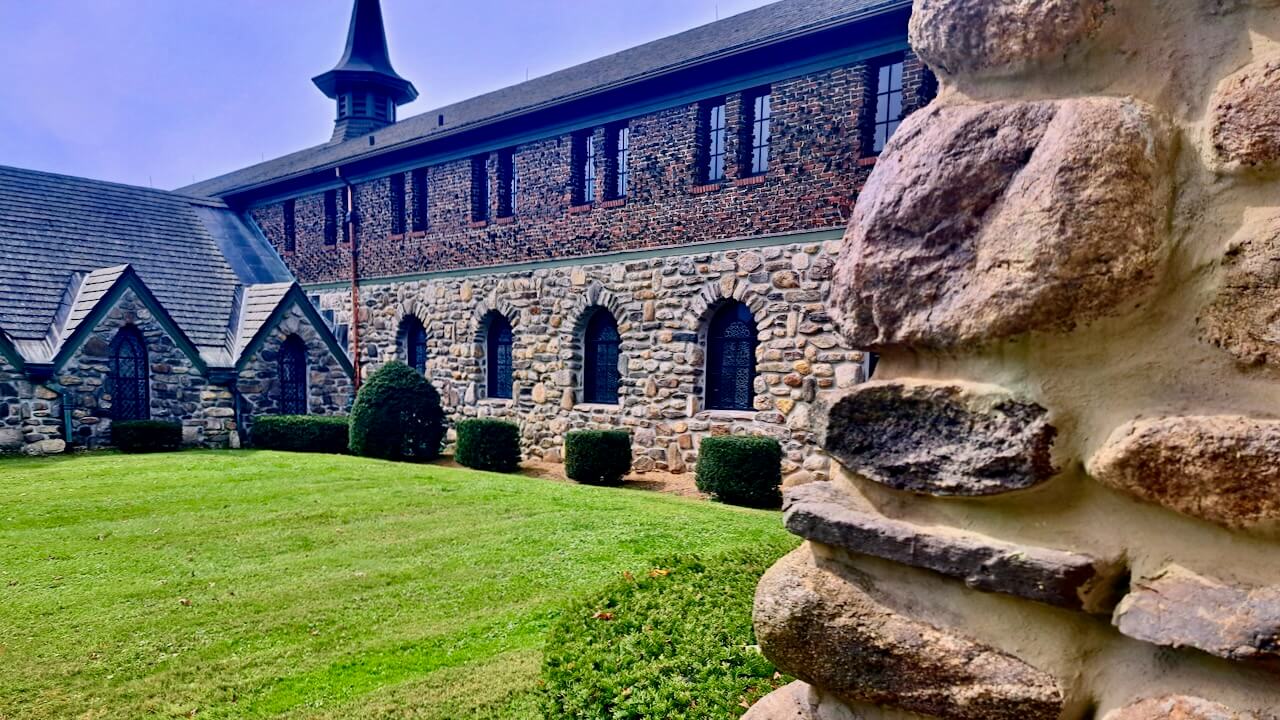
The Trappist monks of St. Joseph’s Abbey in Spencer, Massachusetts constructed their monastery buildings using fieldstones from the nearby fields in the early 1950s, performing the majority of the stone-masonry work themselves.
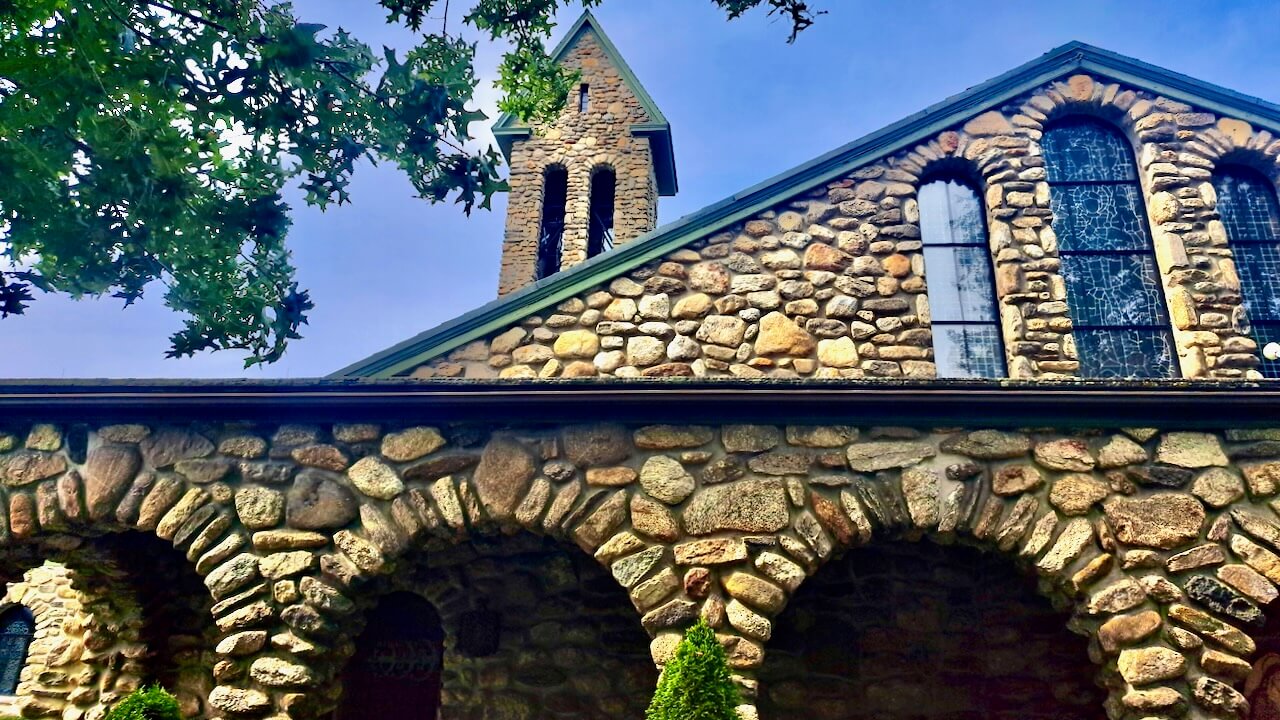
A rustic arched portico at the front is topped by a bell tower.
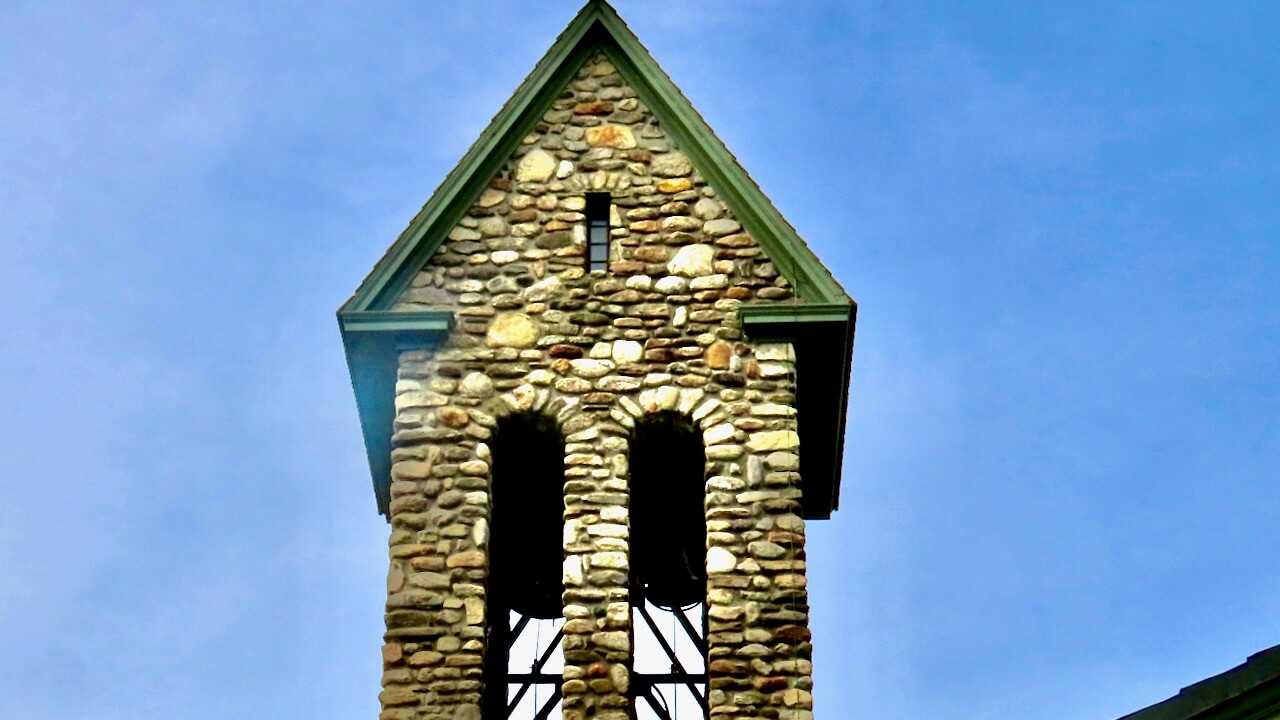
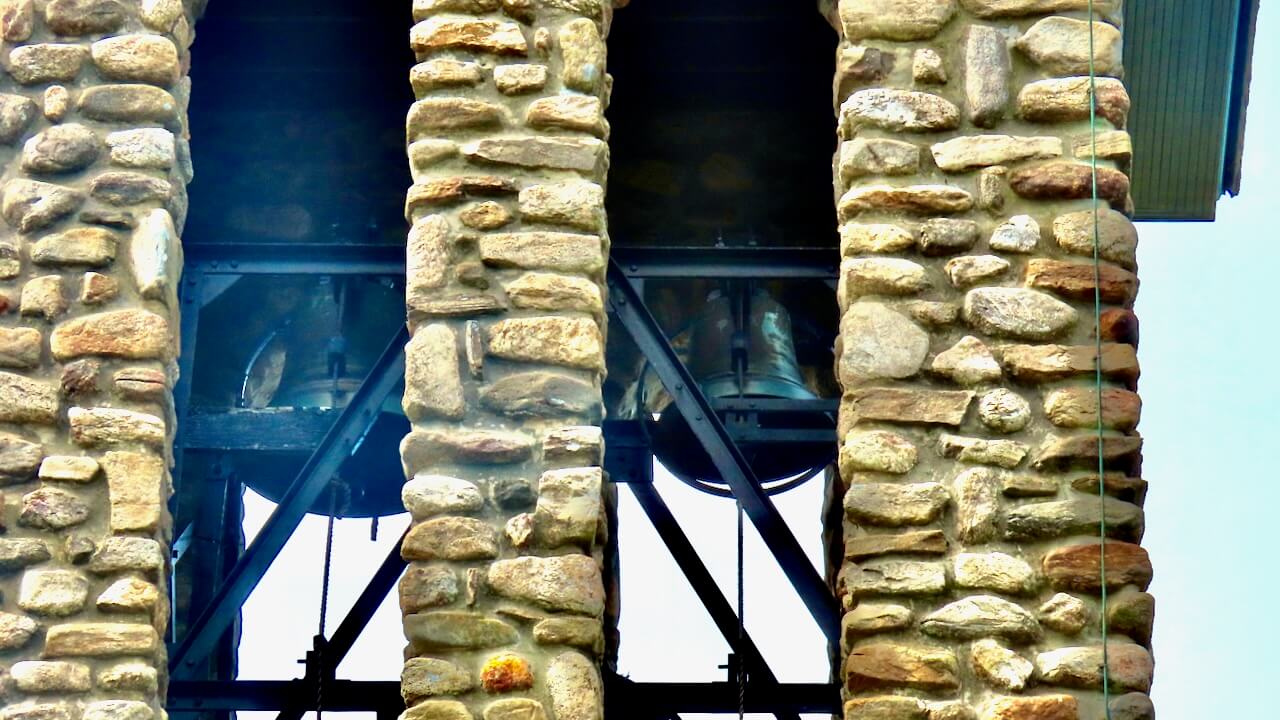
The bells in the Abbey ring seven times each day to call the monks to prayer.

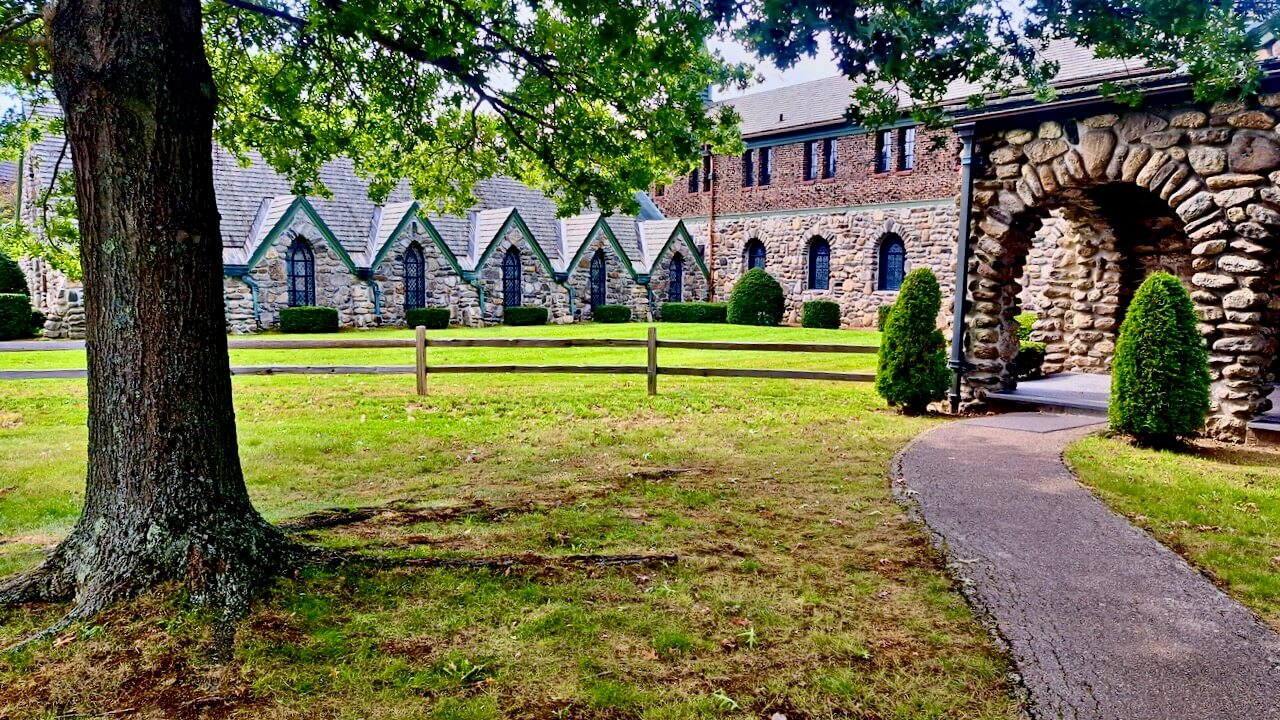
Gothic arched stained glass windows complement the architecture of the rustic stonework.
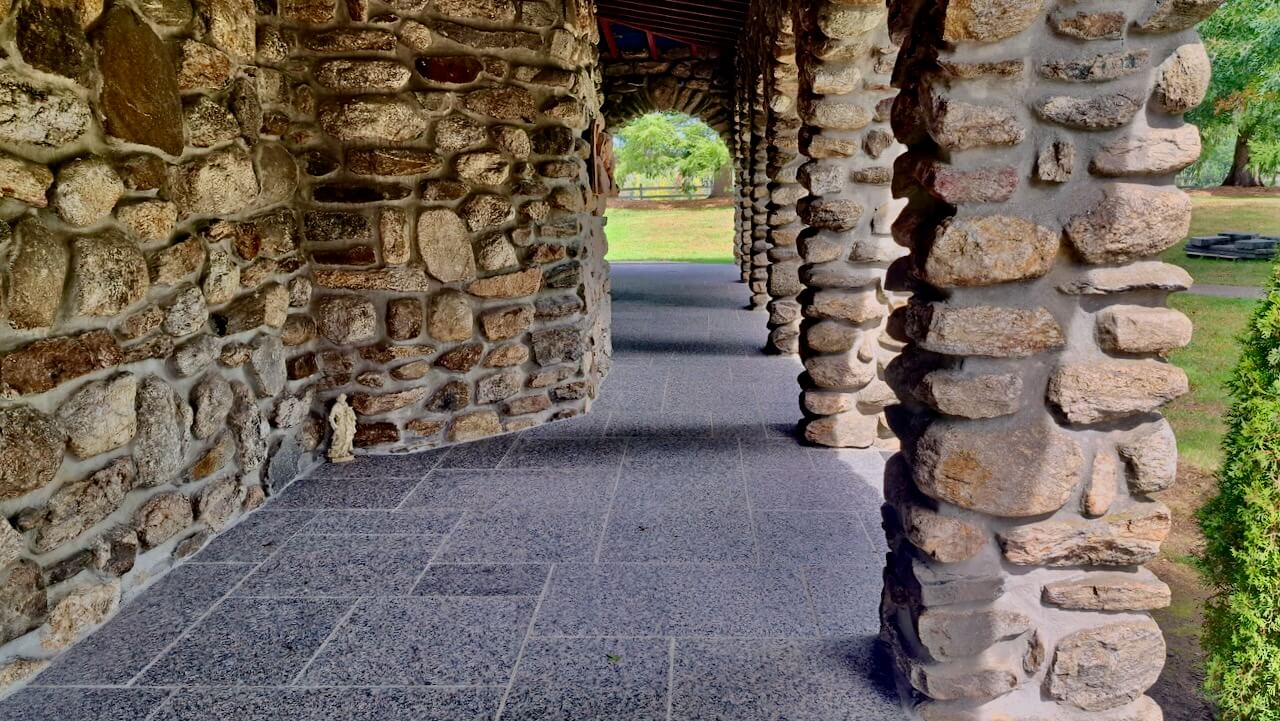
The stone-lined walkway leads to the two visitors’ chapels, one on each side of the altar.
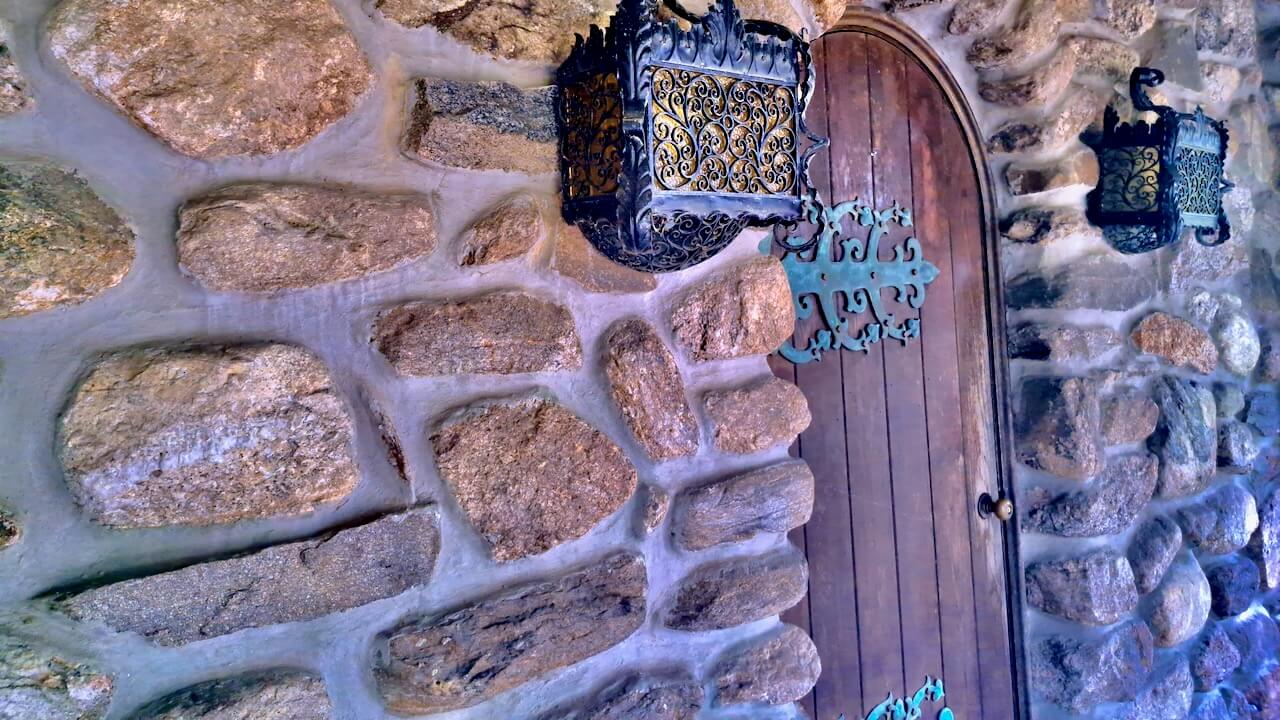
Doors to the two Abbey guest chapels remain open daily for visitors.

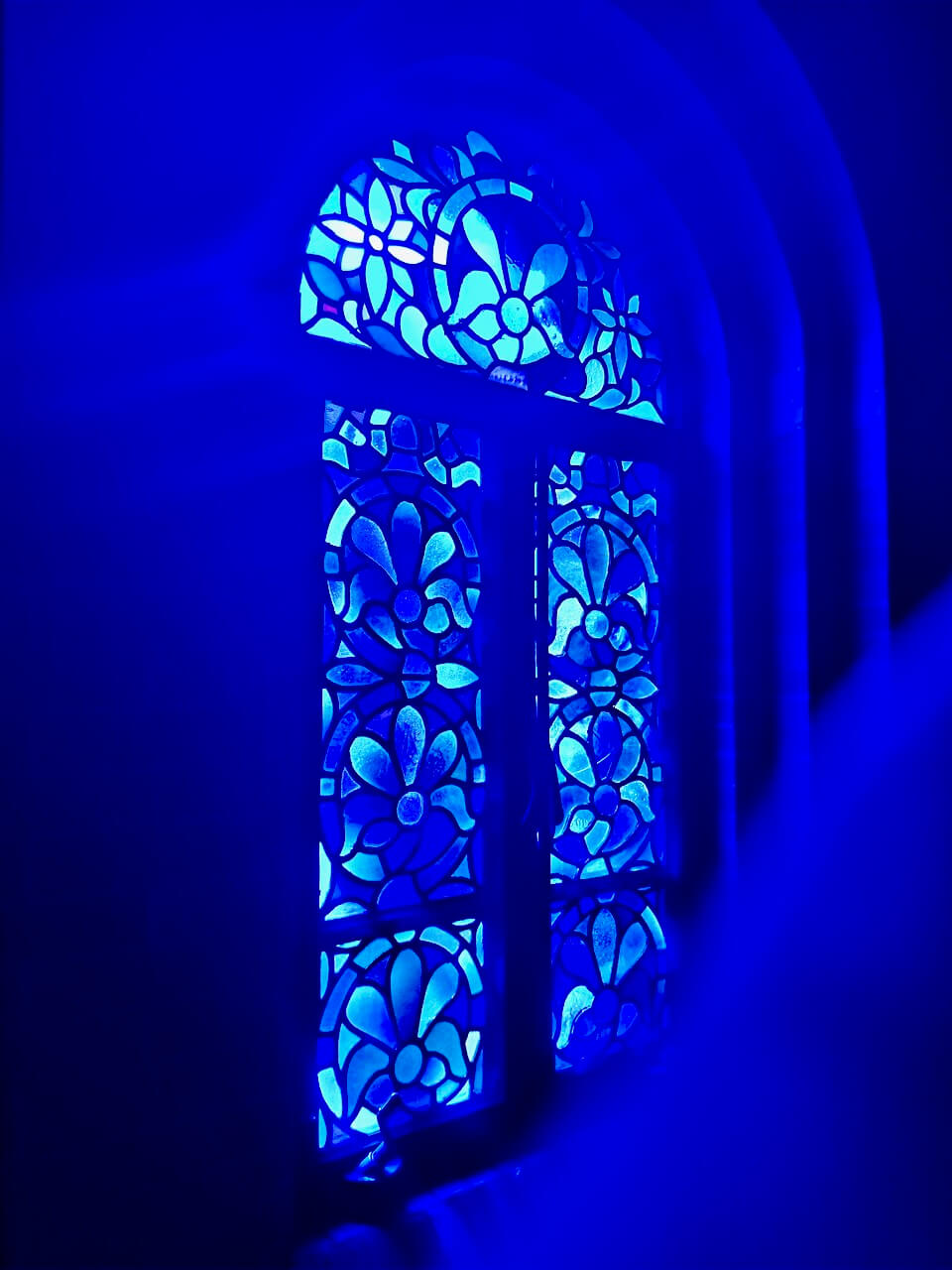
The “Chartres” stained glass from the outside….

surprises and calms visitors as they enter the chapel. The term “Chartres glass,” an intense colbalt blue, mimics the color of the 12th- and 13th-century windows of the Chartres Cathedral in France.
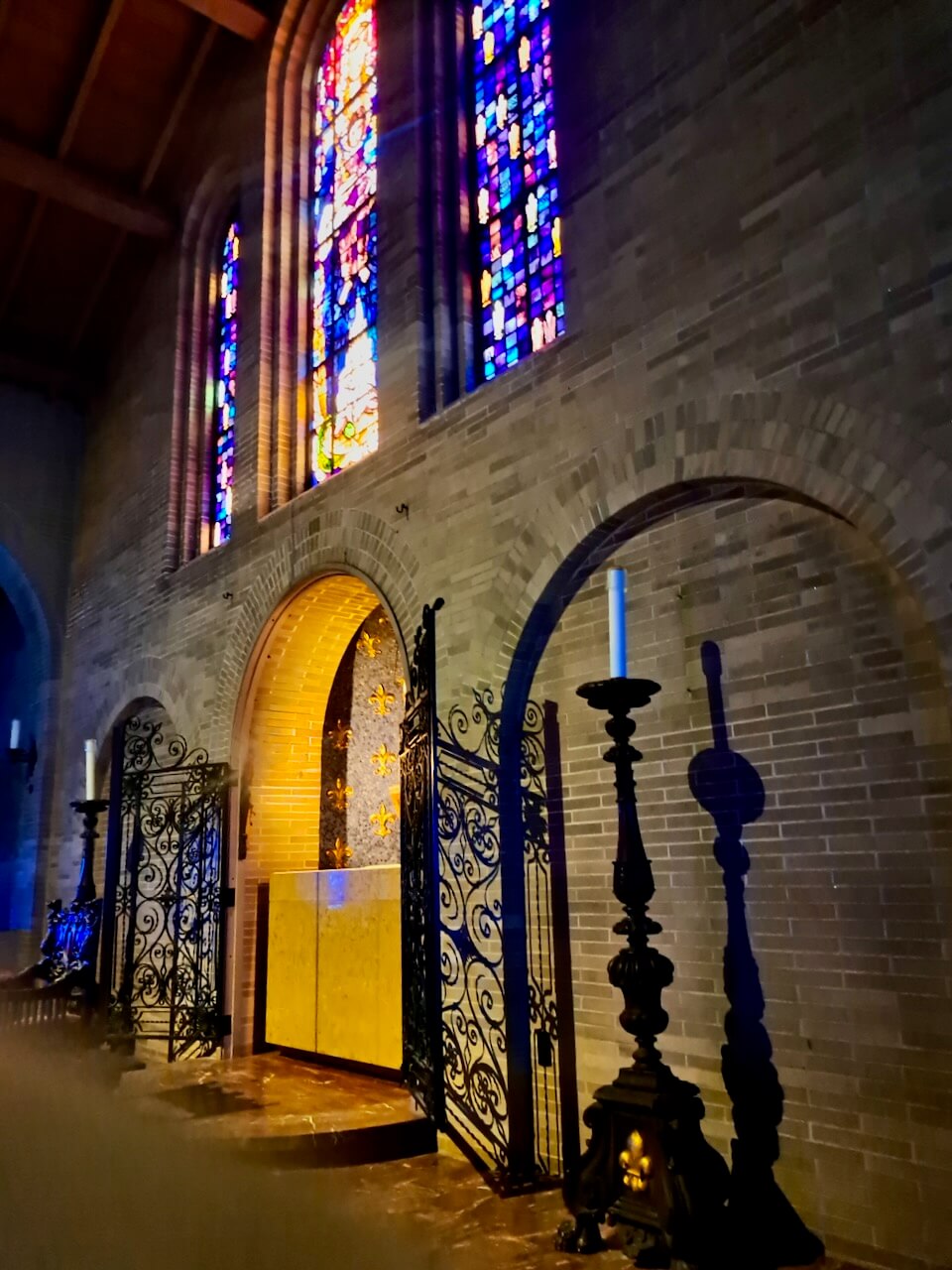

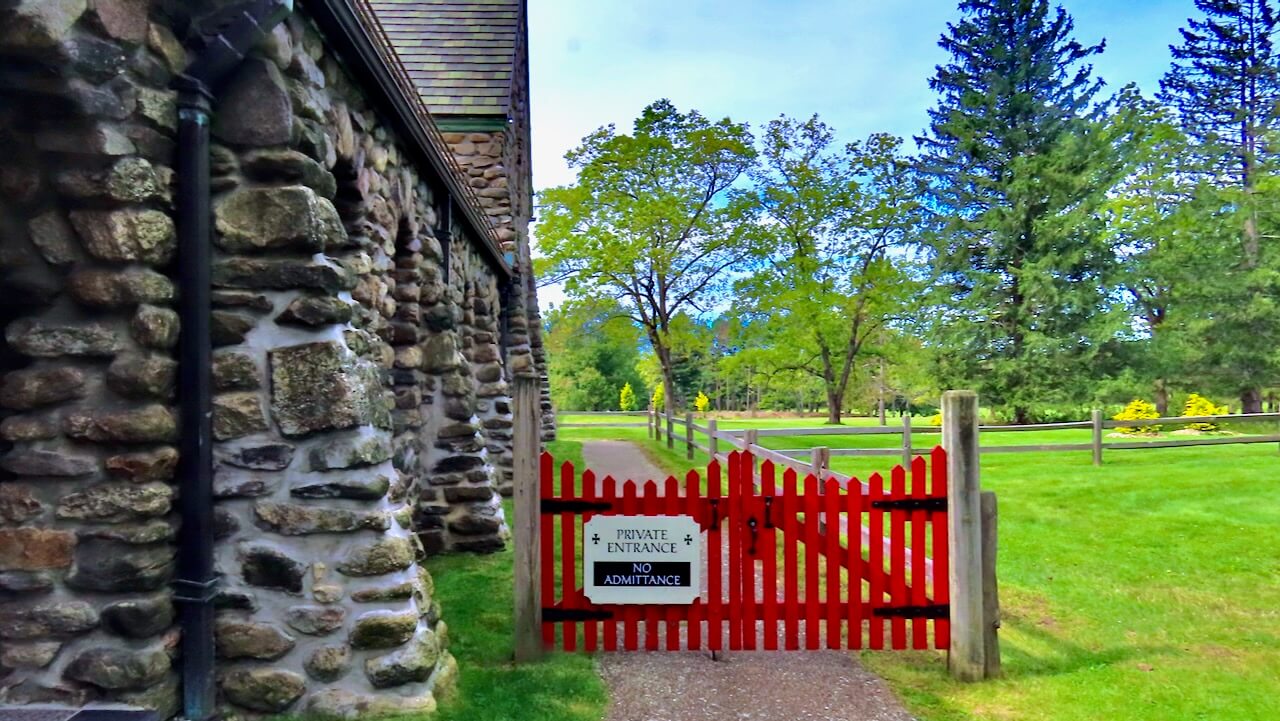
Although the the monastic enclosure is not open to the public, visitors are free to enjoy the grounds at the front of the abbey.
Overlooking the Abbey fields, now with stones cleared, on a windy fall day.

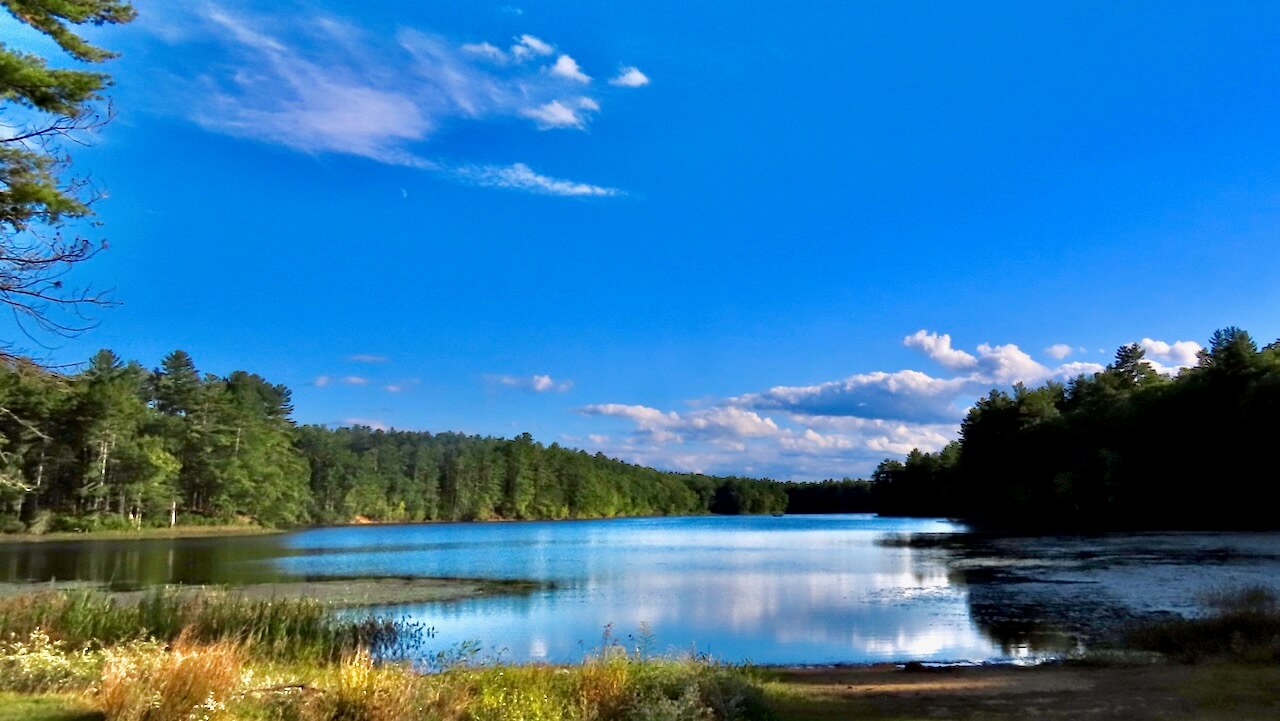
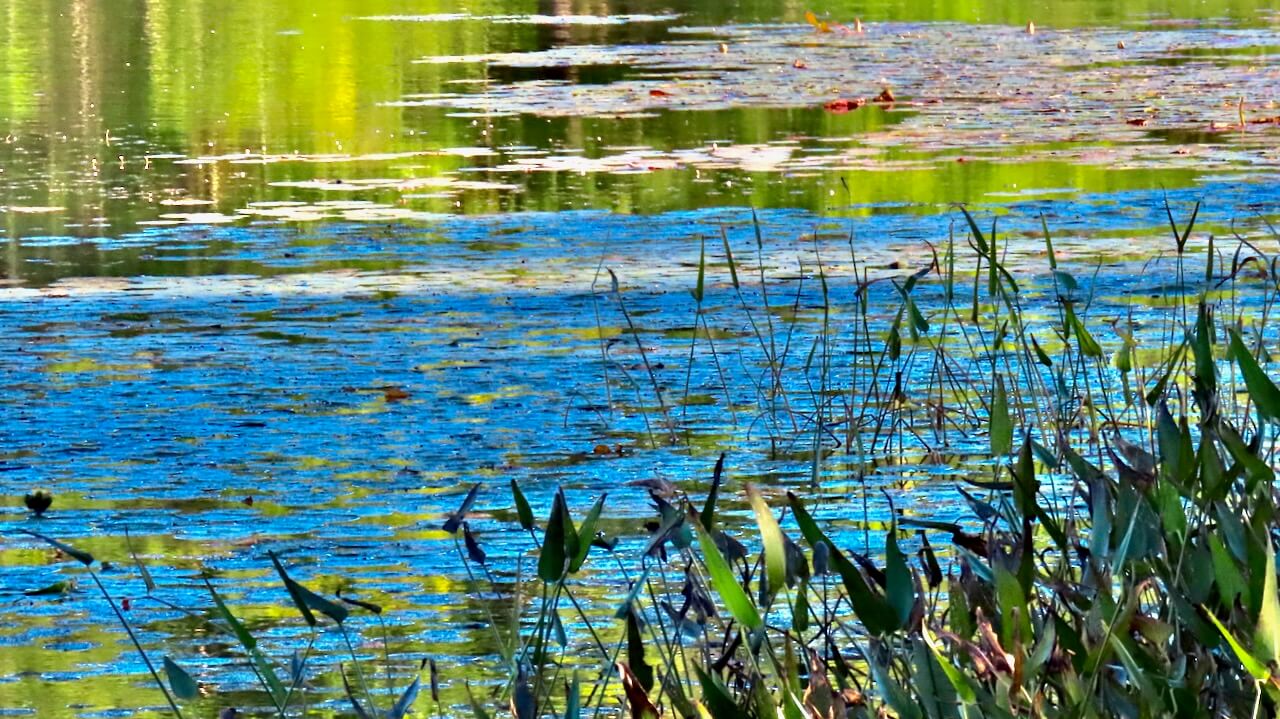
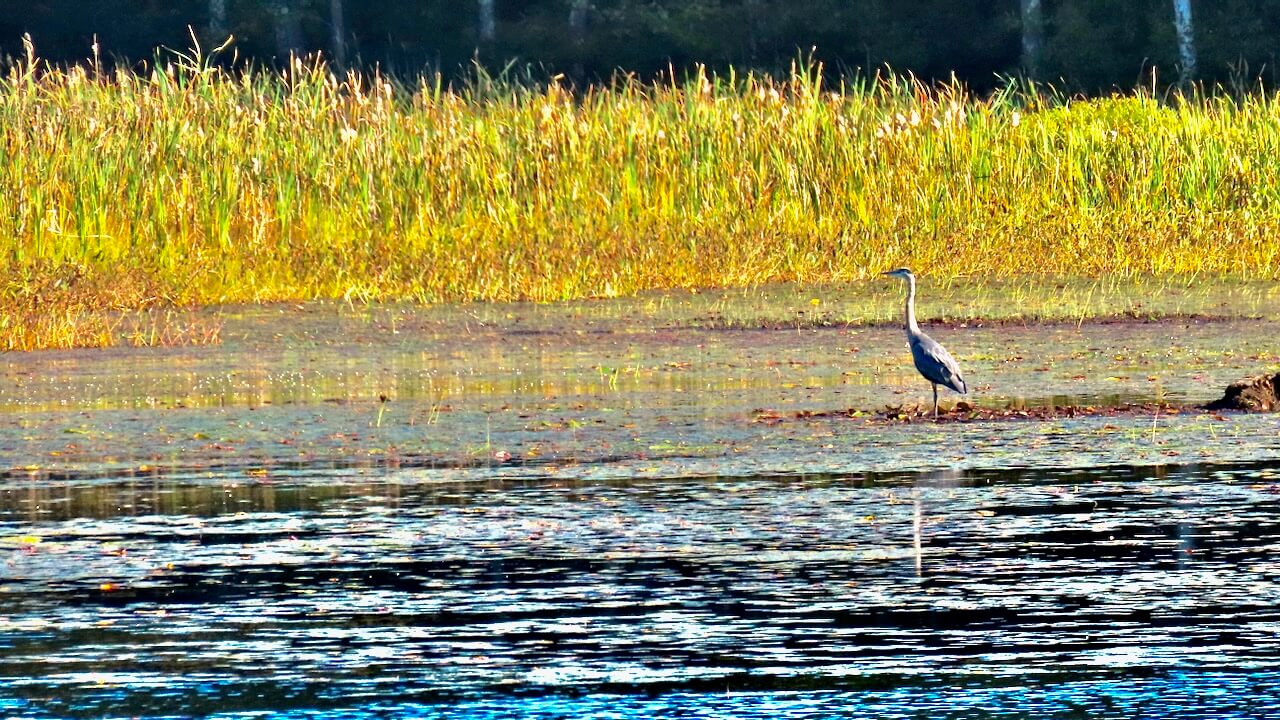
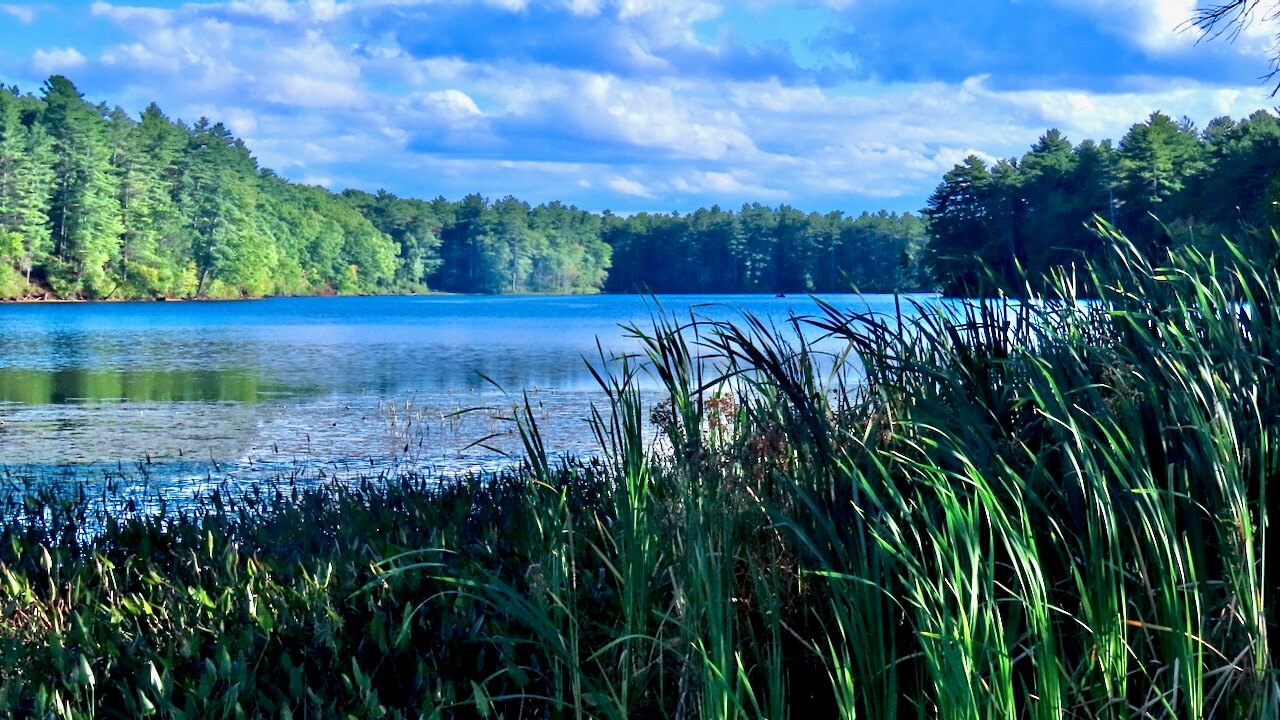
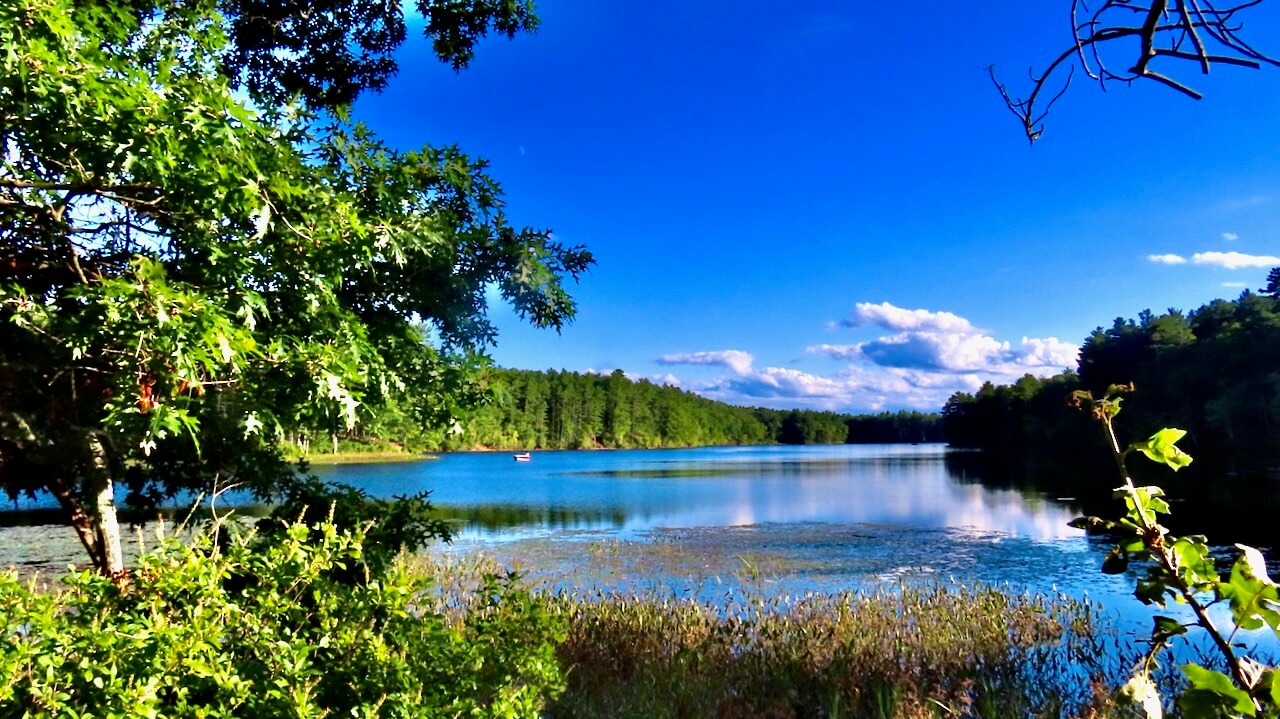
The late afternoon sun casts changing reflections on the water at Long Pond in Rutland, Massachusetts. This peaceful water, part of the local state park, is a short drive from my home.

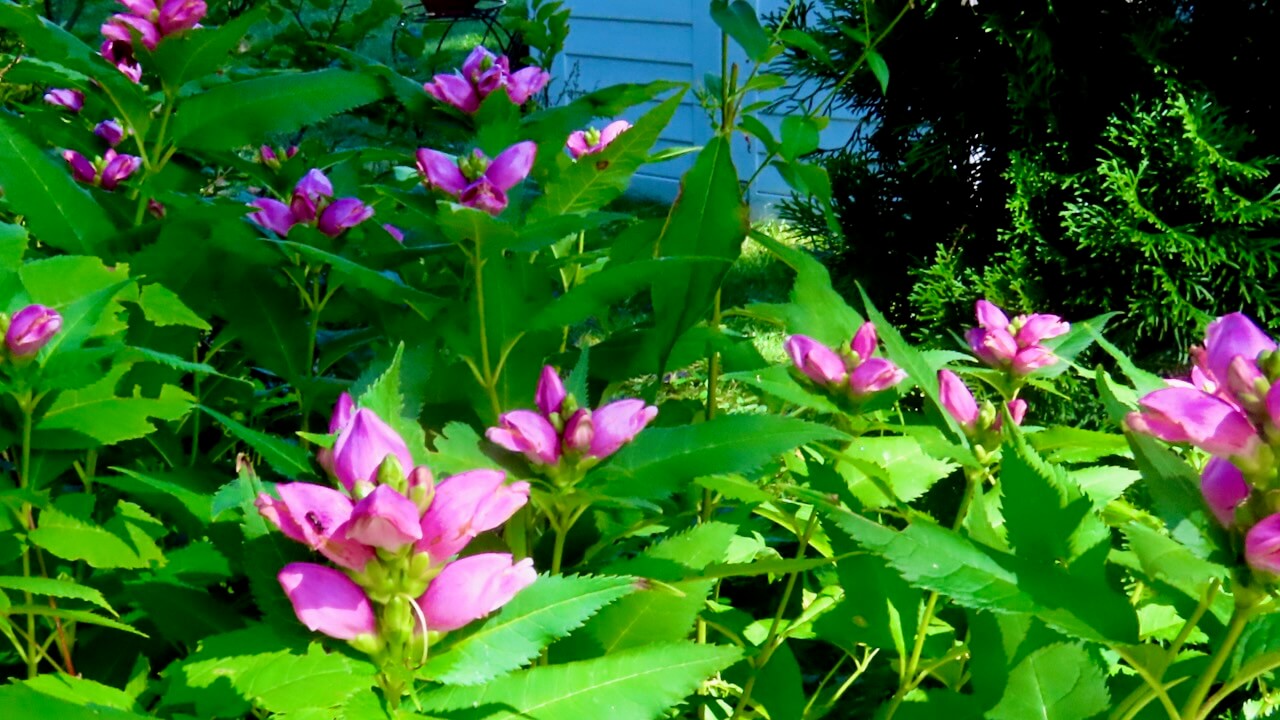
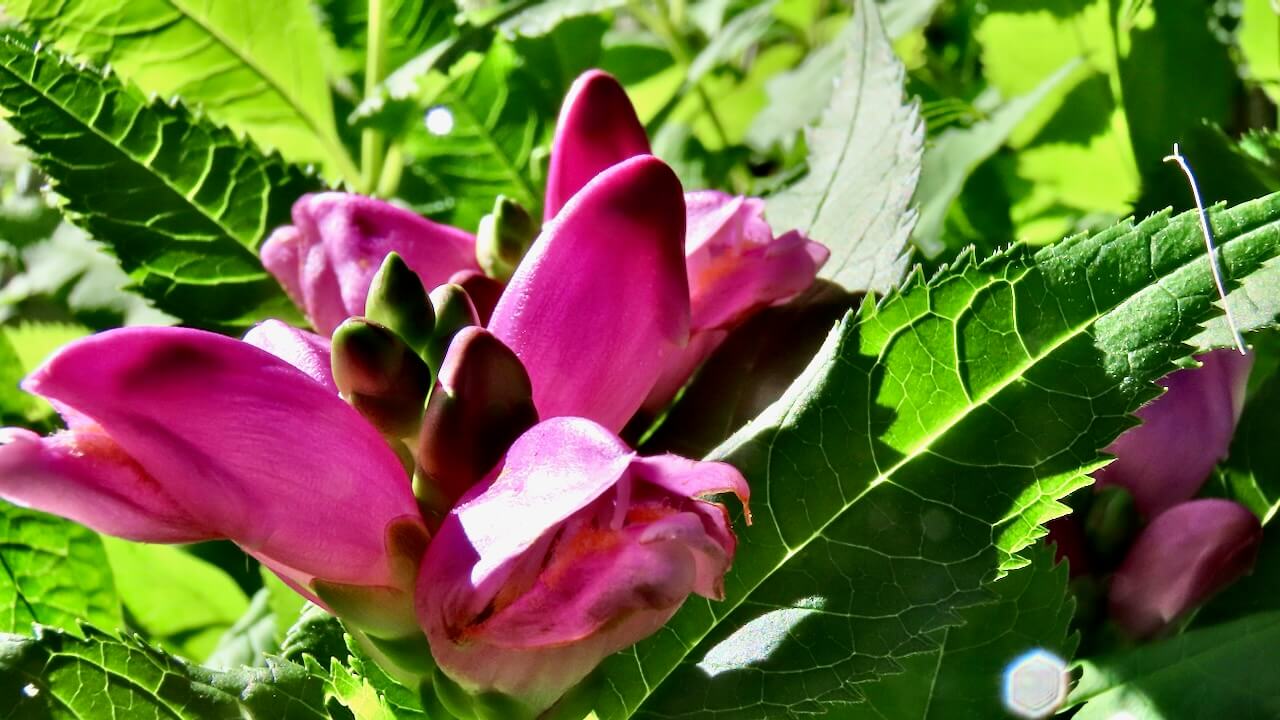
This no-care shade perennial flower is adding welcome early fall color into my garden at a time when many other flowers are past. Its name comes from the distinctive shape of its blossoms, which resemble a turtle’s head with its mouth slightly open. It can bloom through September and into October, depending on the weather.
“Slow and steady wins the race.” –Aesop

Each year the small Central Massachusetts town of Sterling, Massachusetts (population 8000) welcomes around 40,000 visitors to the Sterling Fair over a three day period. How fitting that each year the ukulele group I belong to, The Sterling Strummers, gives a concert there.
After the concert, I took some quick captures of the sights on my phone. The brightly colored billboards stood out against the clear blue sky, and later I learned a few things about fast food trends and classic old-fashioned ride decor, as well.
“Fair” warning: Many of the following photos are not for weight watchers!




Deep fried oreos were very popular. You can make them at home with or without a deep fryer.
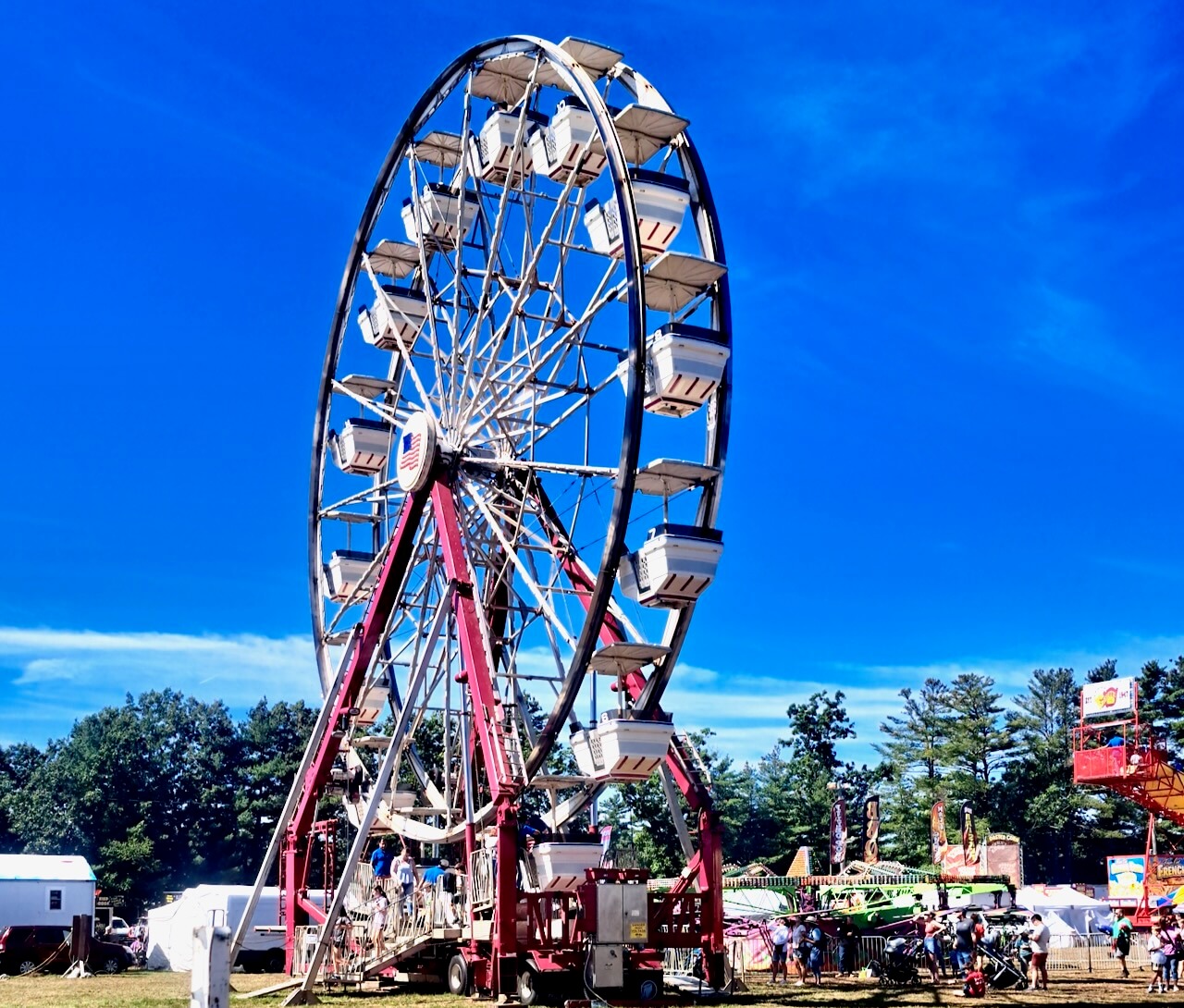
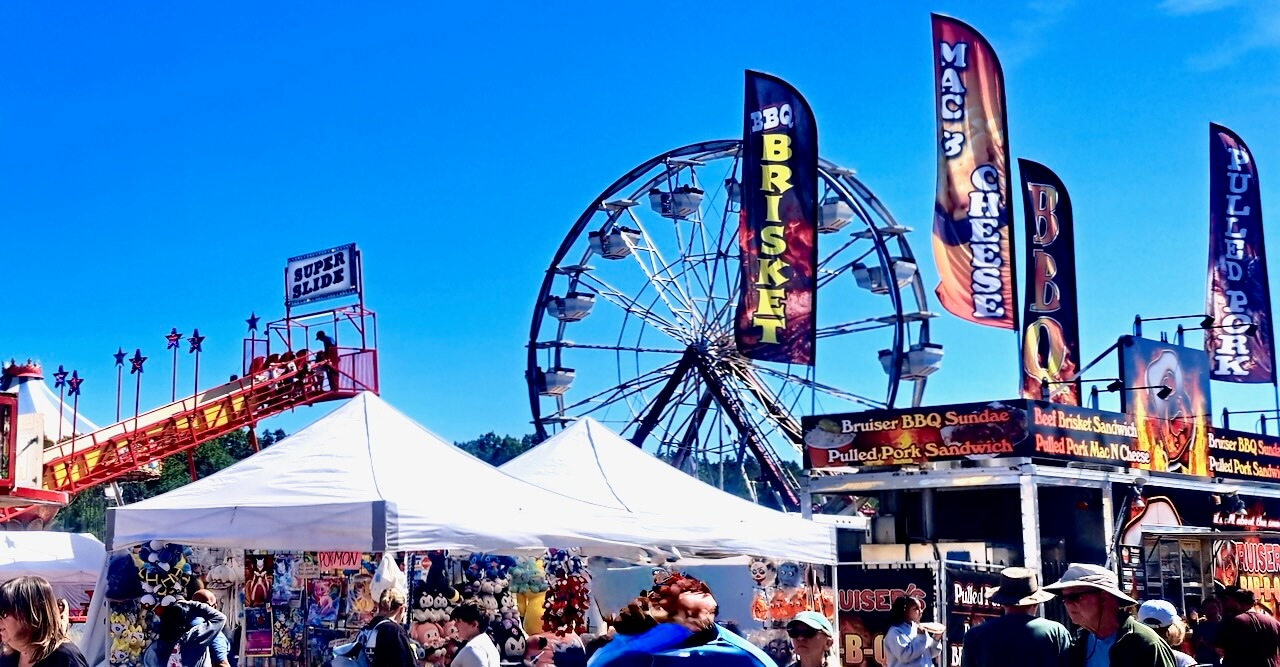

No fair can be without a classic Ferris Wheel, originally designed as a monument to outshine the Eiffel Tower.

The Silly Symphony Swings are decorated with Venetian scenes, dating back to European designs.


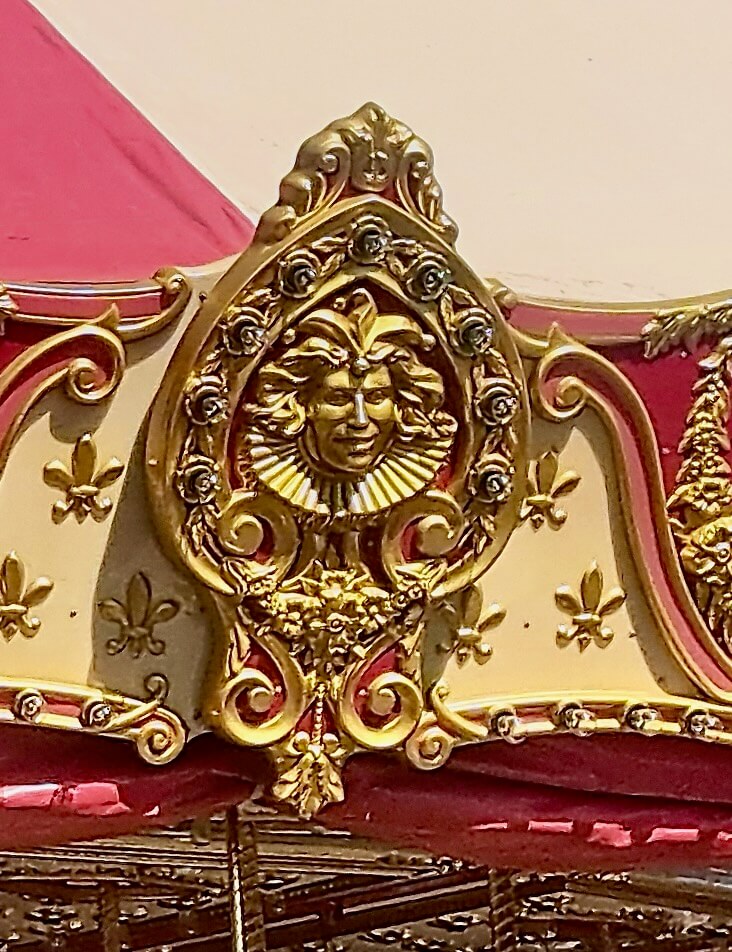
The carousel has ornate jester faces, which have their roots in medieval tournaments and festivals. Decorations served to hide the mechanical work under the roof.

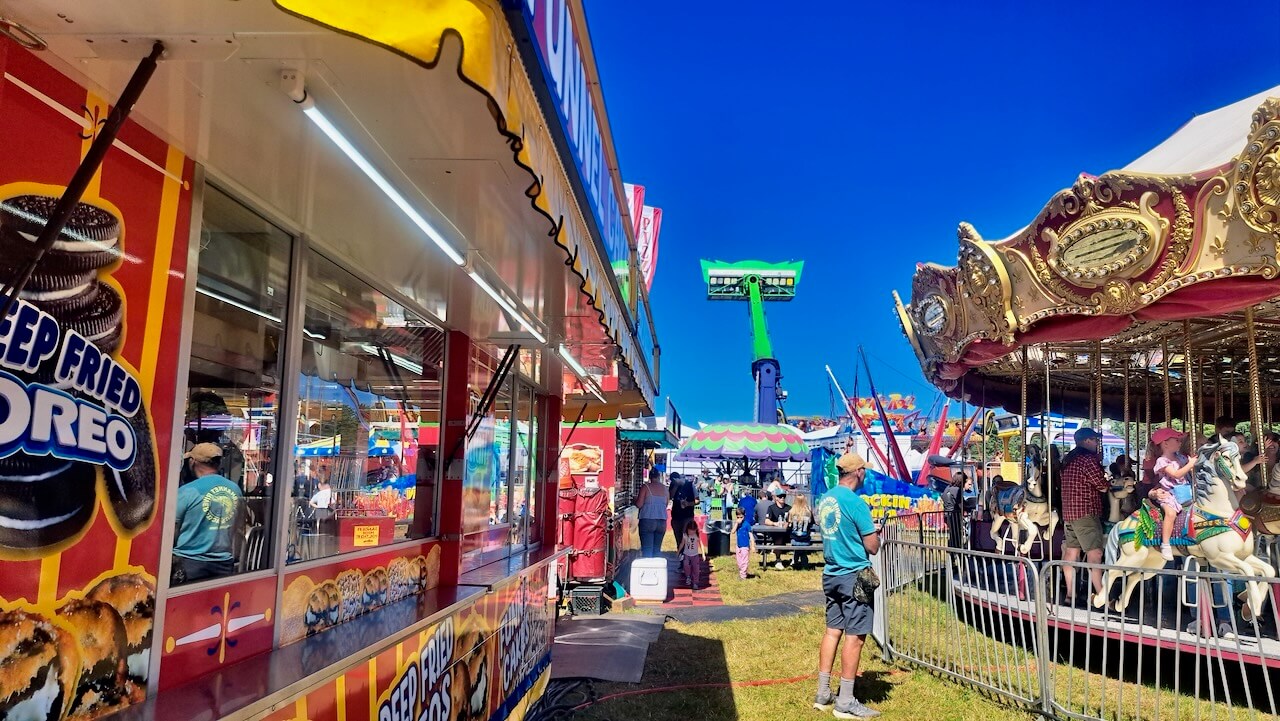


Dubai coffee, pizza, cannoli or candy apples? It’s all here in Sterling, Massachusetts.


Rutland State Park, Rutland, Massachusetts

Corn on the cob is best cooked as soon as possible after harvesting, as the natural sugars in corn start turning to starch as soon as it is picked.
How does corn get on the internet? It uses a cobweb.
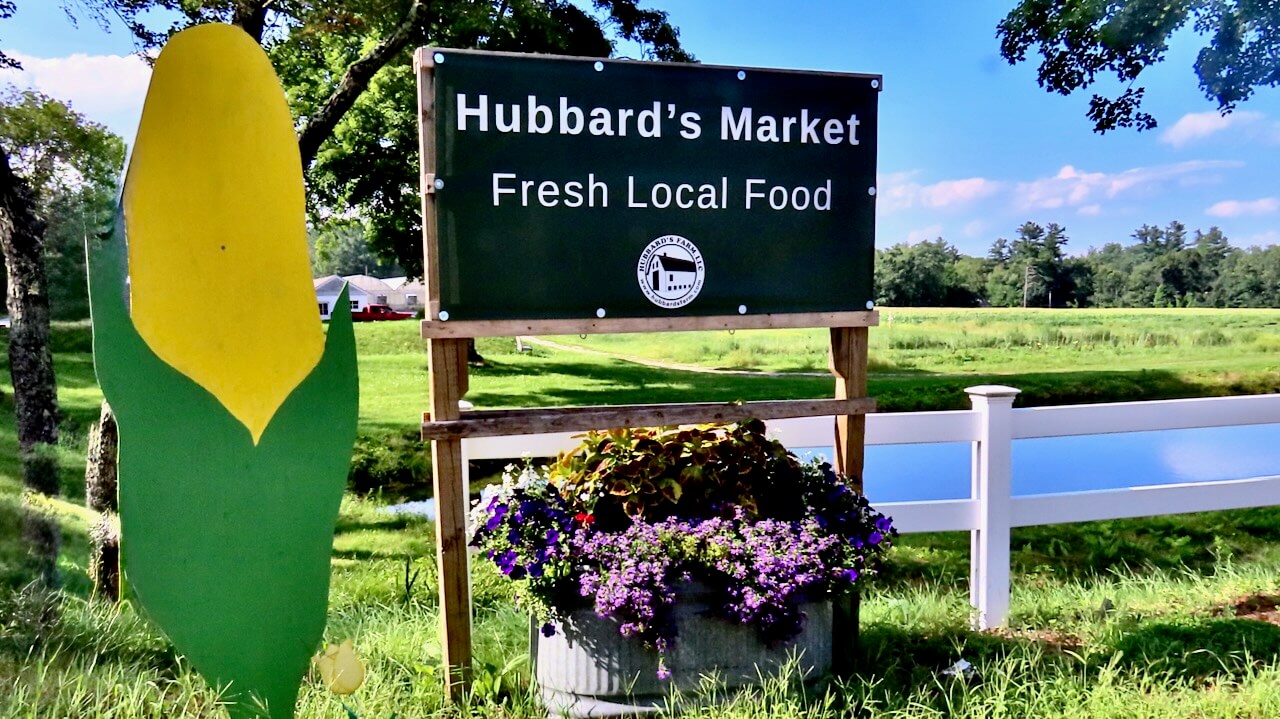
At this farm stand, you could select ears of corn harvested from nearby fields.
Why did the corn stalk win an award? Because it was outstanding in its field.
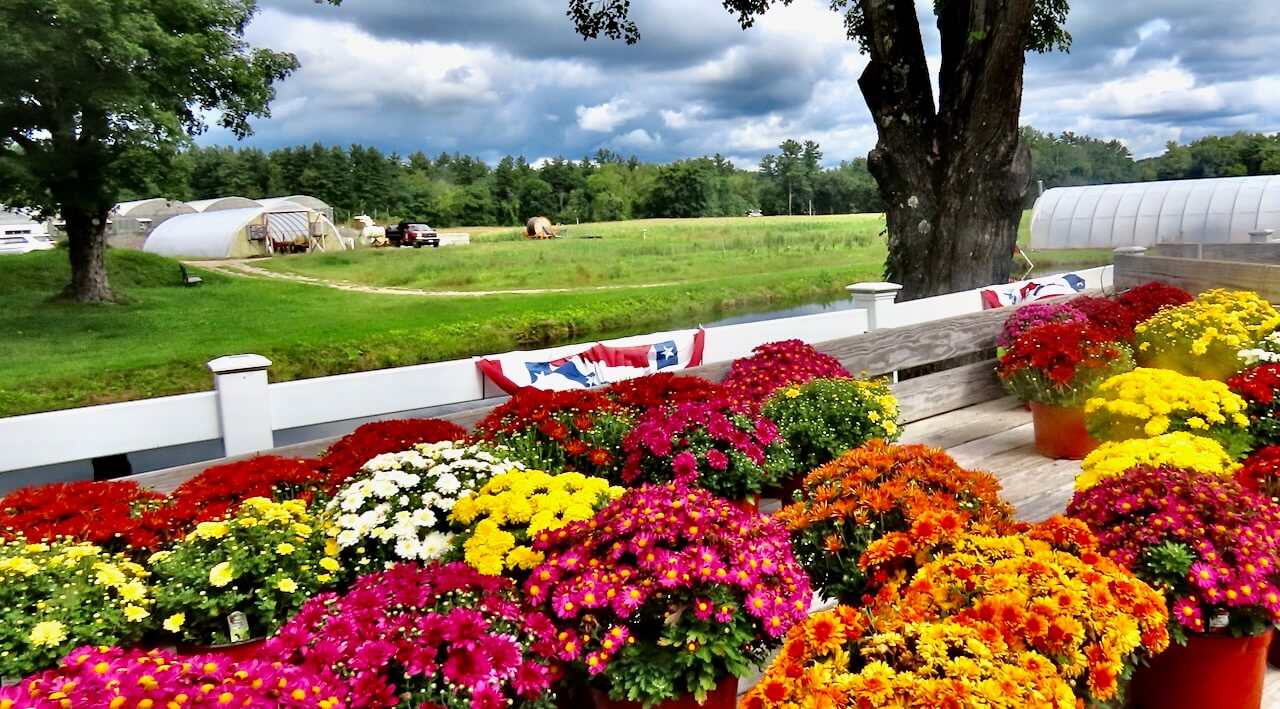
You could also pick up a mum that was grown in the greenhouses on the left.
When is the corn ready? Mum’s the word.
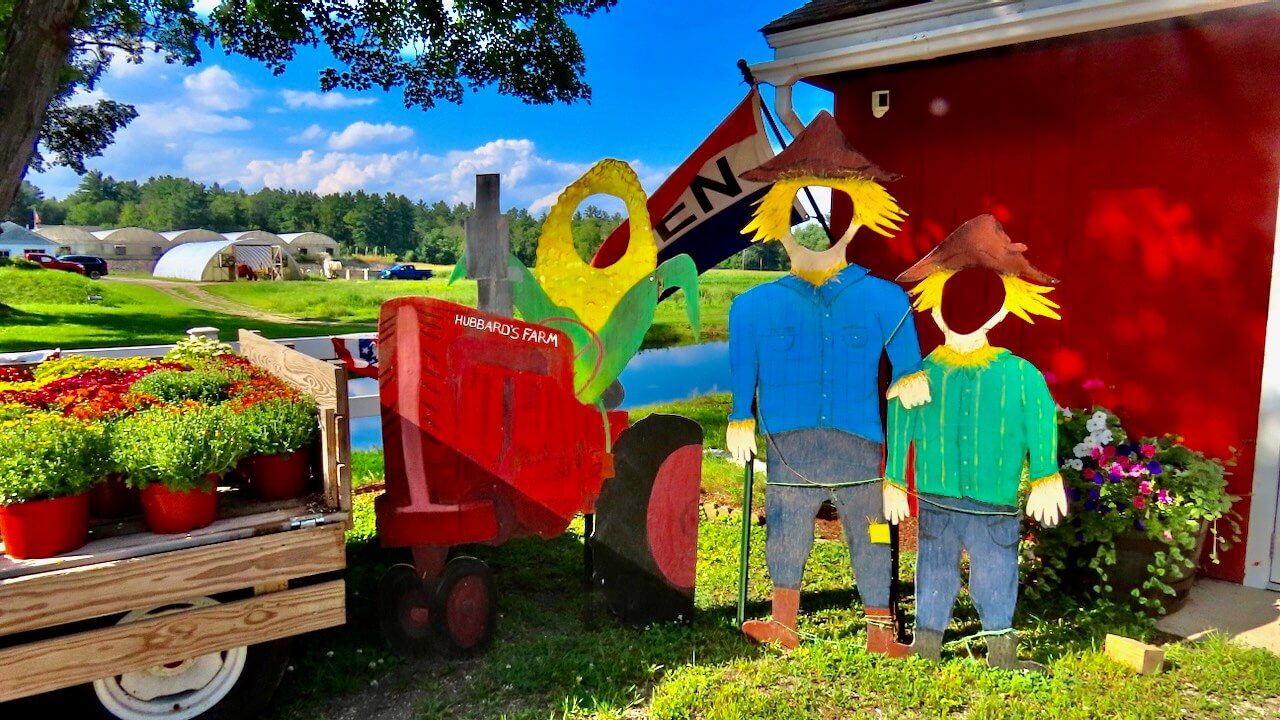
Just for fun, the “farm family” will soon be available for photo opportunities.
The baby corn asked its mom, “Where’s Pop Corn?
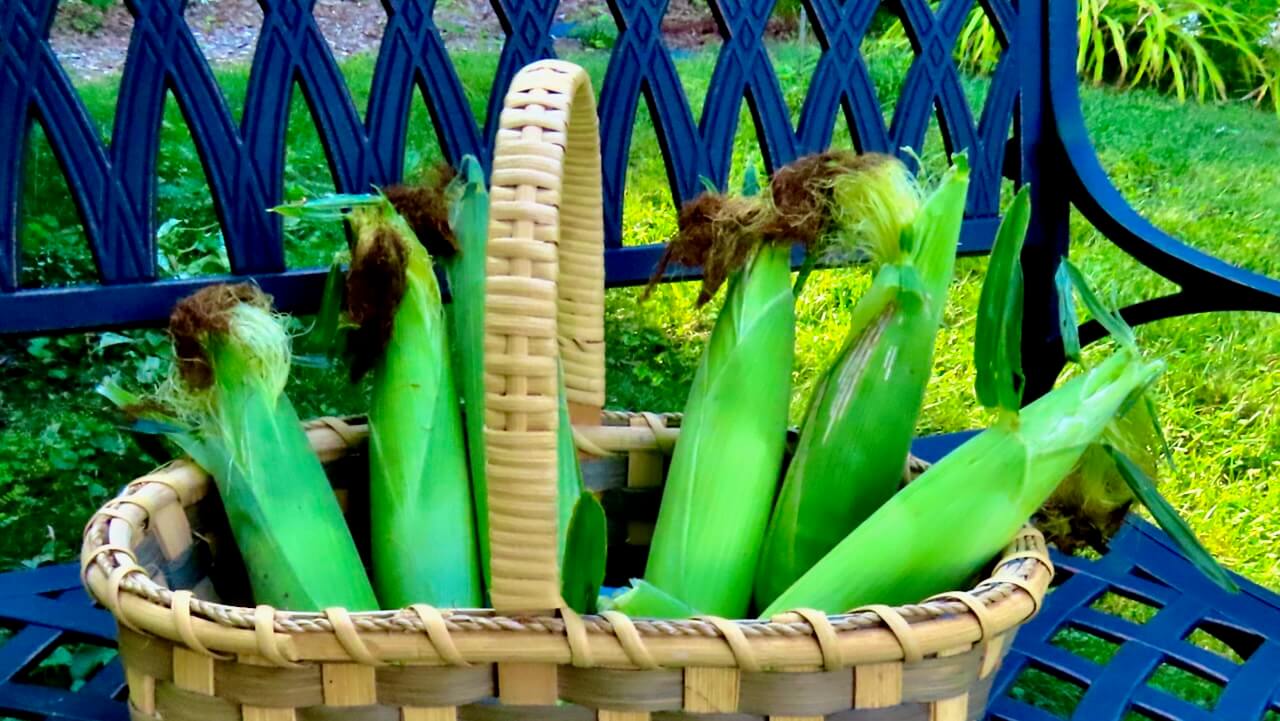
Back at home, the corn looks fresh in the basket that I wove.
What do you call a pair of cornstalks that are best friends? Ear buds!
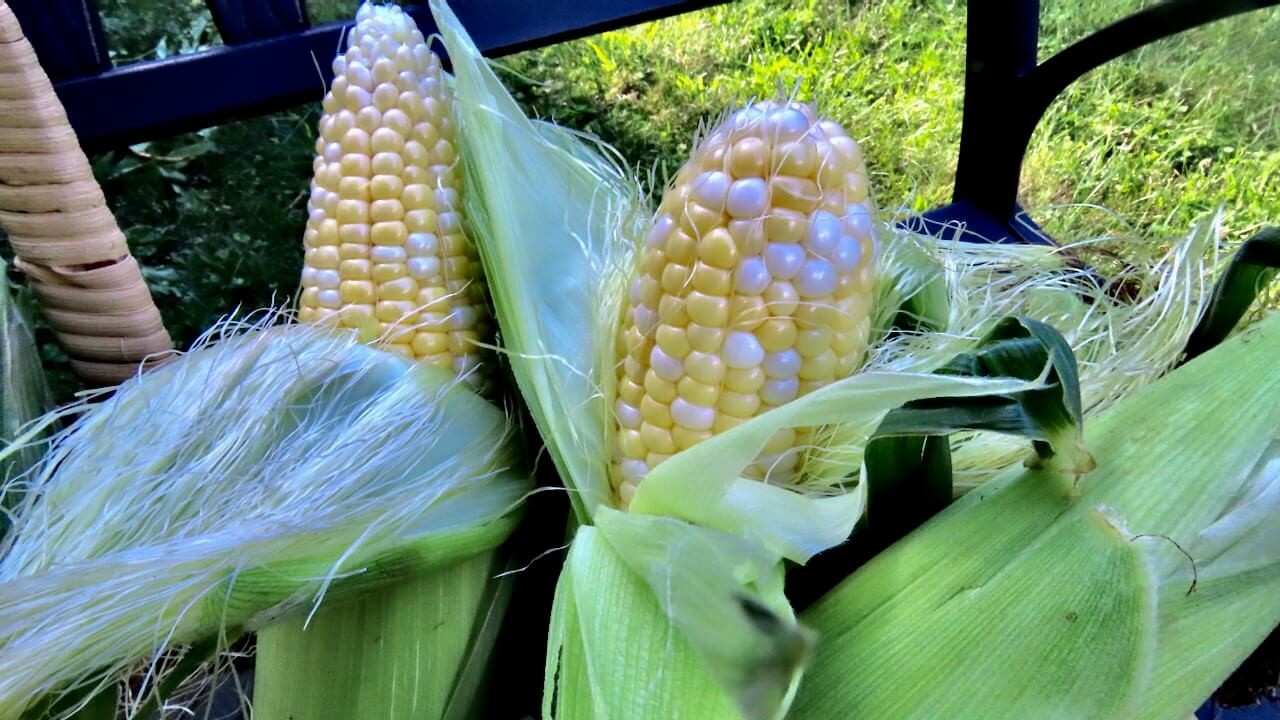
The corn is protected by the husk and corn silk, which helps keeps the kernels moist and sweet.
Why did one of the five kernels not pop in the pan?
It was wearing sunscreen.
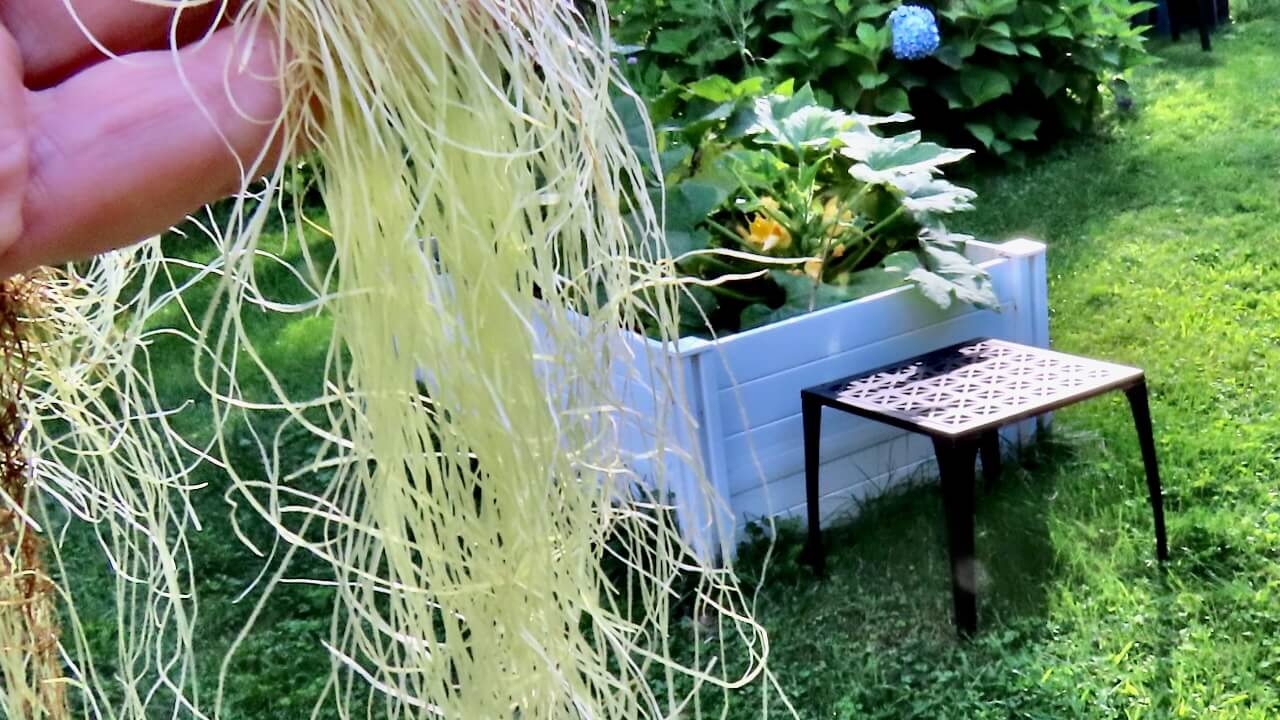
What does corn wear to bed? Silk pajamas!
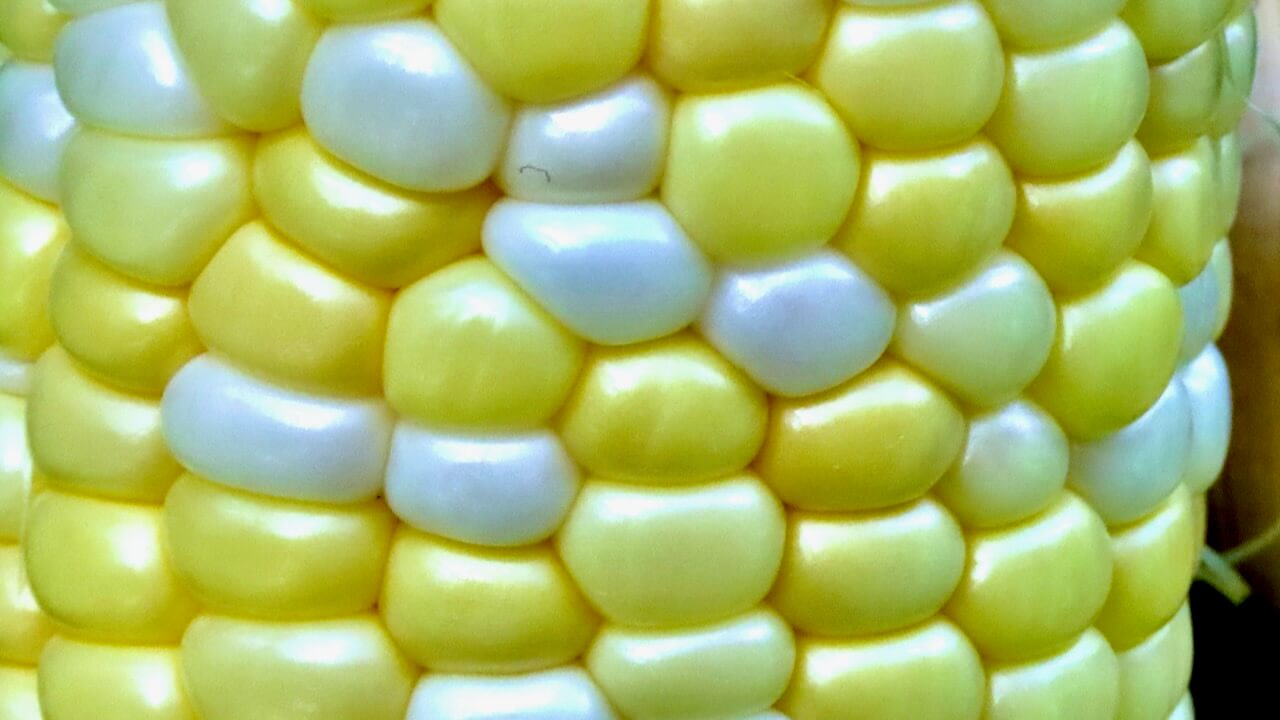
These kernels of butter and sugar corn look delicious, but what would you call a single, solitary kernel of corn?
-A unicorn!

Flowers at my local nursery radiate the jewel-like coloring of these September days of longer shadows, clear skies and warmer colored wavelengths traveling to the Earth.


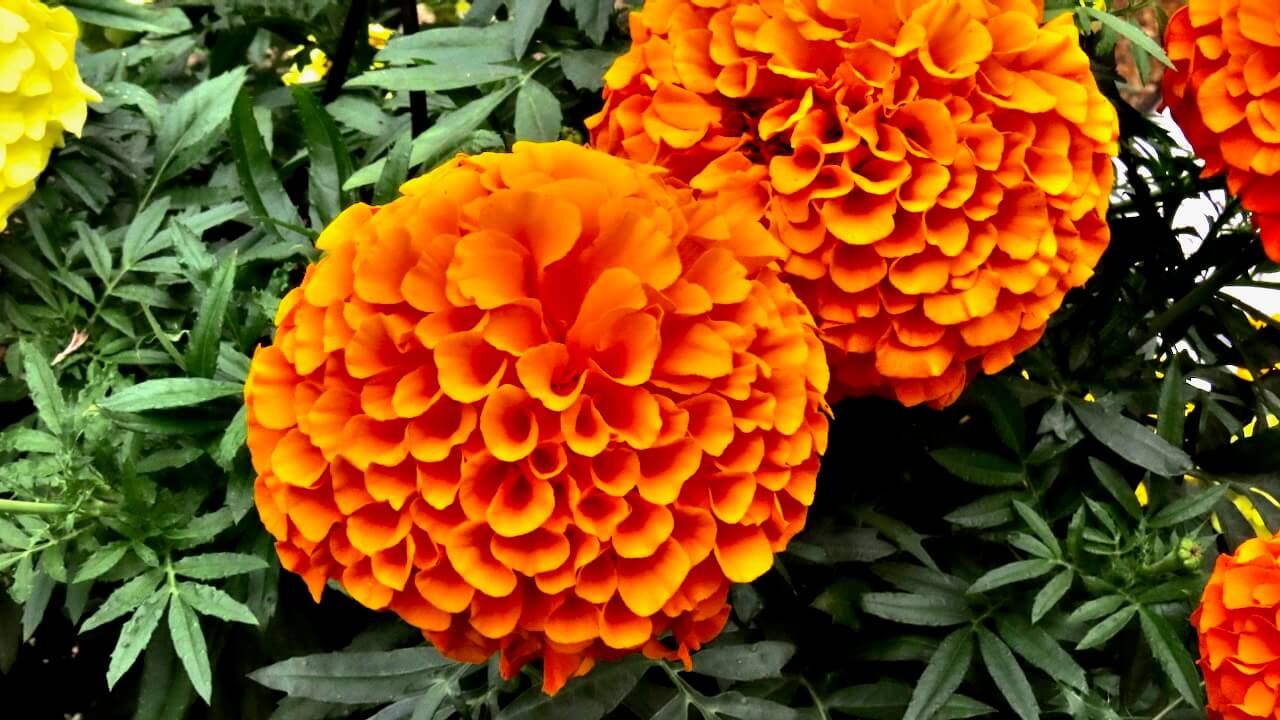
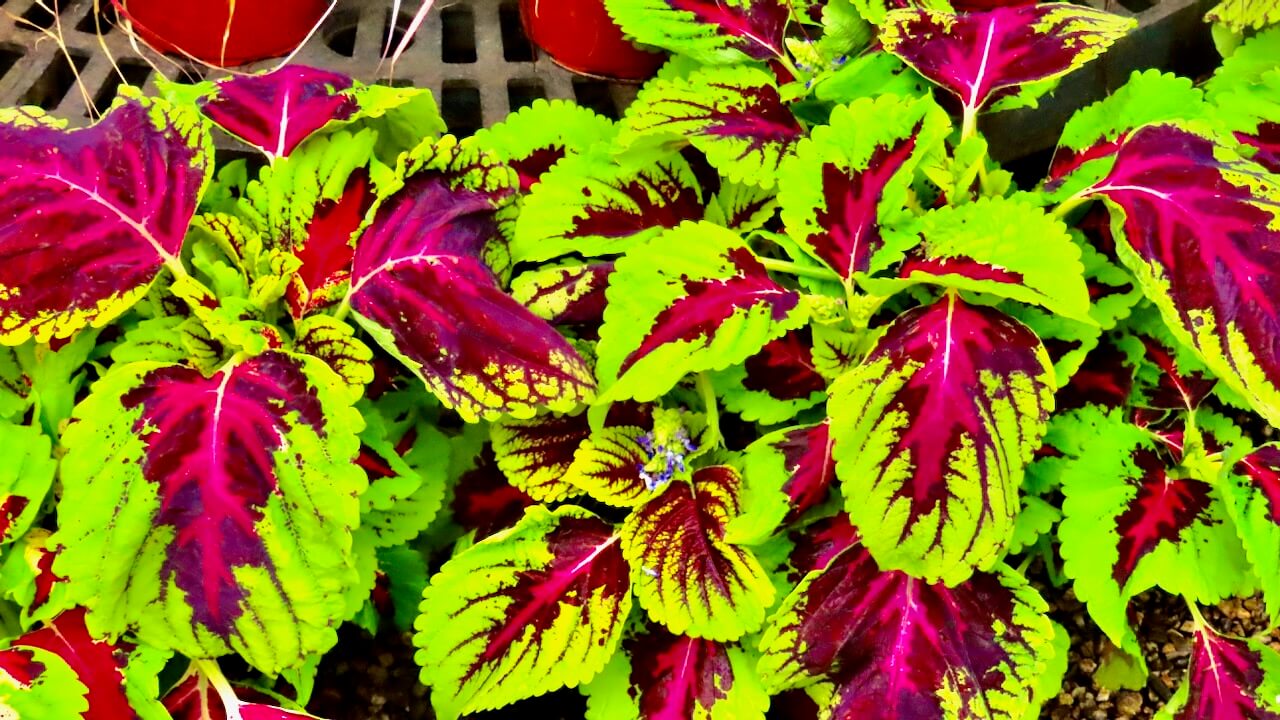


These are just some of the …

“Jewels in the Ground”.

Rudeneja ( roo-den-ay-ha) is a Lithuanian word that describes the transition from late summer to early autumn. It comes from ruduo, the Lithuanian word for autumn, and is used as a verb to describe the shift in nature towards fall, or as a noun for the reflective feeling of the season.

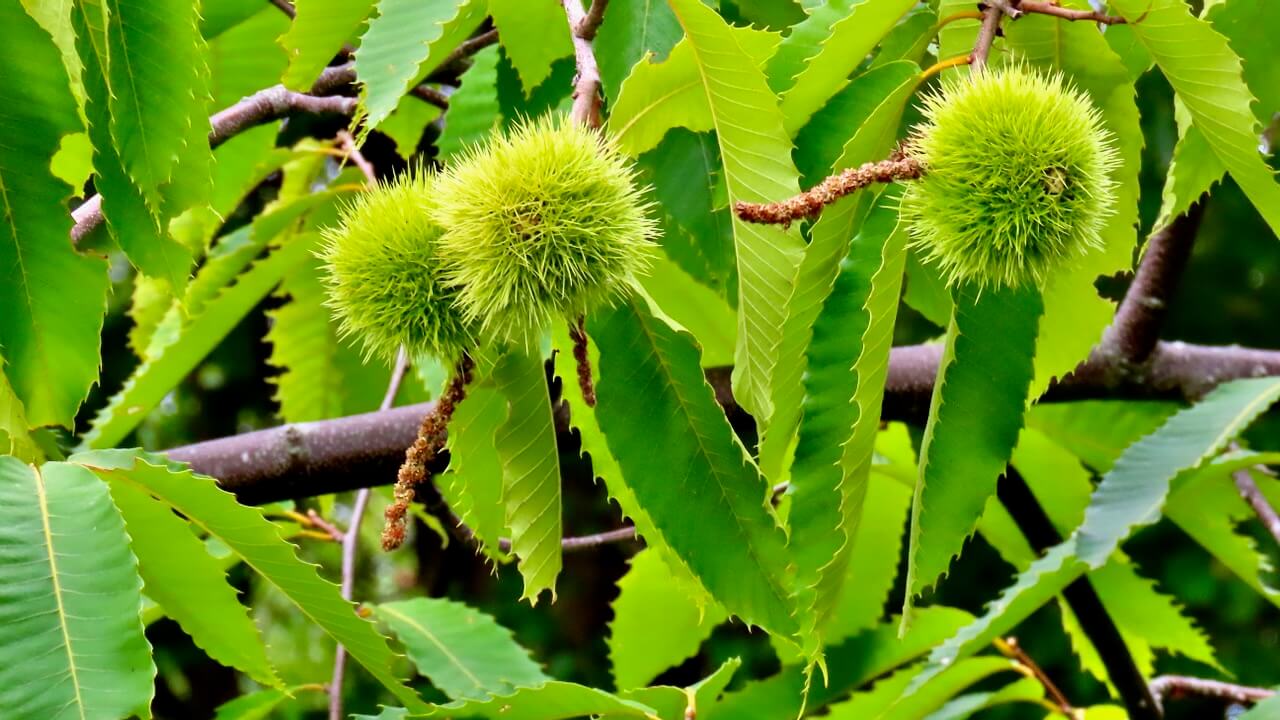
The chestnut tree displays spiky protective shells.
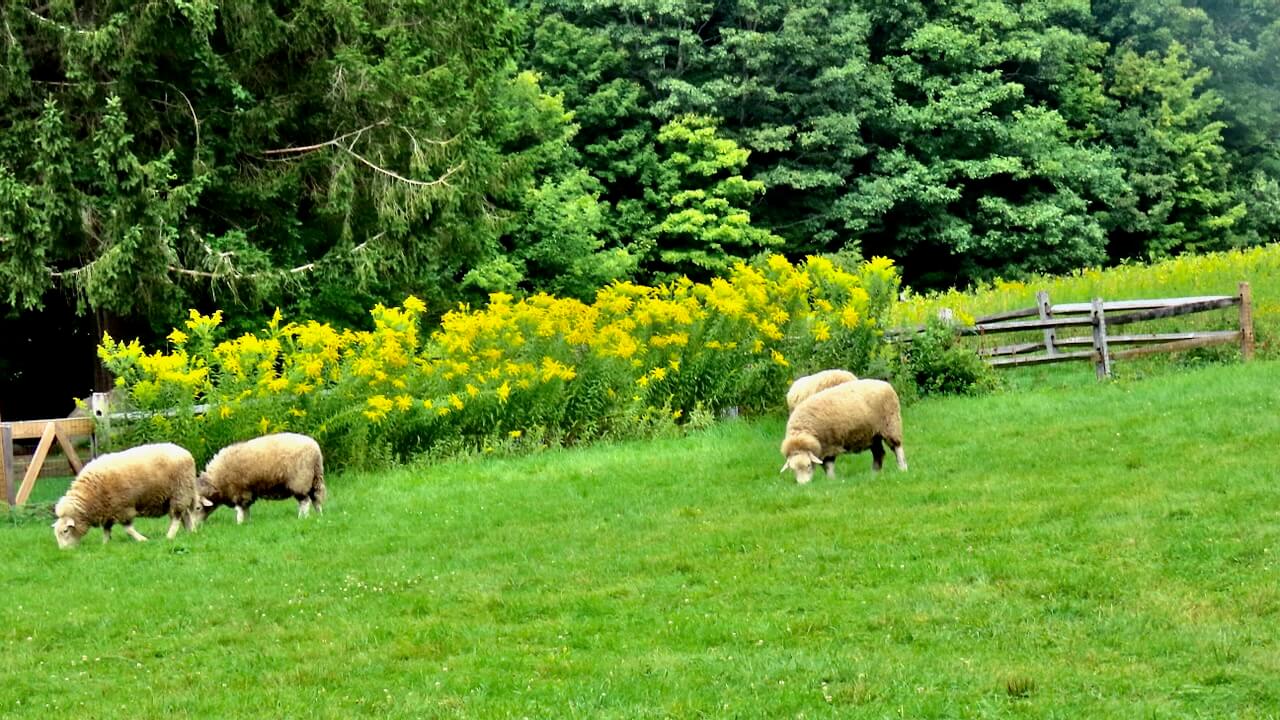
Sheep roam freely in the meadow.
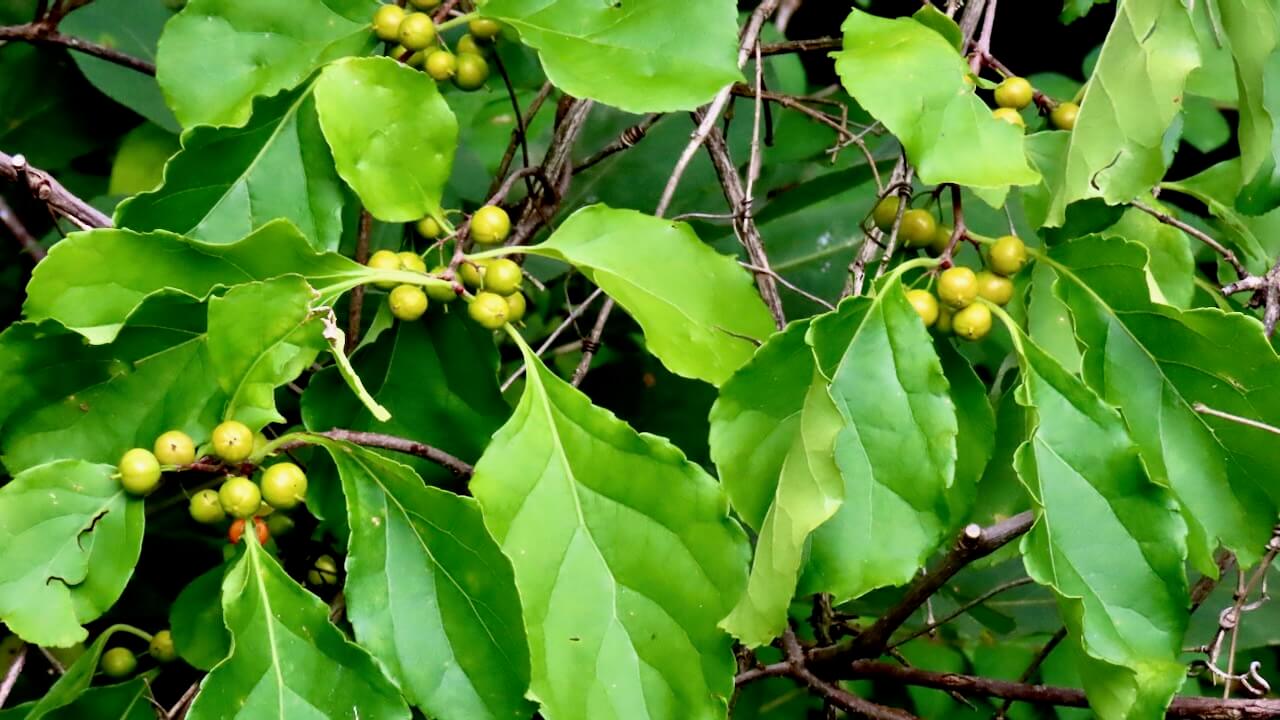
Yellow berries begin to appear on the bittersweet.

Monarch butterflies gather before they begin their migration.

The swamp maples are among the first trees to change color.

The sight of cornfields always reminds me of growing up across from a farm in Western Massachusetts. Luckily, Central Massachusetts has approximately 1,623 farms spanning over 90,000 acres. Corn was critical to the survival of Indigenous Peoples and early colonists of Massachusetts. On a recent country walk, I viewed local fields of cow corn almost ready for harvesting.
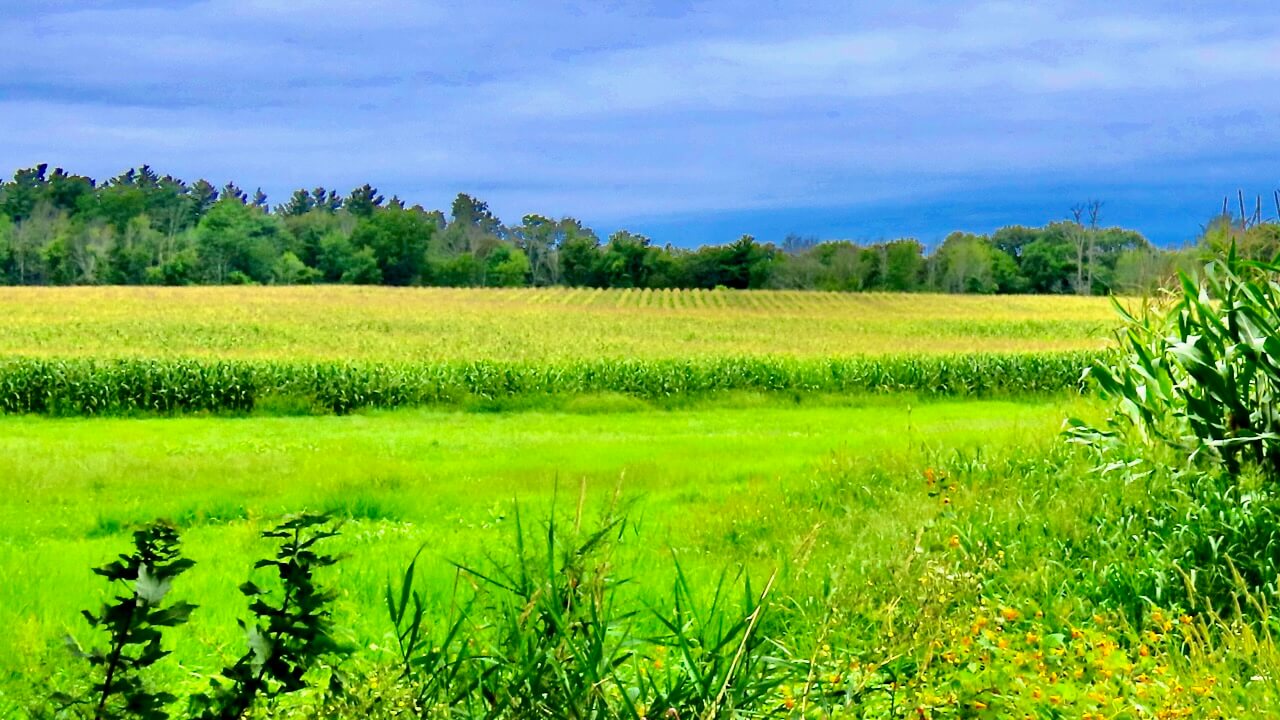
Jordan Farm, Rutland, Massachusetts

The farm has a total of 950 acres of fields planted with either corn or hay.

The spikes at the top of the plant are the tassels. Tassels produce and release millions of tiny pollen grains that blow in the wind, fertilizing the silks on the lower ears. This is what allows the ears to grow.
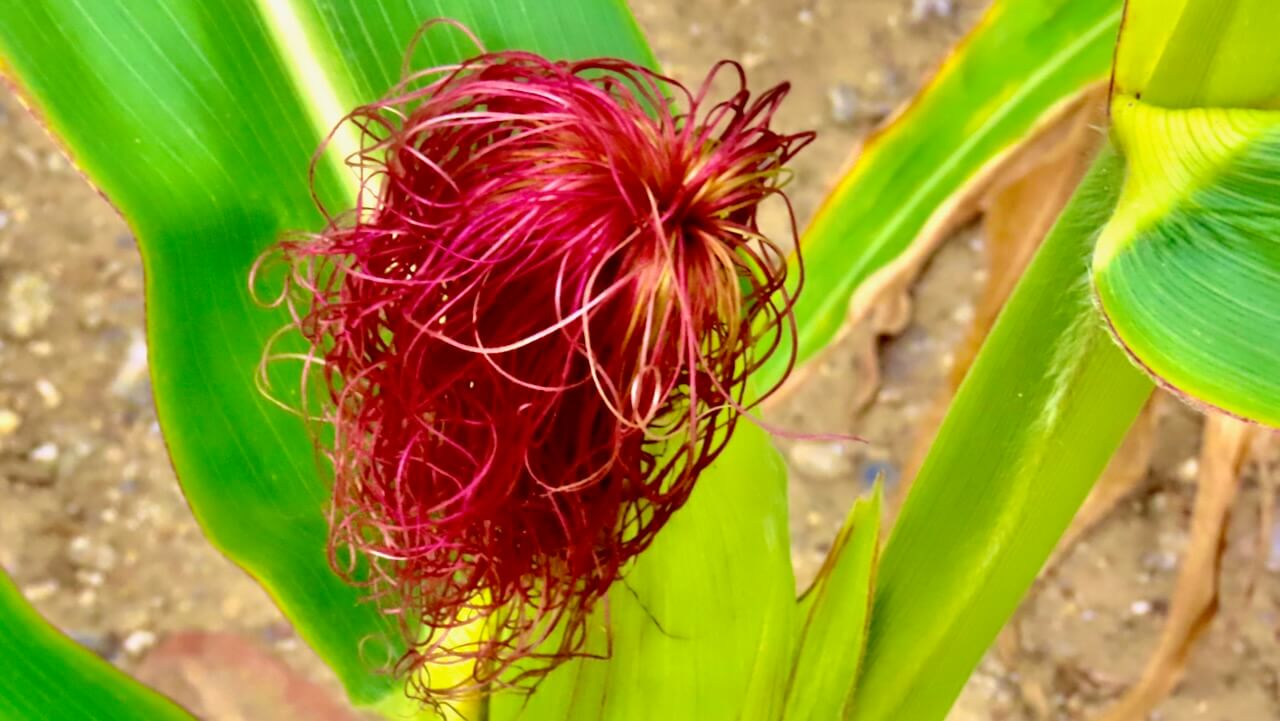
A close-up of the corn silk. Each individual strand of corn silk must catch a grain of pollen from the tassel for a single kernel of corn to develop.The silk will turn brown when the corn is ripe.

Corn ready for harvesting.
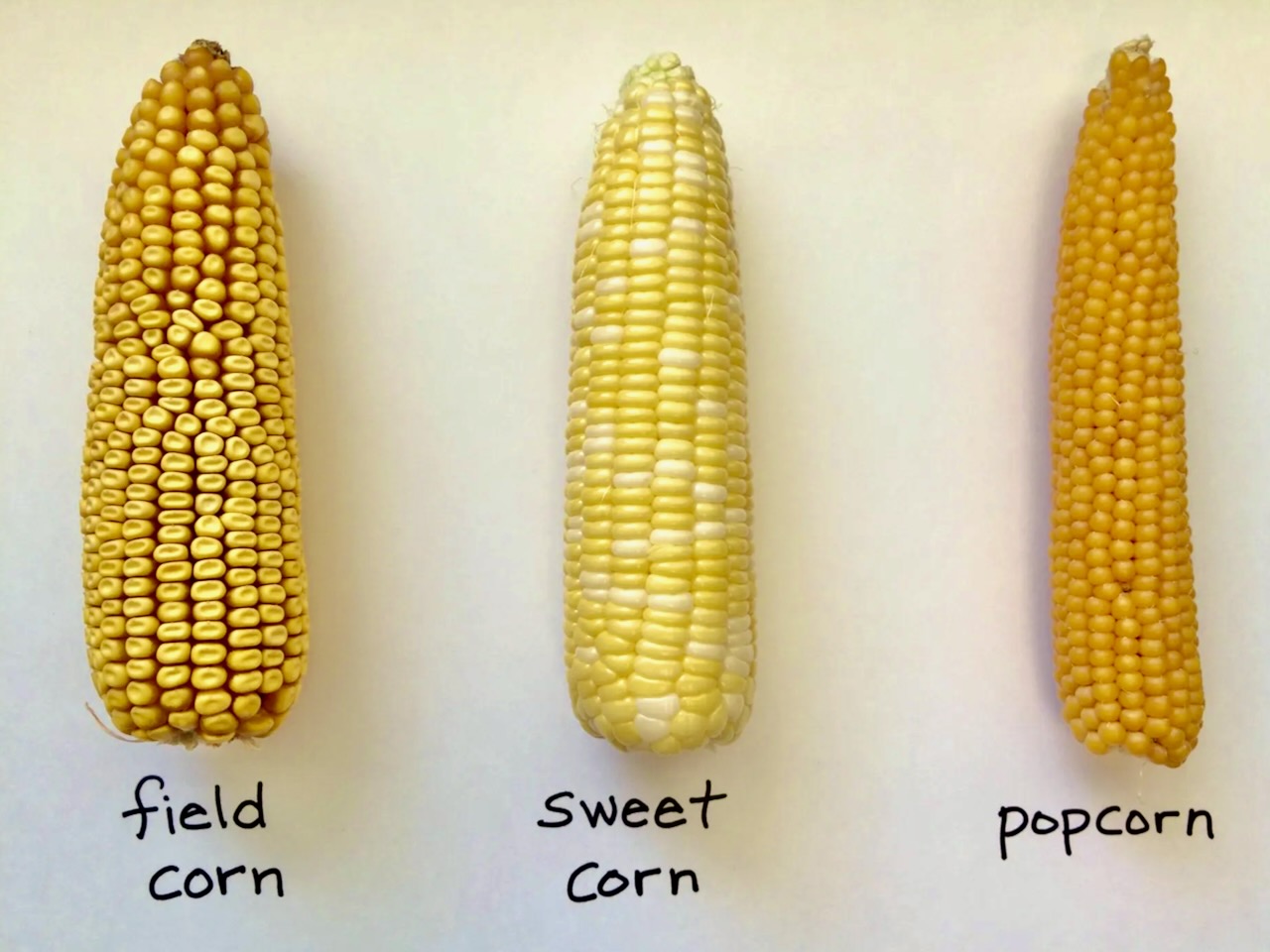
The above image, courtesy of the New York Agricultural Animal Commission , shows the difference between field corn, popcorn and sweet corn.
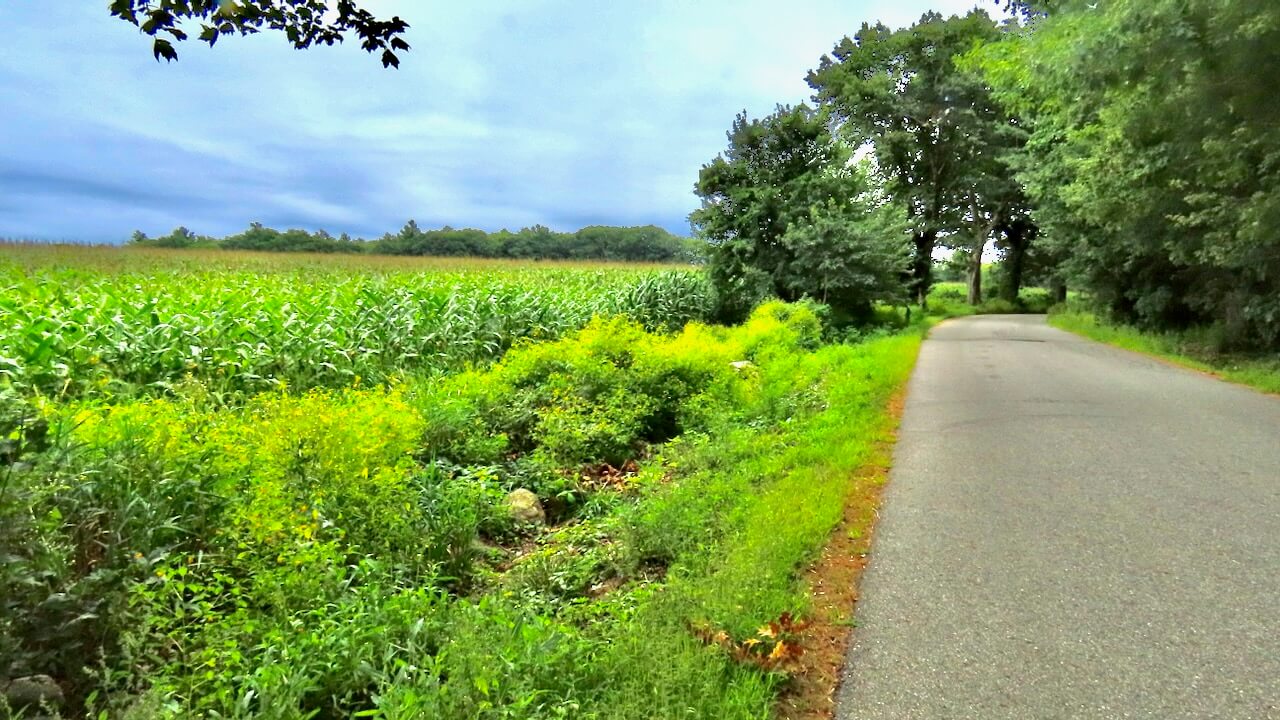
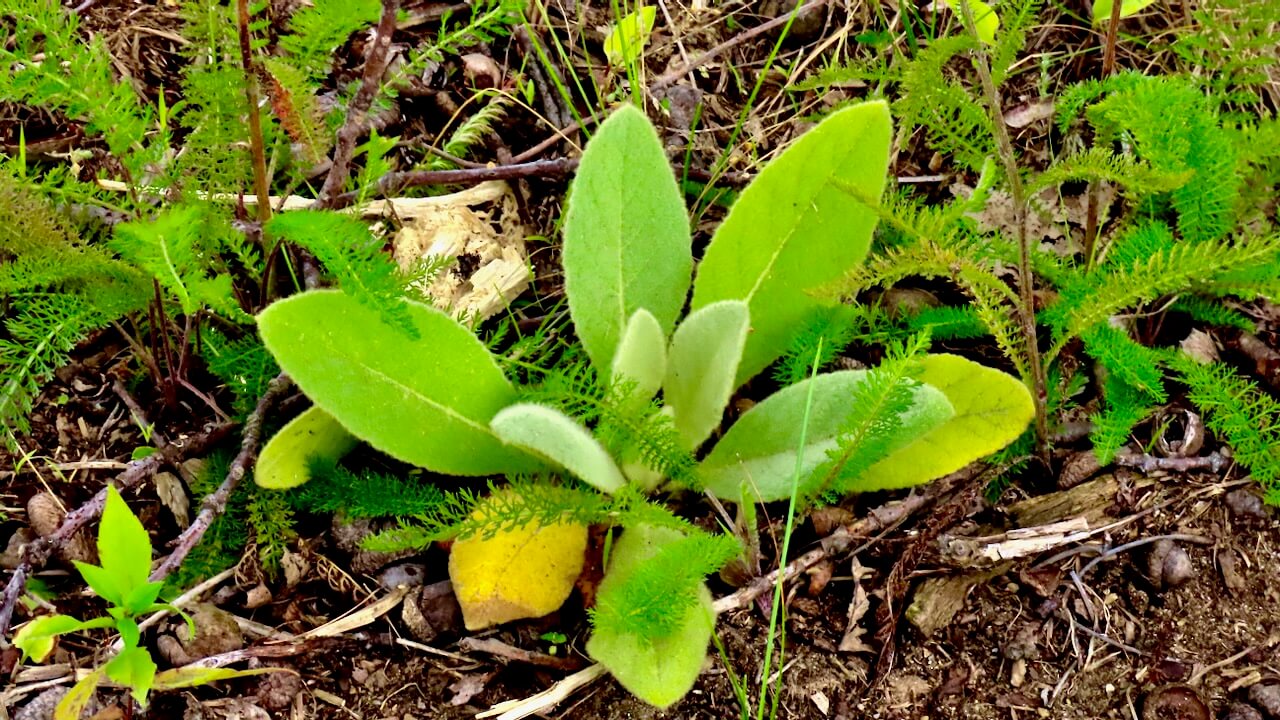
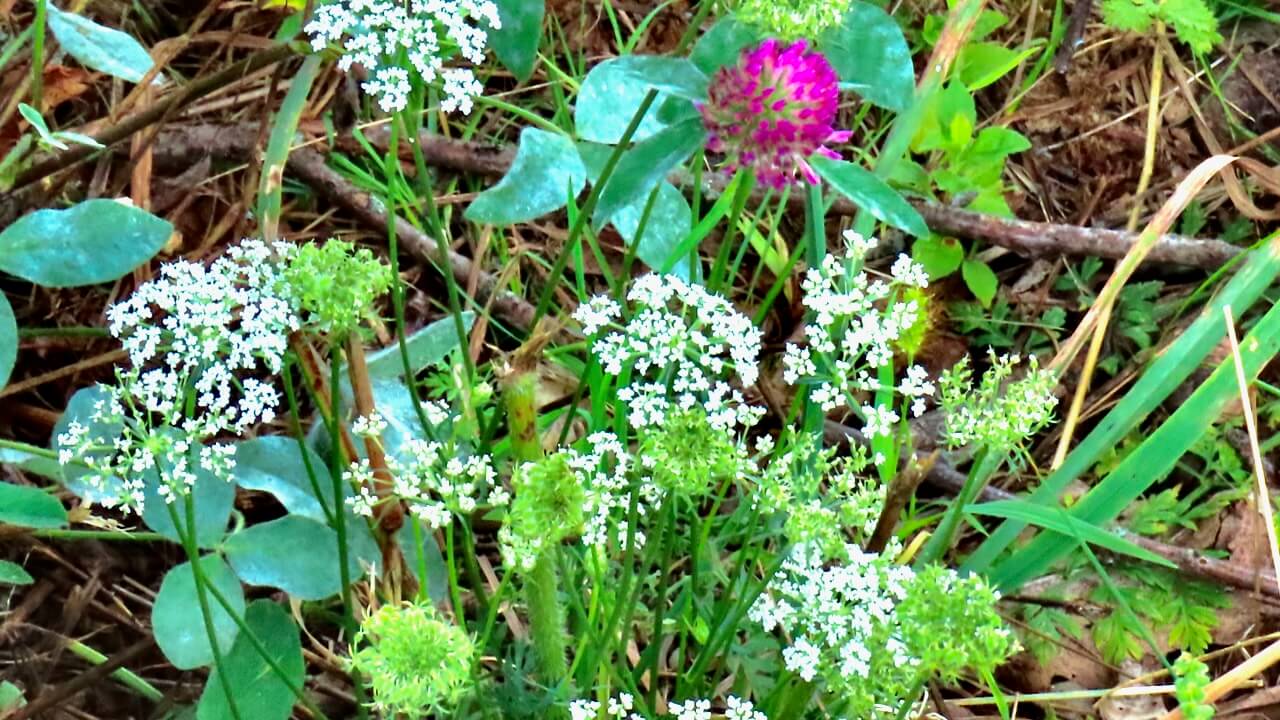
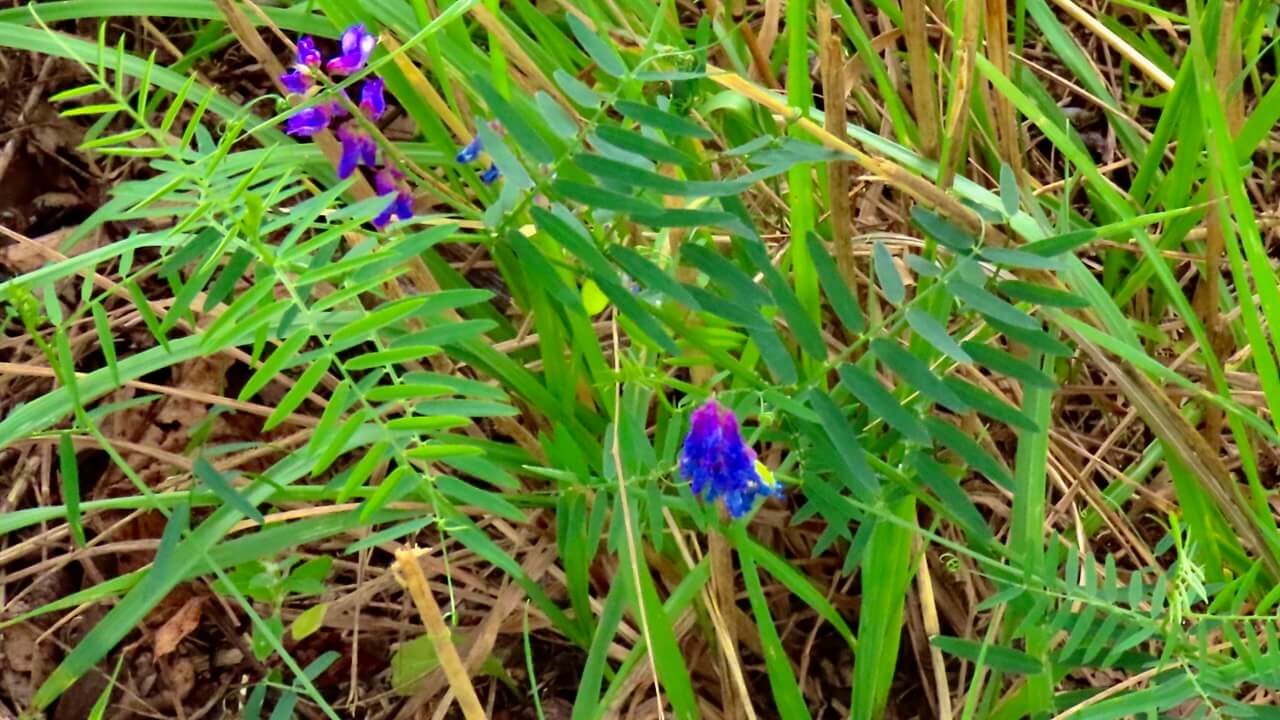
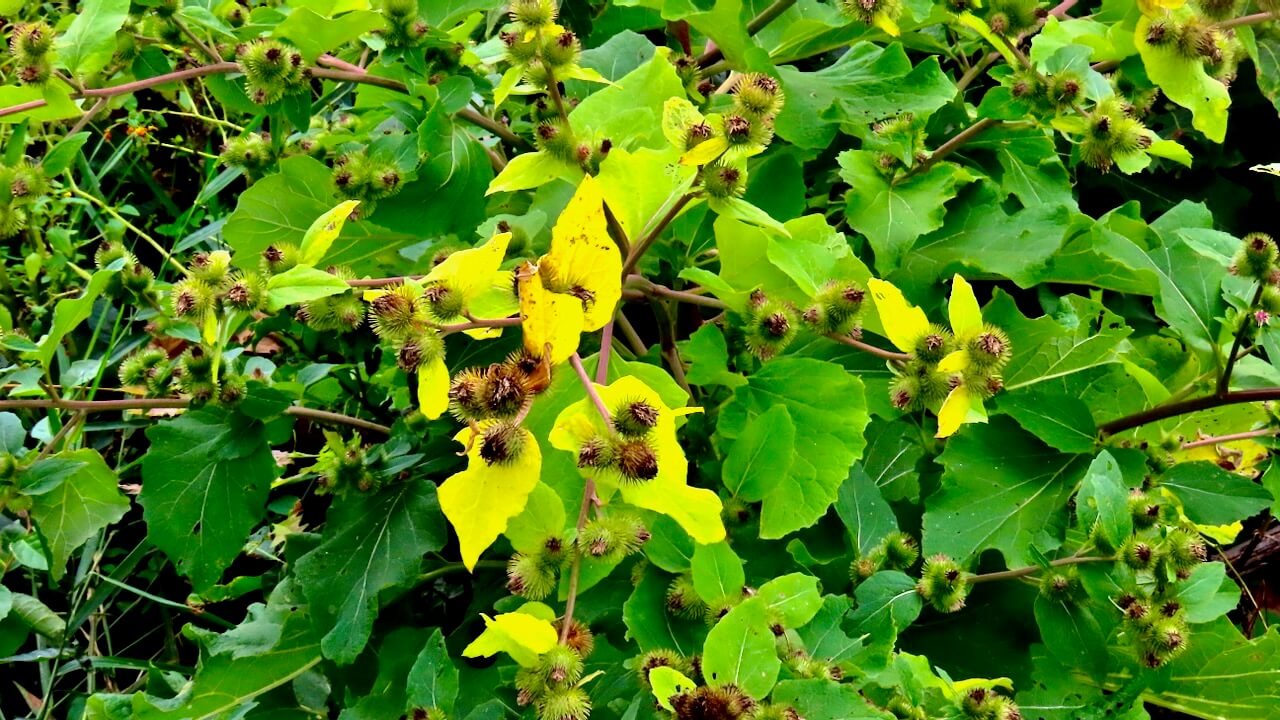
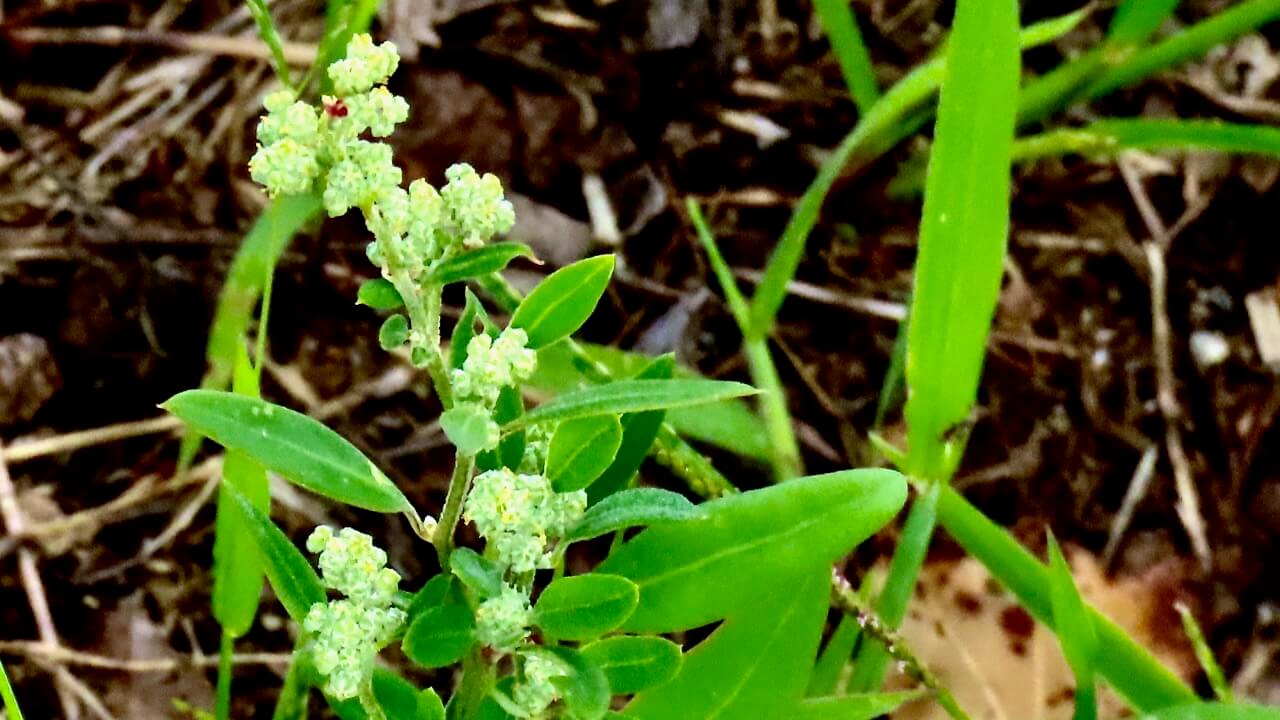
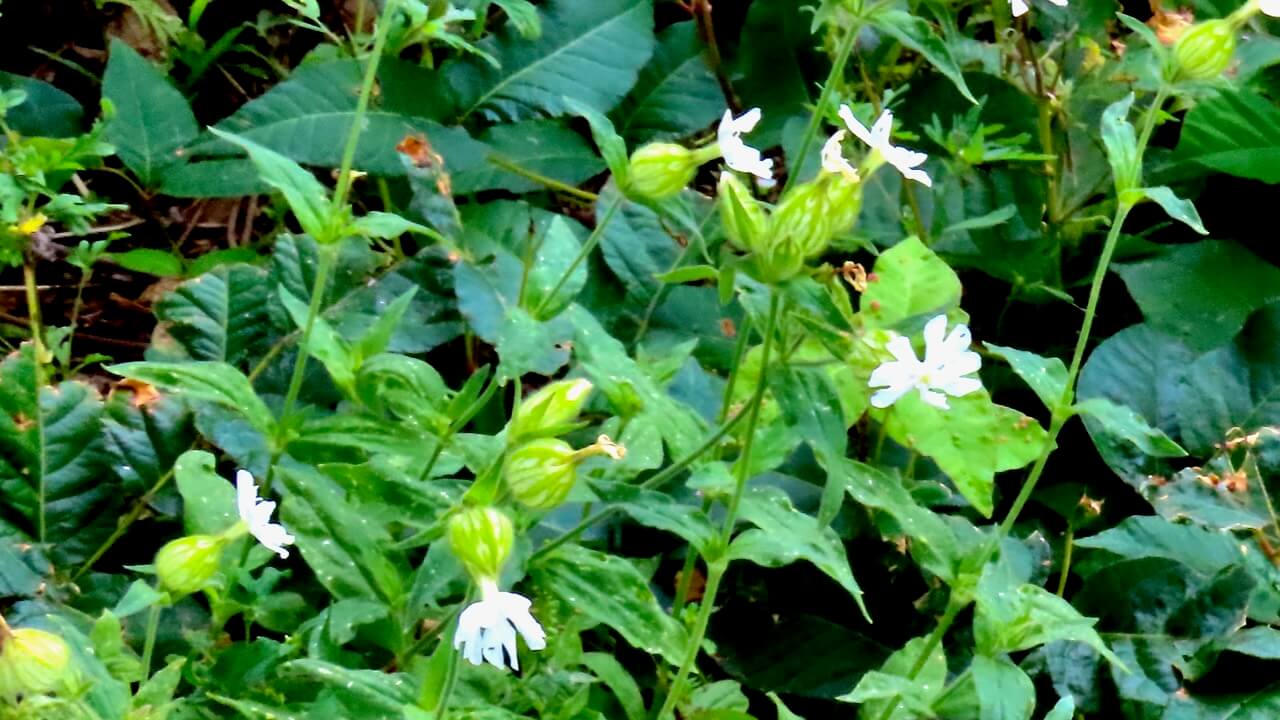
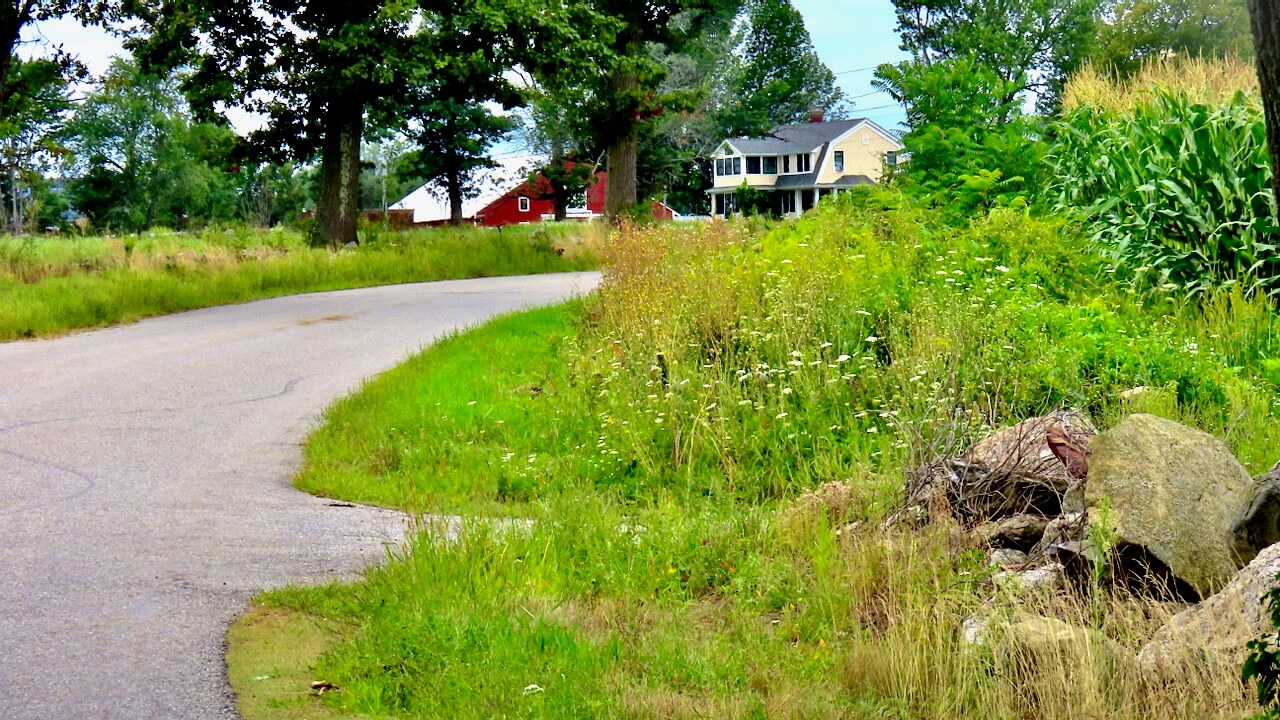
The uncultivated strips of land pictured above are field margins, areas near the boundaries that encourage biodiversity, support wildlife, and prevent soil erosion. By leaving these areas for natural grasses and wildflowers, farming production is balanced with environmental conservation. The gallery below shows some of the diverse plants and flowers I found in the margin. Some can be invasive, and at the end of the season, margins are often cut down to control growth.
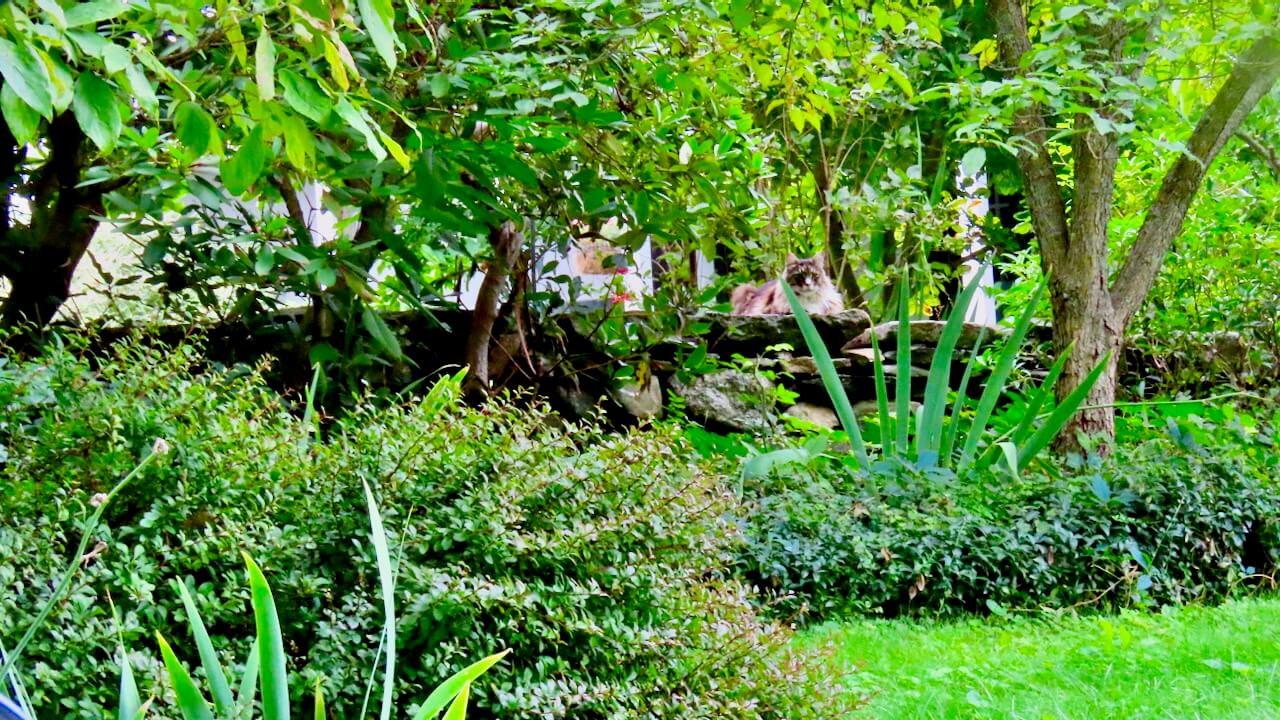
Did you ever have that feeling that you were being watched?

Farm Cat on duty!

WIldflowers abound across the sunny open areas at Wachusett Meadow Wildlife Sanctuary.

Goldenrod

Joe Pye Weed


Common Tansy


Eastern Chipmunk


Eastern Cottontail

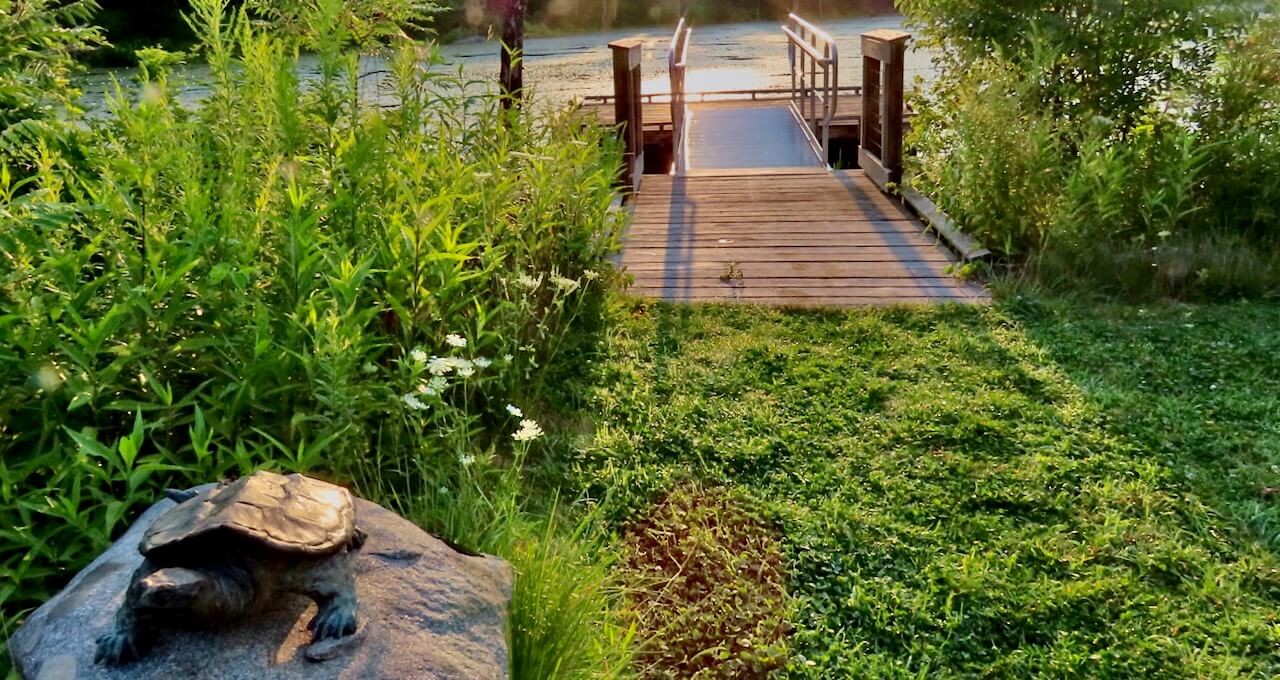
The Cambridge Dictionary defines dawning as:
Princeton, Massachusetts
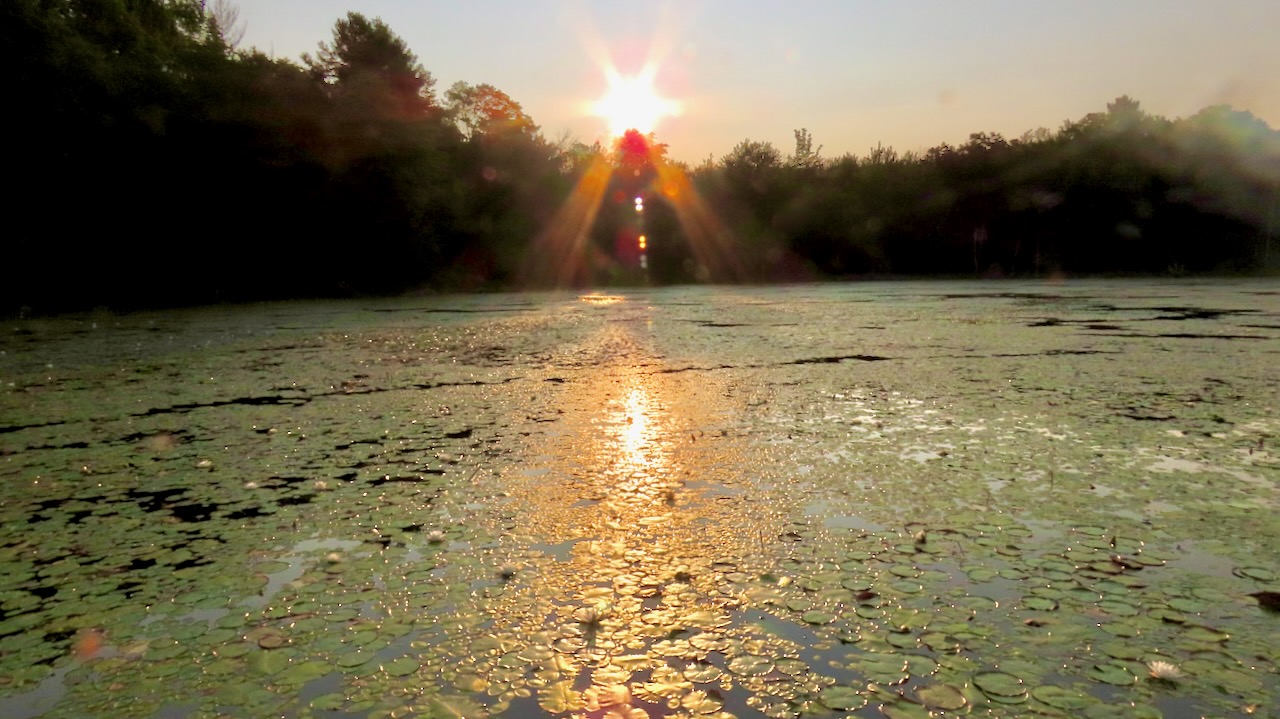


On most summer evenings, beavers can be found foraging in the Wildlife Pond at Wachusett Meadow Wildlife Sanctuary. Last night was no exception.
According to the National Park Service:
The North American beaver is a keystone species, a unique organism that supports the entire biological community. The term “keystone” refers to a wedge-shaped block that forms the apex of a stone arch, the brick that holds the entire span in place. If you remove the keystone the arch collapses. The same can be true of a keystone species—their removal can contribute to an ecosystem collapse.
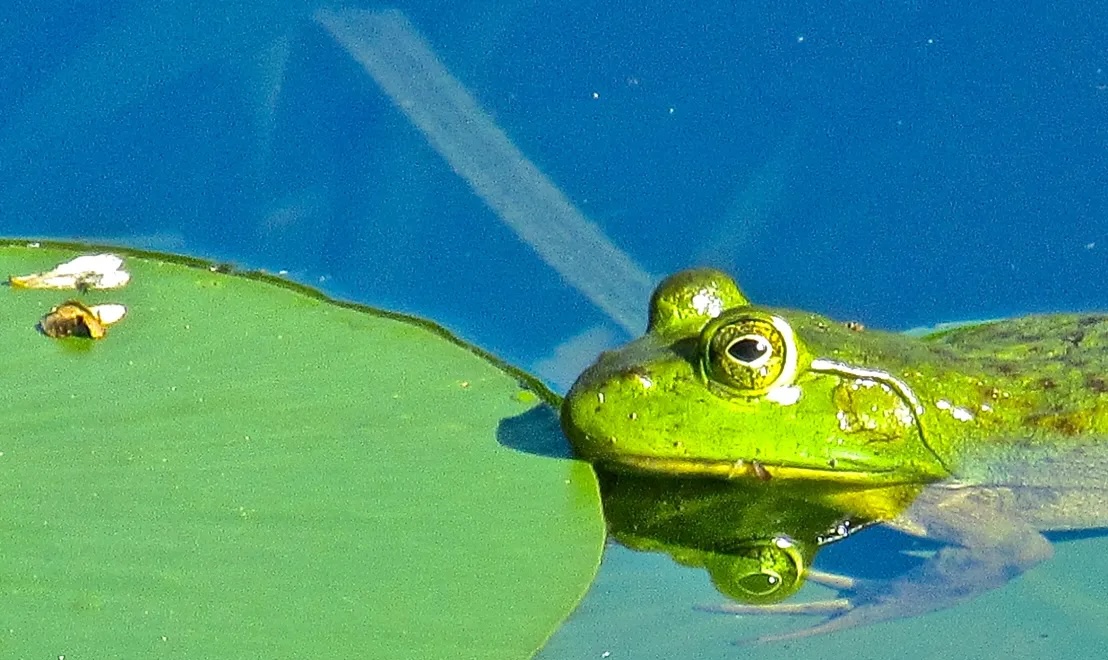
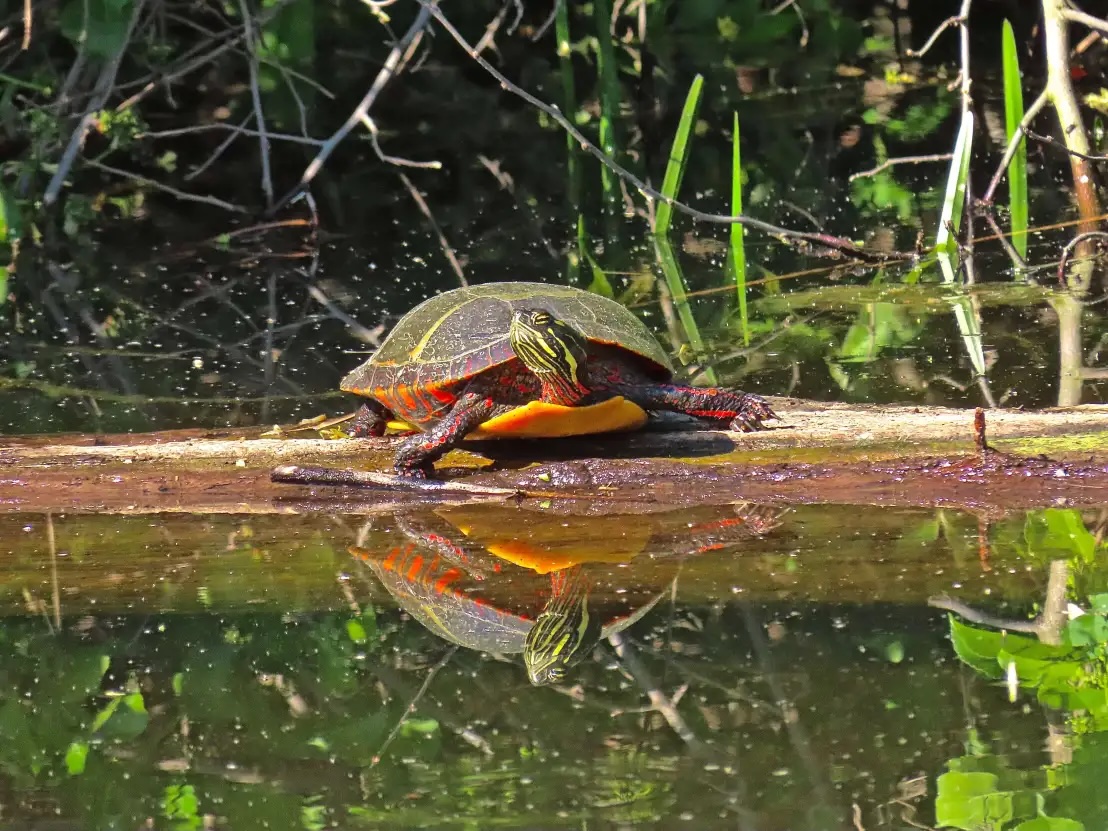
The dams that beavers build create wetlands that provide safe homes, feeding grounds and nesting areas for fish, birds, frogs, and mammals. They help to trap dirt and harmful chemicals and clean the water before it flows downstream. And of high importance in these times of global warming, the dams help to hold back water during heavy storms and slowly release stored water during dry summer months.

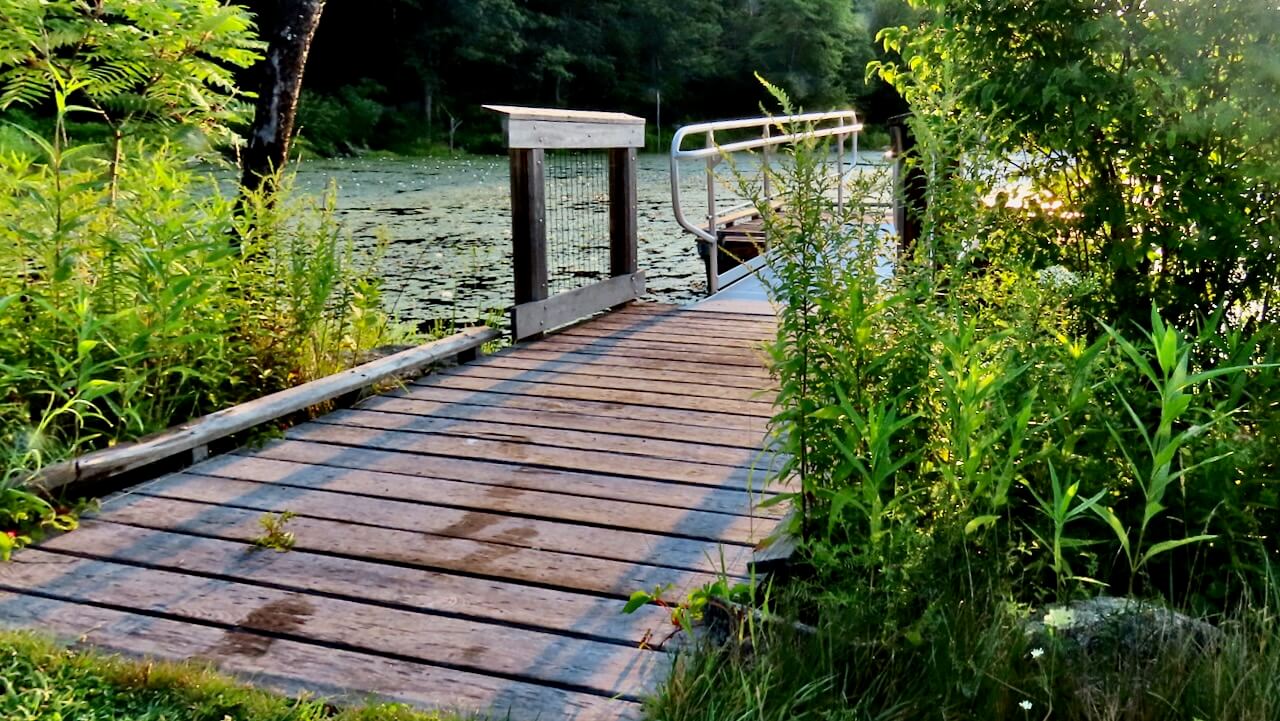
Beavers live in lodges like this one at Wachusett Meadow that sports a “late summer greenery” look. I’ve photographed this lodge in all seasons. Click here for some different lodge views. Click here to learn more about the design of the lodge.

Last night this single beaver busily munched lily pads, and barely noticed me a few feet away on the dock. I watched as it used its ten fingers to prepare and eat dinner.
This video from a previous post shows the hands at work.
In this video short, a juvenile otter’s cry can be heard as the the beaver forages. Although the beaver paused each time it heard the otter, it remained unconcerned. Shortly after the beaver dives, the abrupt splashing of otters diving nearby can be heard.
The otter family that swam quickly by can thank the beaver for this environment . Otters and beavers are not “friends”; rather they are more like neighbors who tolerate each other. Occasionally, an otter might pose a threat to a young beaver, as otters are carnivores.

The lower left edge of this photo shows the observation dock where I was standing. I managed to take one photo of the otters before they dived away. There is plenty of space for both otters and beavers to live here. Over the years, I’ve photographed many other creatures who depend on the beavers for their habitat. You can view a selection of them below.

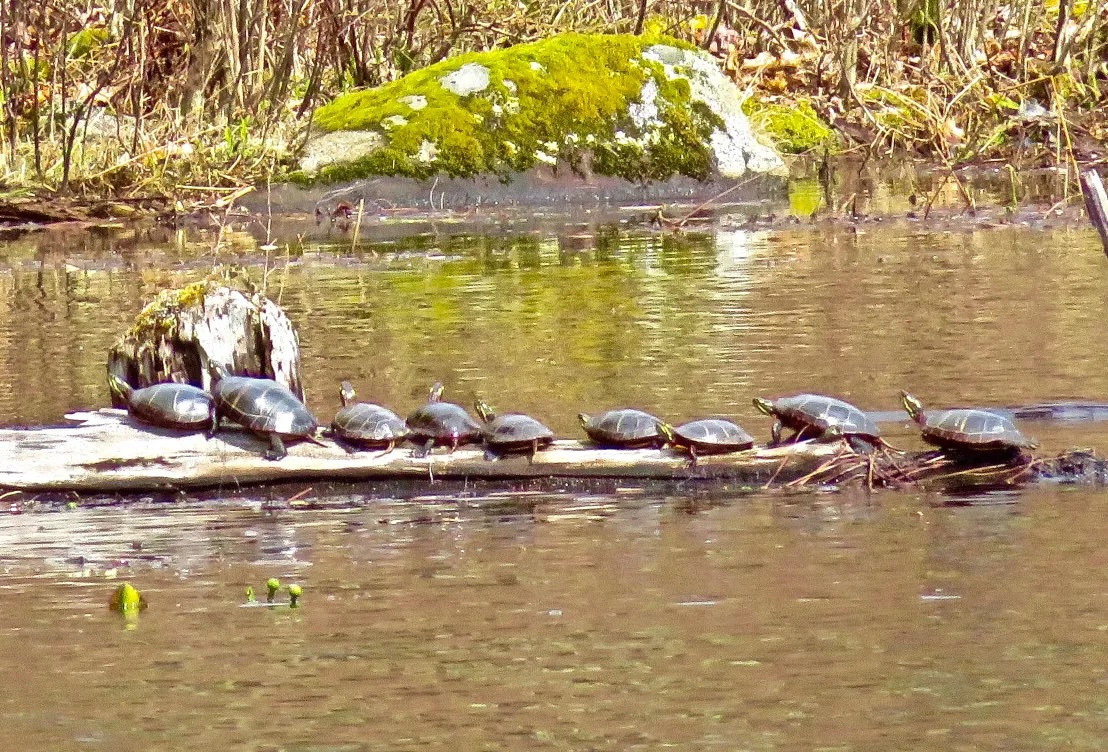

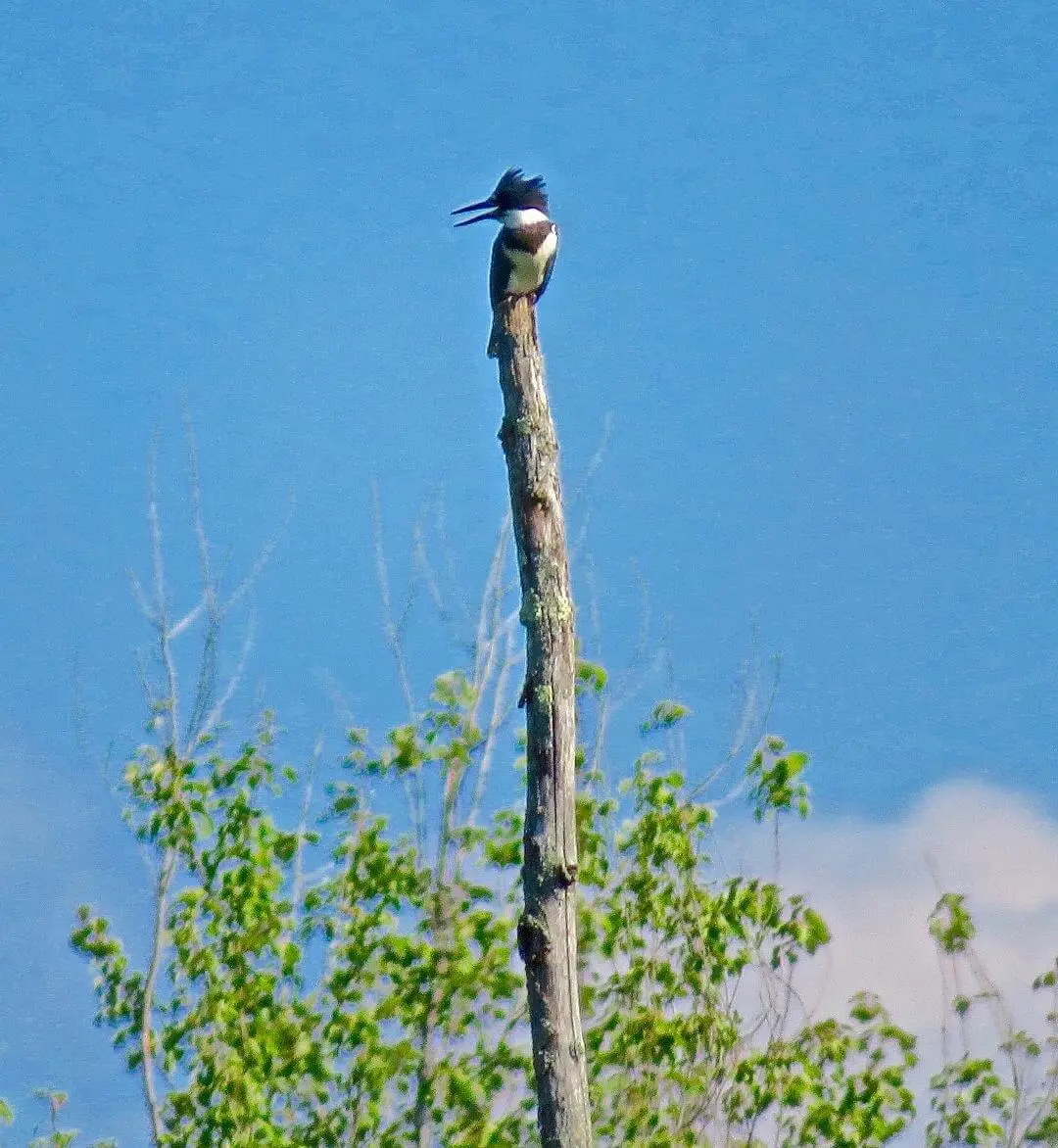

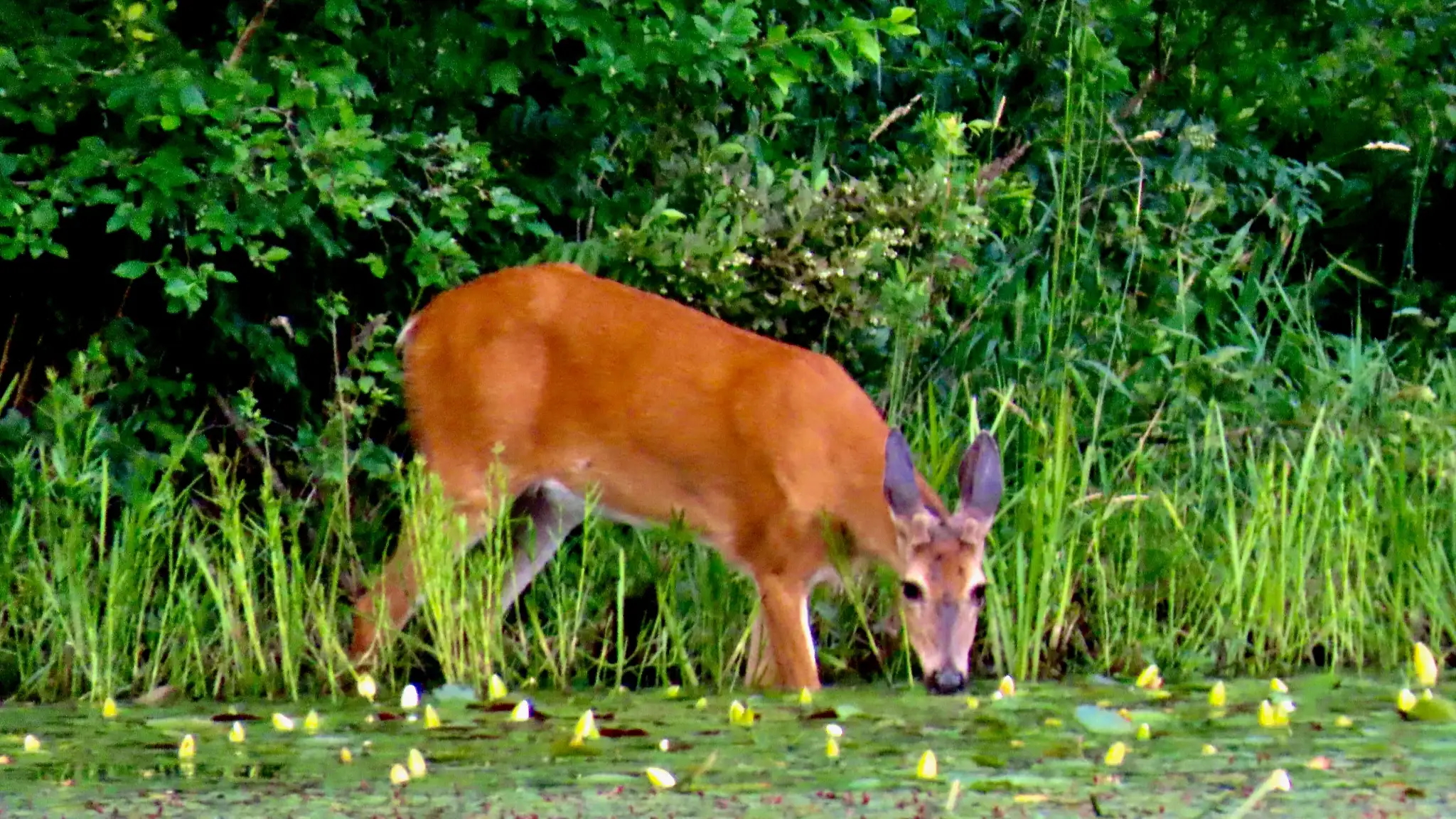



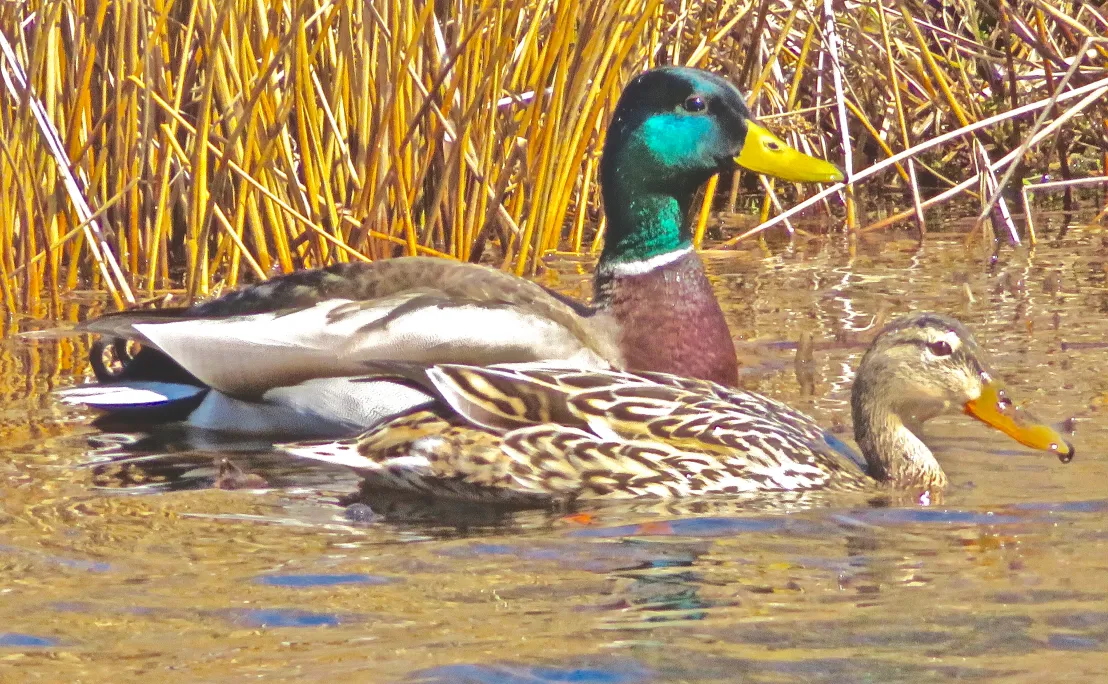

You can find more information about beavers in Massachusetts here. I also recommend Ben Goldfarb’s Eager:The Surprising, Secret Life of Beavers and Why They Matter. He sums up his book in this way:
“Beaver Pledge: One river, underground, irreplaceable, with habitat and wetlands for all.”

Photographs taken from my front porch.





Mokuso is a Japanese term meaning “silent reflection” or “meditation”. In photography, it refers to a mindful state of calm awareness. The photographer breathes quietly and steadily, observes a scene deeply and waits patiently to capture the right moment .
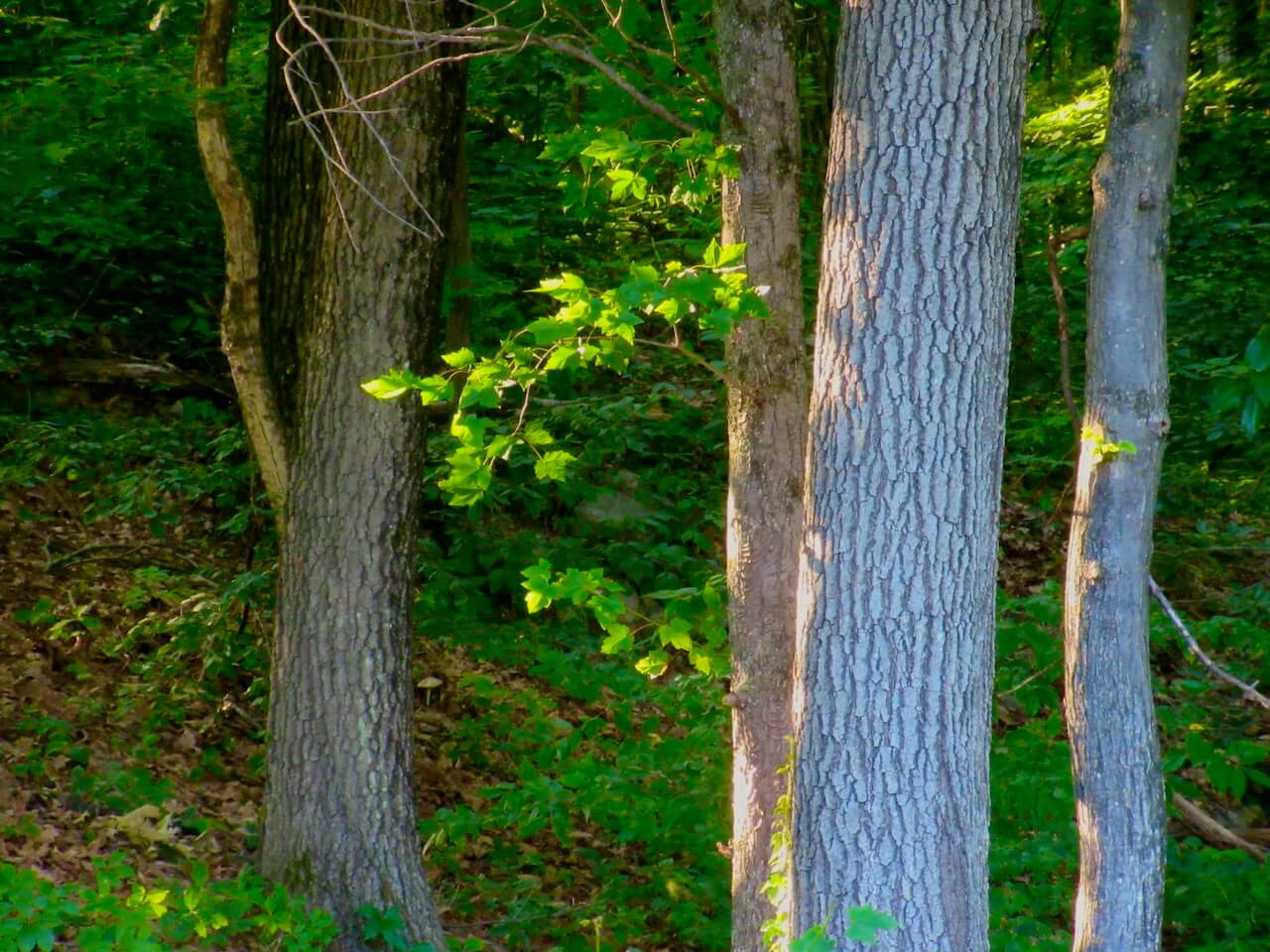
Late afternoon/ Holden, Massachusetts

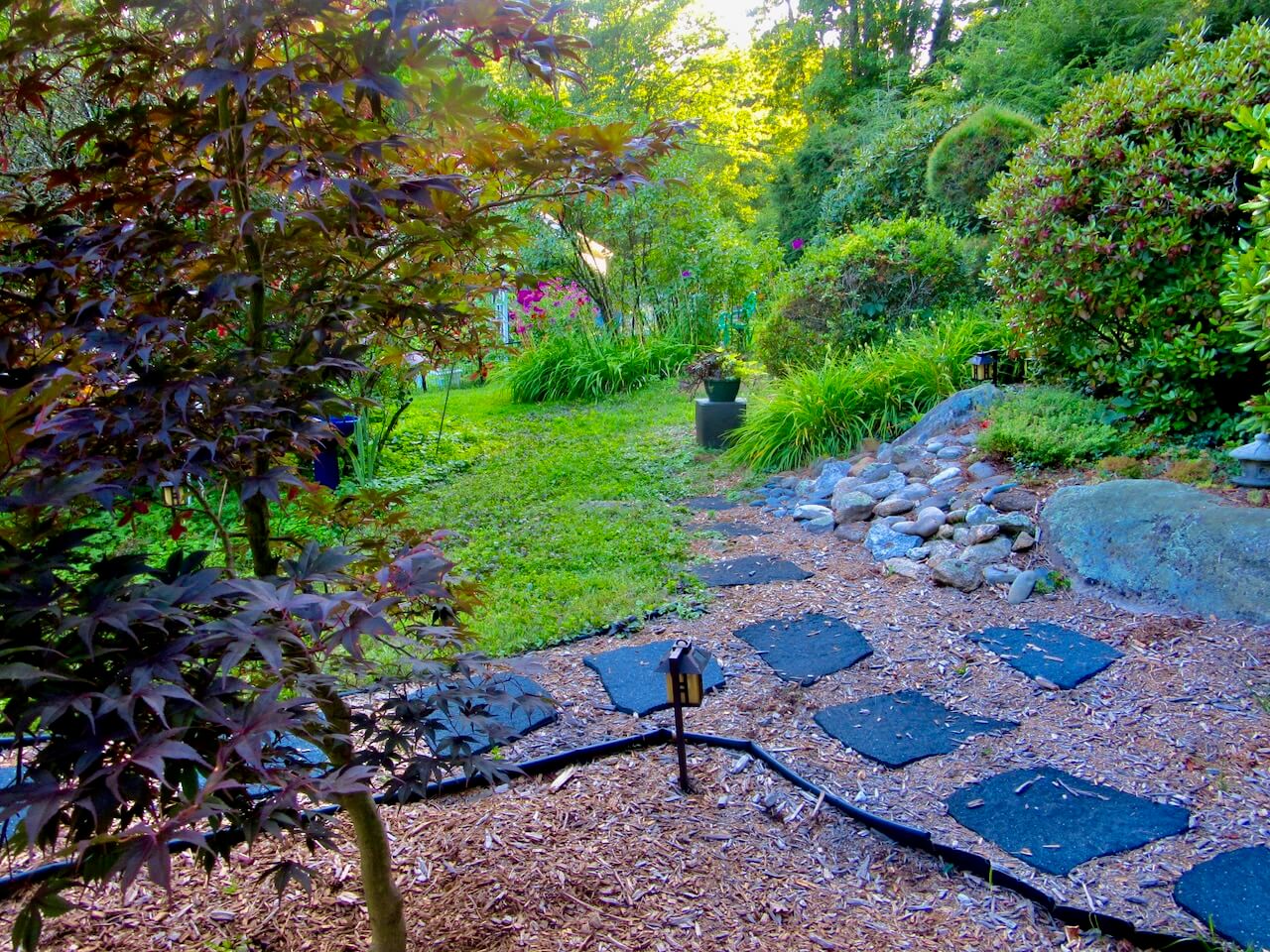


The Visitors Center at Wachusett Meadow Wildlife Sanctuary provides ample opportunities for accessible views of nature.

Relax on the porch to view grapes, hummingbirds and the South Meadow.

From your seat, the grape leaves above provide both cool shade and a view of the meadow beyond.
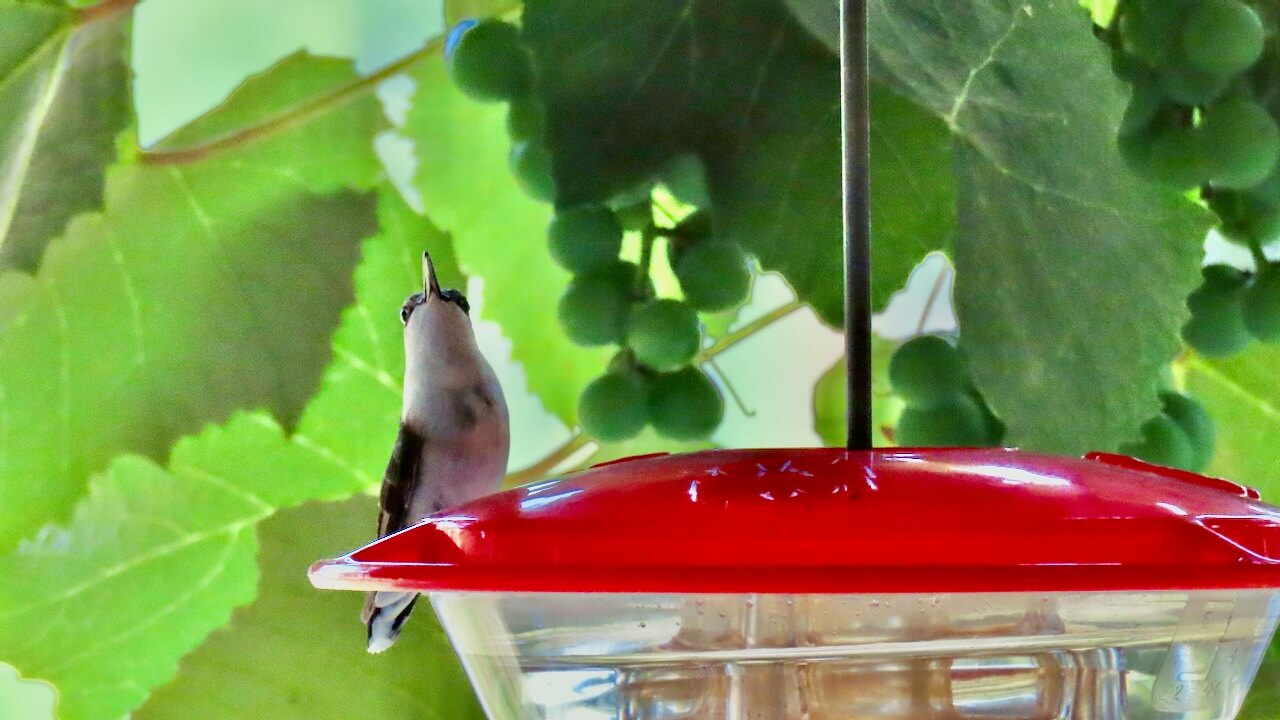
Hummingbird feeders hang just a few feet from you, near the grape vines.
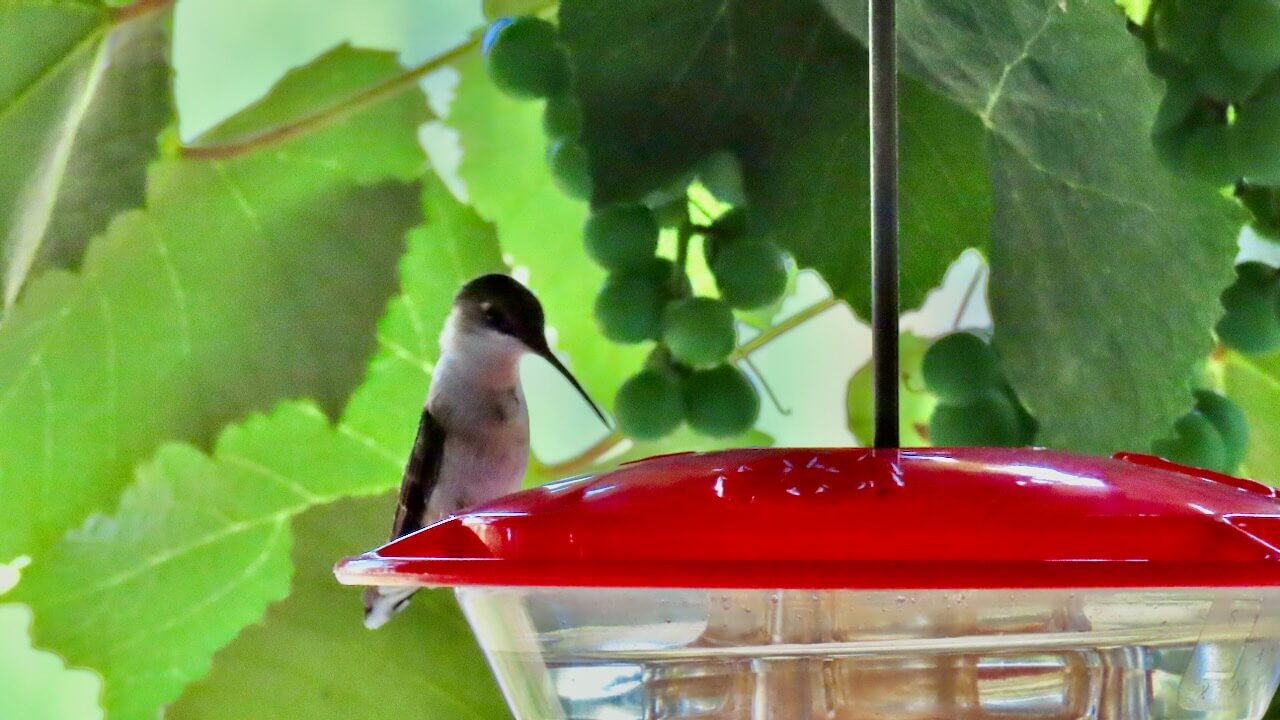
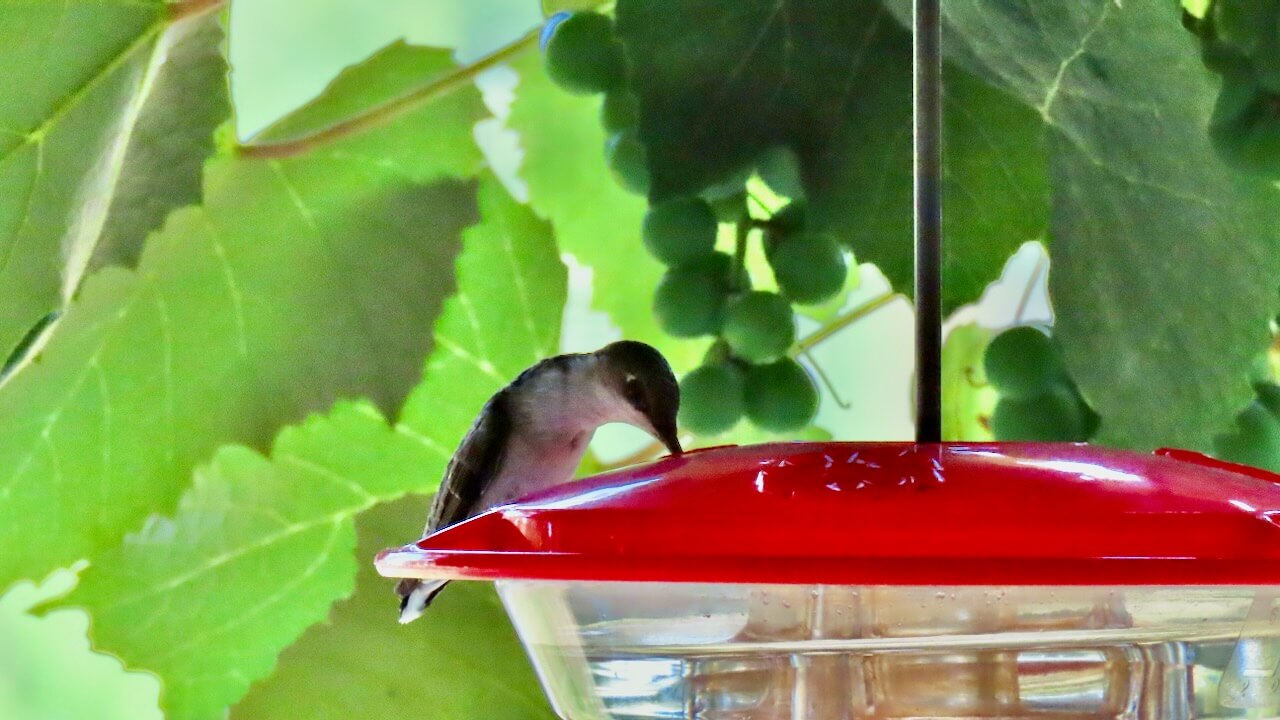

Just to the left of the parking lot, stone walls lend a shady spot at the edge of the sheep pen.

The friendly sheep will often come to you, and allow you to pat them.

From the pen, traditional wooden fencing and movable fencing allow the sheep to graze a variety of pastures. You can also view the beaver wetlands beyond.

Another accessible trail leads directly from the Visitors Center to open views of the North Meadow. The Meadow sign is also written in Braille underneath the English, and is linked to an audio tour for the visually impaired. In the ever-changing meadow, you might view any of the flora and fauna below:


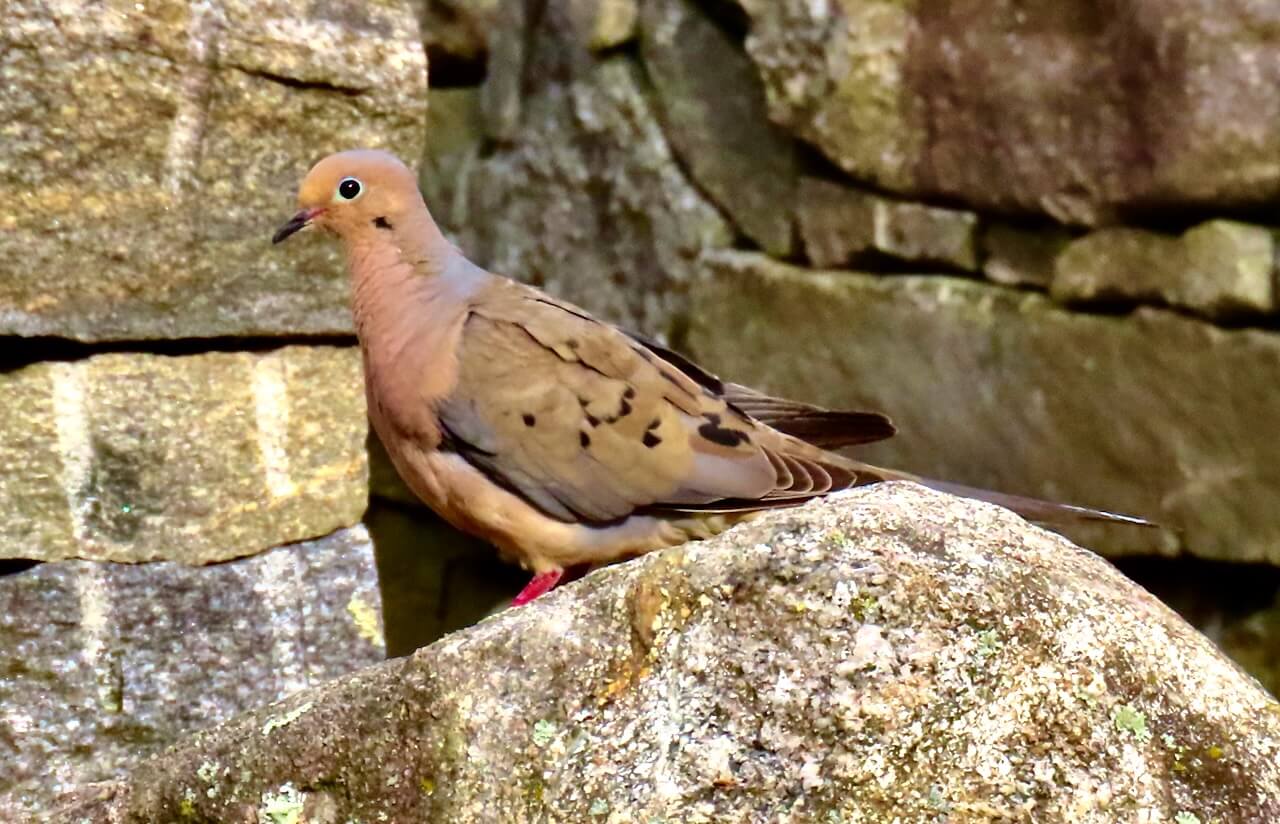
Mourning Dove

The scientific name for daylilies, hemerocallis, comes from the Greek words hermera, meaning day and kallos, meaning beauty. The two terms together can be translated as “beauty for a day”. This term aptly describes the lifespan of the plant, as each individual flower lasts only one day.
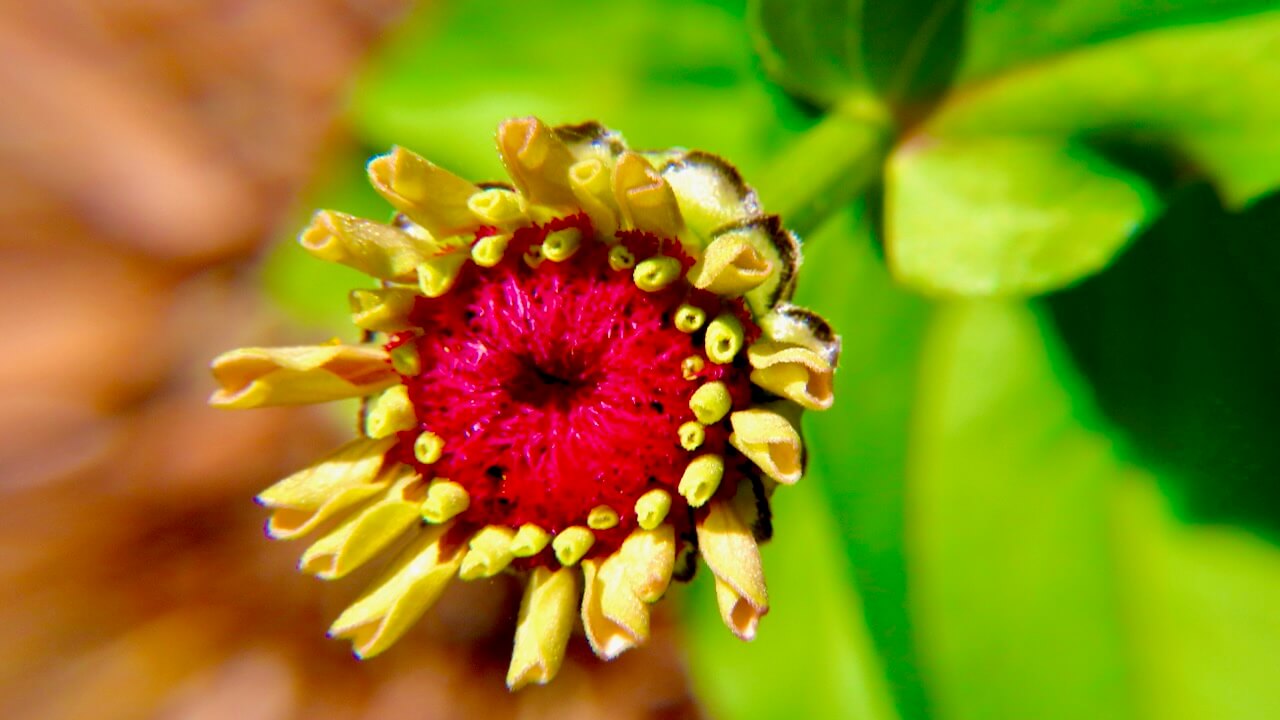
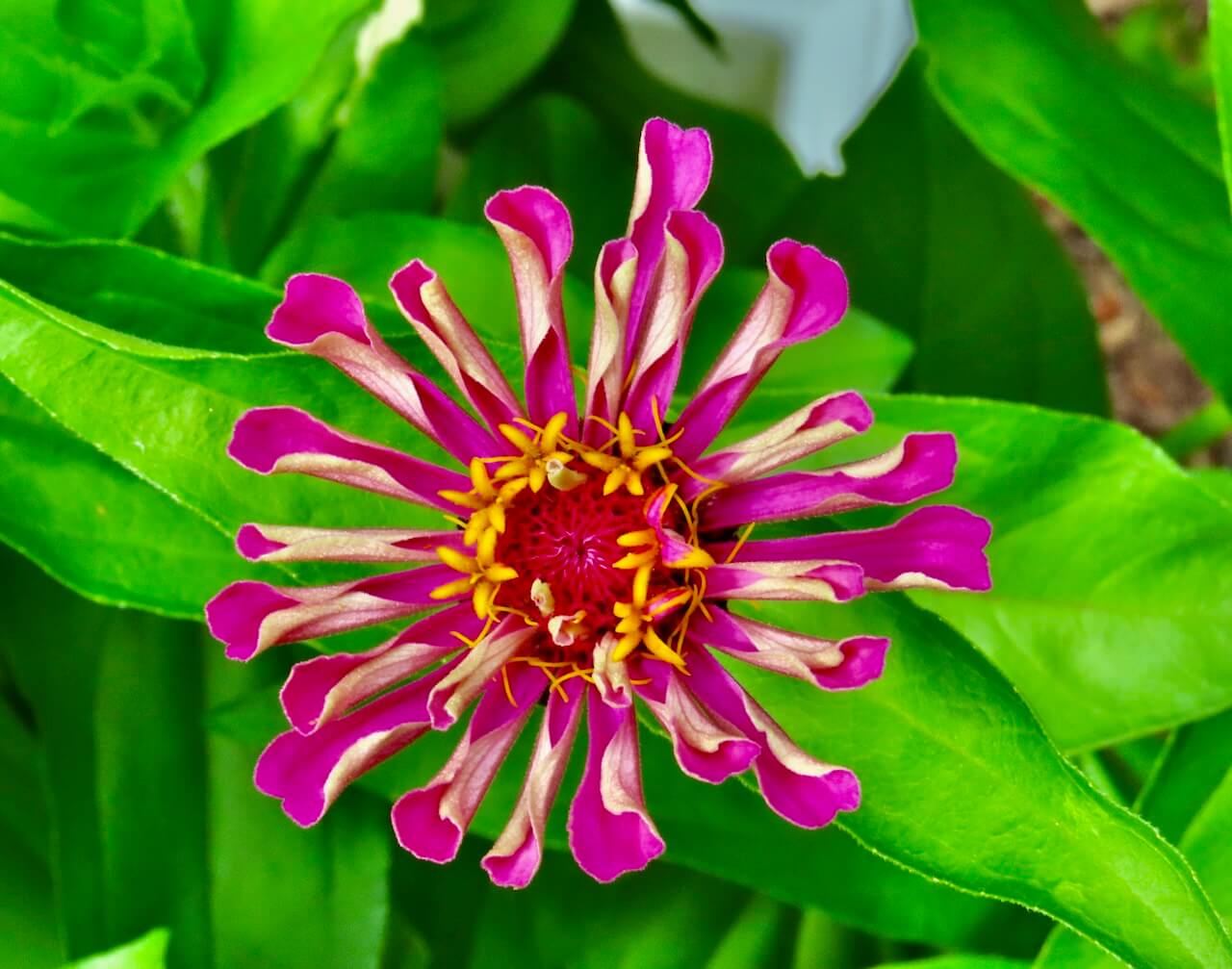
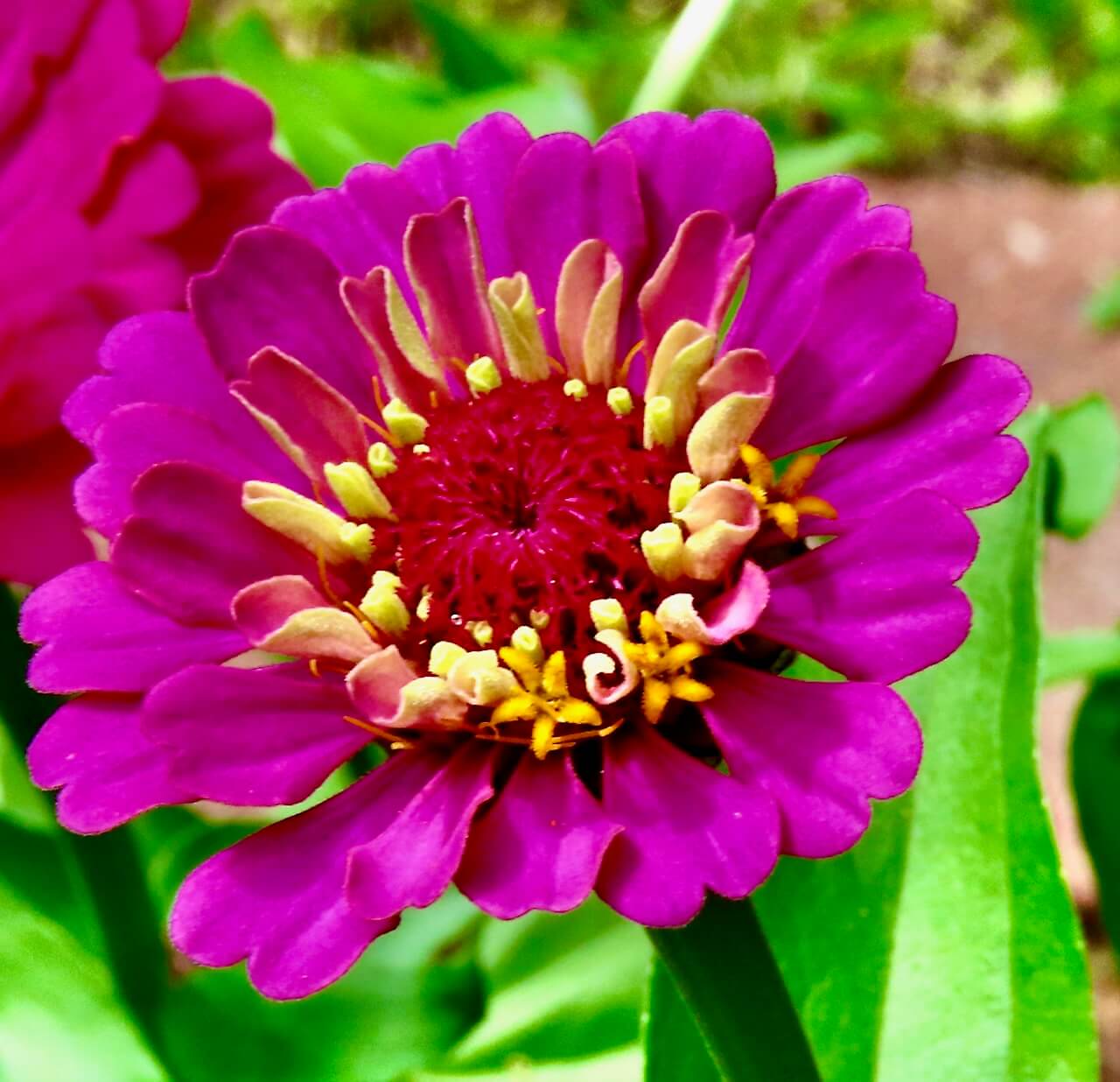
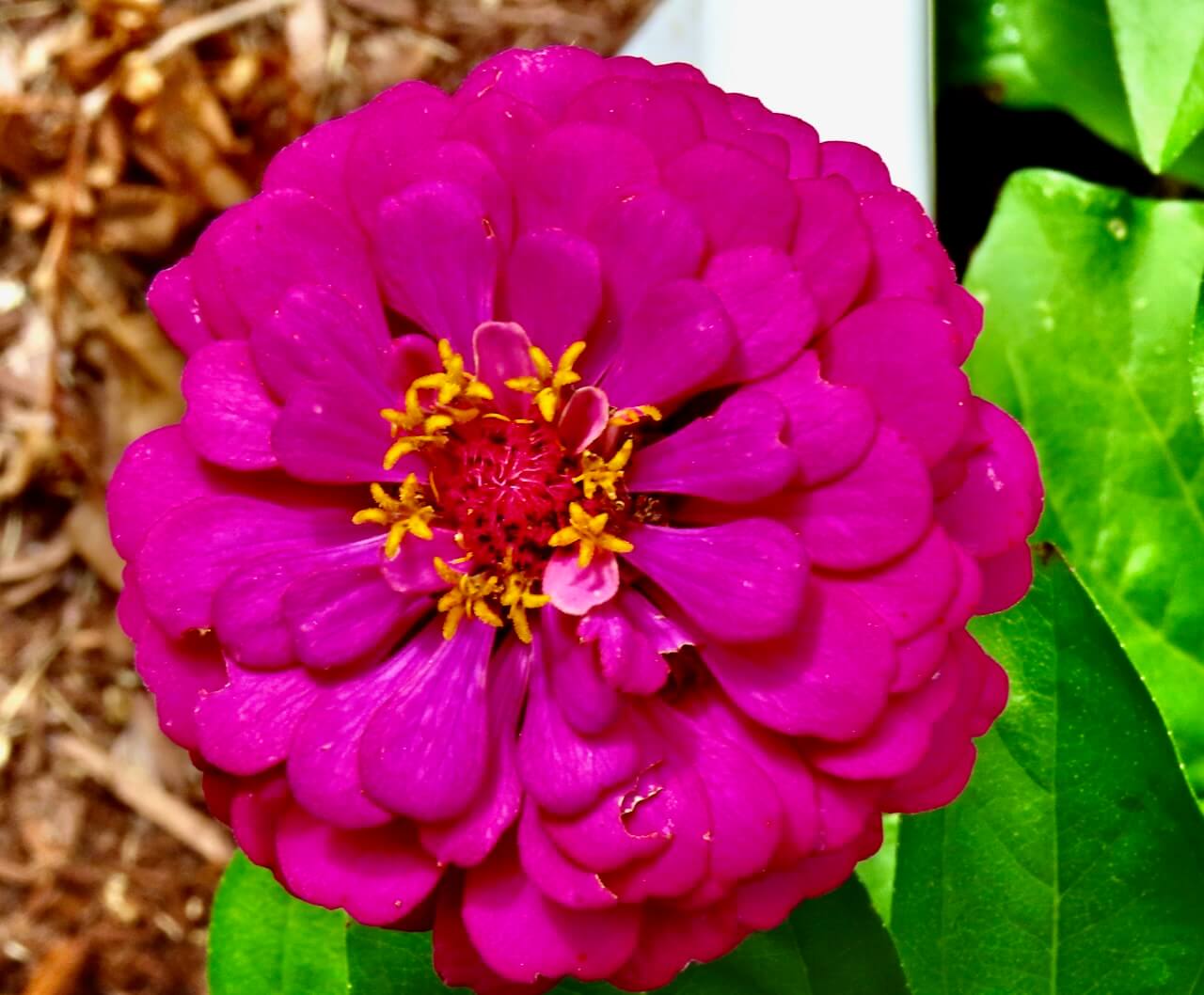
Daylilies are at their height in Central Massachusetts right now. As I travel the area, colorful lily displays abound, most likely due to the consistent sun and heat this season. Below are a few “beauties for a day” that I enjoyed in my own garden recently.
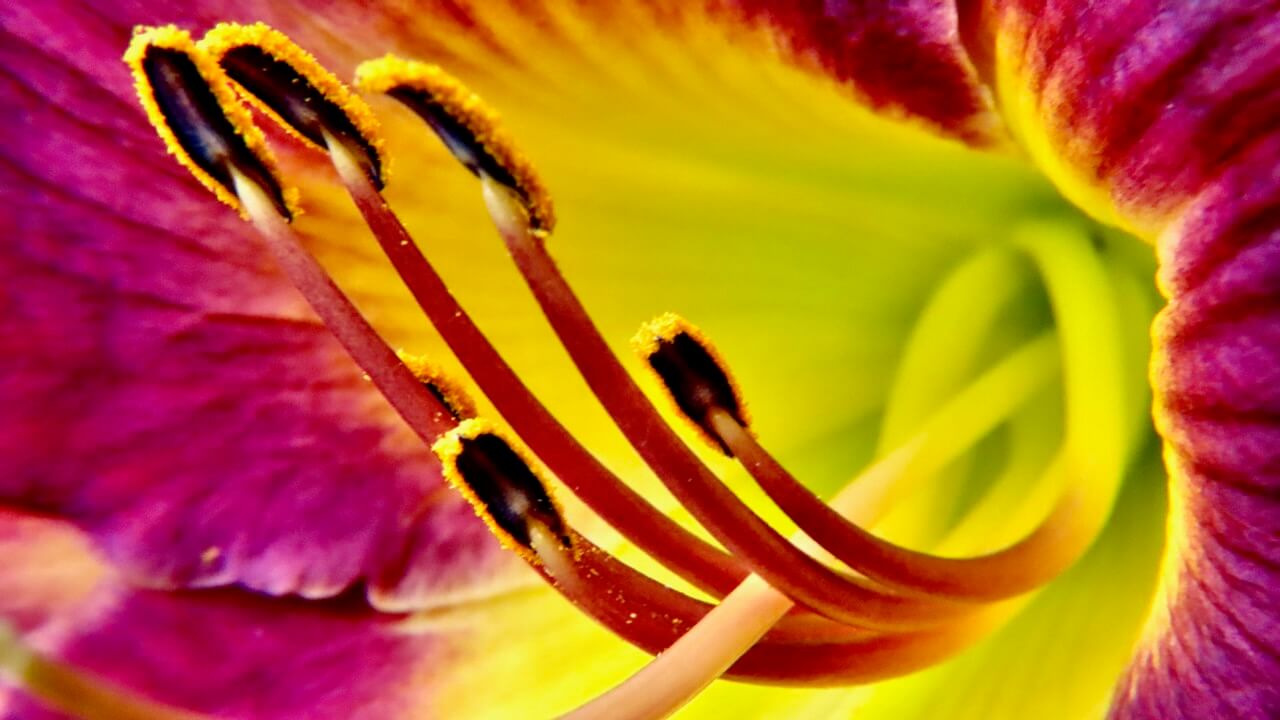
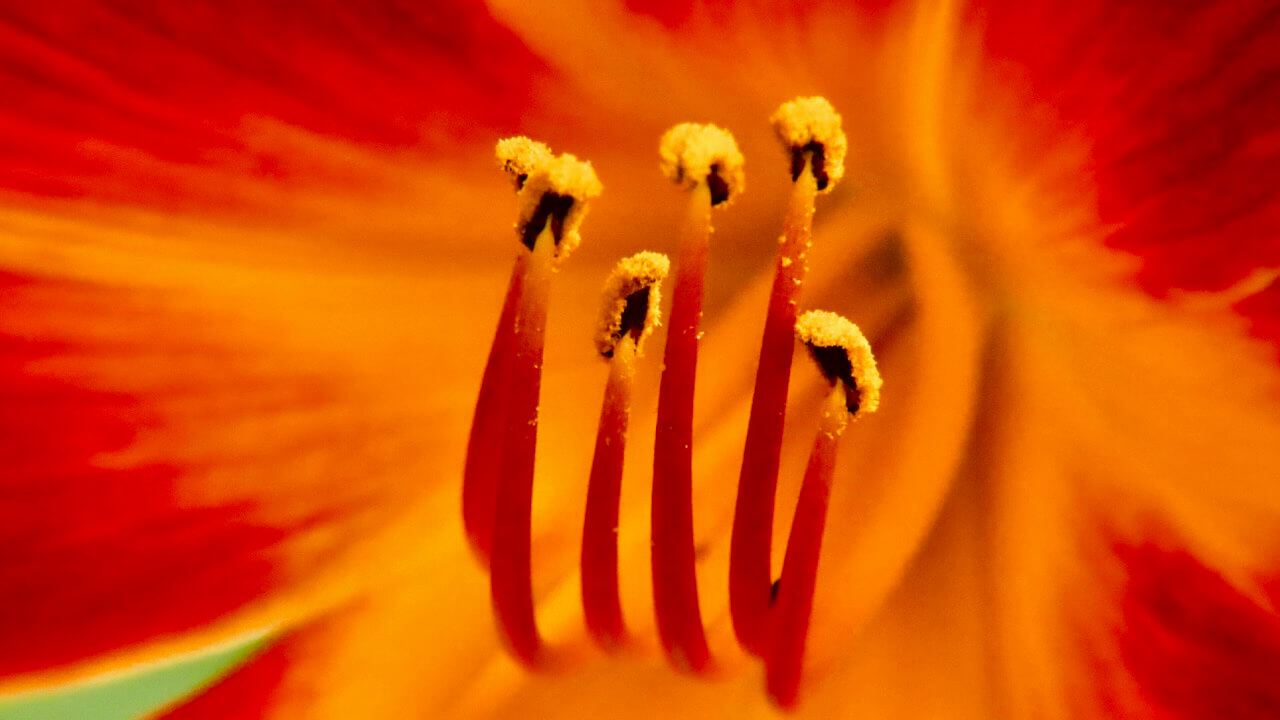
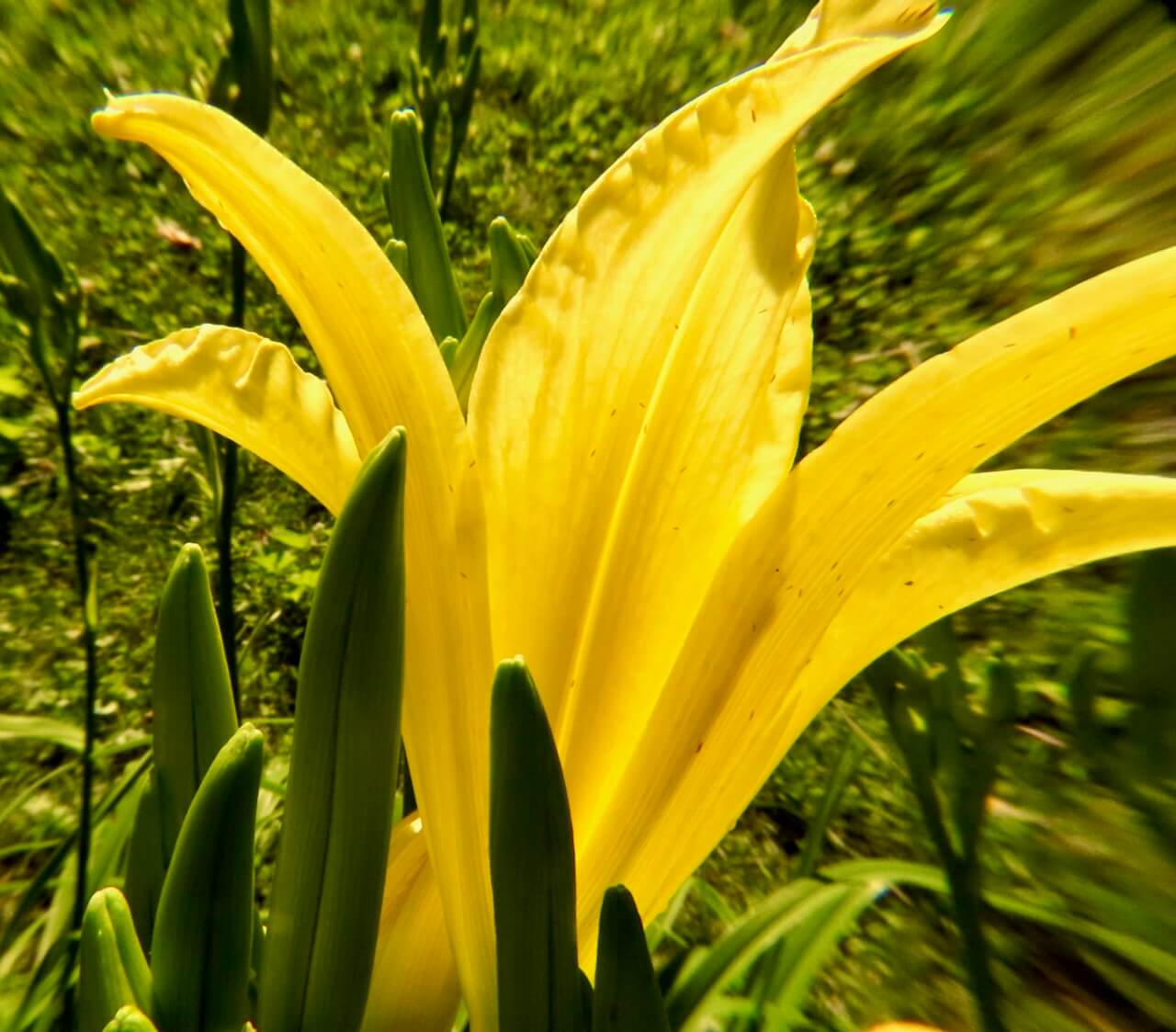

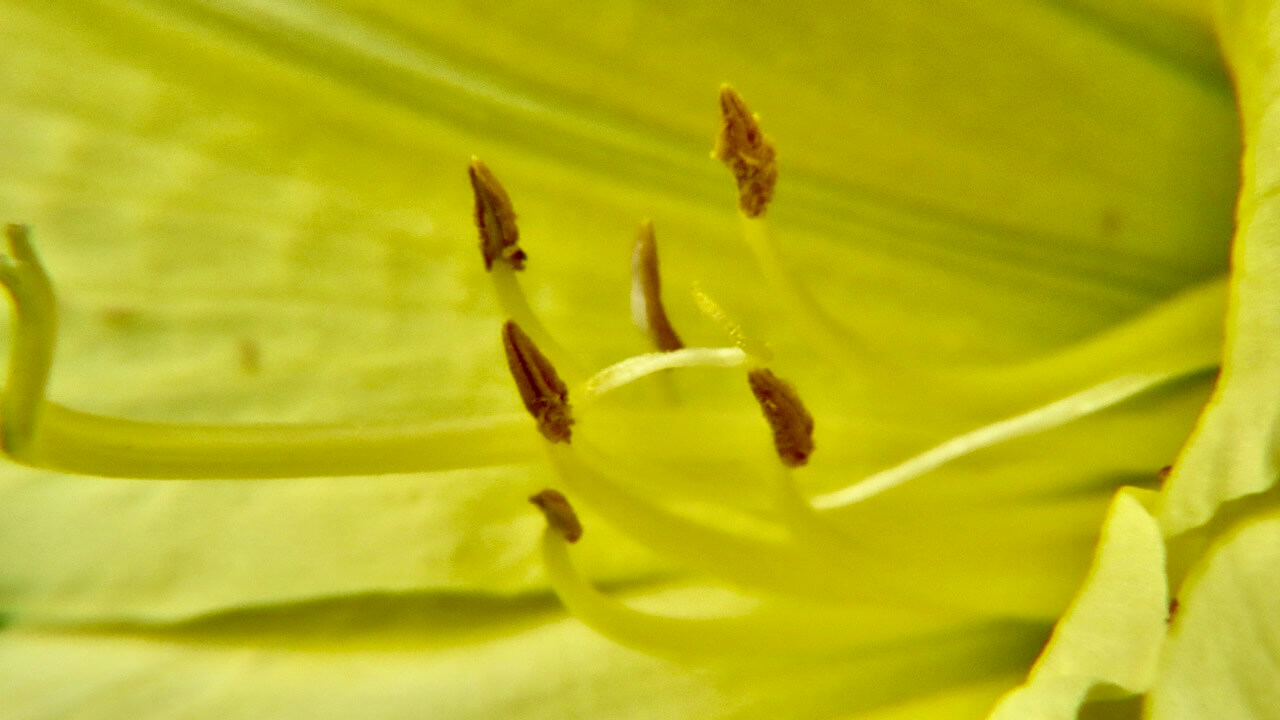
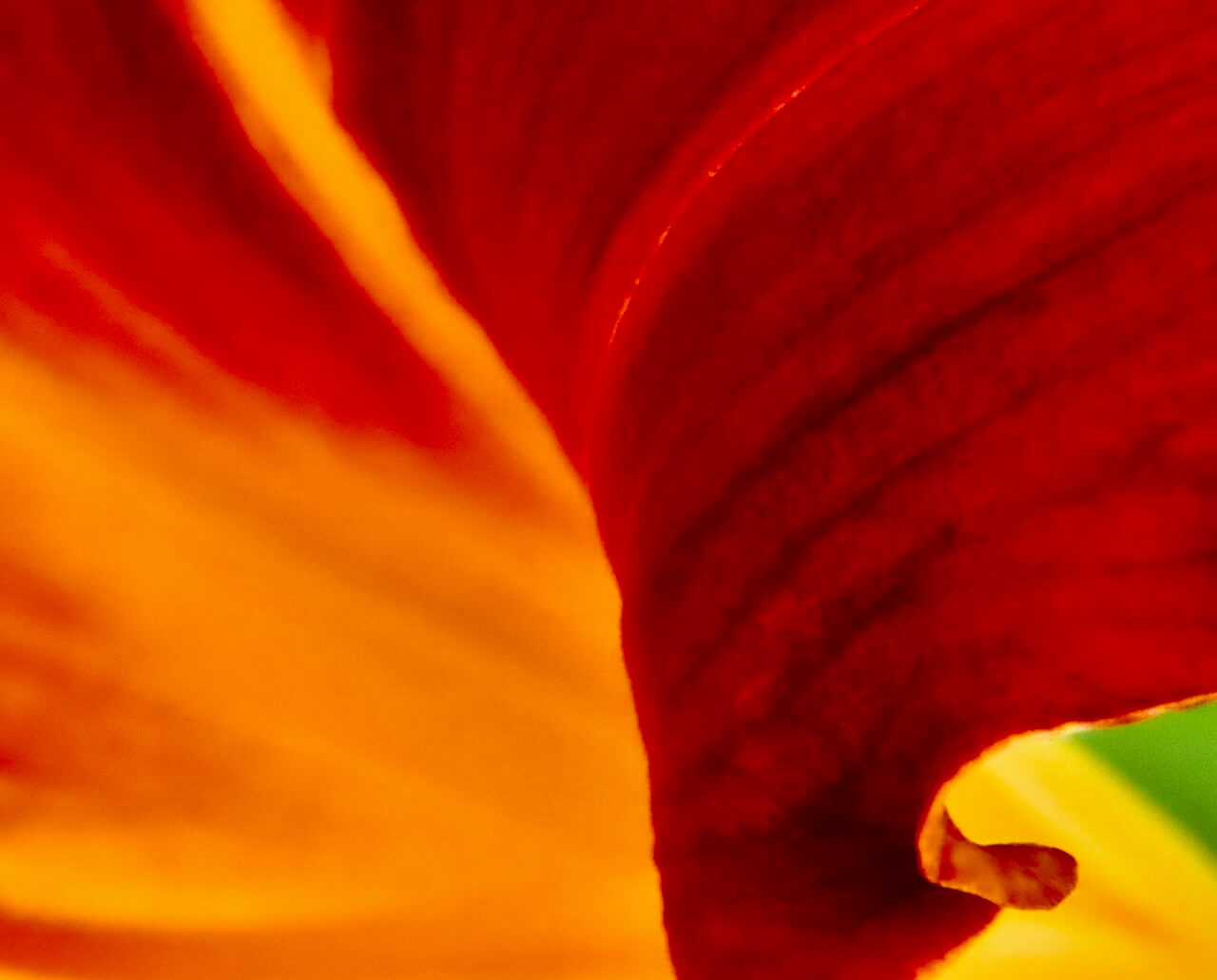
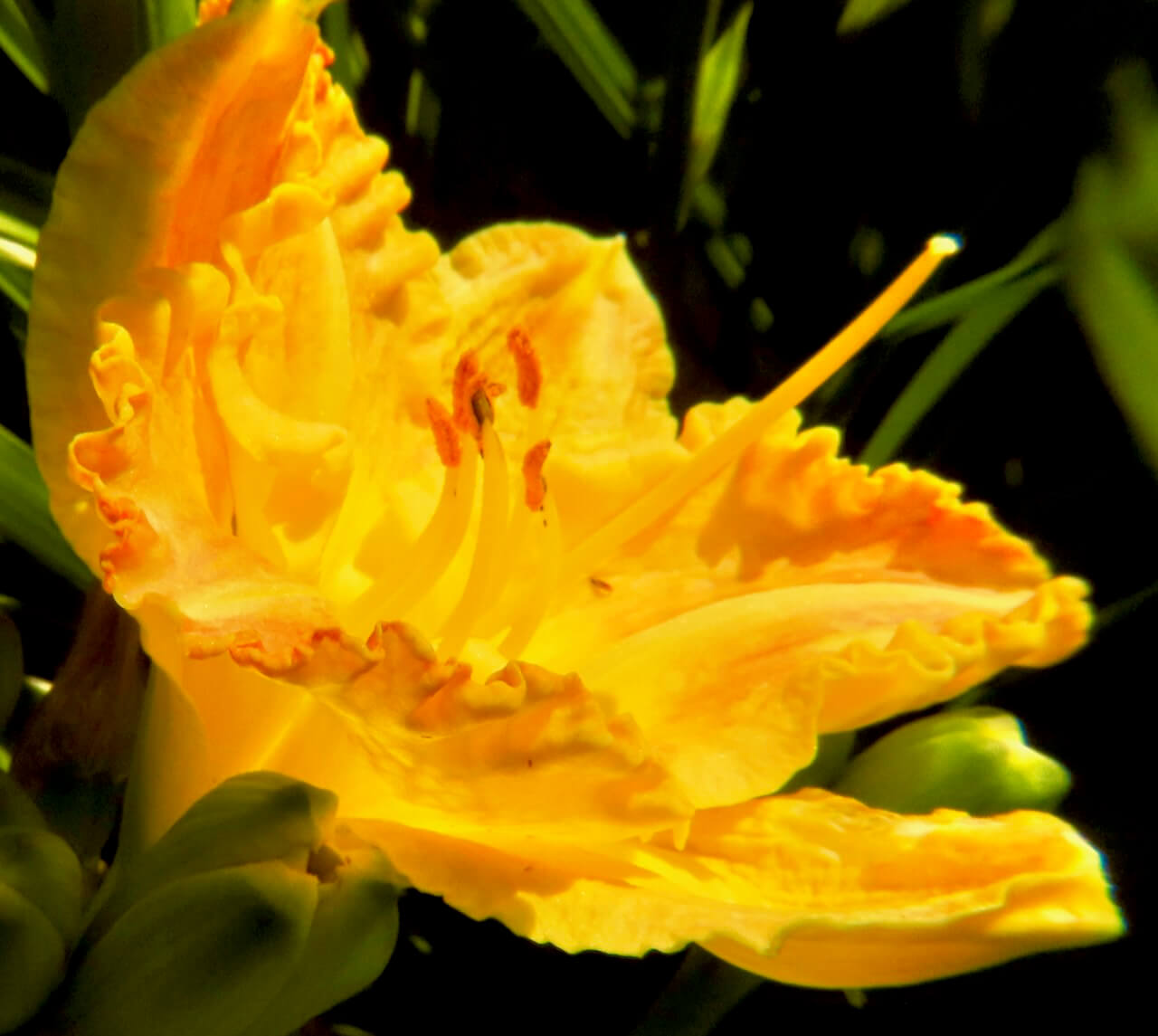

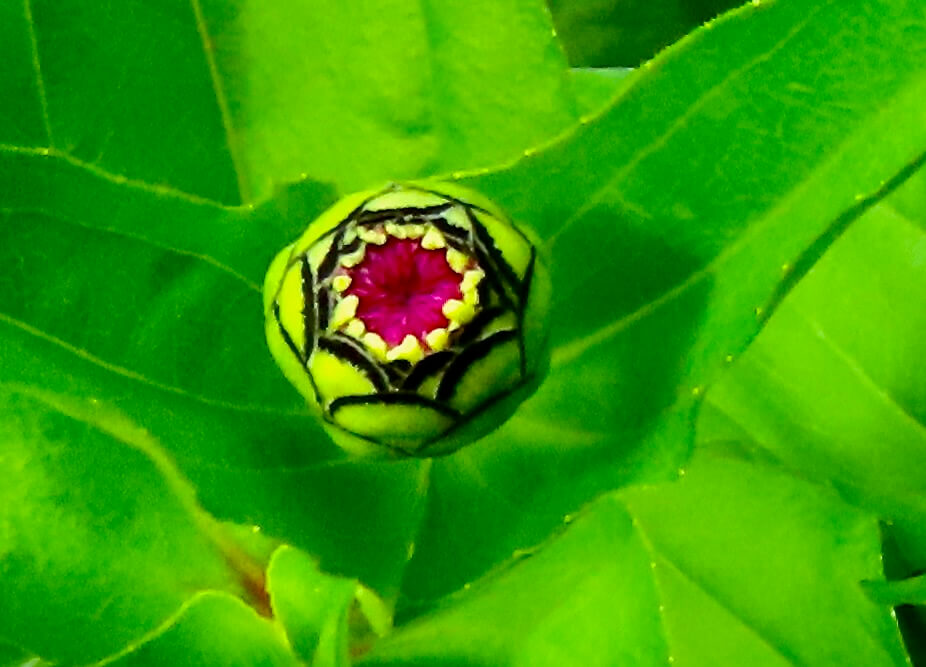
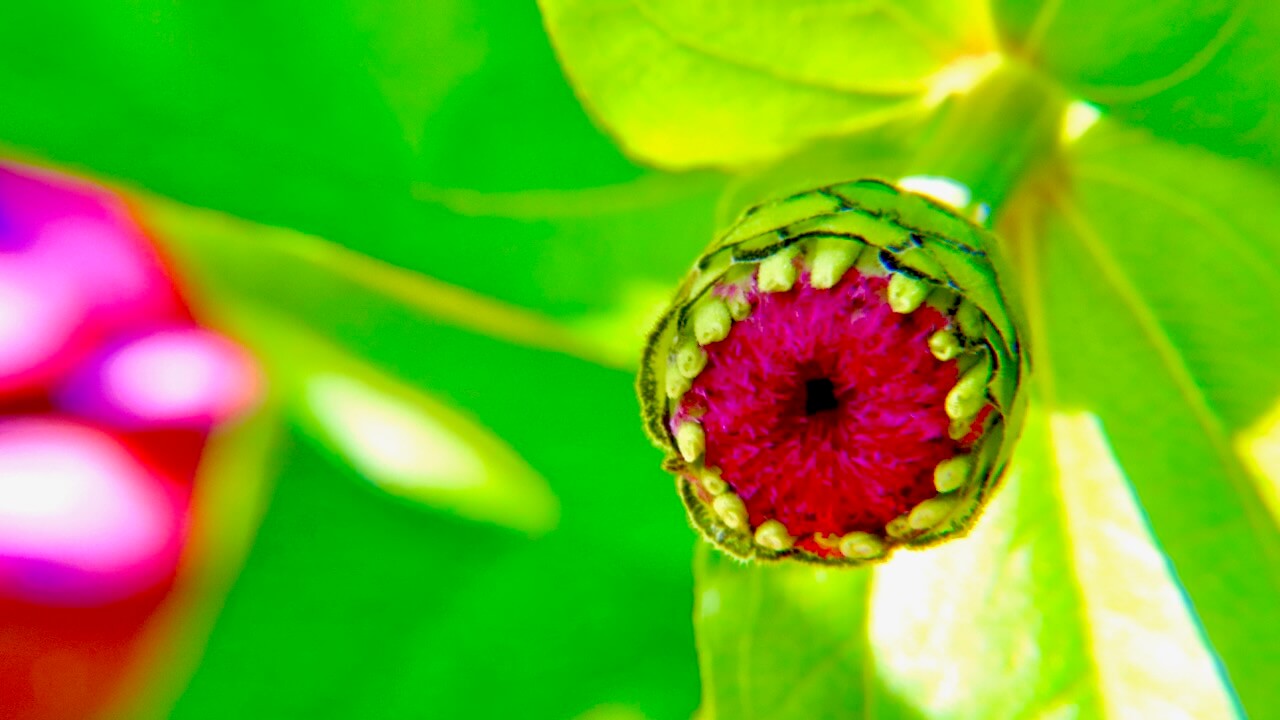
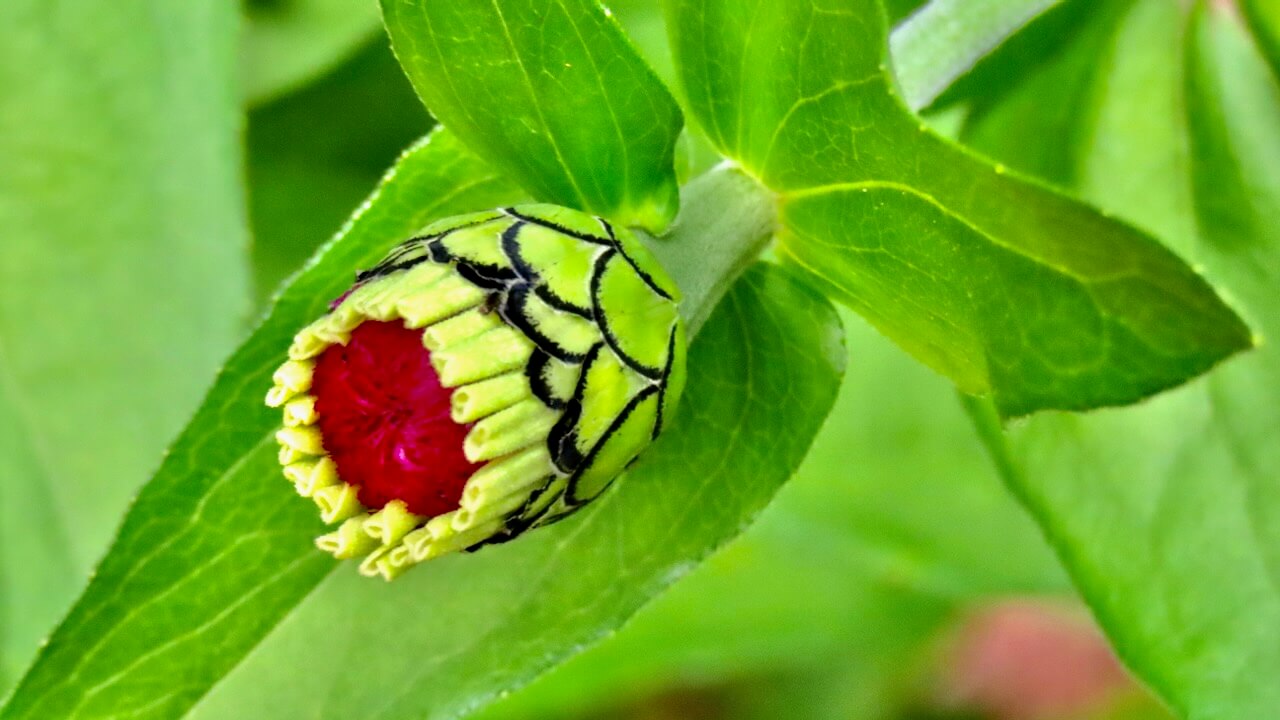


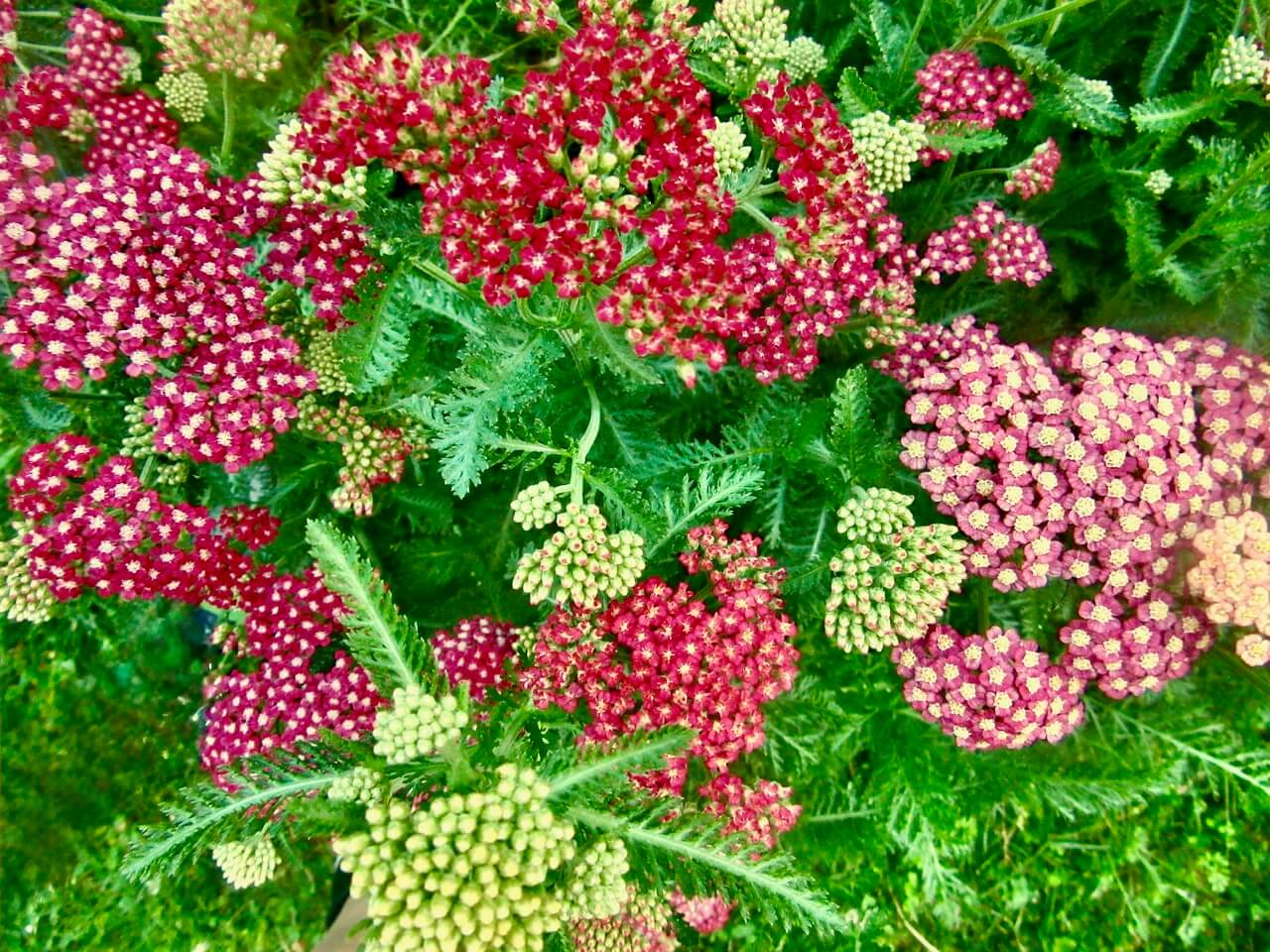

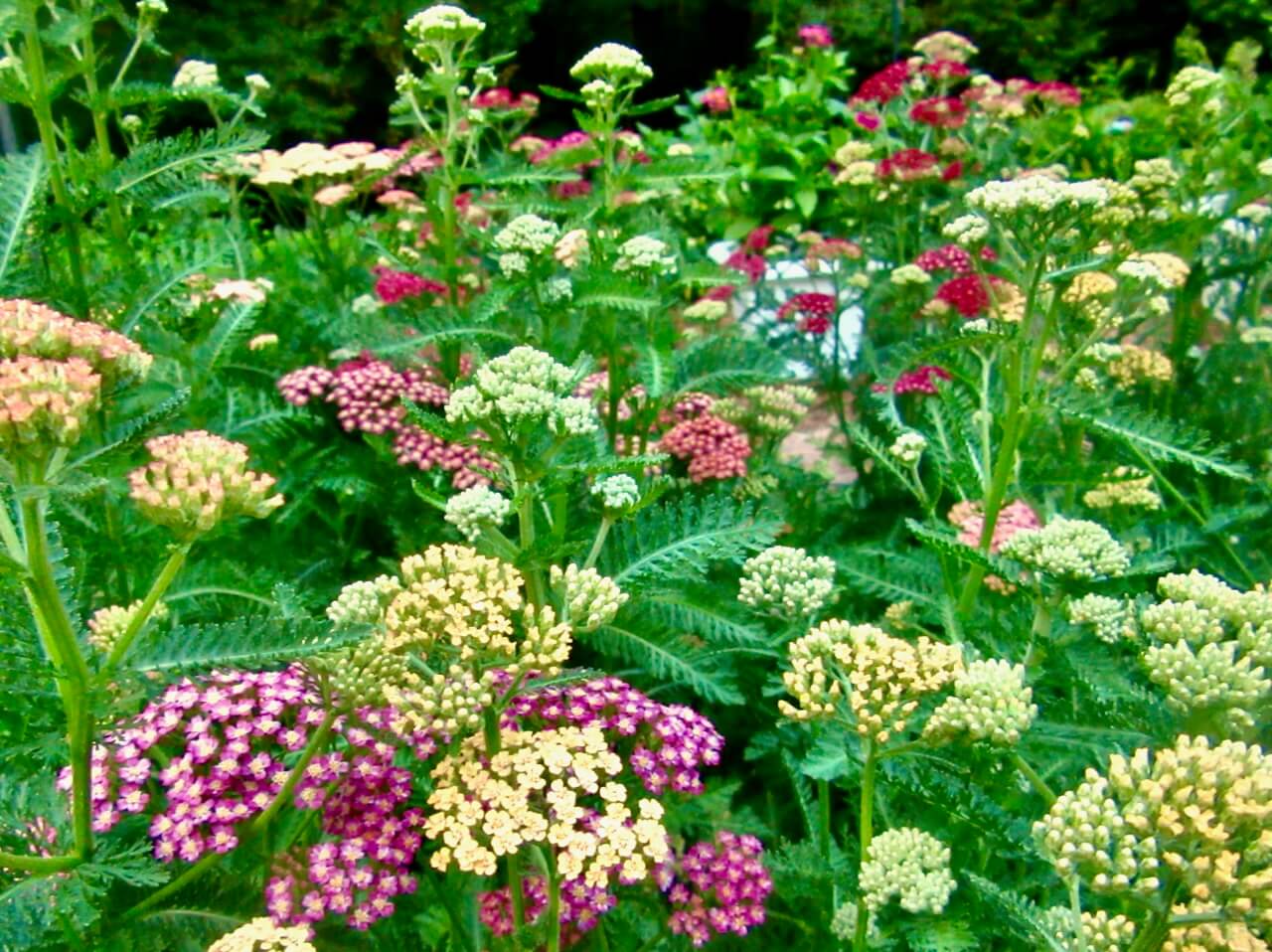


My yard is popping with orange this week.


The ditch lily softens and adds interest to this fieldstone foundation.


Here, the Asiatic lilies contrast with evergreens nearby, lending a more “Eastern” feeling.


Walking by this beautiful English Tudor Revival home near the center of Holden, Massachusetts, I am reminded of one of the links between England and New England.

The 1920s and 1930s were the heyday of the Tudor Revival style in the United States. The steeply pitched roofs and sturdy masonry held up to the harsh New England winters, and the “old world charm” blended well with historic colonial homes of the era.

A wide porch overlooks a spacious walkway lined by roses.

Stones such as this one with gothic details were often used as “capstones” at the end of walkways.

A second porch features a covered doorway entrance; the peace symbol over the door is a welcome light at night.

The diamond-patterned grills in the top floor windows are typical of Tudor style, as are the dark frames around all the windows.

The sturdy wooden fence allows the owner’s pets plenty of room to roam safely near a busy street.

The home once belonged to the owners of a large woolen mill in Holden. The inscription 1741-1991 refers to the towns 250 year celebration held in 1991.

The garden’s old style swing is an invitation to slow down in these busy times.

The grounds feature ceramics,

charming relaxed seating,

and beehives. The owners are beekeepers and honey from the hives is sold in a local shop in Holden.


A quiet area for bird viewing in back of the visitor’s center at Wachusett Meadow was not all serenity and contemplation on a recent breezy morning.
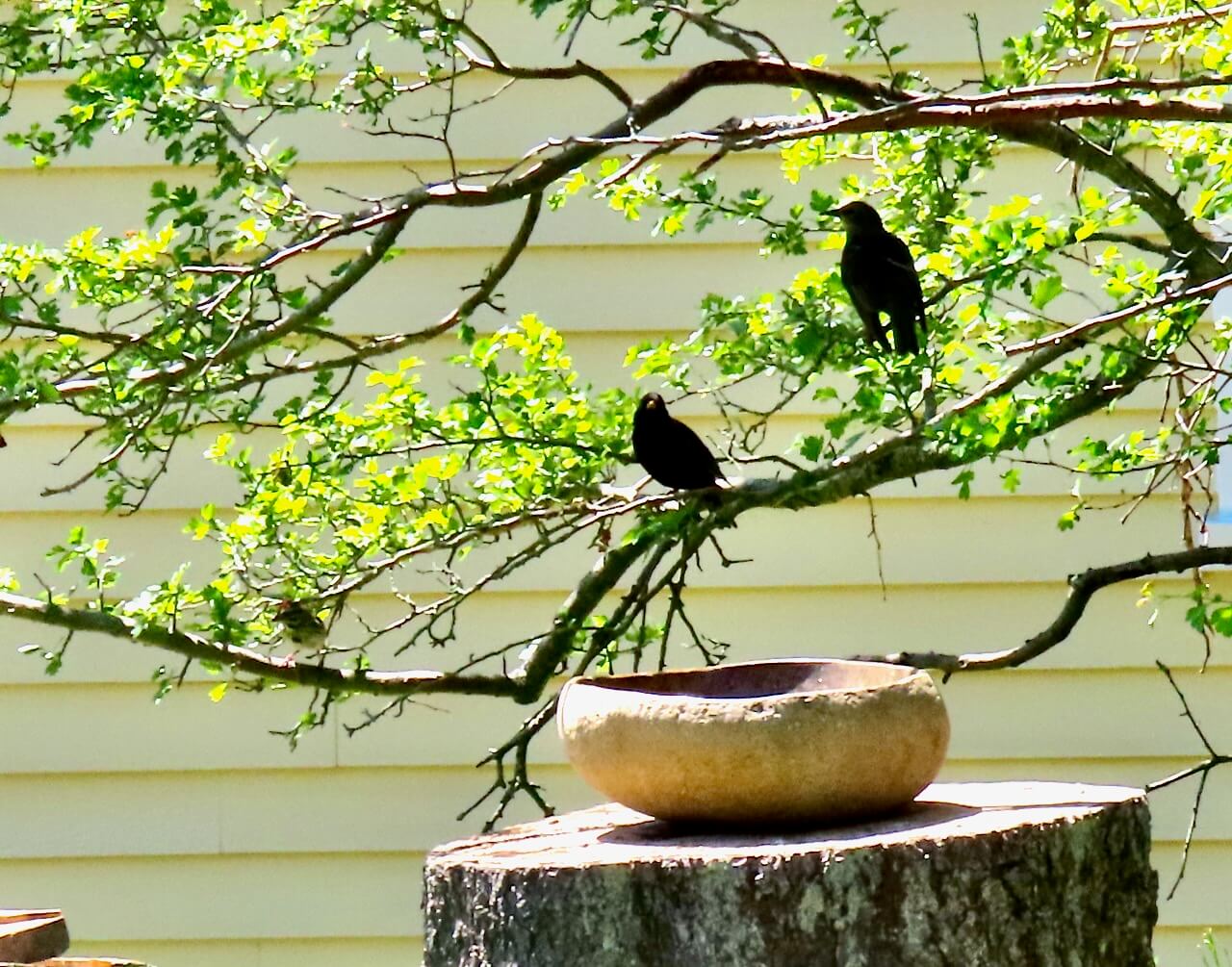
A perfect Zen moment with European starlings.
A bluejay gets some unexpected company at the birdbath hand carved from river rocks..
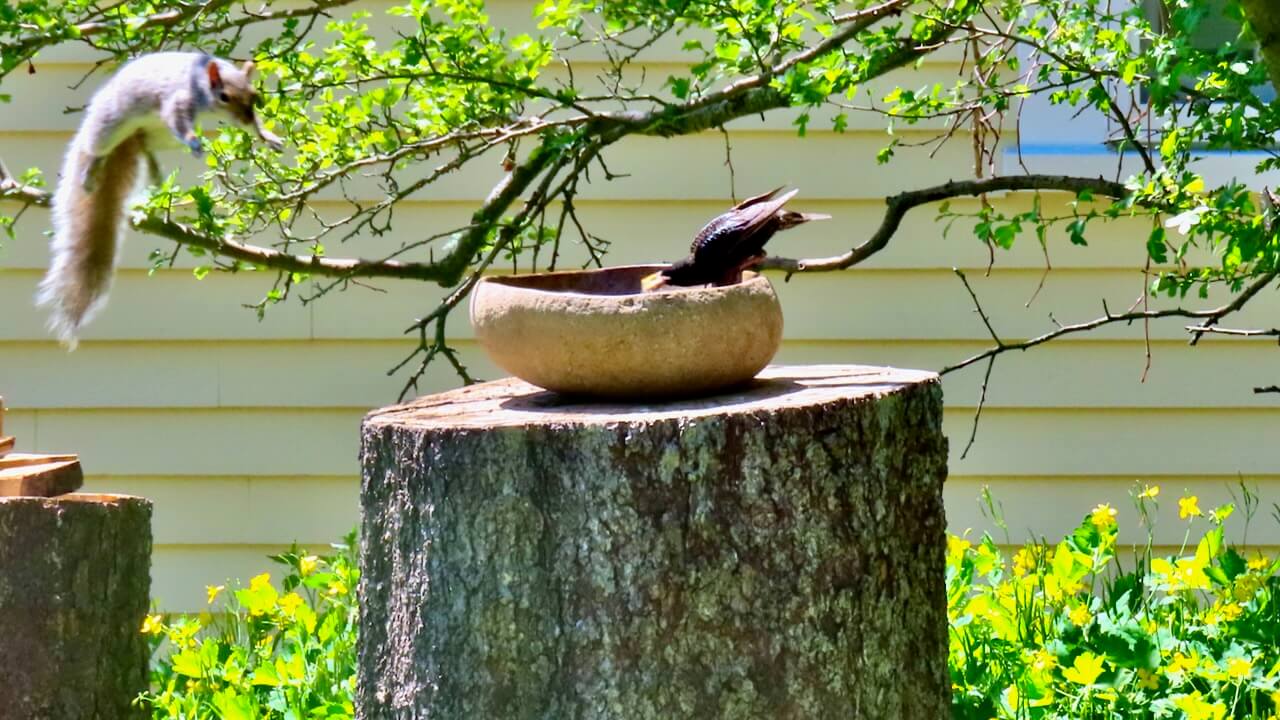
The game is afoot!
Juvenile starlings are known to squabble.
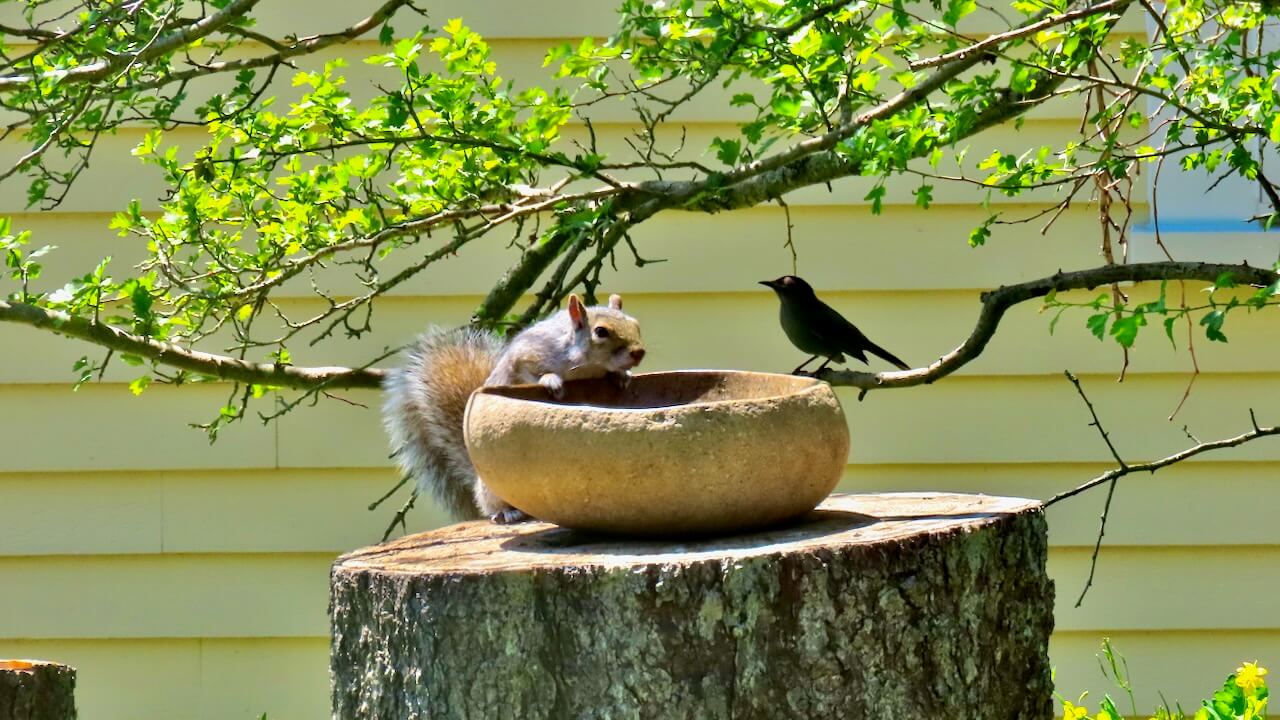
The gray squirrel and starling share the scene peacefully.
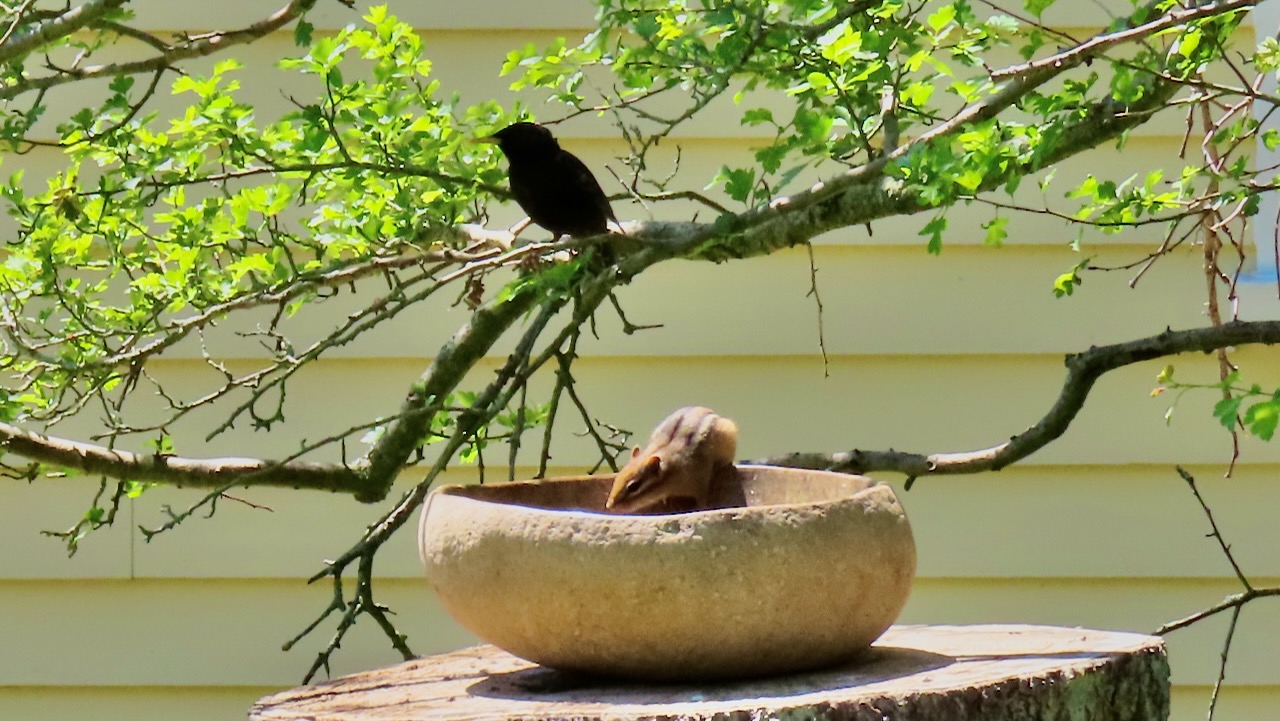
The chipmunk’s color almost matches the birdbath.
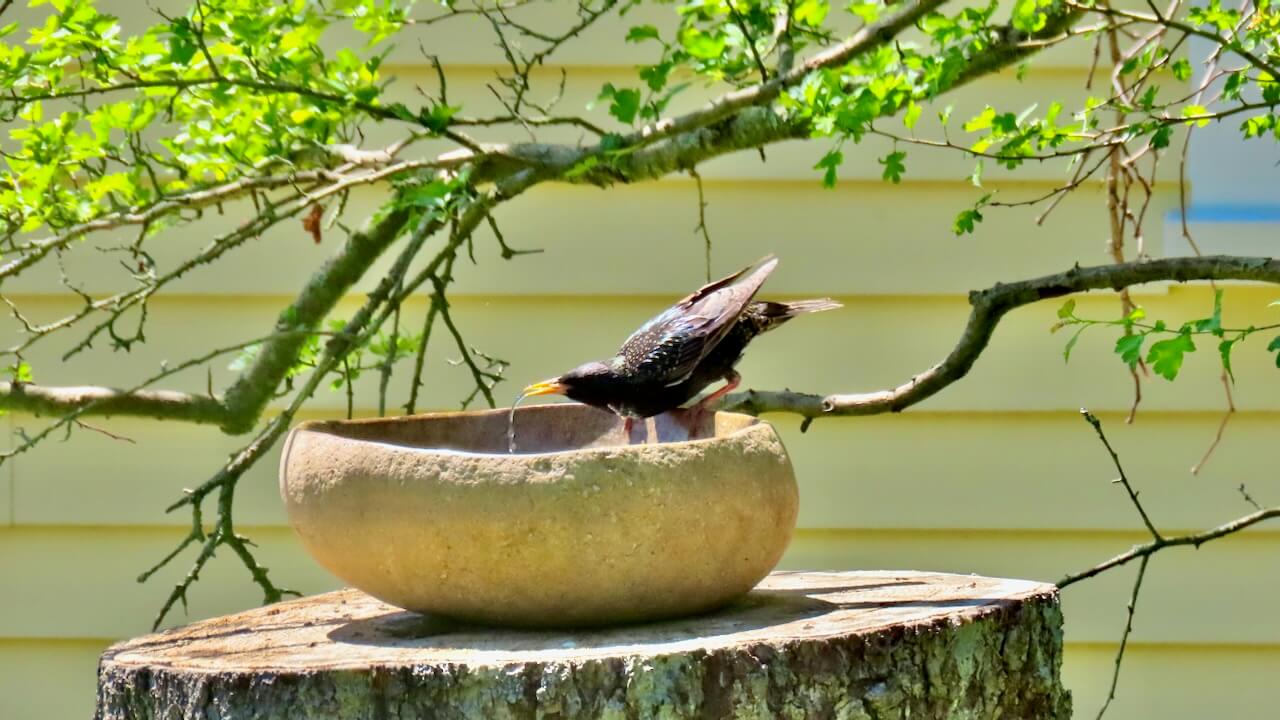
Calm returns.
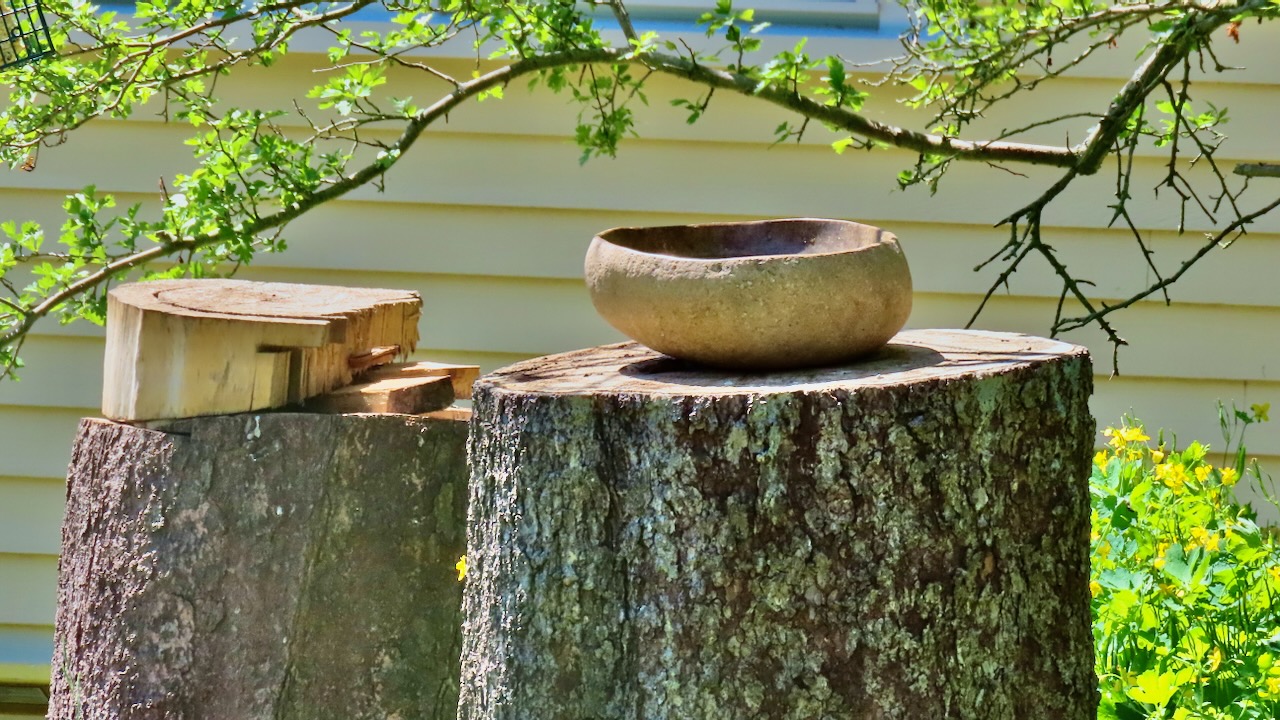
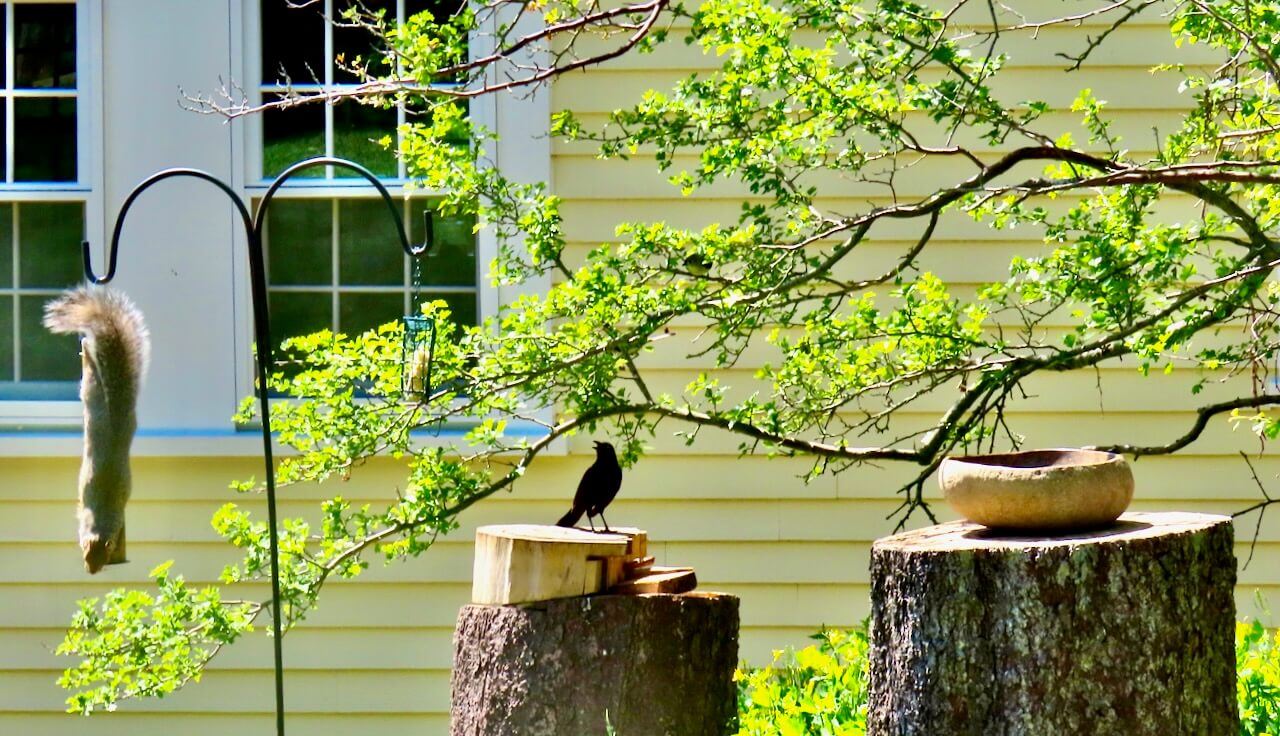
The stump on the left is topped by a cookie, which is a horizontal slab of wood. I shared more information about cookies in a recent post.

I live a few miles from Mt. Wachusett in Princeton, Massachusetts, the highest point in Massachusetts east of the Connecticut River. It is a monadnock, a rock that resisted erosion better than the surrounding land and stands alone above the lower hills. I think it is appropriate that this isolated peak that endured hundreds of millions of years in this manner is also called a “survivor“ mountain.

This “survivor” can be seen rising above the lower lands from numerous settings in the surrounding towns, and is a celebrated landmark in the region. Here, it rises above the farmland in Sterling, Massachusetts.

Earlier this spring, a roadside walk near the mountain’s base revealed both its rock structure and a quintessential spring woodland vista. Boulders tumble along the hilly roadside, and a hardwood forest grows among the rocks.

Caves and shelters are covered by maple alumroot, a member of the coral bell family, common in New England.

The alumroot looks surprisingly like a carpet of maple leaves.

Monadnocks contain singular large upstanding rocks called “glacial erratics”, which were likely deposited during the last ice age over 400 million years ago.

The top third of this glacial erratic displays reddish colored rock tripe, an edible lichen known as “famine food” . It was consumed by early European explorers, indigenous peoples, and George Washington’s starving troops during the winter at Valley Forge. It is very bitter and must be boiled before eating.

Hardwood tree roots share space around and on top of large boulders. Tree trunks sometimes grow in the rock space itself. In contrast, a common red maple sapling is just beginning to grow in this crowded area.

This “cave” is formed by metamorphic rocks ( rocks that have been transformed by heat, pressure and chemical reactions deep within the Earth) . Natural rock shelters such as these are believed to have been used by the Nipmuc people, who made their home here before European colonization. In fact Wachusett means mountain place in the Nipmuc/Algonquin language. These caves were likely used for protection from the elements, or for the storage of food.

Trees growing out of rocks and bending toward the light are demonstrating phototropism, the manner in which plants naturally grow towards light sources.

Celebrate this survivor, but beware when driving!

A lightly edited reblog of a post from this day in 2021.
Iris means “rainbow” in Greek.
In Greek mythology, the goddess Iris carried messages from heaven to earth on the arc of the rainbow. Beautiful flowers appeared wherever she set foot on the ground.
Irises in a rainbow of colors are blooming in my garden this week!

The Wabash Tall Bearded Iris, introduced in 1936, an is an award-winning heirloom flower.


A group of Honorabile Iris. This vigorous heirloom bearded iris was introduced in Paris in 1840, and carried across the United States by the pioneers.

The Amas Iris was collected in Turkey in the late 1800s. It is larger than many other irises.


Pallida Sweet Irises are prized for their sweet grape-like or powdery scent. Many modern irises have only a mild scent, or no scent at all.

After a long snowy winter, old favorite flora and fauna are once again reappearing in my yard.
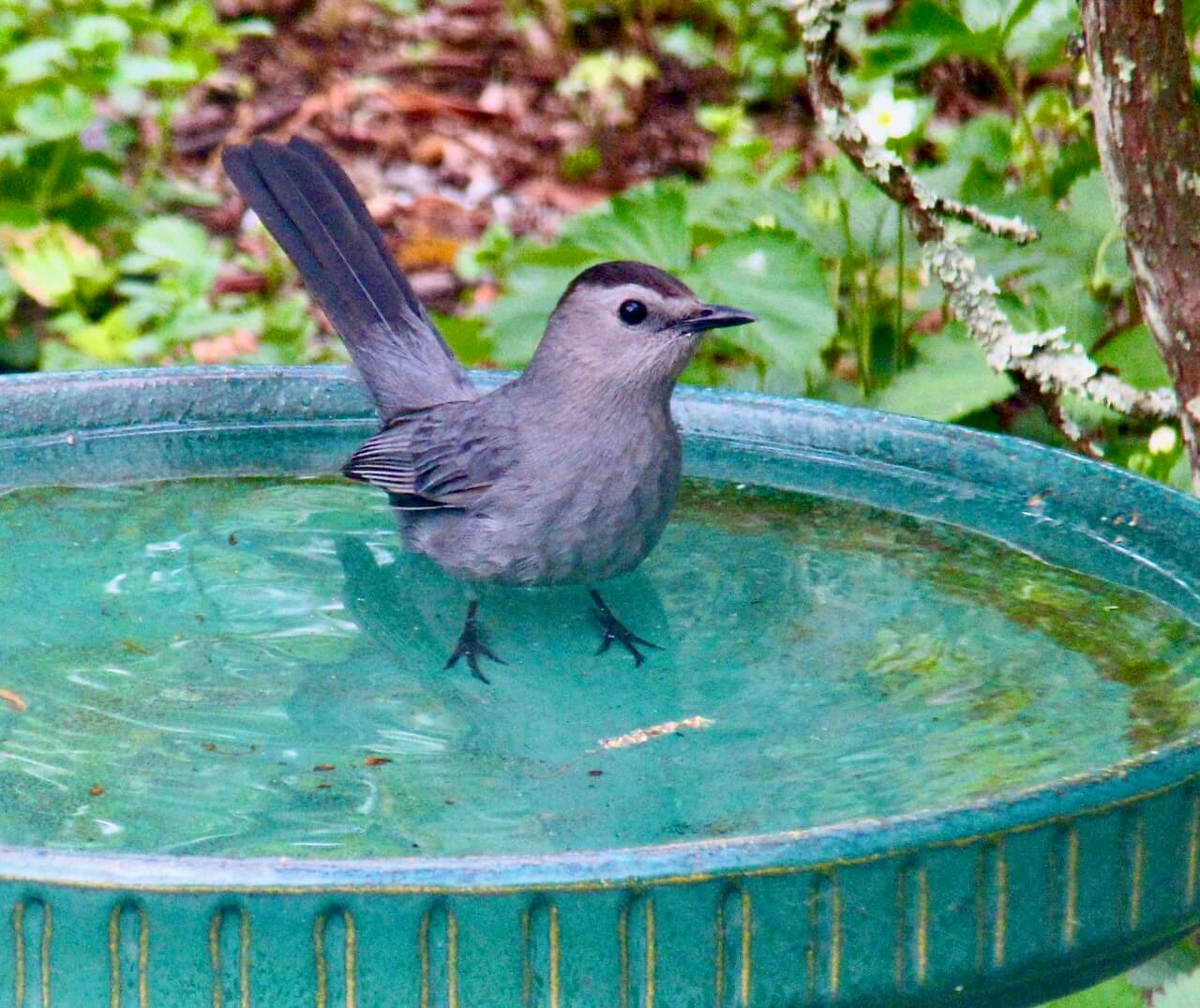
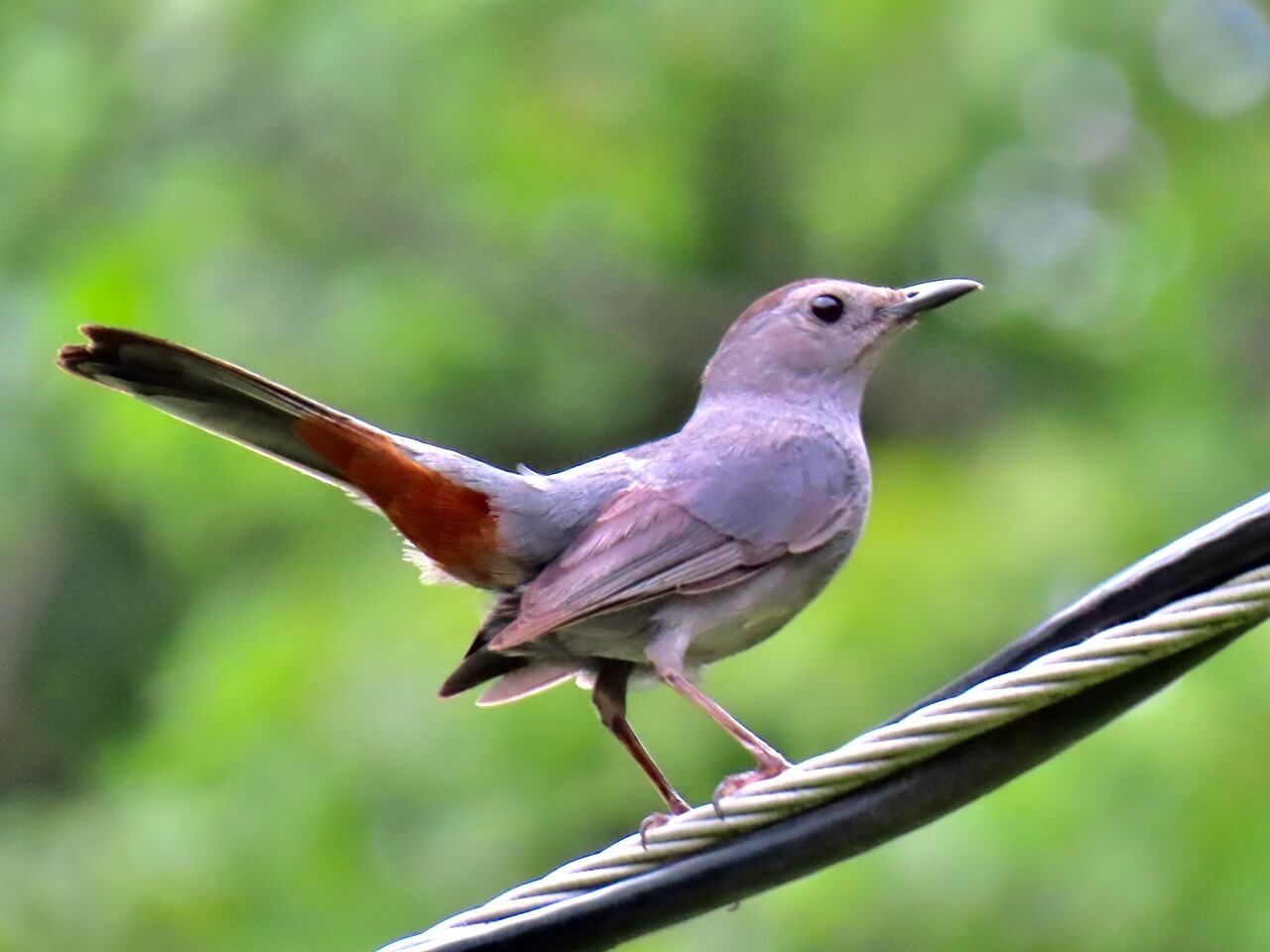
A Juvenile Gray Catbird enjoys a bath.
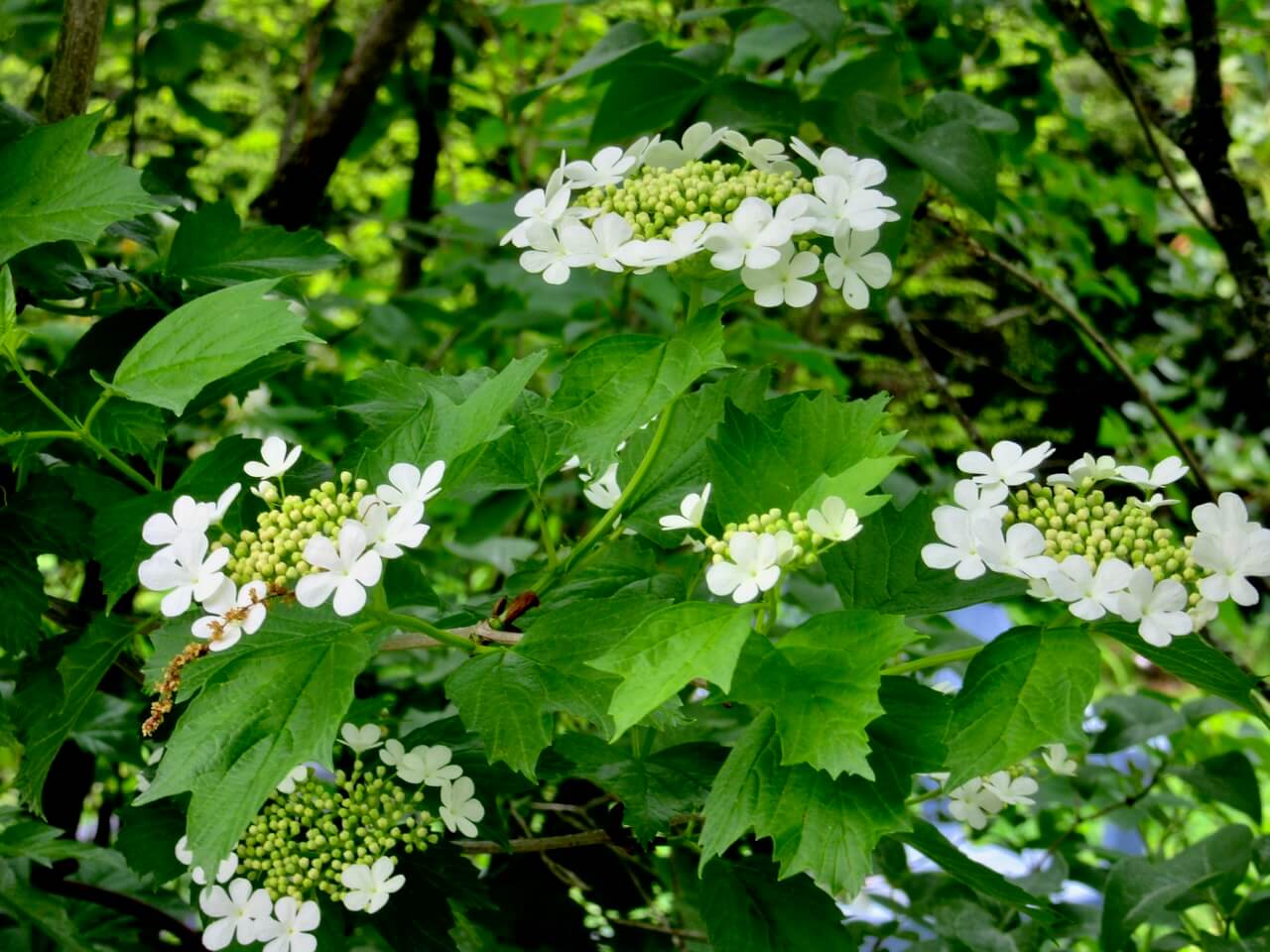
American Cranberrybush Viburnum
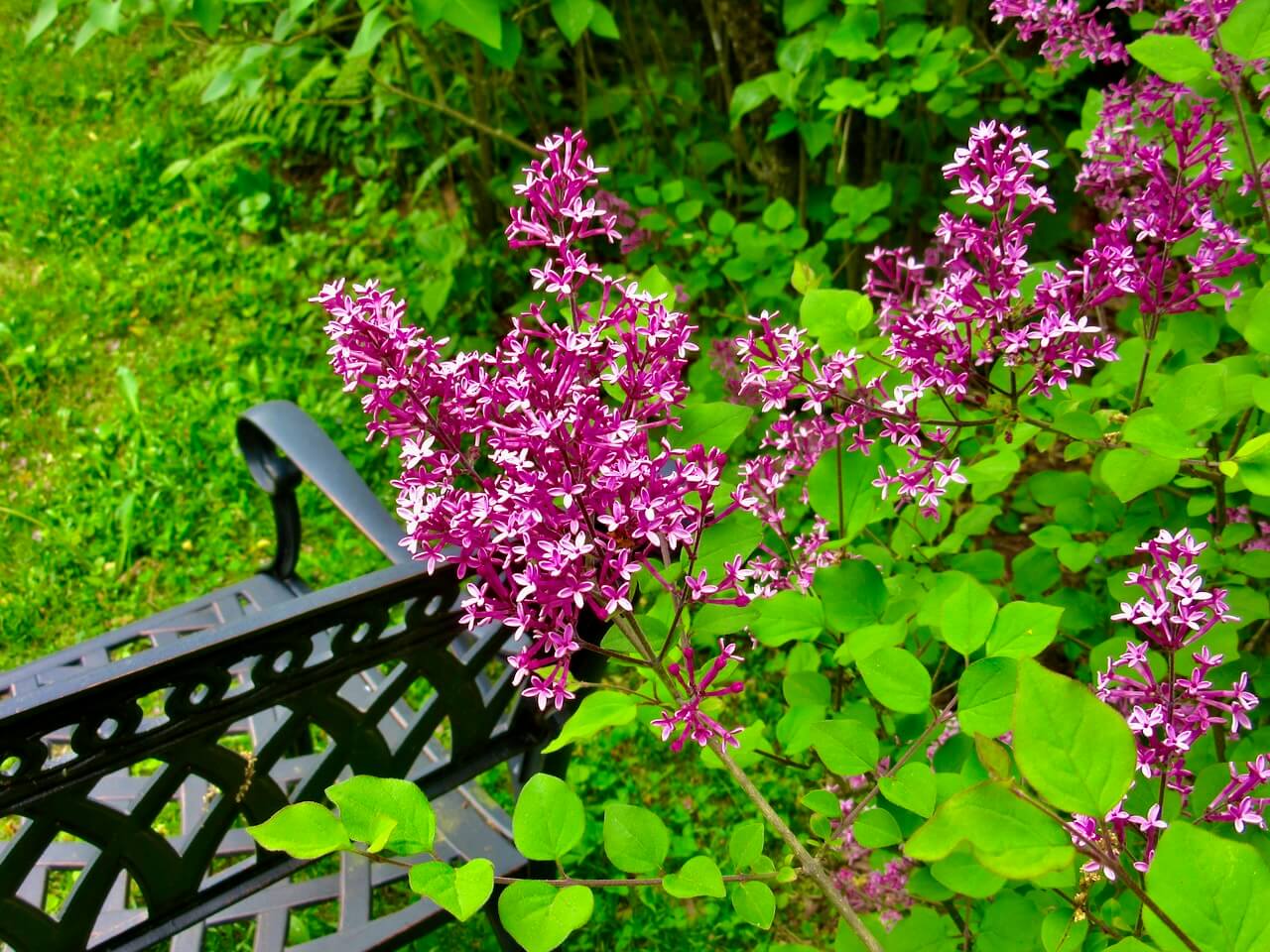
Boomerang Lilac
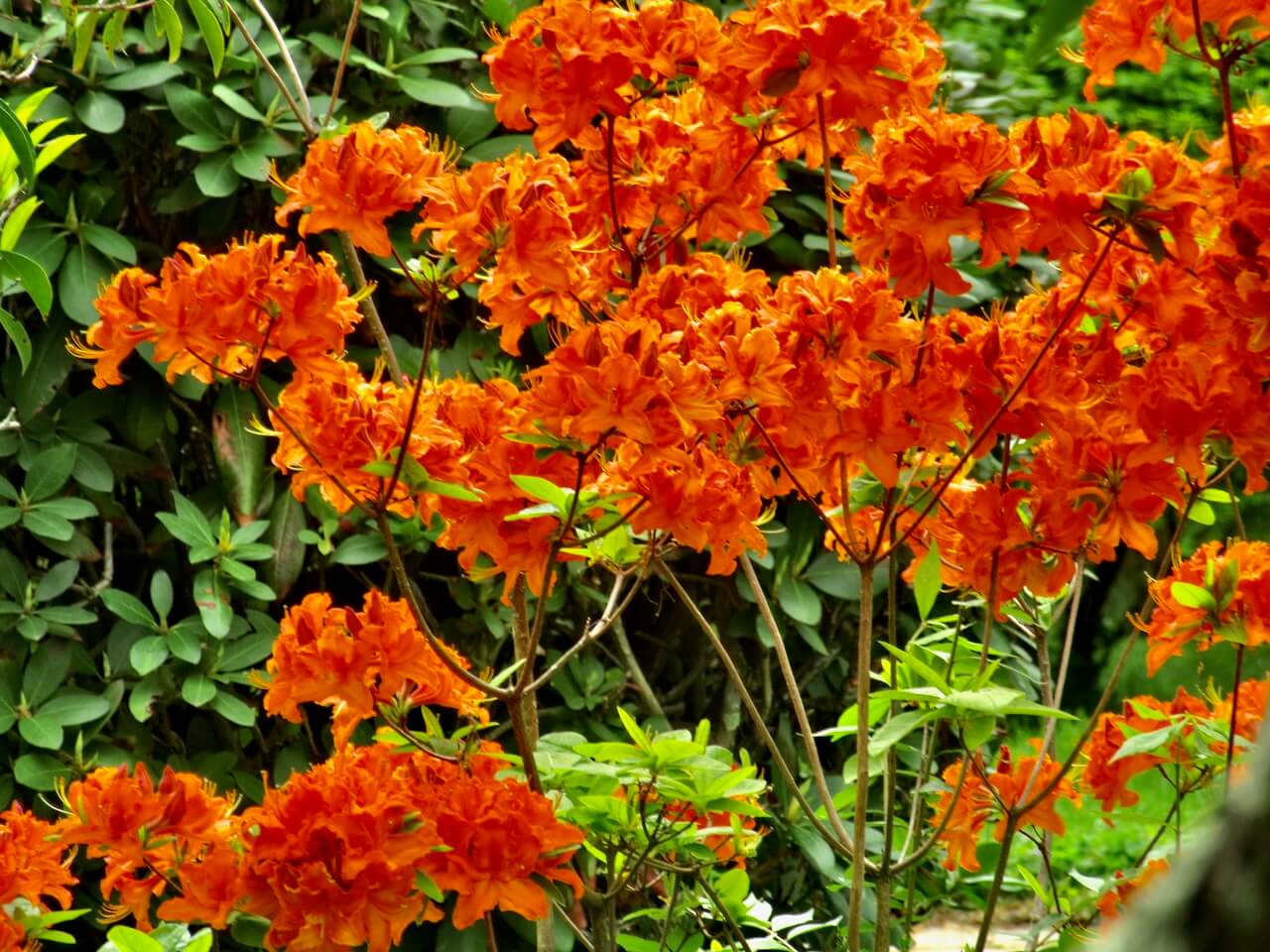
Flame Azalea
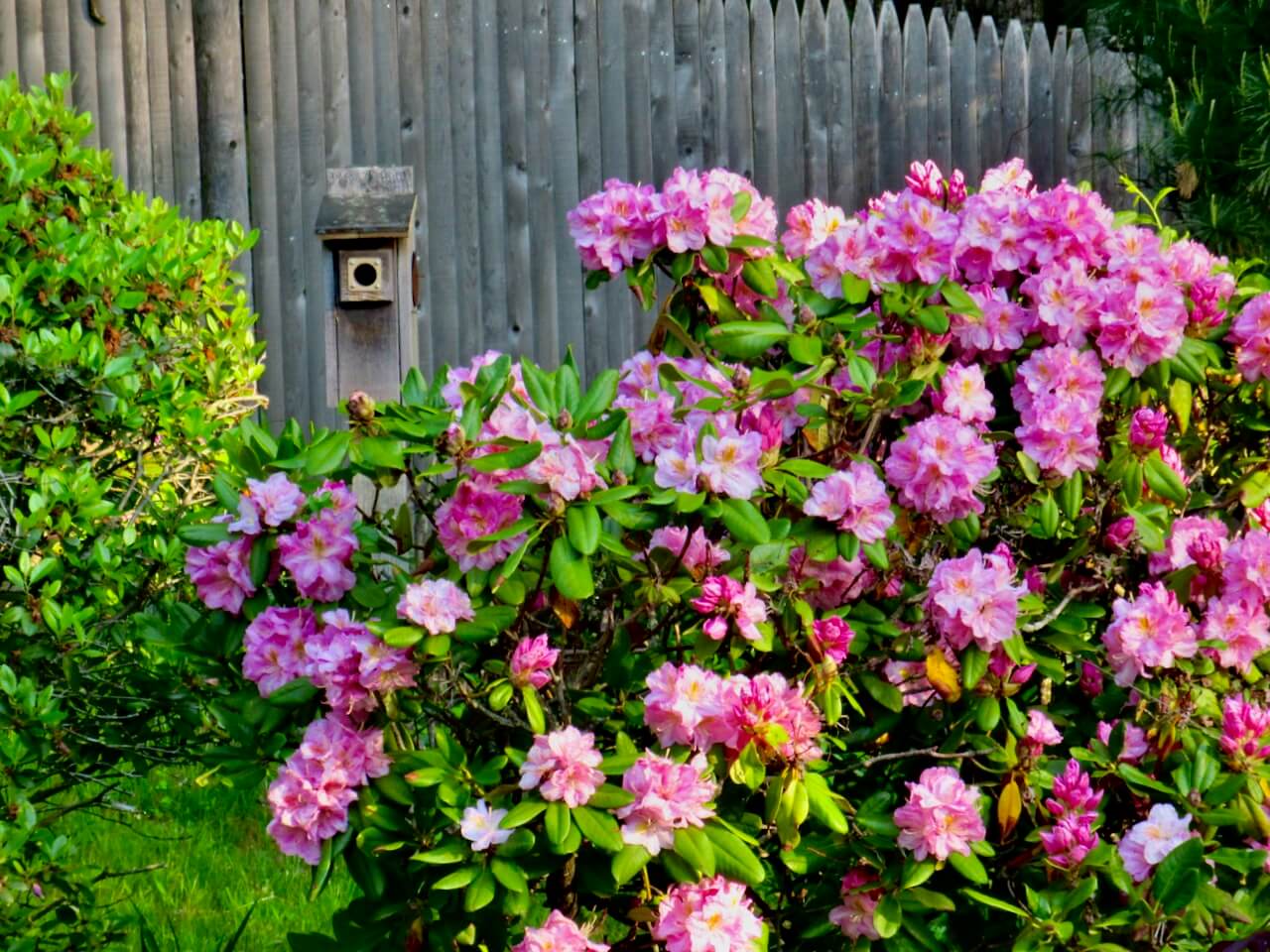
Pink Rhododendron

The Eastern Bluebird builds a home.
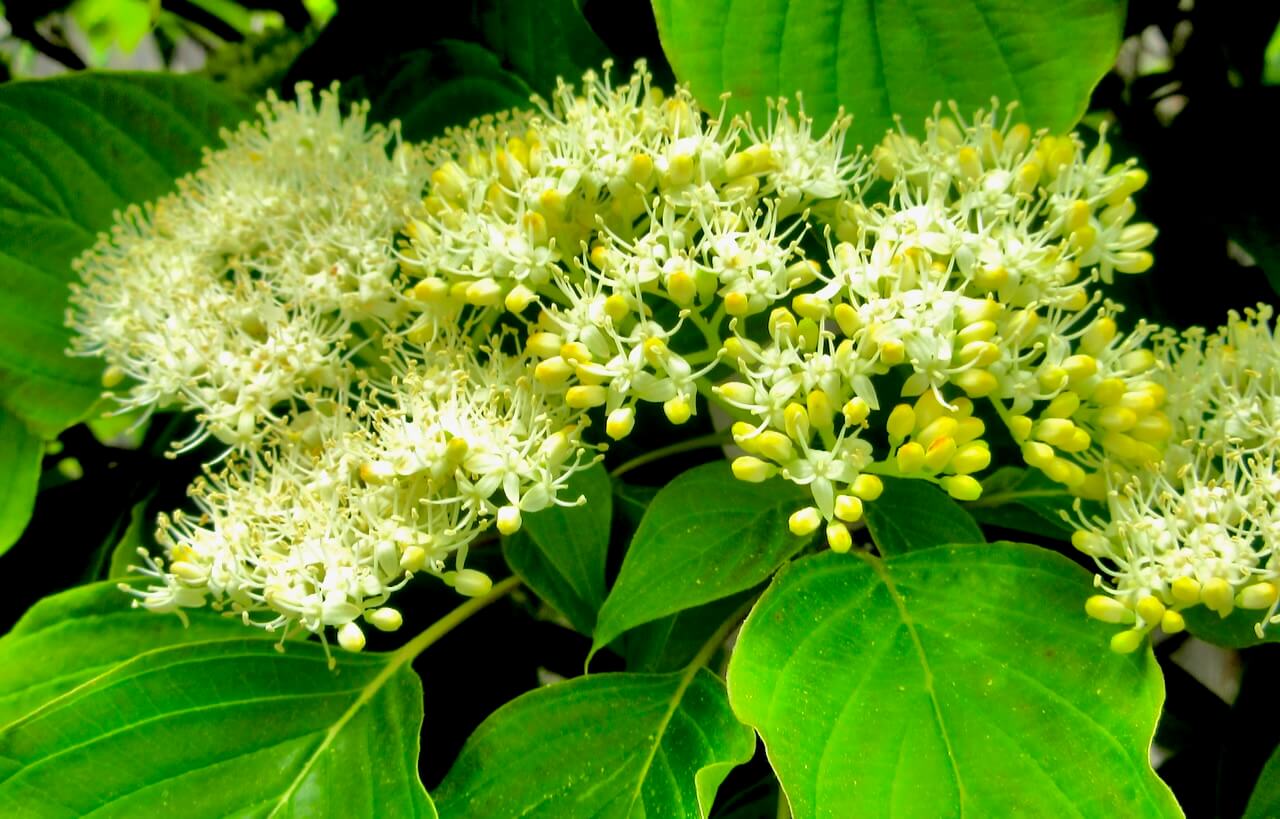
Pagoda Dogwood
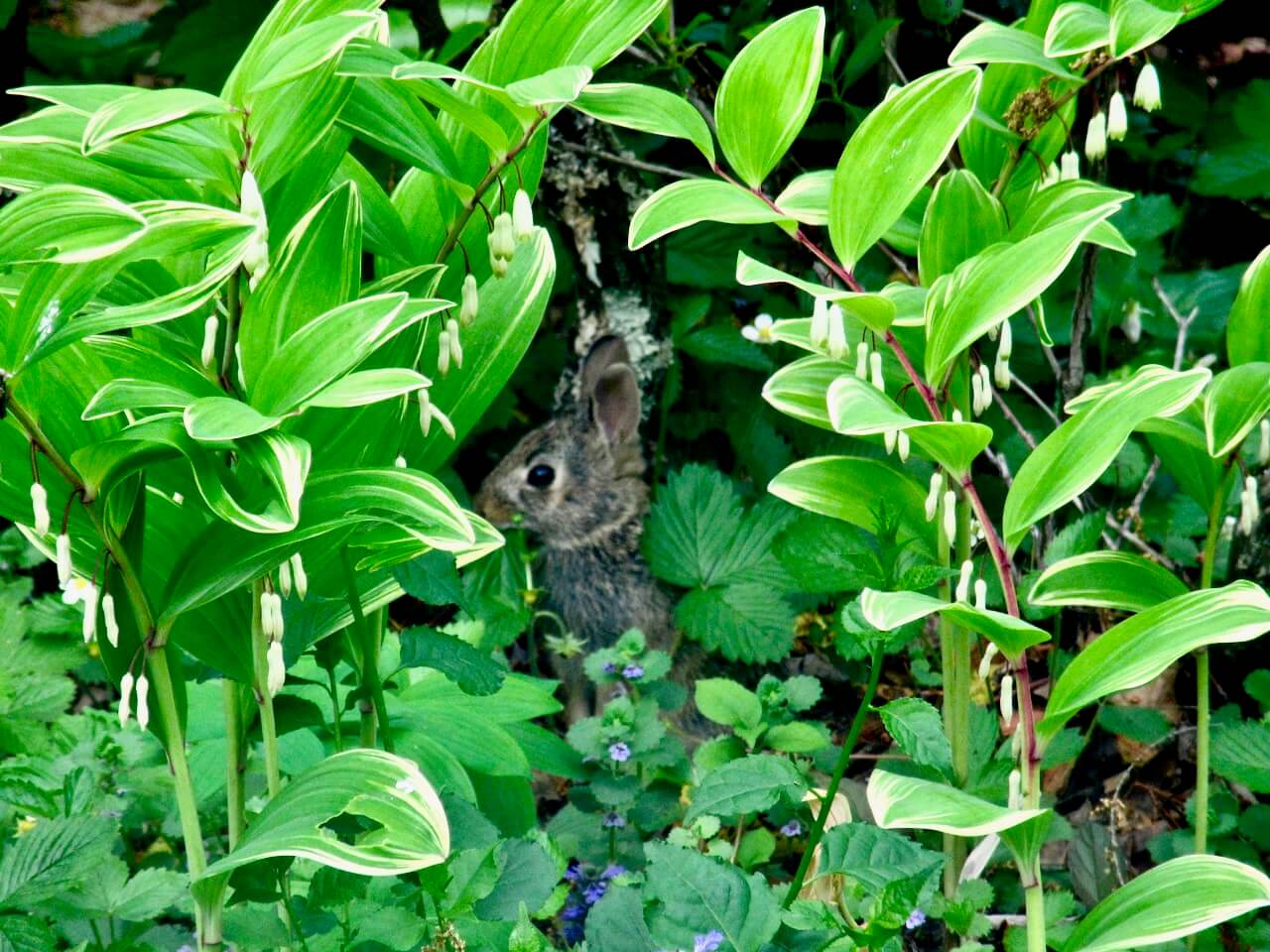
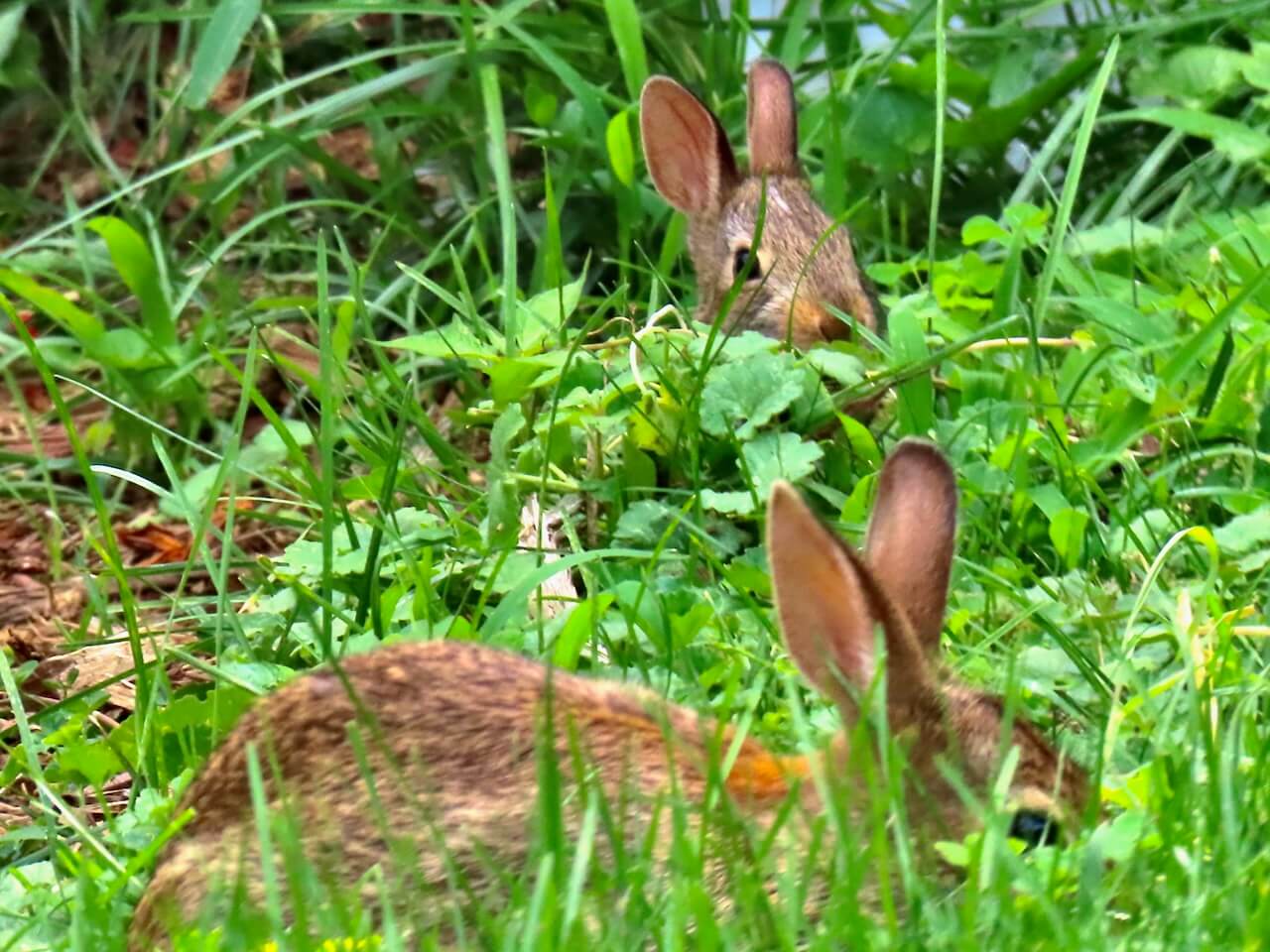
A juvenile Eastern Cottontail Rabbit hides among Solomon’s Seal and Robin Runaway.
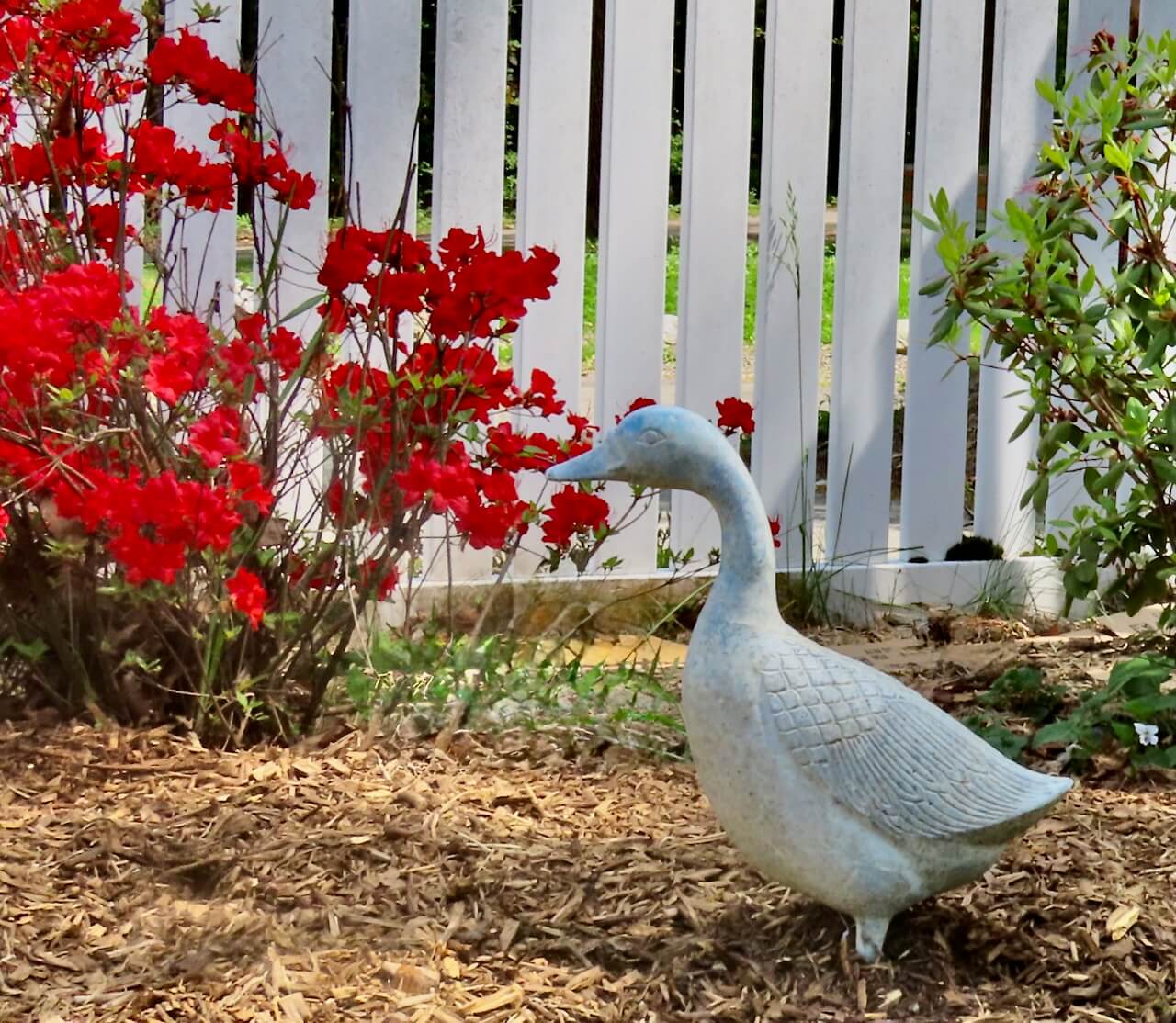
Our perpetual goose visits the Red Azalea.
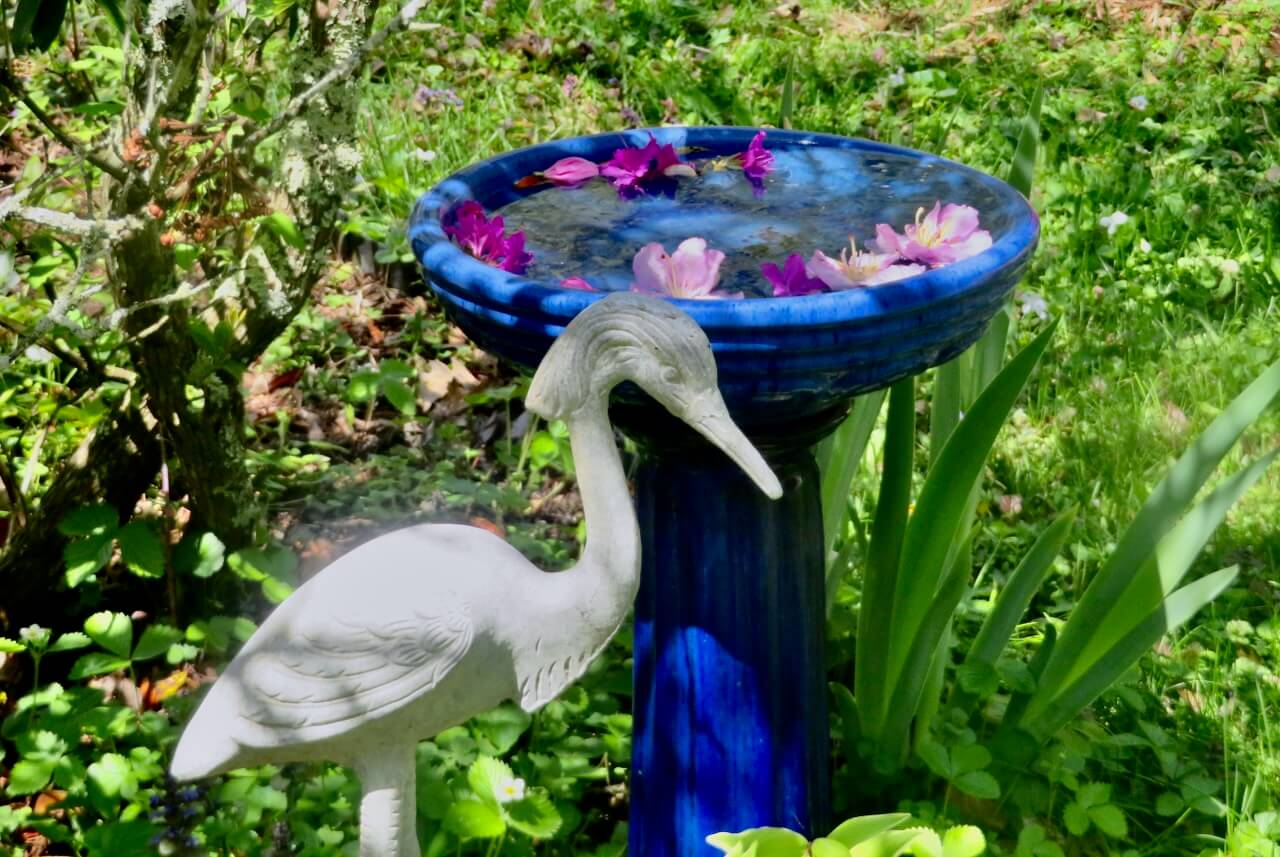
Even this particular heron came back to admire the rhododendron blossoms.
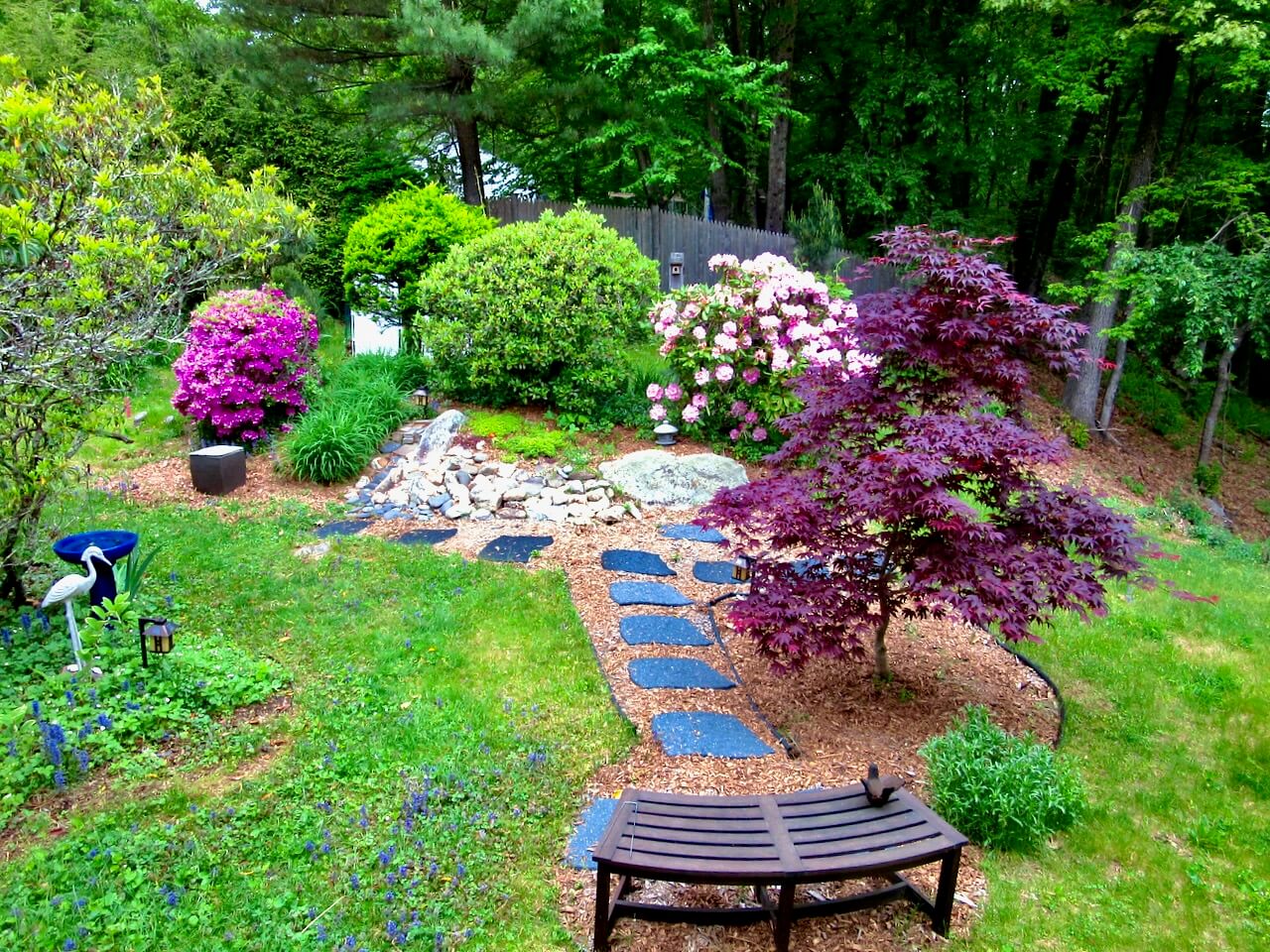
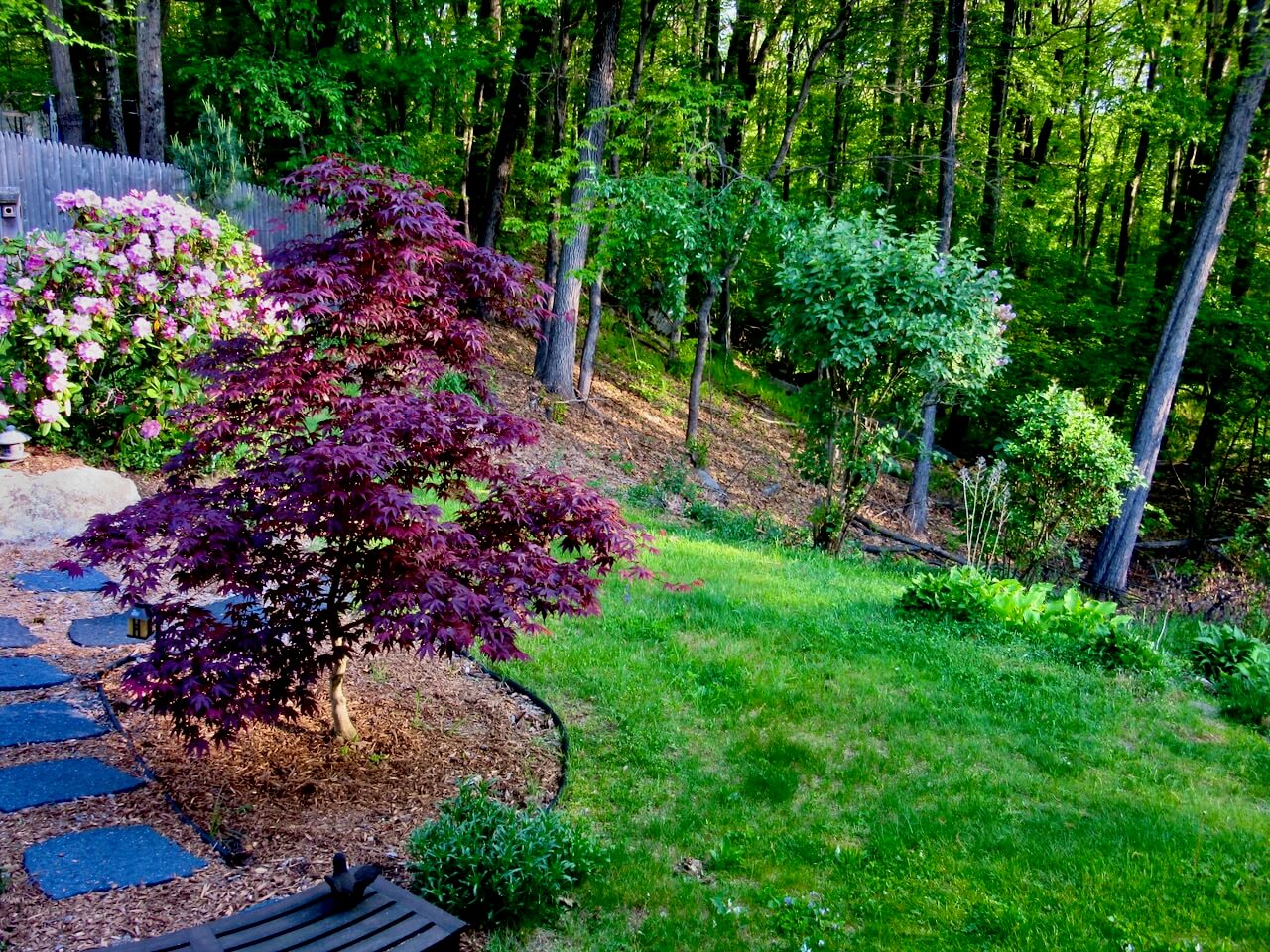
It overlooks the woods, which is filled with many types of wildlife.

It wouldn’t be spring without the return of these native plants in my yard. According to the National Audubon Society:
Native plants thrive in your local climate and soil, making them low-maintenance and naturally pest -resistant. By supporting the local food web, they provide vital food and shelter for birds, butterflies, and bees while helping conserve water, prevent soil erosion, and build healthier ecosystems.
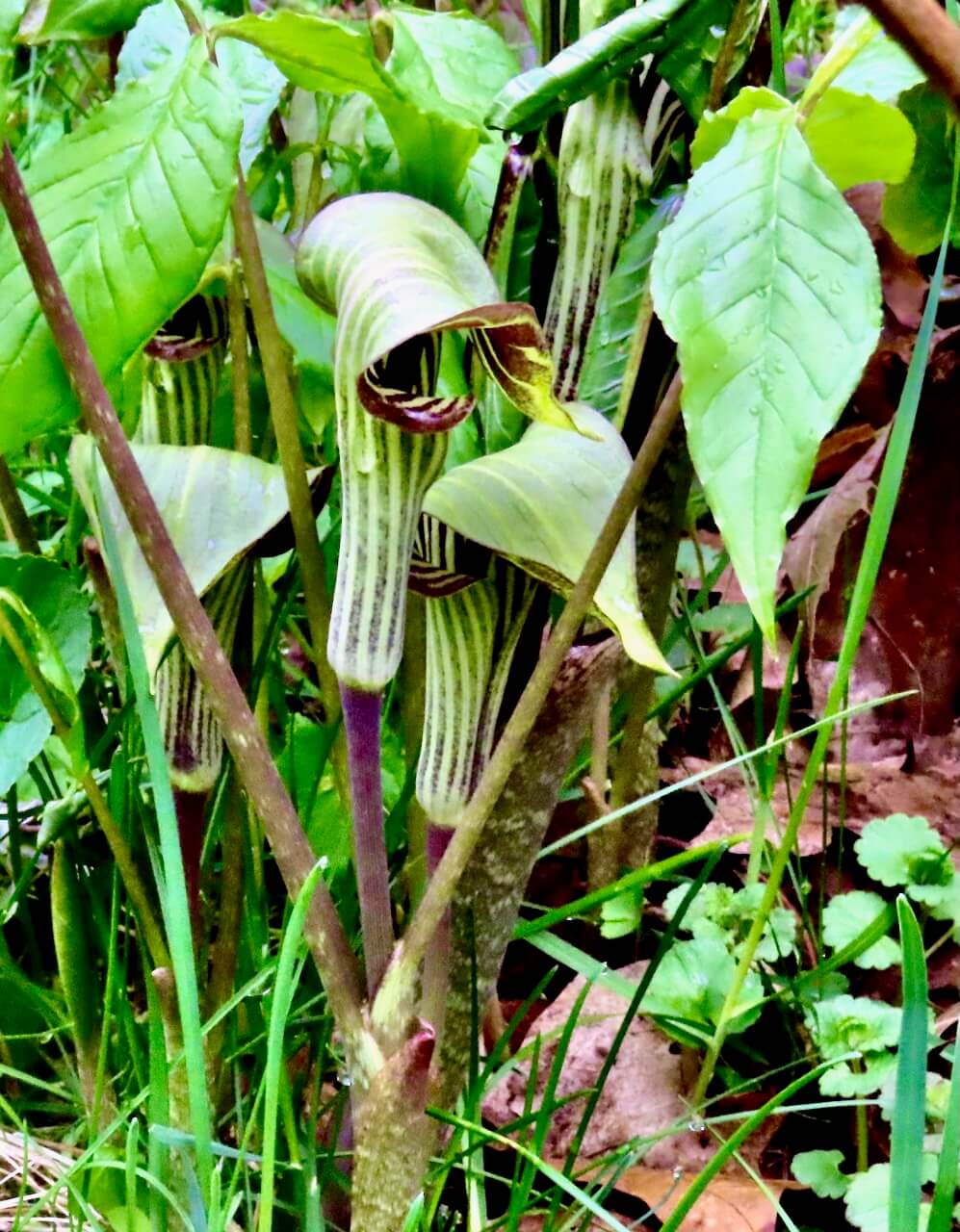
Jack-In-The-Pulpit
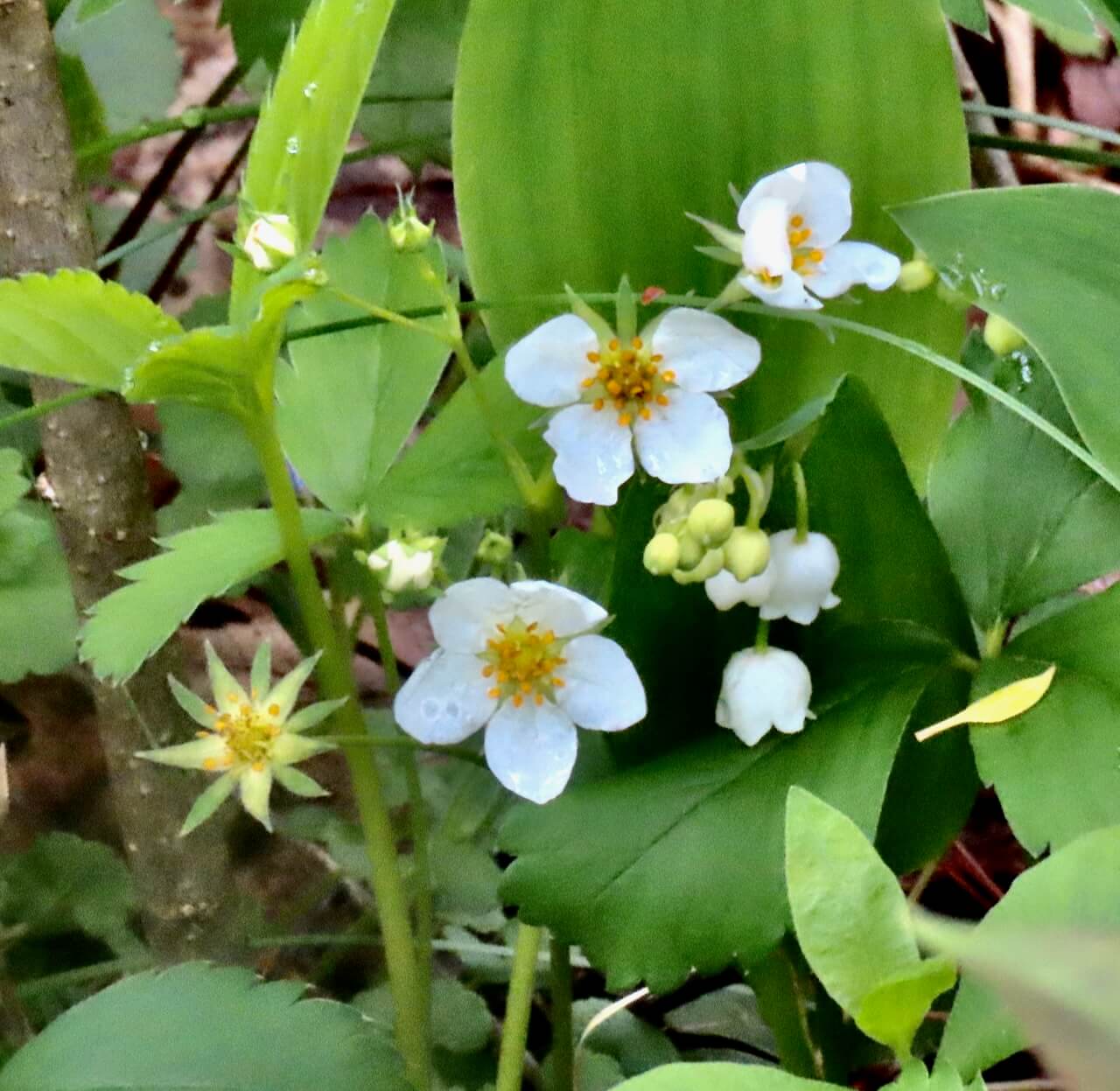

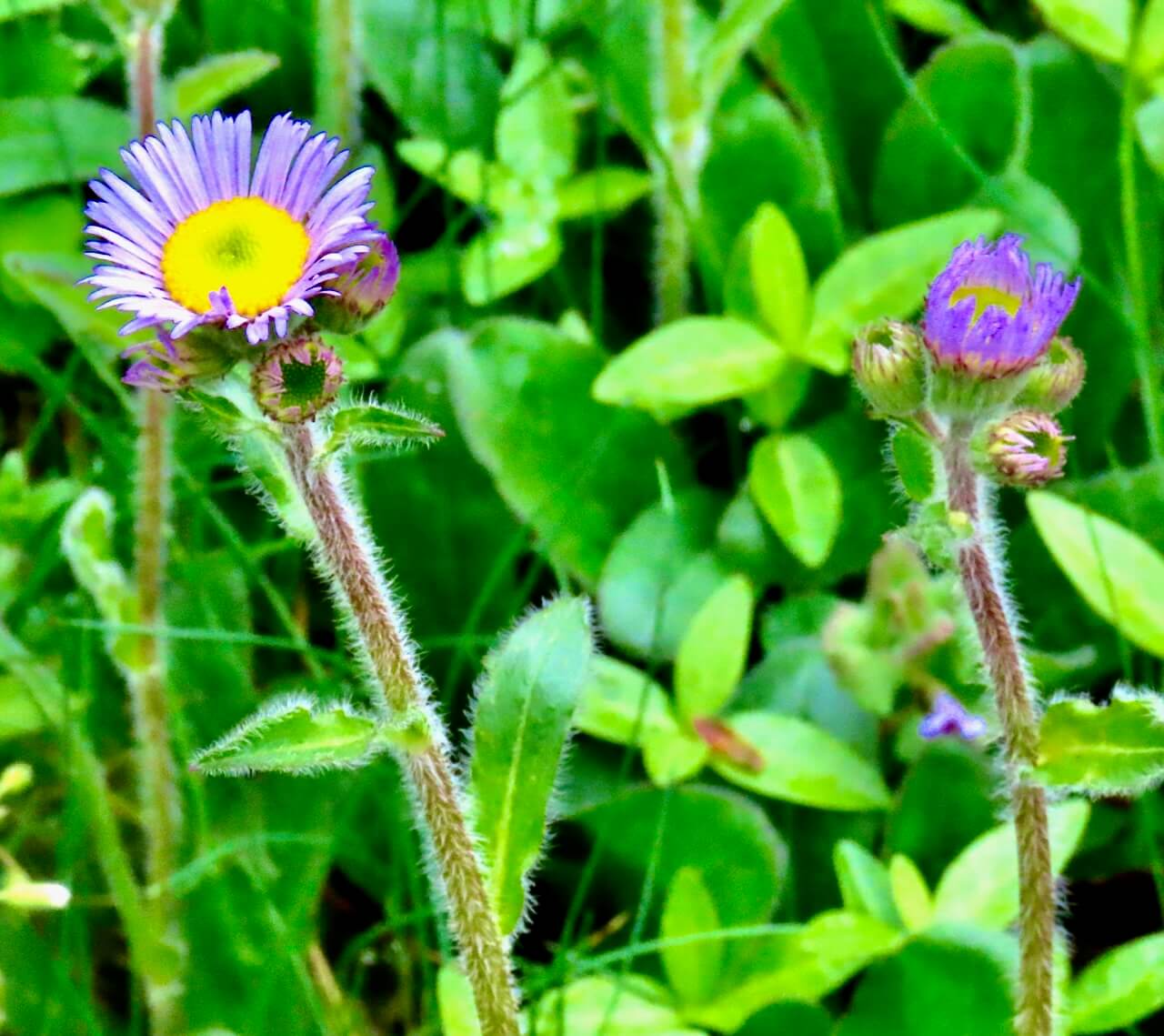
Fleabane
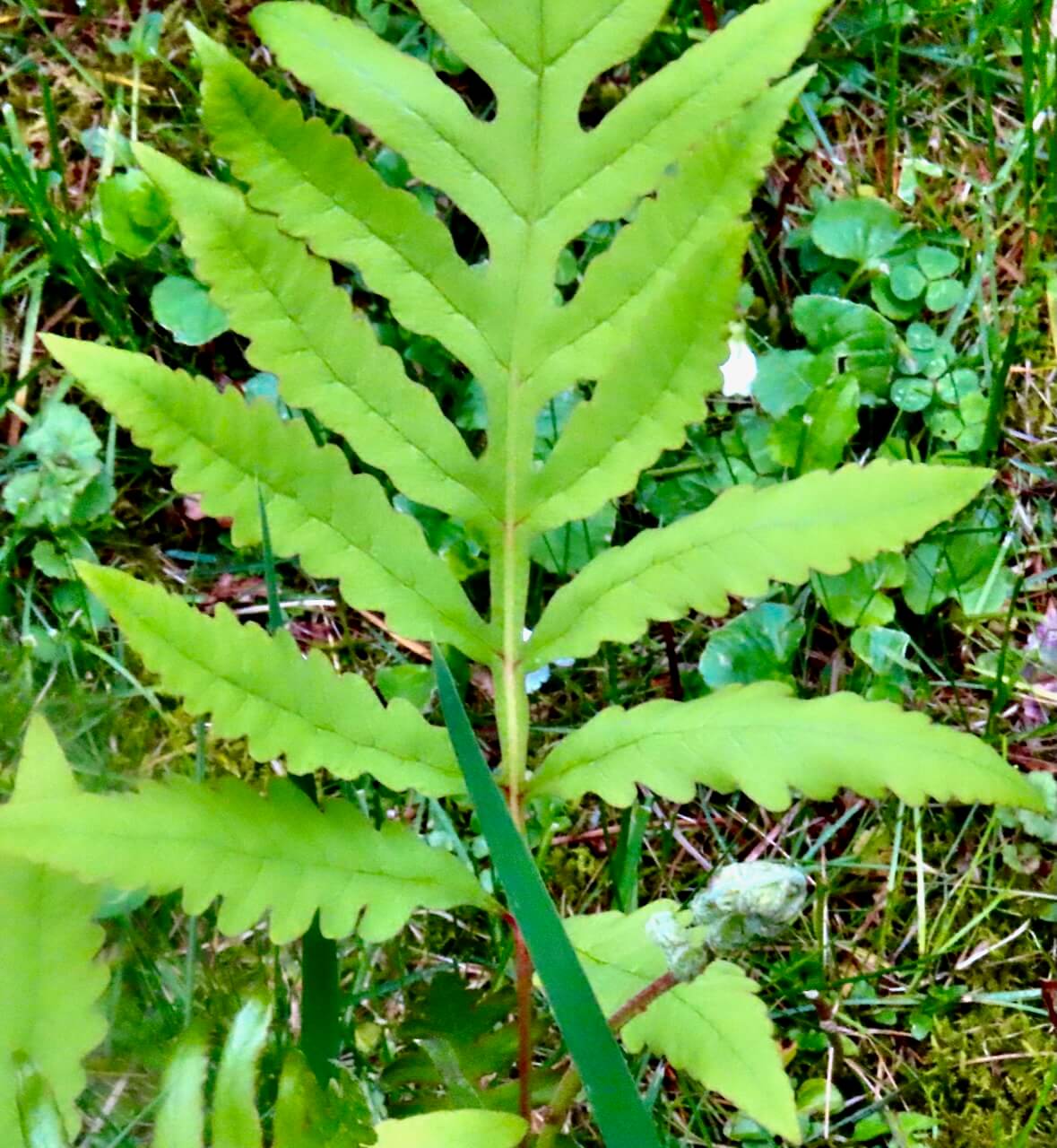


The Baldwin apple tree in my yard is teeming with blossoms this week. This classic heirloom apple was discovered around 1740 in Massachusetts. It became the most popular and commercially successful variety in New England right up until 1934, when a deep freeze killed millions of the trees, nearly wiping out the variety.
Baldwin blossoms are part of the rose family, and the petals are edible. They are noted for being highly fragrant and sweeter tasting than modern apple varieties. They can be used as a garnish for salads or desserts, in herbal teas, infused in liqueur or even made into apple bossom jelly.

Holden, MA


Sterling, Massachusetts

Kwanzan Cherry Tree/ Forsythia in the Background

Shad Trees


Northern Cardinals, Grackles, Red-winged Blackbirds


My family learned to decorate traditonal Easter eggs, called pysanky, over 20 years ago. First we used a pin- drag method; free form designs were created using this technique later. Eventually, we used the masking tape Batik method. Although slightly faded, these decades- old eggs still bring me pleasure when they are displayed each spring.


The word pansies comes from the French word pensées, which means “thoughts”. For centuries, pansies have been given as symbols of remembrance, contemplation and love.


There are about 400 varieties of pansies. They are popular due to their hardiness and adaptability.

In Victorian times sending pansies as a gift meant “I’m thinking of you”. Coded messages of feelings or intentions toward another person were sent via the color of a particular flower.


Orange often meant energy and enthusiasm.

White most often symbolized purity.

Cheerfulness and happiness was symbolized by yellow; red could stand for thoughts of love.

Wishing you many colorful thoughts this spring!

In these troubled times, moments of laughter and seasonal festivity can provide relief from the never ending news cycle. Here are some photos from a spring visit to my local vintage shop, which both adults and children can enjoy.


Thanks to Punsnet for their joke listings.

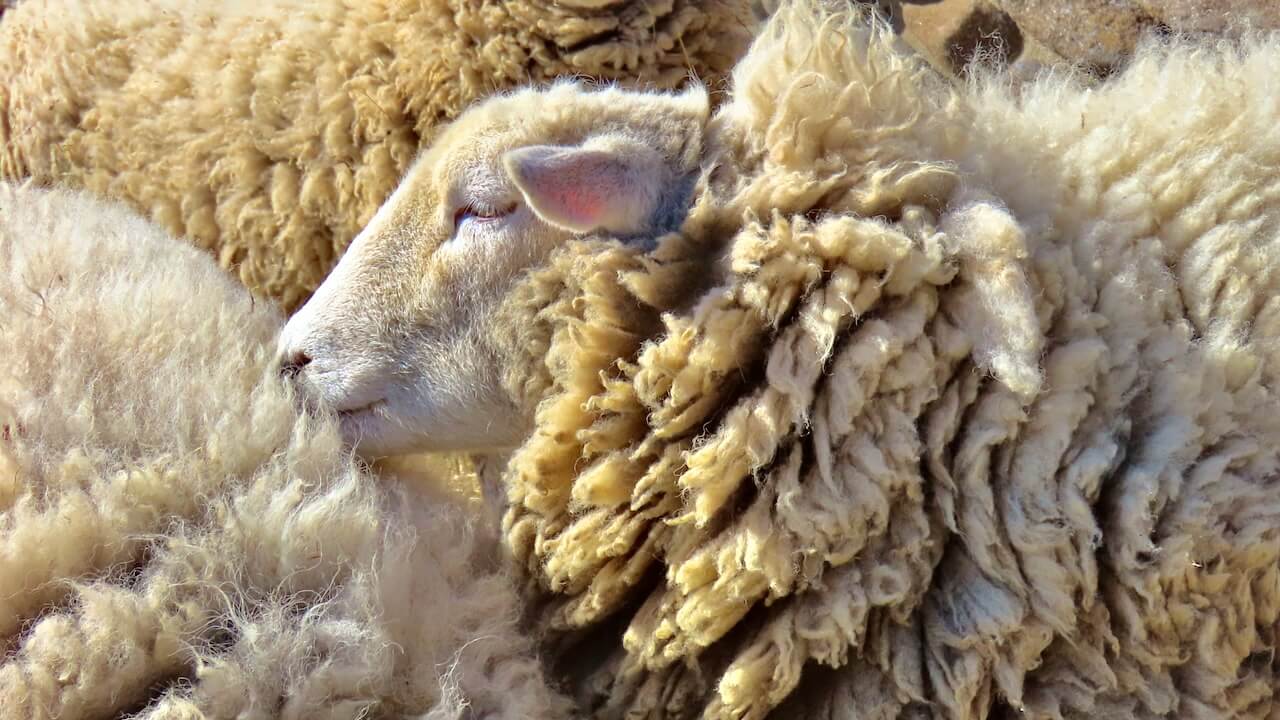


Tree Cookies are cross section slices of tree trunks, like these at Mass Audubon Wachusett Meadow. They are used to learn about a tree’s age, growth and history by studying its growth rings. (Video clip at end.)


Recently, tree stumps and cookies were used in the design of a new bird feeding area.


the eastern gray squirrel,

the white-breasted nuthatch,

and the downy woodpecker.

Bon appetit!
Click on post title and scroll down to view comments and related posts.

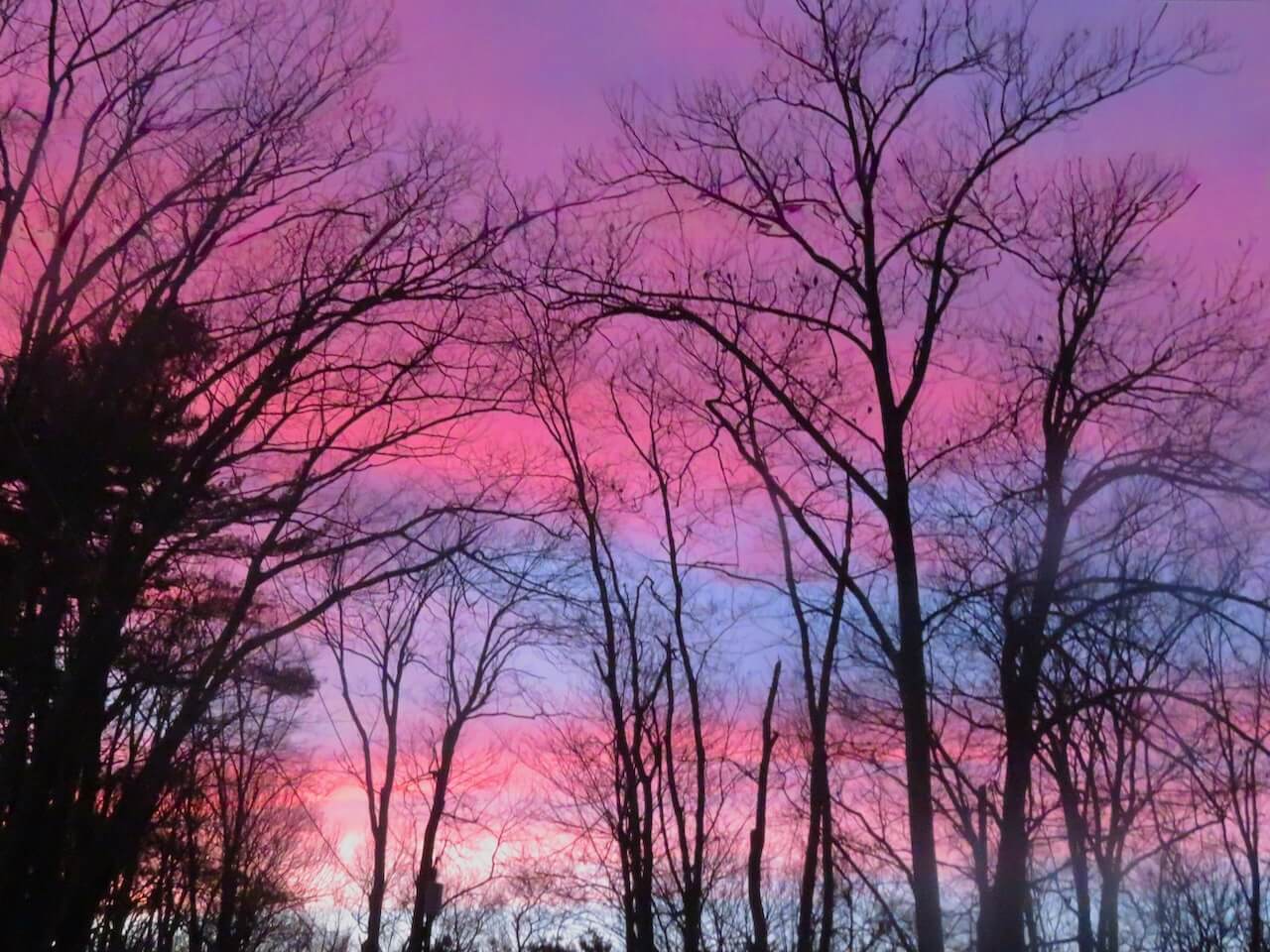
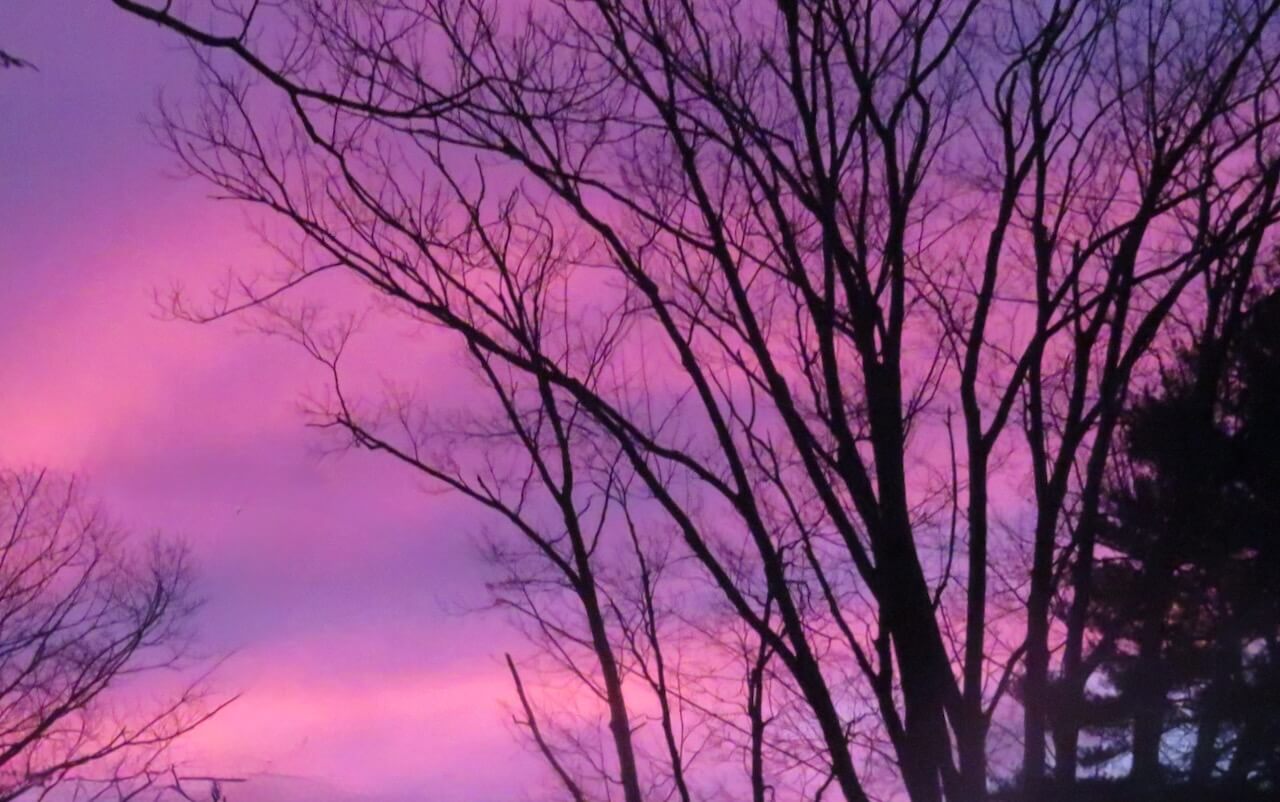
In photography, “colorshift” refers to the time at twilight when the sky transforms in minutes through what is sometimes called a “kaleidoscope” of color. Last evening, the skies above my house colorshifted in a dramatic changing show of orange, pink and blue.
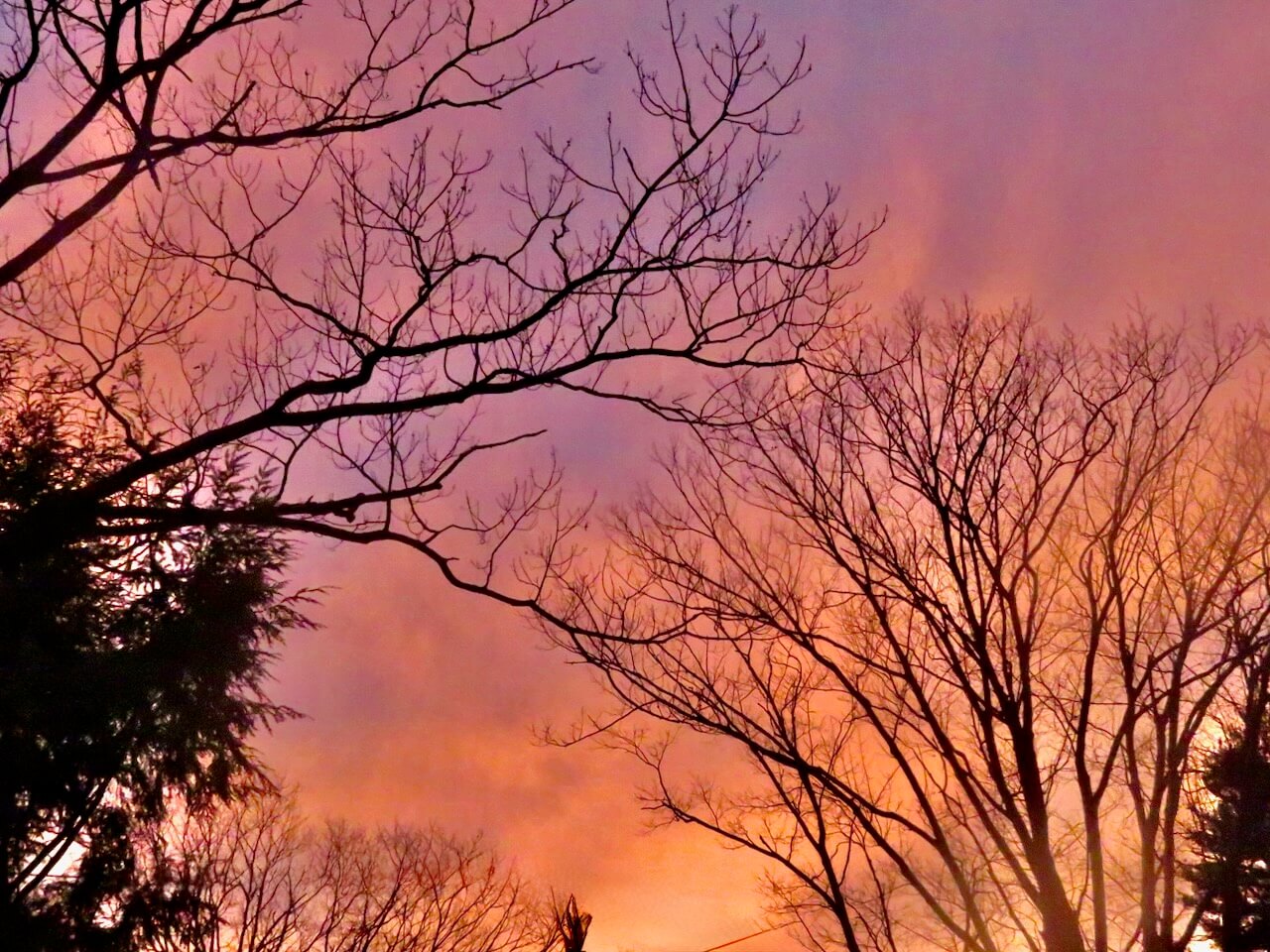
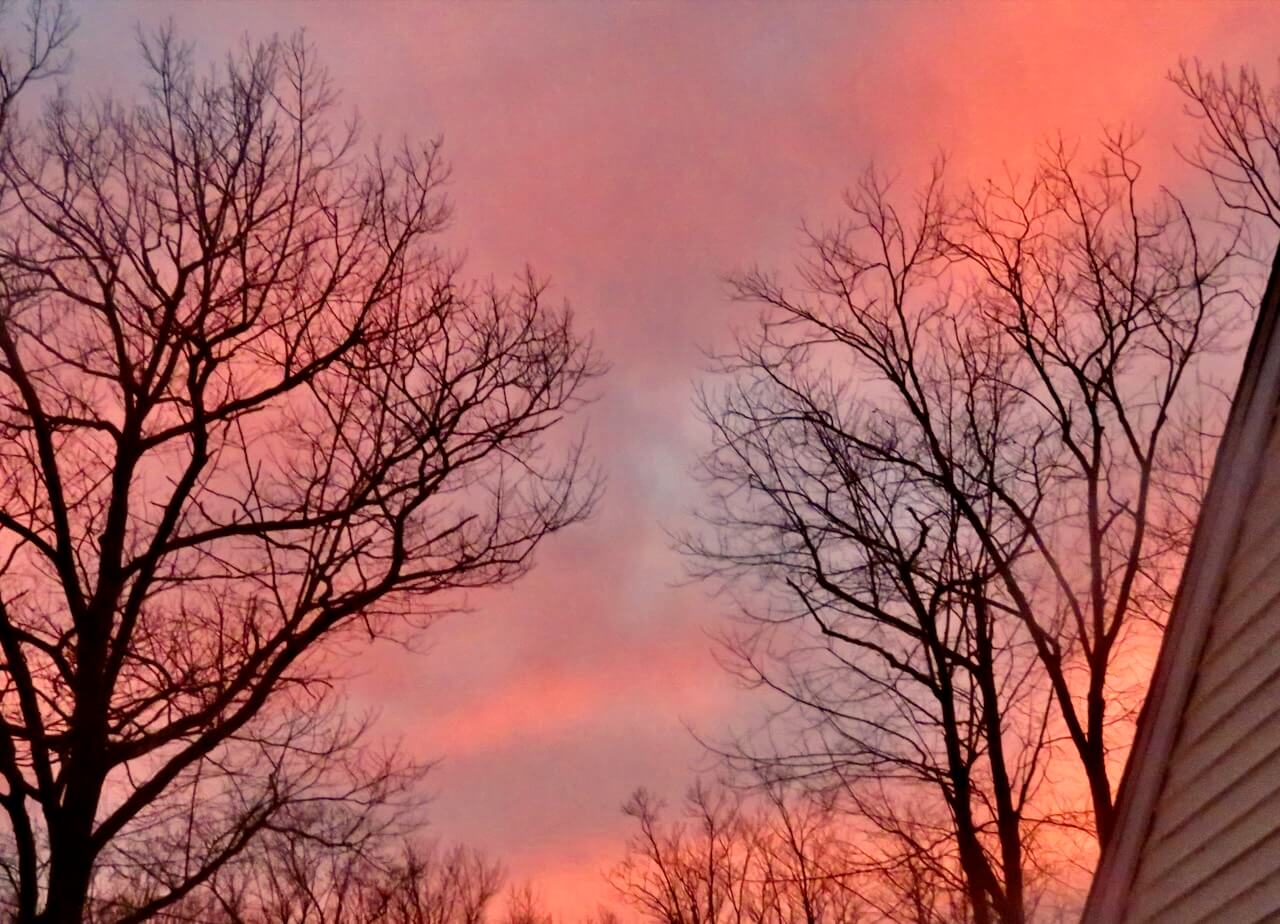
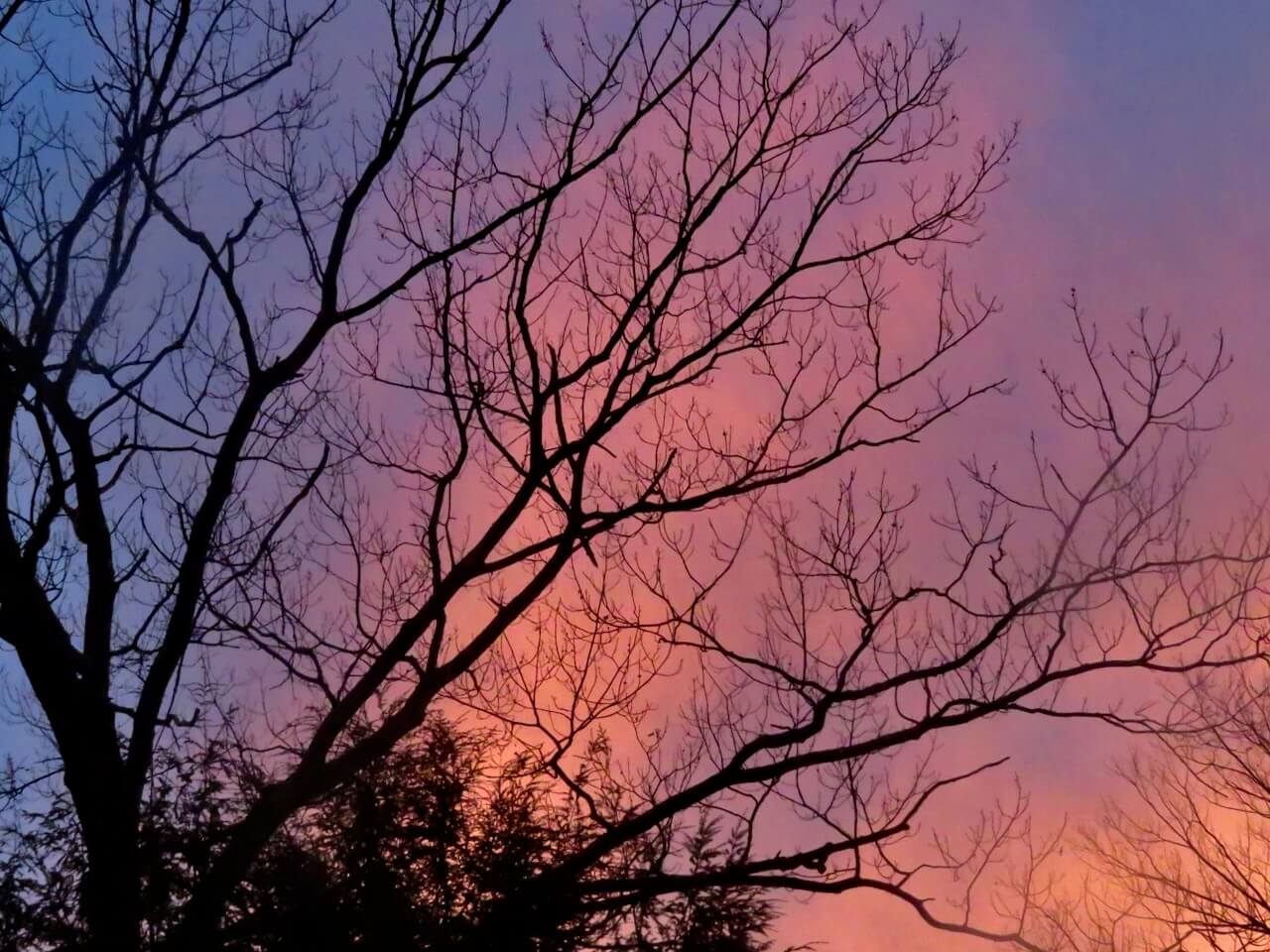
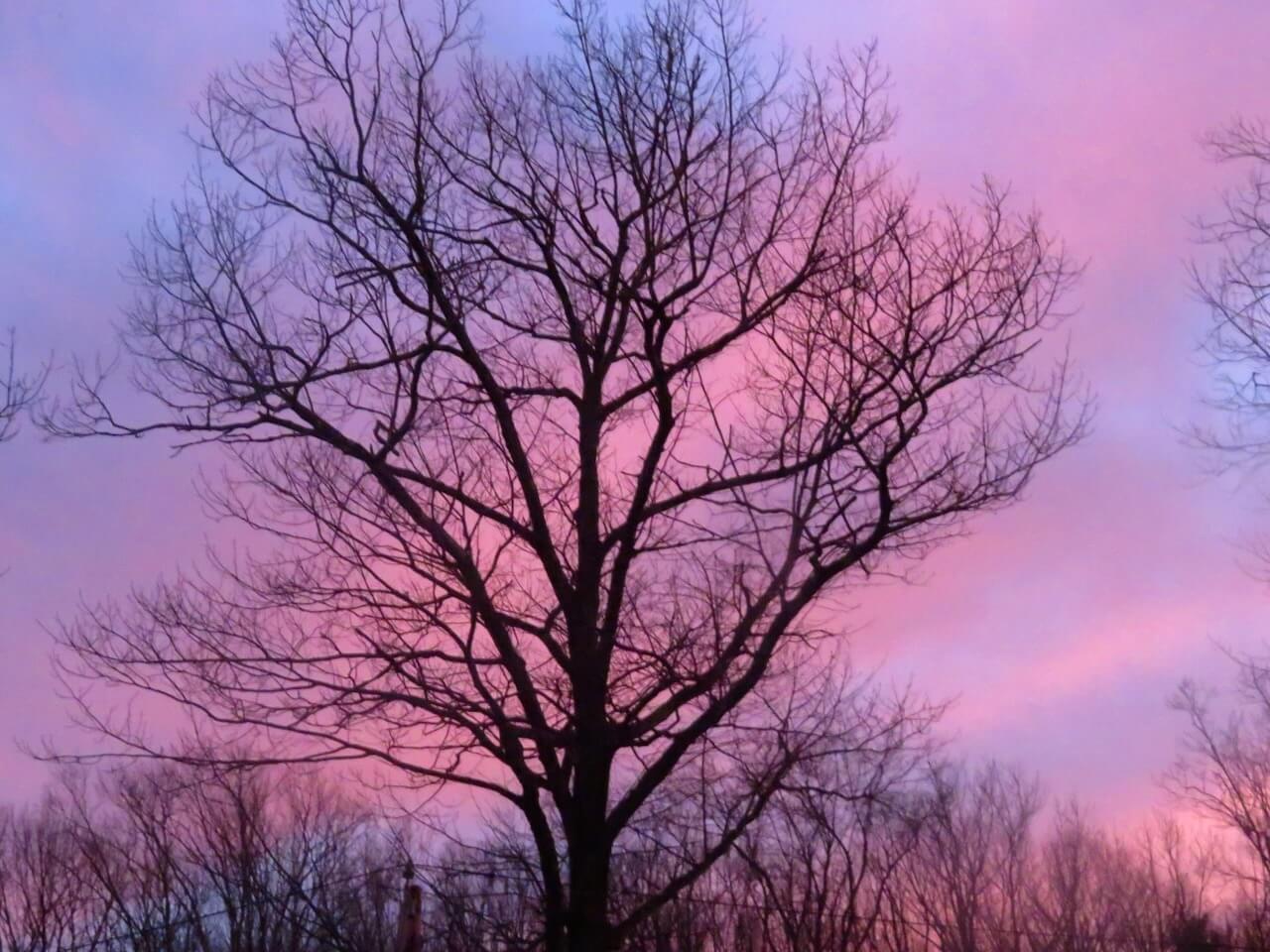
Click on post title and scroll down to view comments and related posts.

A “raft” of ducks is a collective noun for a group of ducks who gather together as they float on the water. A “paddling” of ducks describes how a group moves across lakes, ponds or rivers with synchronized , graceful movements. I look forward to the March arrival of hooded mergansers at Wachusett Meadow Wildlife Center soon, whether they are rafting or paddling.

This raft of hooded mergansers are diving ducks that have a serrated bill designed for catching fish. Along with other mergansers, they are the only North American ducks specializing in eating fish. They are excellent divers, and can go as deep as thirty feet.

The male hooded merganser looks like this when relaxing…

or can raise and lower a large fan-like crest or “hood” on his head like this. The crest is raised during courting or when then duck feels threatened.

Two male Mergansers with crests down…


The crest is sometimes described as a “punk rock hairstyle”.

Male mergansers have intense, bright yellow eyes while the females’ are brown or reddish-brown. Their eyes are specially adapted to allow them to see clearly while fishing underwater.

It can be difficult to photograph hooded mergansers, as they are shy and paddle fast. They are sensitive to sound and movement, and move away quickly when approached. I’ll be waiting -quietly -to photograph whatever fleeting moments are possible.


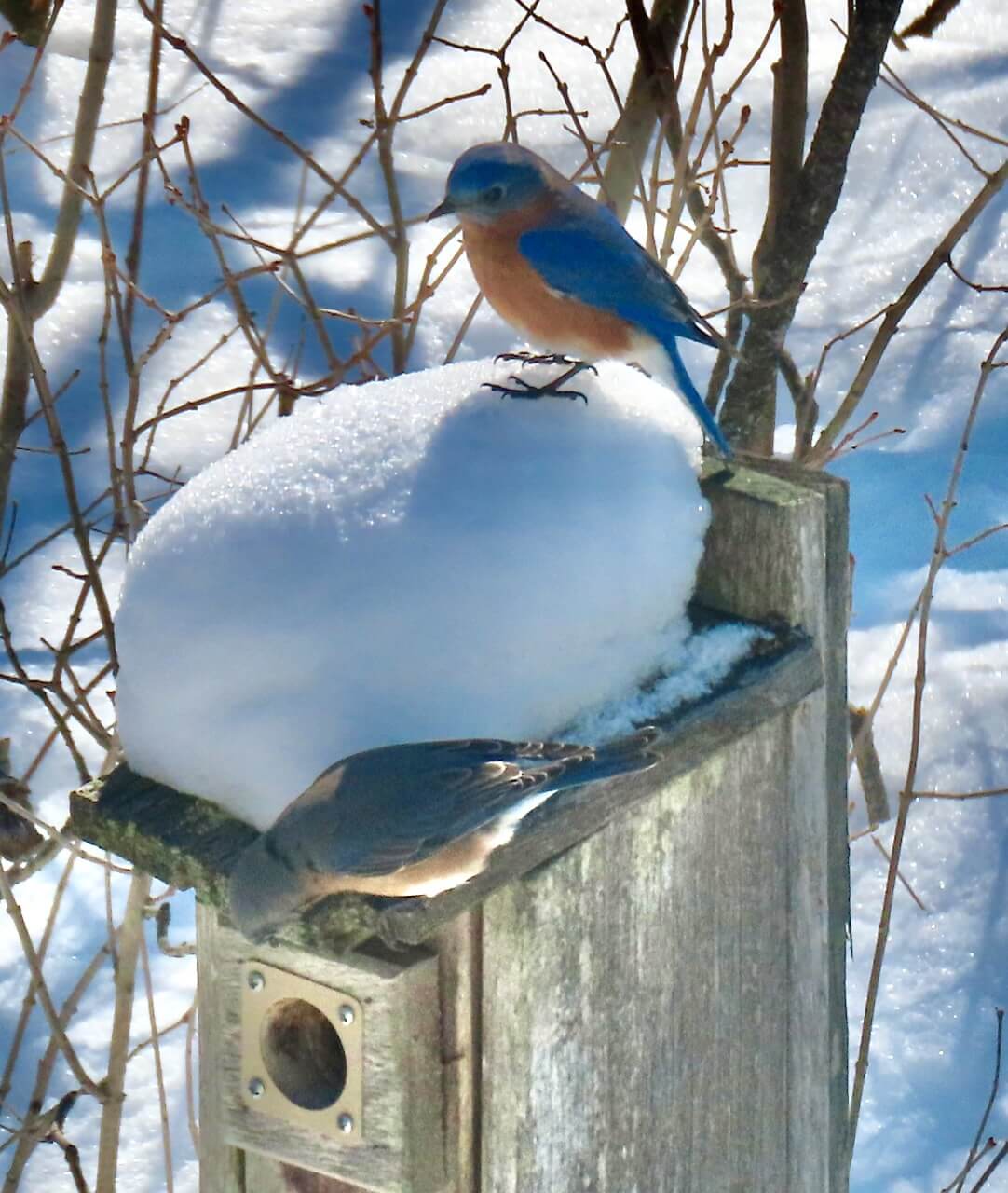
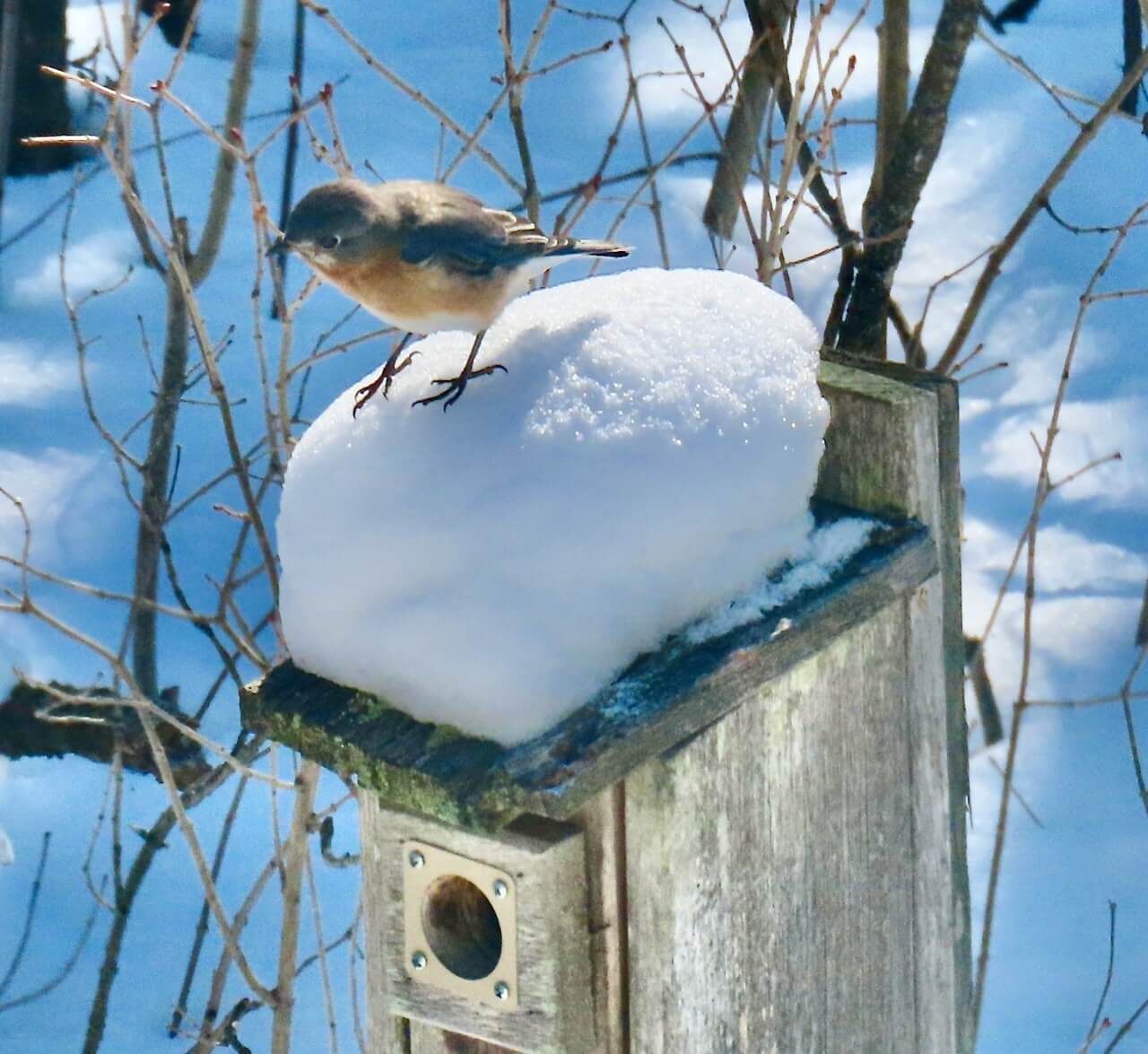
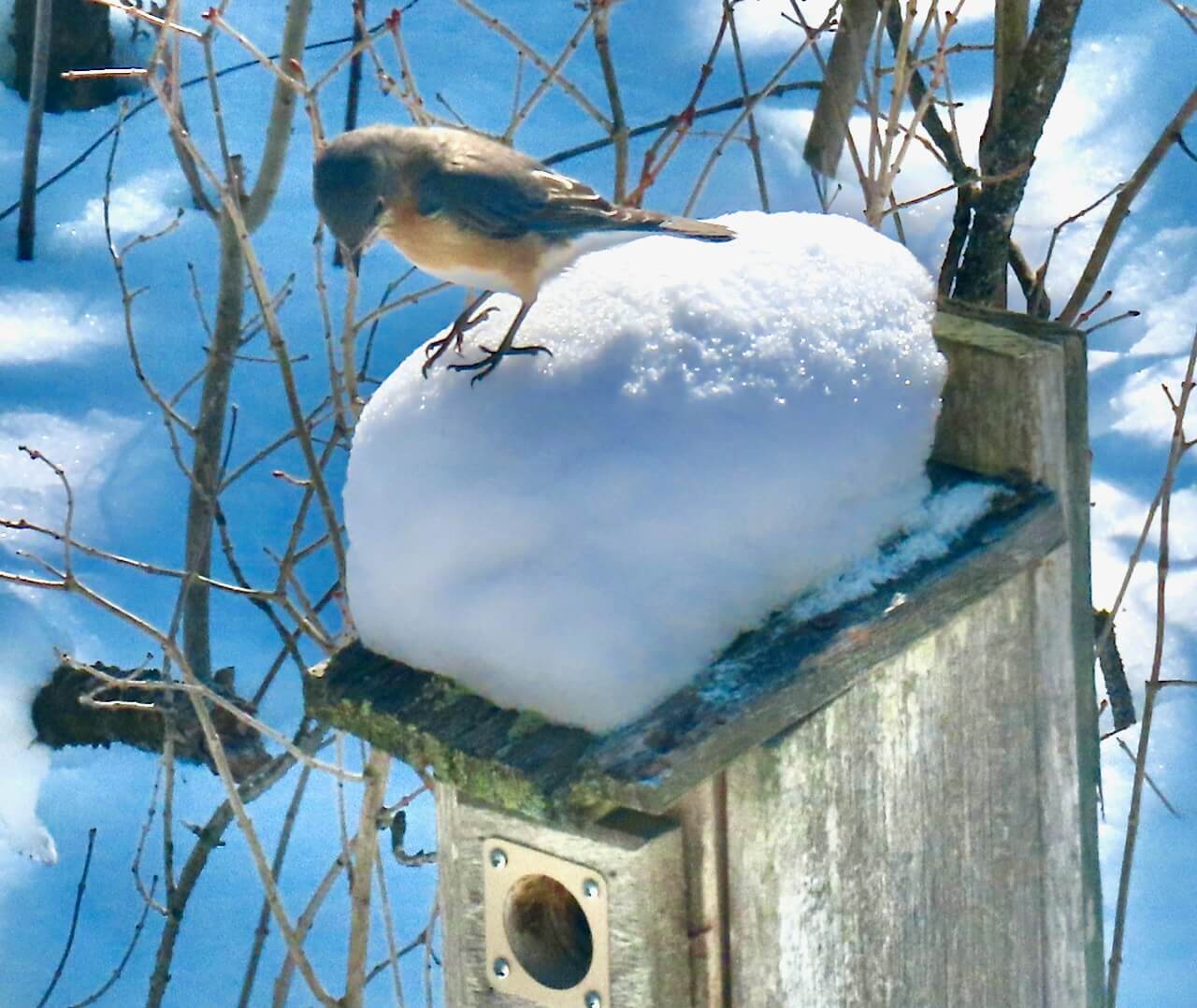
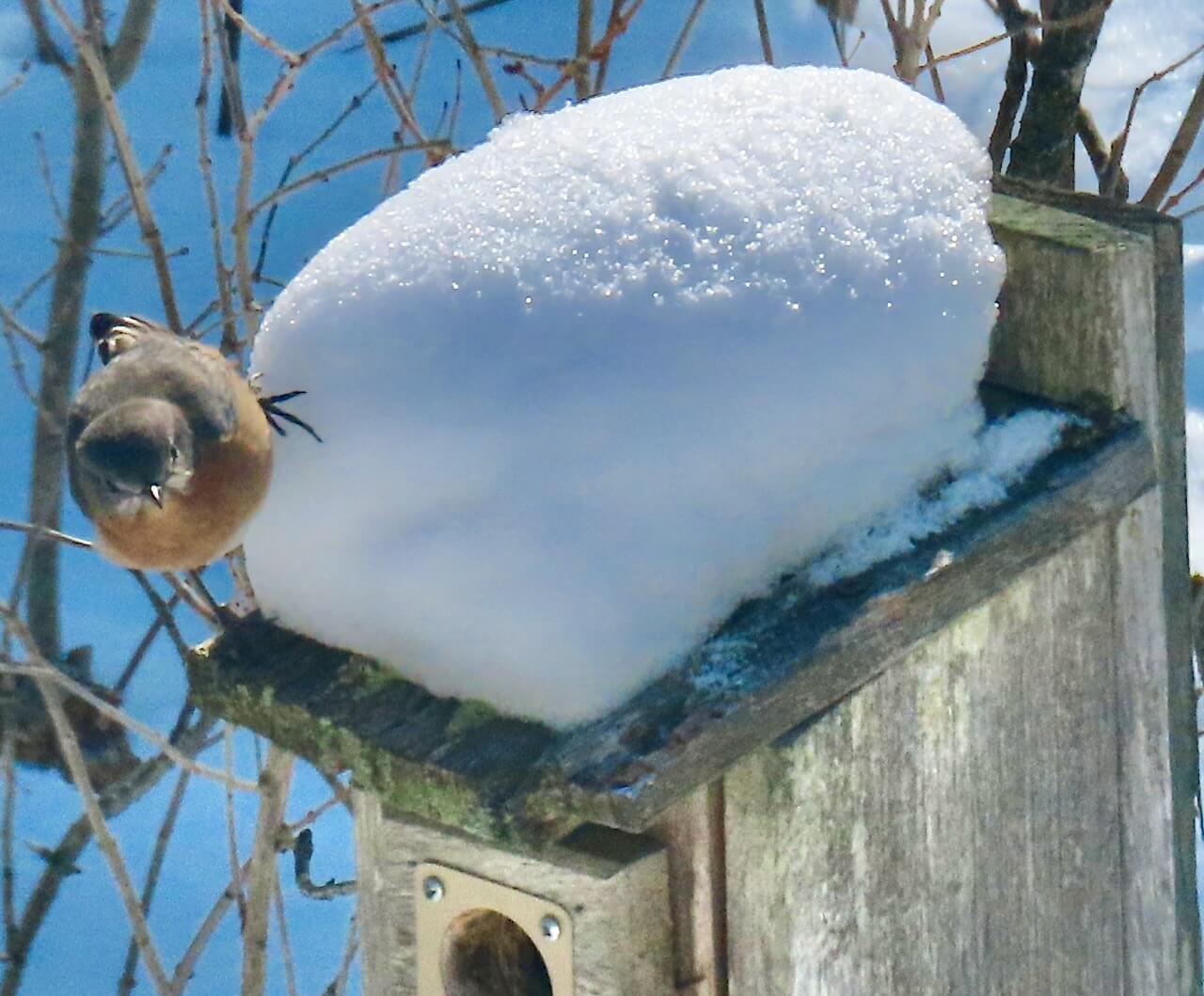
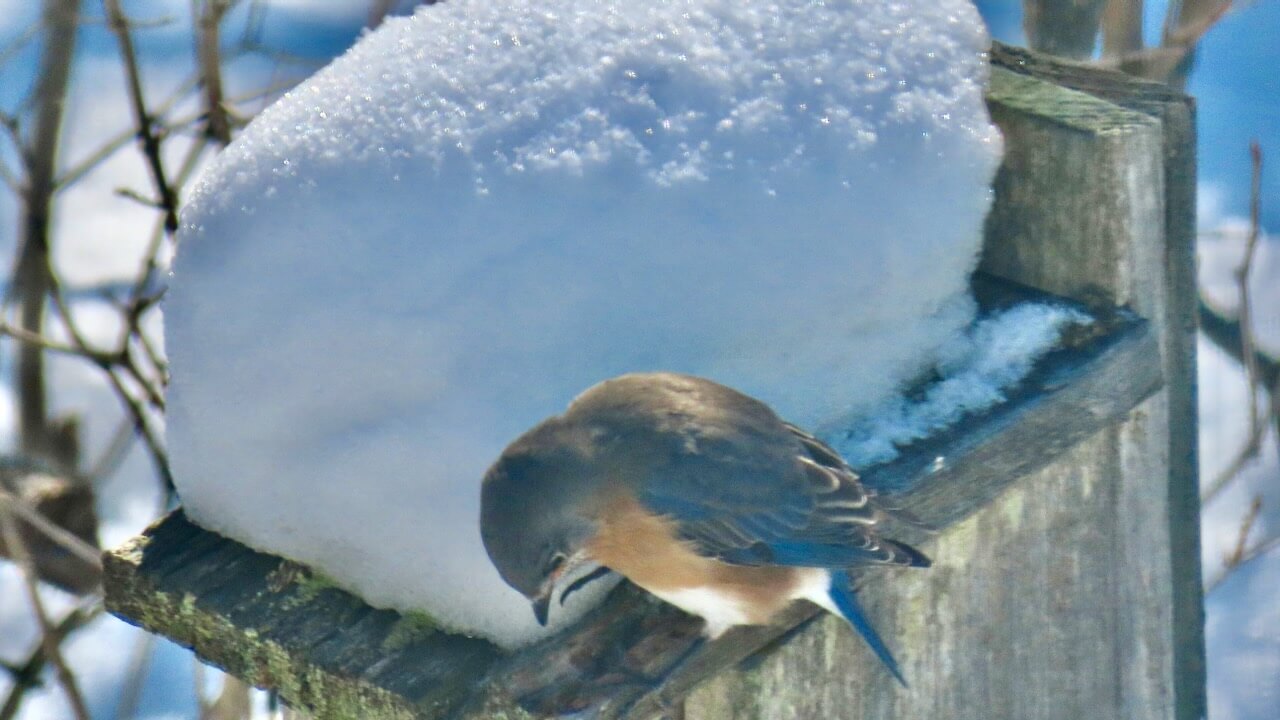
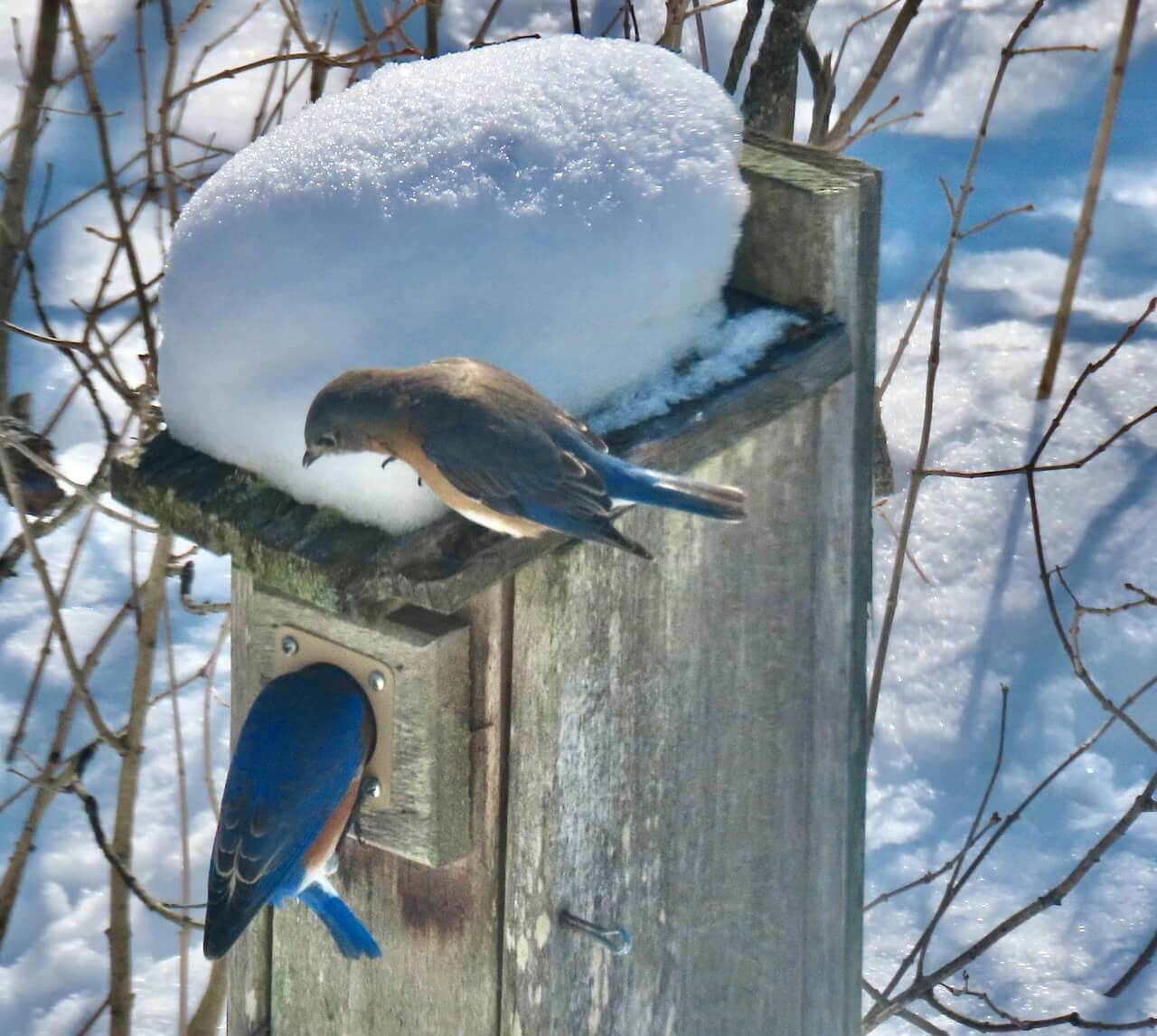
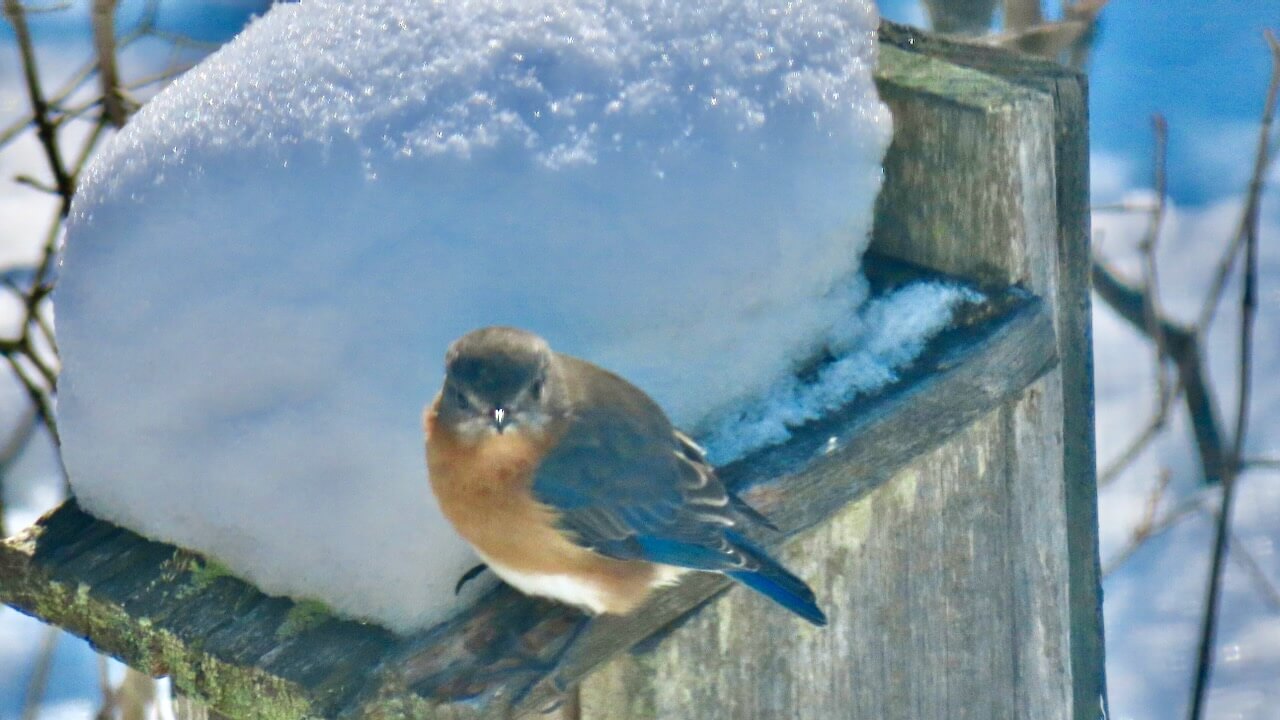
Undaunted by a snow-laden roof after a blizzard, eastern bluebirds continued home furnishing in my yard today.

Rock specimens from around the globe on display at the Beneski Museum show how rocks from millions of years ago are used in contemporary art and home design.

Agate, which is a type of quartz, forms over millions of years inside cavities in volcanic or ancient lava rocks. Because of their natural beauty agate slices and patterns are frequently used in wall murals, canvas art prints, jewelry and even kitchen counter tops.

Andalusite Hornfels is a metamorphic rock which includes crystal within it. It is around 400 million years old. These crystals can resemble seeds, pods, or stems, giving the rock a deceptive organic look. Because of its toughness and attractive appearance, it is frequently used in architecture for interior flooring and curbing, and also in modern art installations.

Sutured Ammonites were prehistoric marine animals that went extinct approximately 65 million years ago. This fossil exhibits natural “fractal-like” patterns, which are the wavy lines (sutures) formed where the internal chamber walls (septa) met the outer shell. These intricate, often leaf-like or feathered designs, are highly valued in both fine art and personal crafts.

This fossil plate contains several crinoids, prehistoric marine animals commonly known as “sea lilies” from about 345-350 million years ago. While they strongly resemble plants, crinoids are actually related to starfish and sea urchins. These limestone or shale slabs are popular as interior decor, in specialized jewelry, and as inspiration for acrylic painting.

This item is an Ammonite, which is a fossilized shell of an extinct marine mollusk that lived millions of years ago. The fossils are often used in jewelry, textile or surface designs and home decor.

A pair of Eastern Bluebirds brightened up my snowy yard on a gray morning. The specially designed bluebird house installed for them has an opening of exactly 1.5 inches in diameter to ensure that larger birds cannot nest there. Although bluebirds often visit, and occasionally start to build a nest, they never stay through the whole season. After territorial skirmishes sparrows win out. Fingers crossed for this spring!
Holden, MA


It won’t be long until the great blue herons return to the Wachusett Meadow in March.

Herons are important for the environment as they act as “indicator species”. Scientists monitor heron populations to detect environmental contamination, such as toxins in the water or mercury levels in eggs, which reflects the health of the entire ecosystem.

Although they are named “great blue”, herons can look grey or brown depending on the light conditions.

This great blue heron does look blue. Herons appear bluest in low light, fog, or shadows, which reflect cooler, blue tones.


This heron is taking advantage of the All-Persons Observation Deck.

Herons are known for their exceptional camouflage, often appearing nearly invisible when perched among dead branches, or debris.

This heron can see well from high up in the tree. Its eyesight is estimated to be about three times more detailed than a human’s. From this high perch, a heron can spot small movements below.

Great Blue Herons are expert fishers, but they will eat almost anything they can catch and swallow. In a meadow, herons hunt for small mammals, which can make up a large portion of its diet, especially in winter when waterways freeze .

The Great Blue Heron is widely considered one of the most prehistoric-looking birds alive today. While all birds are living descendants of dinosaurs, herons appear more like dinosaurs because of their large size, sharp angles and guttural sounds.


They can form their necks into an S-shaped curve which acts like a coiled, spring-loaded mechanism. This allows them to catch prey in the water with high speed and precision.


In addition to the world’s largest collection of dinosaur footprints, the Beneski Museum features skeletons and casts of dinosaurs and primitive animals.

A Dryosaurus altus skeleton watches at the window of the Beneski Museum at Amherst College. It is the most complete and best-preserved of that species in existence today. This small, fast running herbivore lived during the Late Jurassic period, approximately 150 to 145 million years ago. When it arrived at the museum the students joked that there is a new vegan in town.

Watch out for that Triceratops!


A fossil cast of the head and thoracic armor of a Dunkleosteus, a large armored fish. It is around 300 million years ago, and likely grew up to 33 feet in length.

A fossil skeleton of a Smilodon, or saber toothed cat.


The Main Hall at the Museum features three major Ice Age Skeletons: the Columbian Mammoth at the right; the American Mastodon at the left; and the Irish Elk at center.

Mammoth Tusks

The museum’s prehistoric mammal collection wall display features nine different fossil mammal mounts collected during Amherst College expeditions to the American West in the early 20th century.

The Beneski Museum of Natural History at Amherst College, Massachusetts houses the world’s most extensive collection of fossil dinosaur tracks, primarily from the Connecticut River Valley, where I grew up. These tracks from the Jurassic period are around 190 million years old. In addition to dinosaur tracks, it showcases actual dinosaur body fossils, casts from a variety of historical periods, and an exhibit of stones from all over the world.

Although this Tyrannosaurus rex (T.Rex) cast is not from the Jurassic Period, it inspires visitors to touch, measure and experience the cast close up, and immerse themselves in the world of dinosaurs.

Edward Hitchcock began his study of dinosaurs when the existence of dinosaurs- even the word, “dinosaur” -was unknown. A deeply religious man, he did not believe in evolution at first, but he did believe in the scientific method. By the end of his life, he was a supporter of evolution. The Hitchcock Ichnology Collection contains more than 1,100 slabs of fossil tracks and traces from the Connecticut River Valley. They provided the first evidence of dinosaurs in North America.

Many footprints are displayed along the wall for easy viewing, as if in an art gallery. The collection of tracks is known as “the stone book”.

These tracks were made by small to medium-sized dinosaurs. Hitchcock originally thought they were bird tracks.

A track close up.

Not only are fossils on the walls, but here you can see actual dinosaur prints placed at waist level on the museum’s fossilized dinosaur trackway. The large flat sandstone slabs display various footprints and impressions left by dinosaurs that once roamed the Connecticut River Valley during the Triassic and Jurassic eras.

Truly a hands-on exhibit,

and a chance to walk with the dinosaurs.

Jurassic Morning is a diorama created by artist Will Sillin. This artwork depicts the Connecticut River Valley as it appeared 190 million years ago during the Jurassic period.

The Connecticut River at Northfield, MA today.

Don’t forget the bird action at ground level.


America Tree Sparrow With Red Squirrel


Juvenile Blue Jay

Dark-eyed Junco

American Goldfinch

Red-winged Blackbird

Grackle

White-throated Sparrows

Sheep at Wachusett Meadow Wildlife Sanctuary spend fall days on the go.

Visitors are greeted with this sign at the entrance.

I’ve watched this sheep and her friends

walking the stone wall,

choosing fresh tree leaves to munch on,

strolling through the Visitor’s Center entrance,

and posing for a painting.

Then there’s time for a bit of lawn grazing,


and a quick rub against the scratching post.

Dinner Awaits!

Princeton, MA


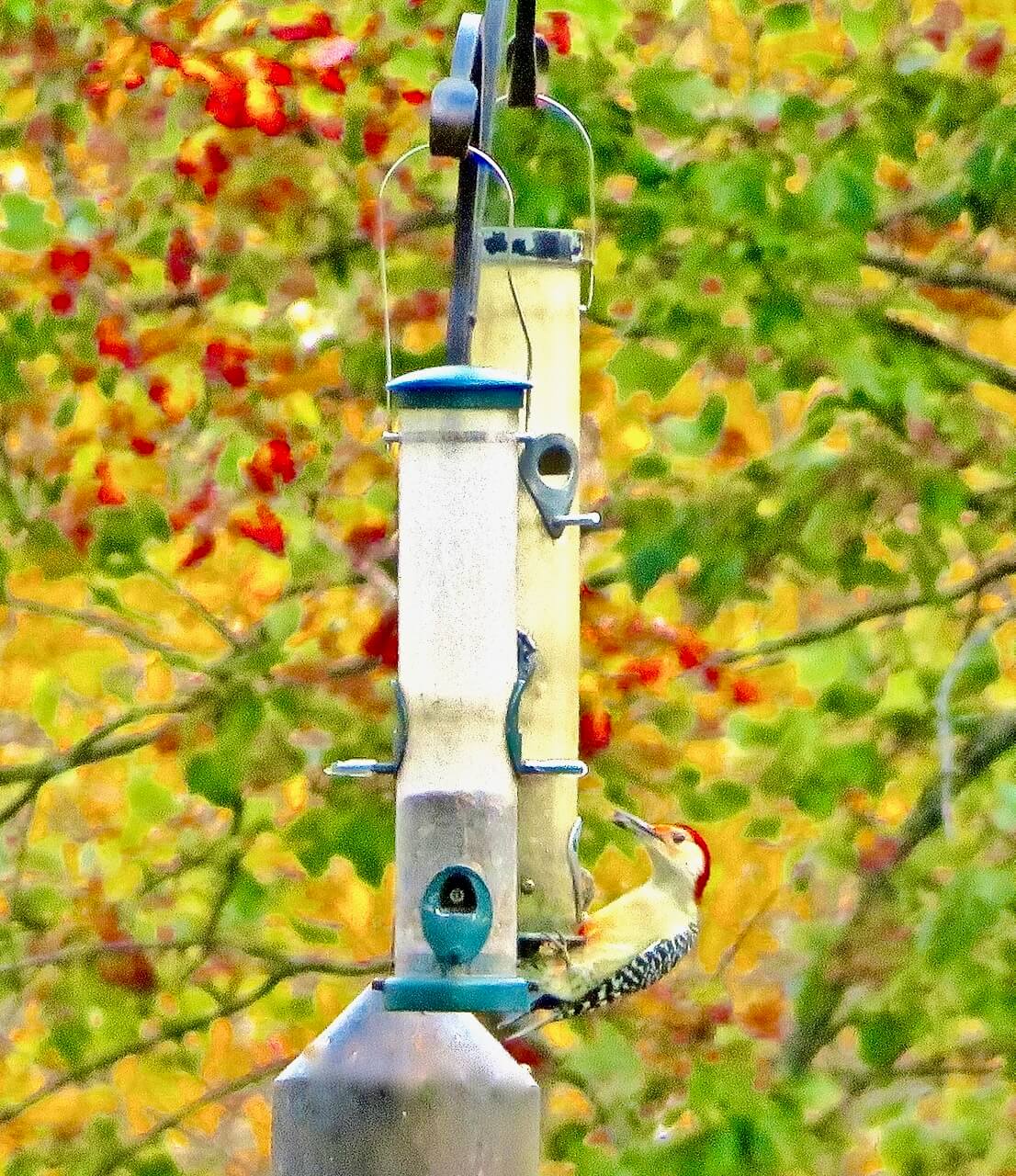
Diverse and energetic birds welcome visitors to Wachusett Meadow Wildlife Sanctuary. Feeders are placed just steps from the parking lot, allowing everyone to experience nature up close, no matter their mobility level.
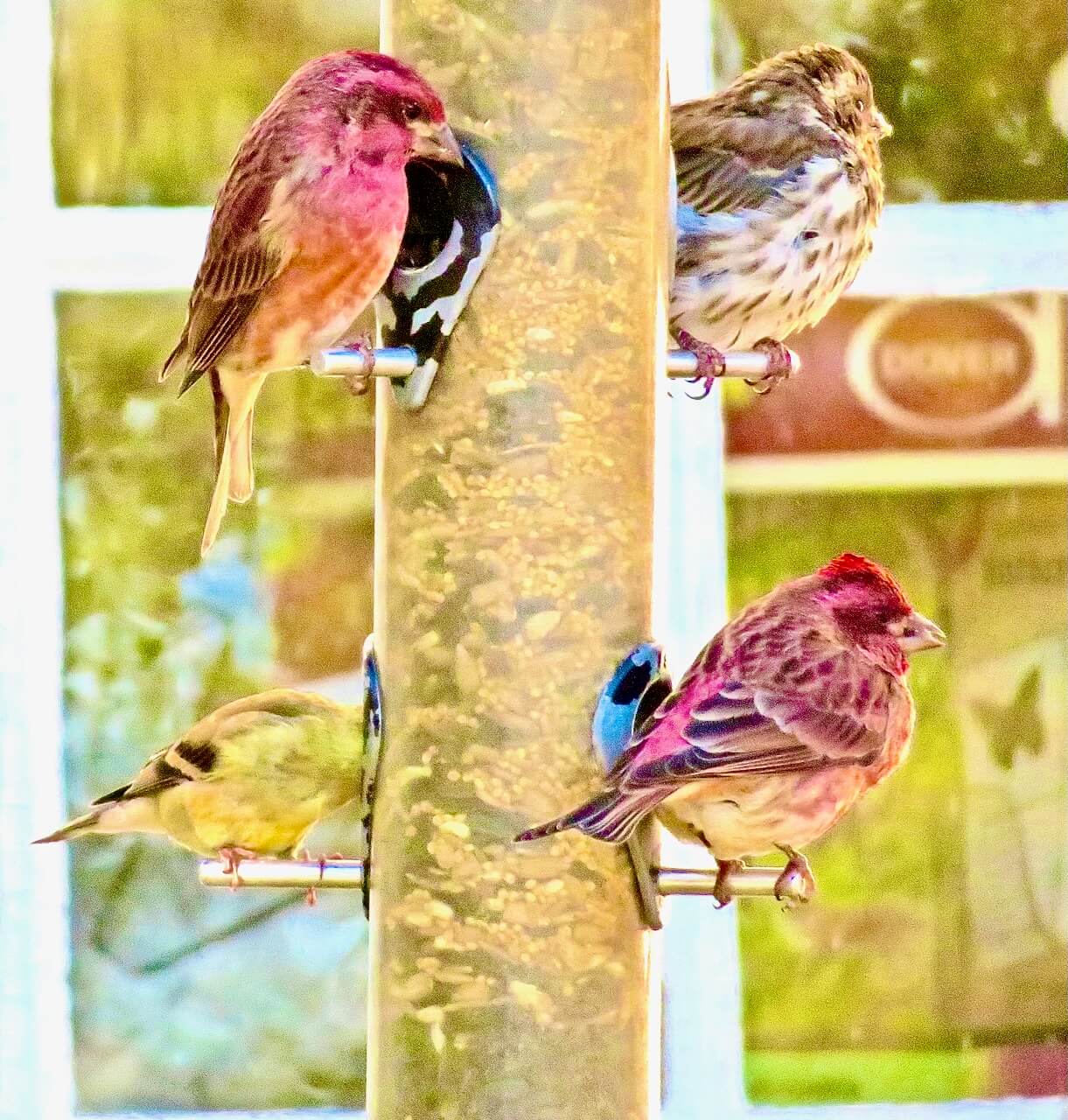
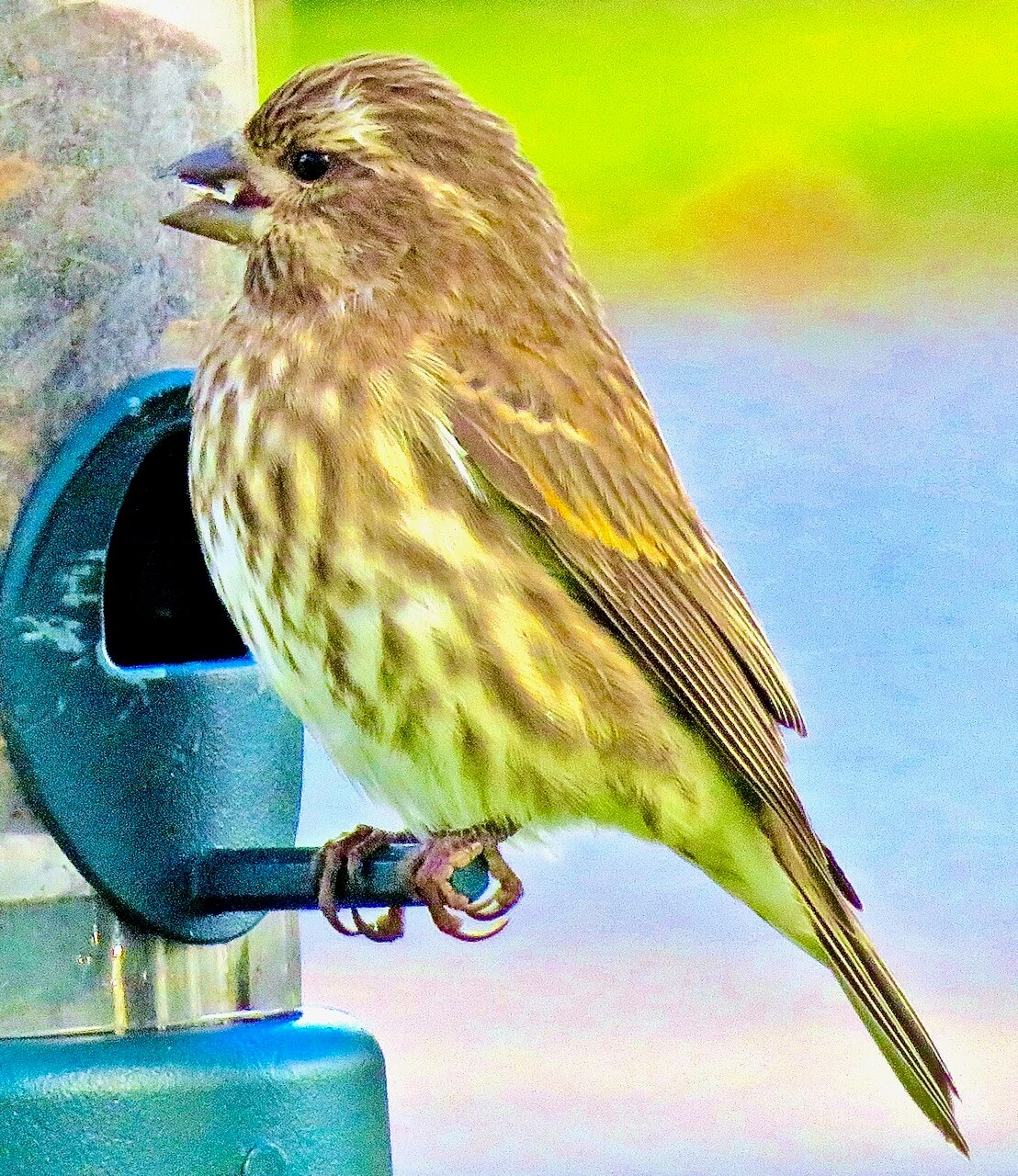
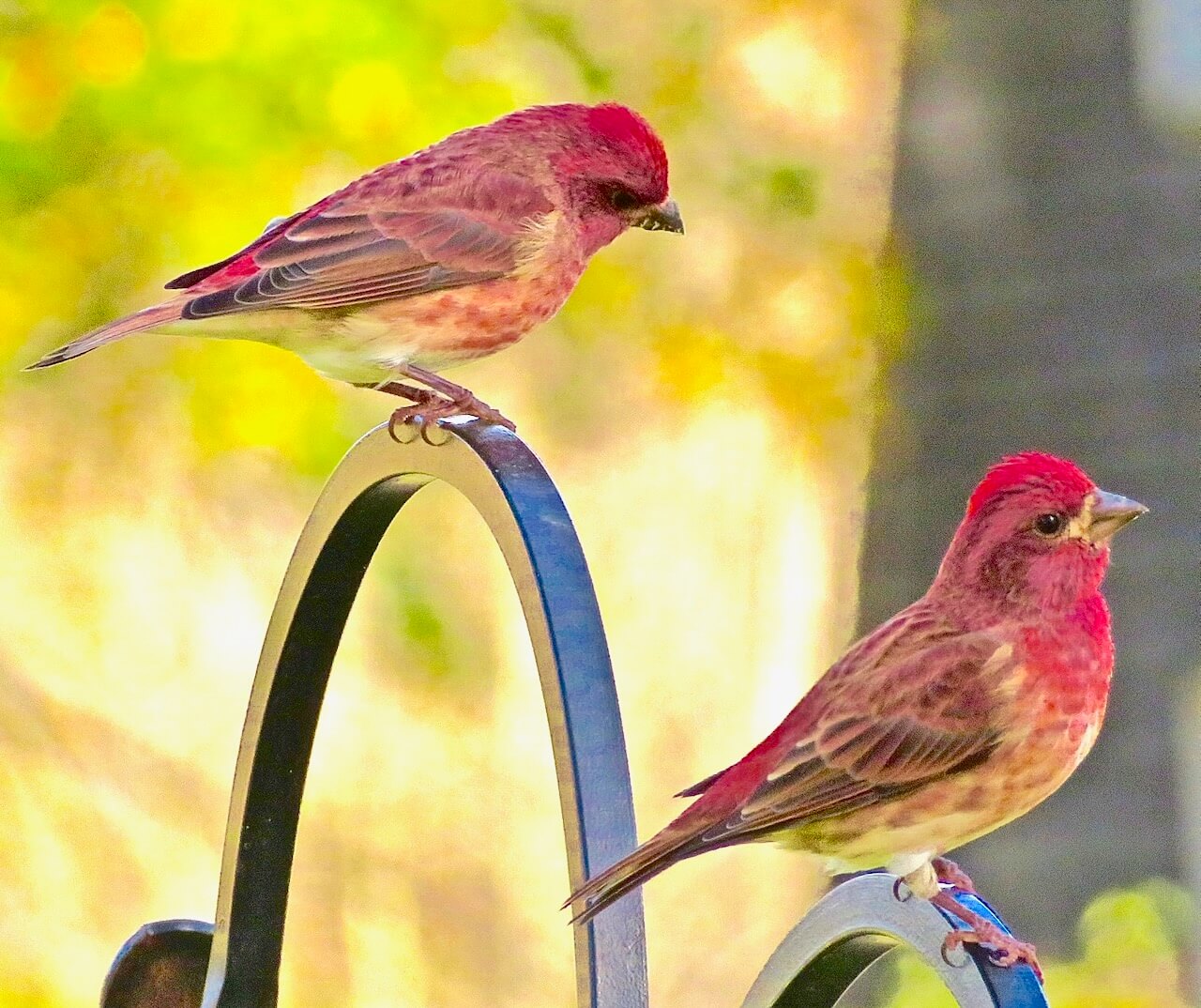
Purple Finches and a Goldfinch
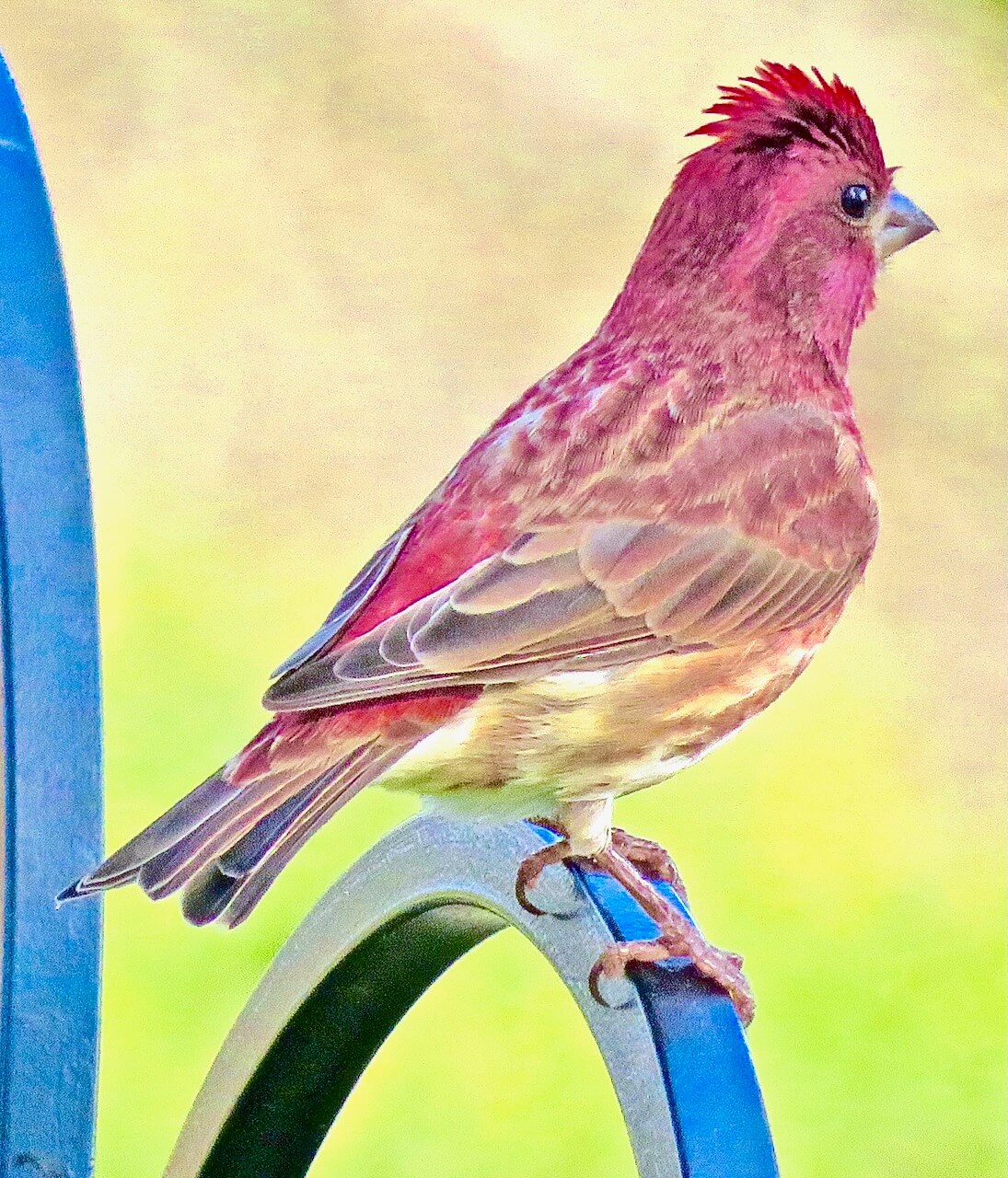
Male Purple Finch
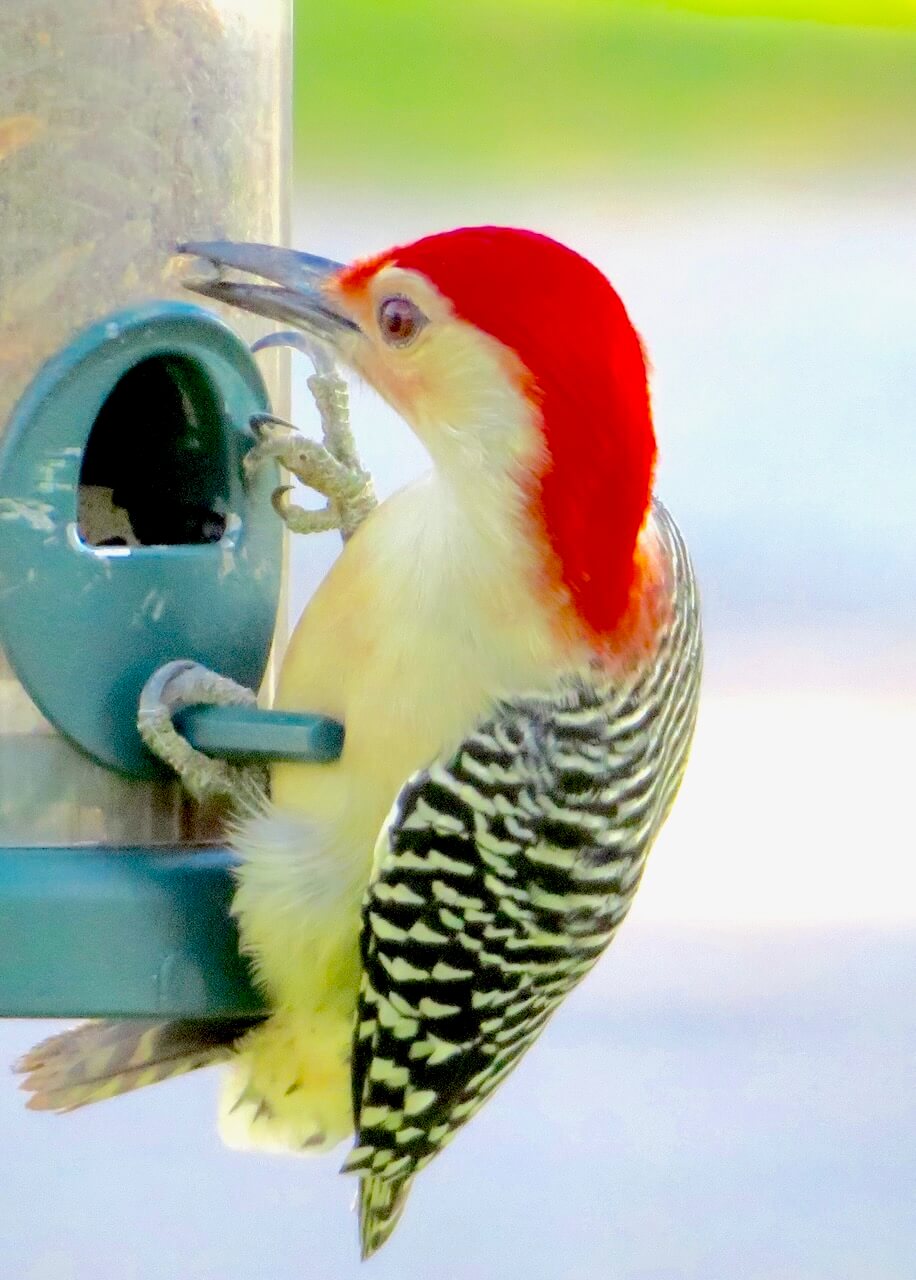
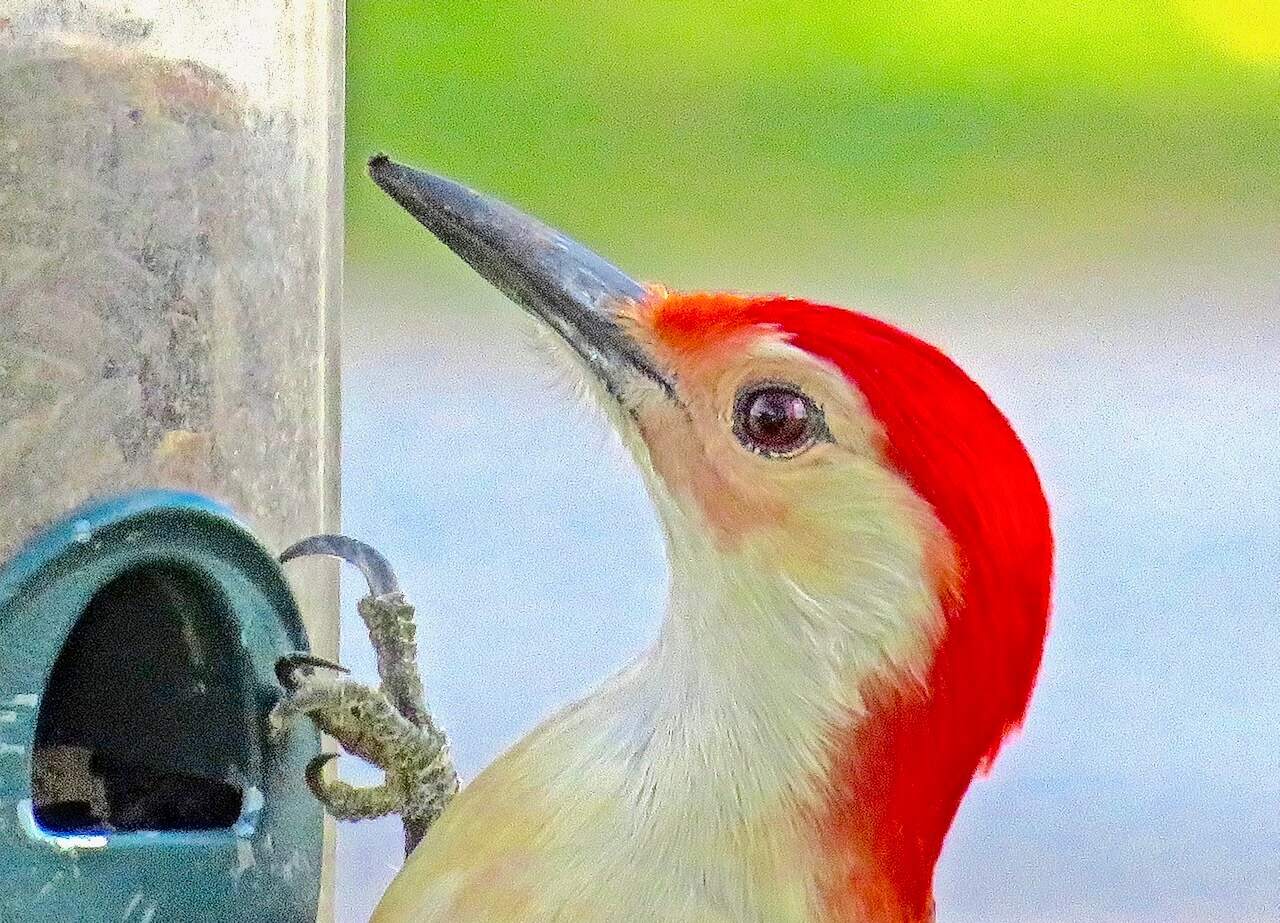
Red-bellied Woodpecker
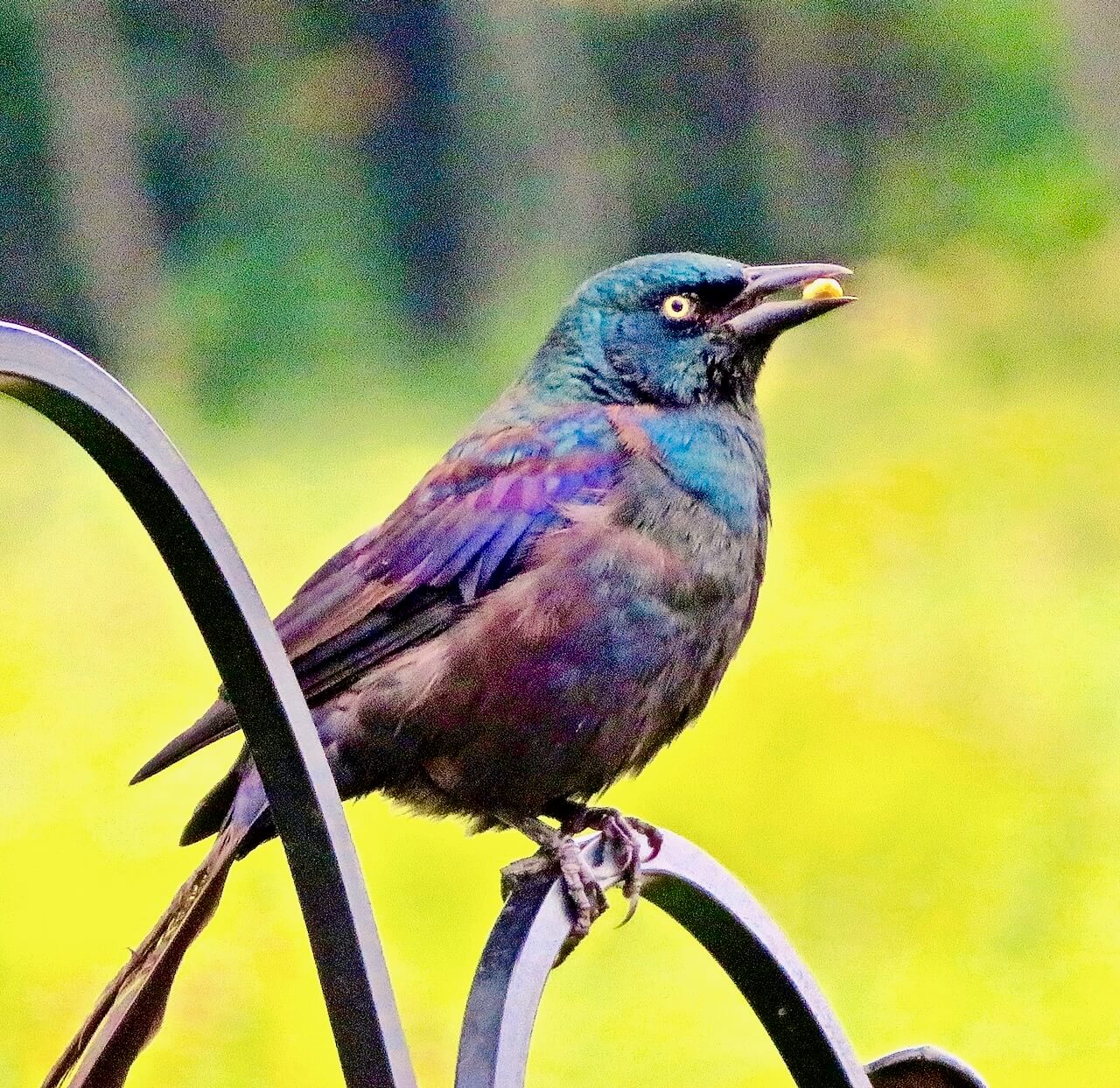
Grackle
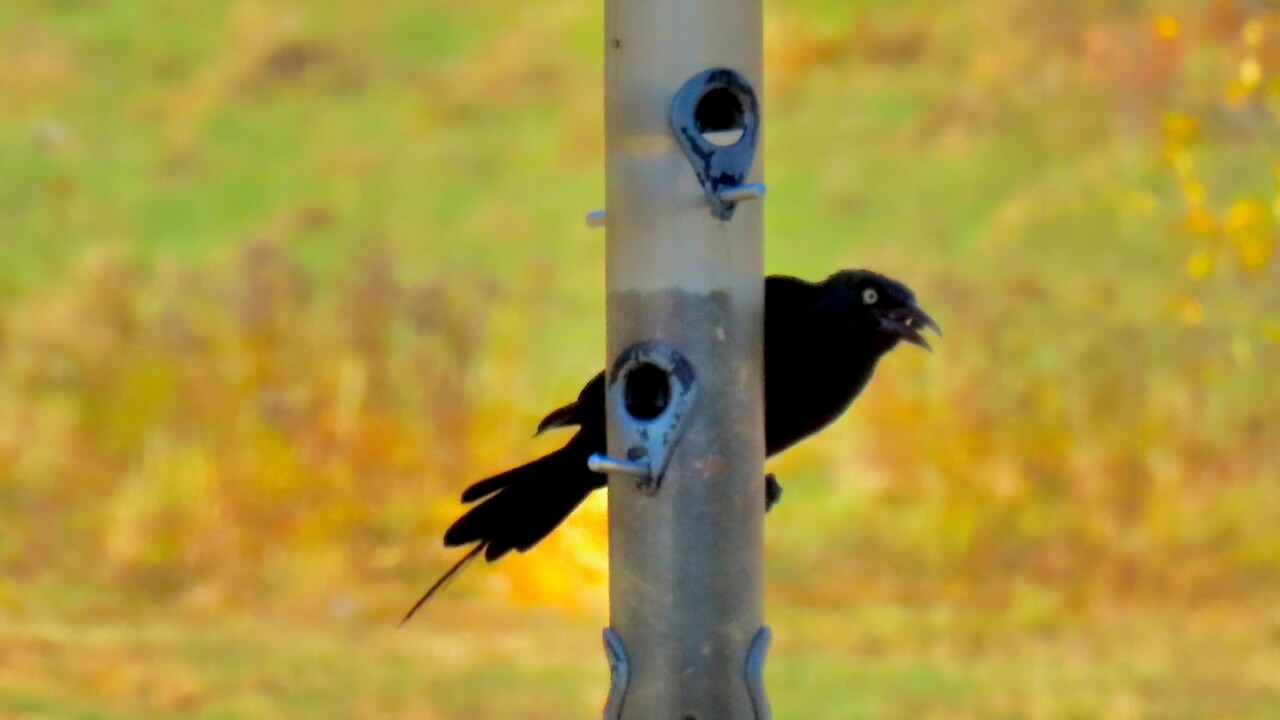


Evening Grosbeak

Northern Cardinal


