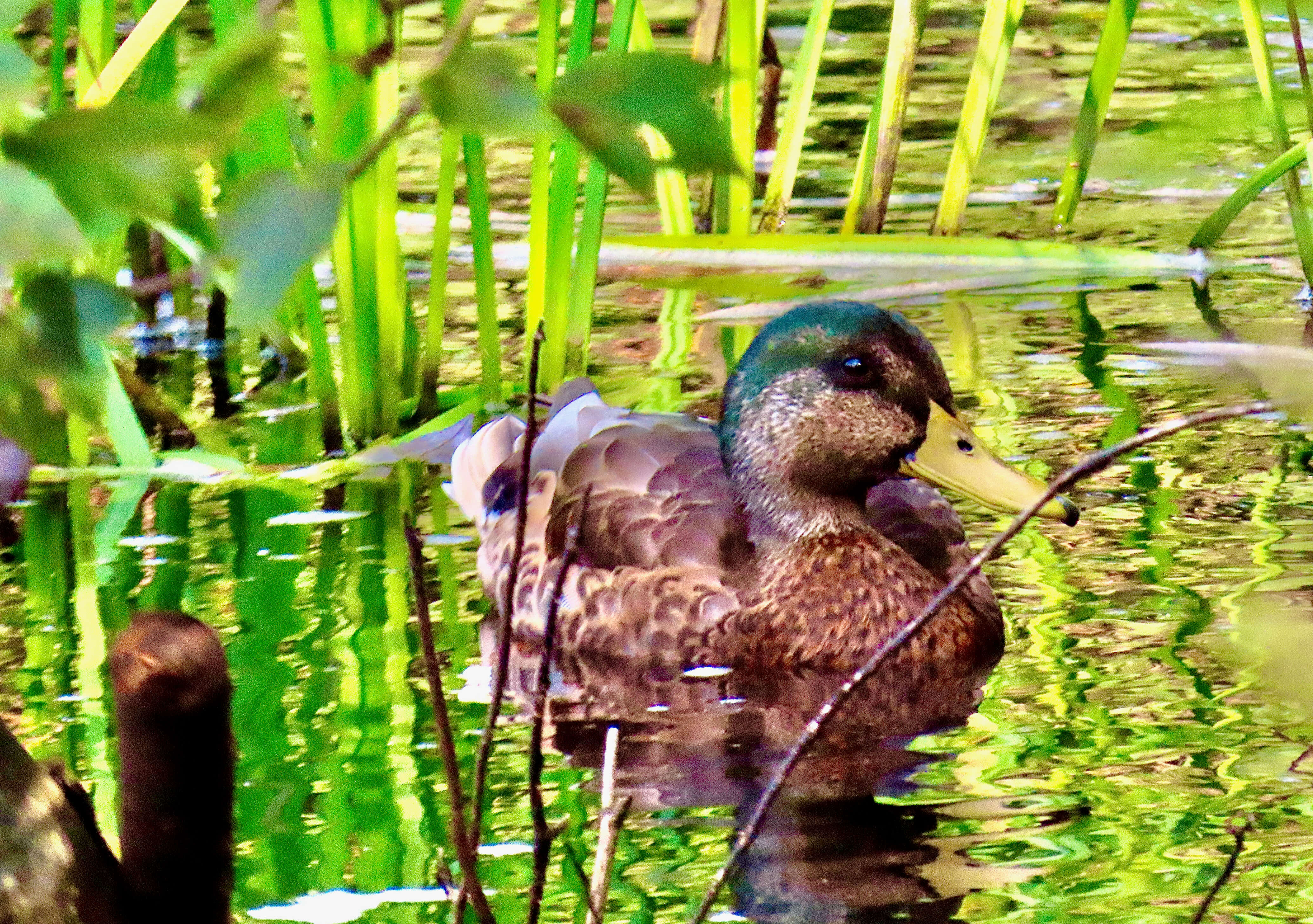
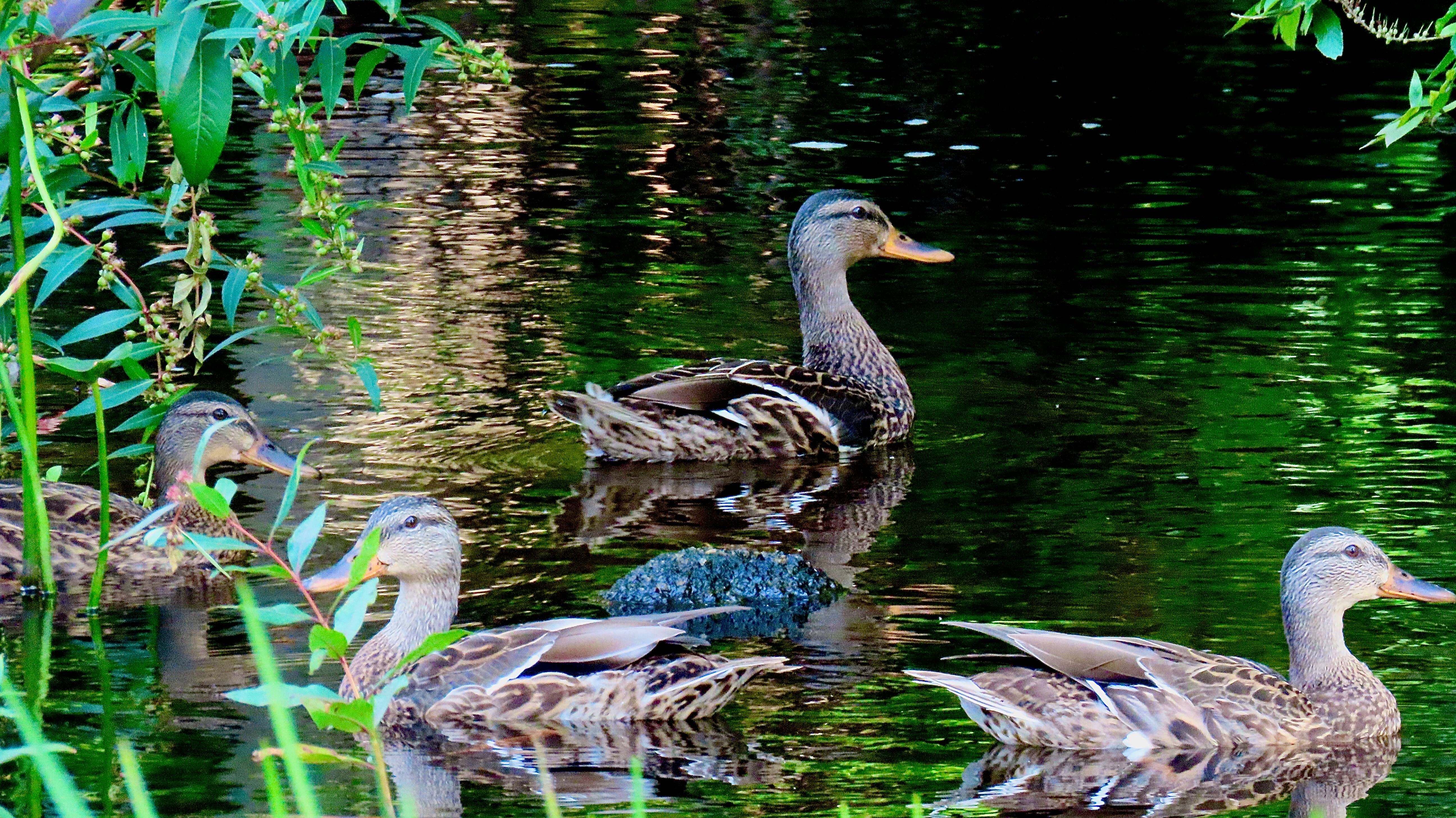
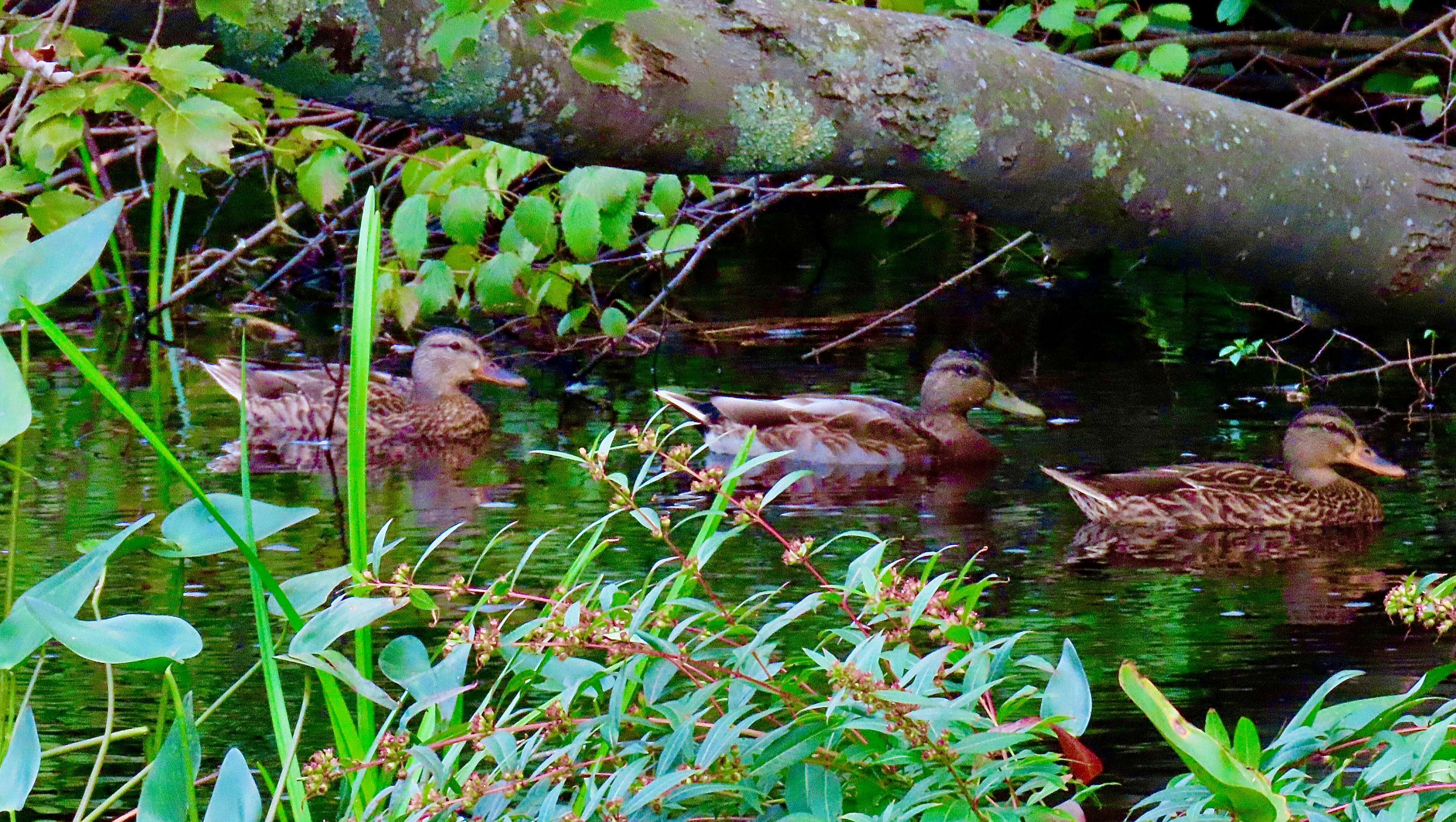
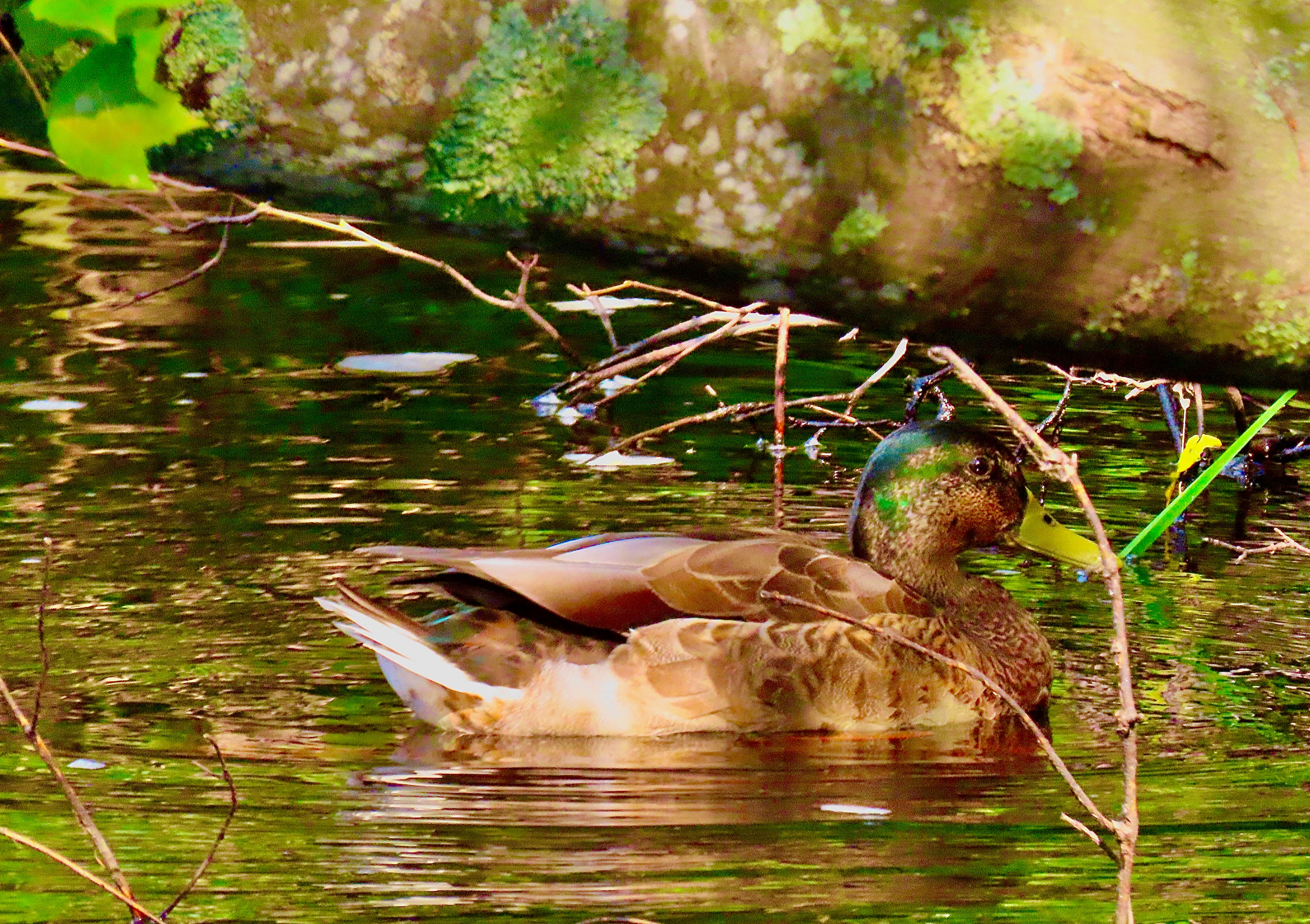
A “raft” of ducks is a collective noun for a group of ducks who gather together as they float on the water. A “paddling” of ducks describes how a group moves across lakes, ponds or rivers with synchronized , graceful movements. I look forward to the March arrival of hooded mergansers at Wachusett Meadow Wildlife Center soon, whether they are rafting or paddling.
This raft of hooded mergansers are diving ducks that have a serrated bill designed for catching fish. Along with other mergansers, they are the only North American ducks specializing in eating fish. They are excellent divers, and can go as deep as thirty feet.
The male hooded merganser looks like this when relaxing…
or can raise and lower a large fan-like crest or “hood” on his head like this. The crest is raised during courting or when then duck feels threatened.
Two male Mergansers with crests down…
and three paddling with crests raised.This raft of female mergansers sports smaller crests of a cinnamon-brown shade.
The crest is sometimes described as a “punk rock hairstyle”.
Male mergansers have intense, bright yellow eyes while the females’ are brown or reddish-brown. Their eyes are specially adapted to allow them to see clearly while fishing underwater.
It can be difficult to photograph hooded mergansers, as they are shy and paddle fast. They are sensitive to sound and movement, and move away quickly when approached. I’ll be waiting -quietly -to photograph whatever fleeting moments are possible.
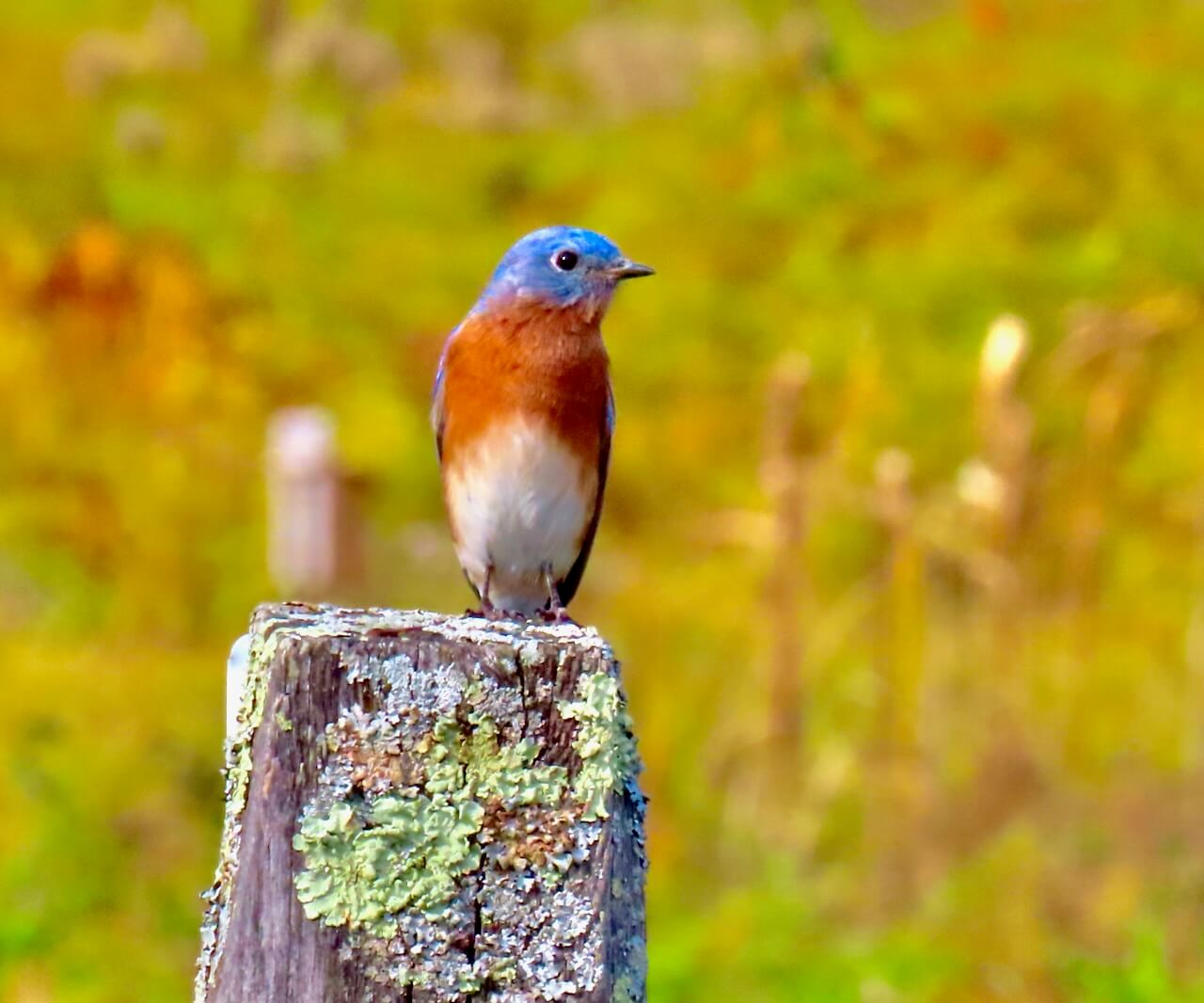
A pair of Eastern Bluebirds brightened up my snowy yard on a gray morning. The specially designed bluebird house installed for them has an opening of exactly 1.5 inches in diameter to ensure that larger birds cannot nest there. Although bluebirds often visit, and occasionally start to build a nest, they never stay through the whole season. After territorial skirmishes sparrows win out. Fingers crossed for this spring!
Herons are important for the environment as they act as “indicator species”. Scientists monitor heron populations to detect environmental contamination, such as toxins in the water or mercury levels in eggs, which reflects the health of the entire ecosystem.
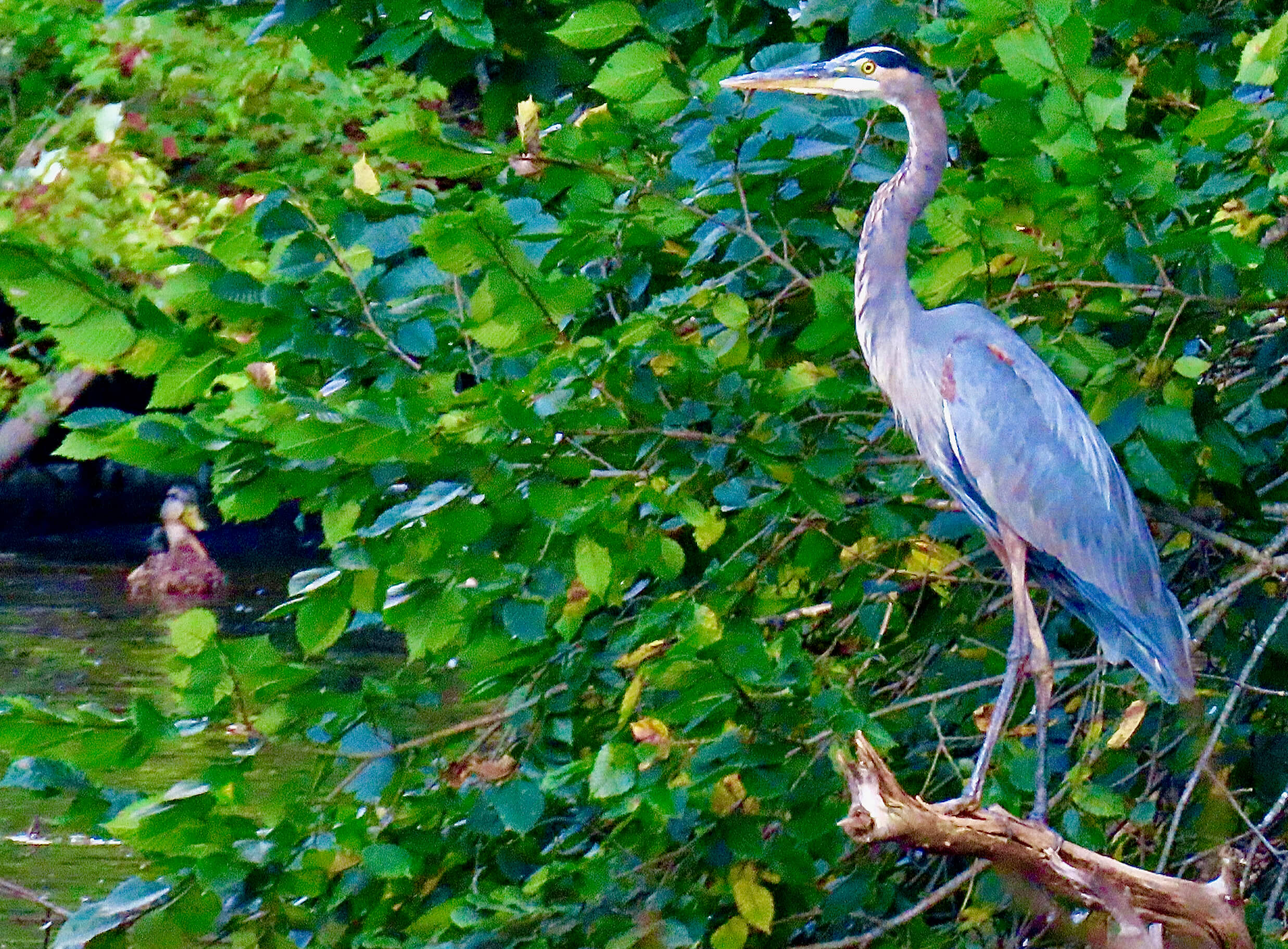
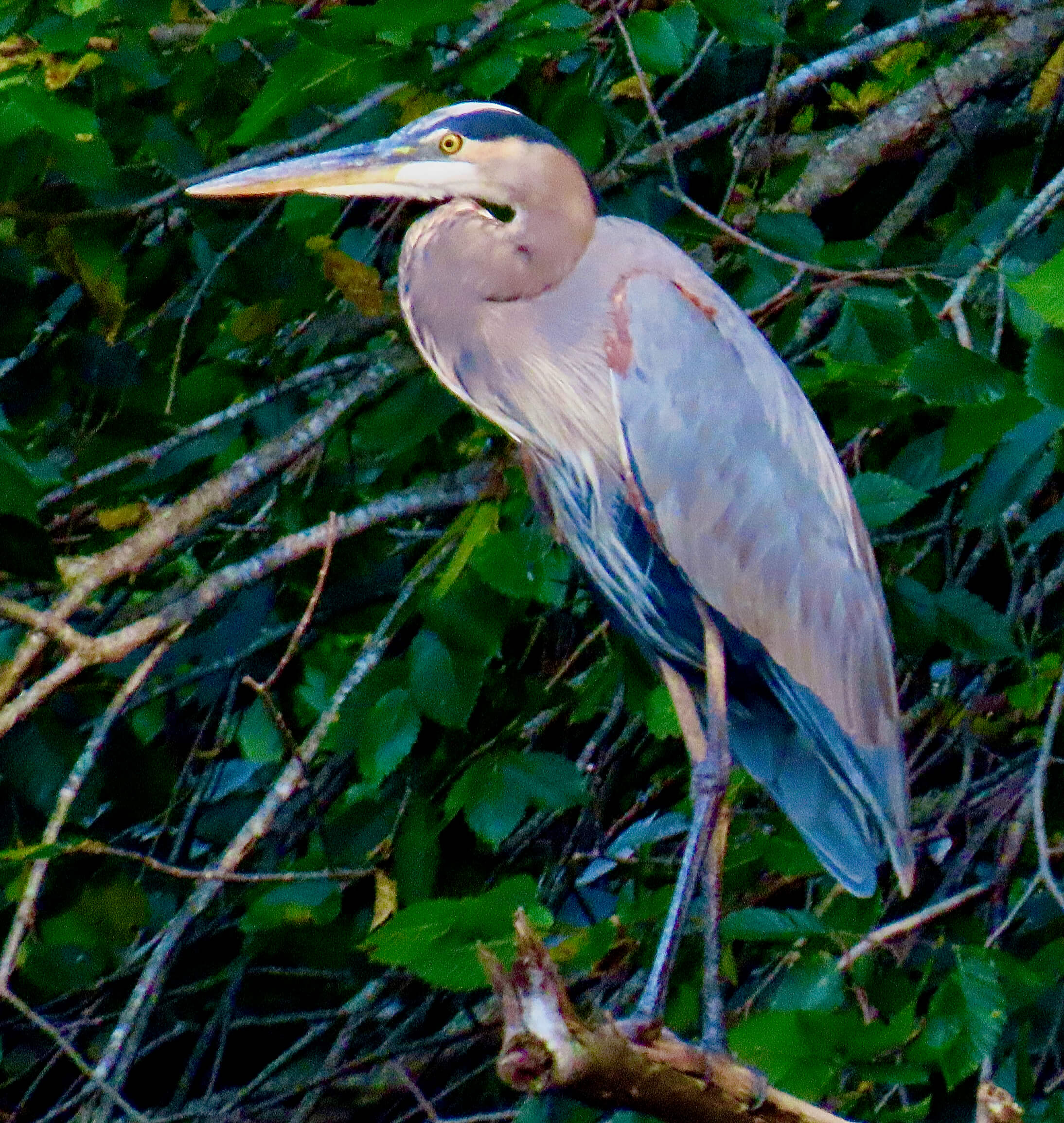
Although they are named “great blue”, herons can look grey or brown depending on the light conditions.
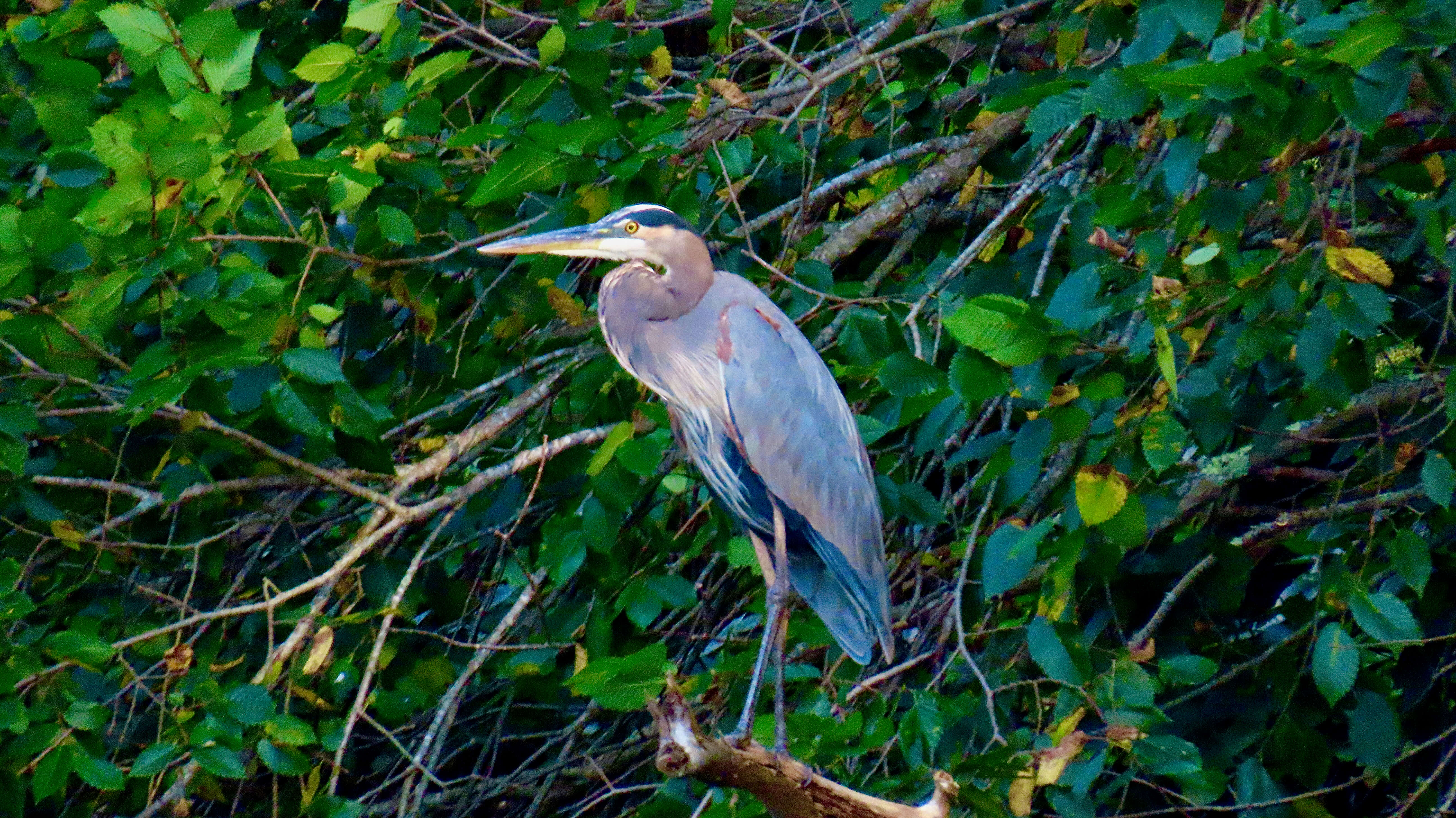
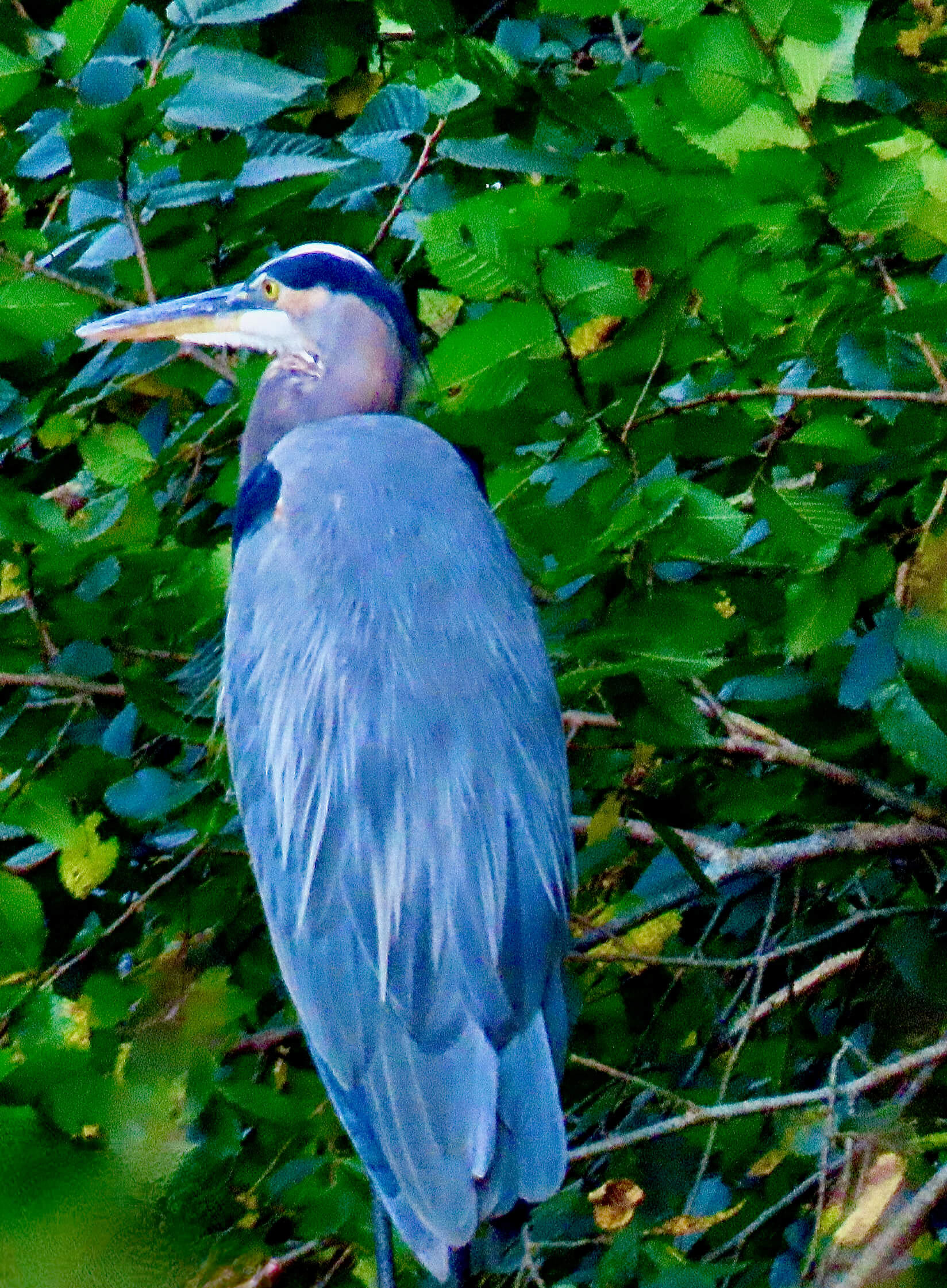
This great blue heron does look blue. Herons appear bluest in low light, fog, or shadows, which reflect cooler, blue tones.
This heron is taking advantage of the All-Persons Observation Deck.
Herons are known for their exceptional camouflage, often appearing nearly invisible when perched among dead branches, or debris.
This heron can see well from high up in the tree. Its eyesight is estimated to be about three times more detailed than a human’s. From this high perch, a heron can spot small movements below.
Great Blue Herons are expert fishers, but they will eat almost anything they can catch and swallow. In a meadow, herons hunt for small mammals, which can make up a large portion of its diet, especially in winter when waterways freeze .
The Great Blue Heron is widely considered one of the most prehistoric-looking birds alive today. While all birds are living descendants of dinosaurs, herons appear more like dinosaurs because of their large size, sharp angles and guttural sounds.
Herons possess specialized flexible necks with 19 to 21 vertebrae.
They can form their necks into an S-shaped curve which acts like a coiled, spring-loaded mechanism. This allows them to catch prey in the water with high speed and precision.
Diverse and energetic birds welcome visitors to Wachusett Meadow Wildlife Sanctuary. Feeders are placed just steps from the parking lot, allowing everyone to experience nature up close, no matter their mobility level.
There is no shortage of wildlife in Central Massachusetts. Here is a sample of photographs from this year.
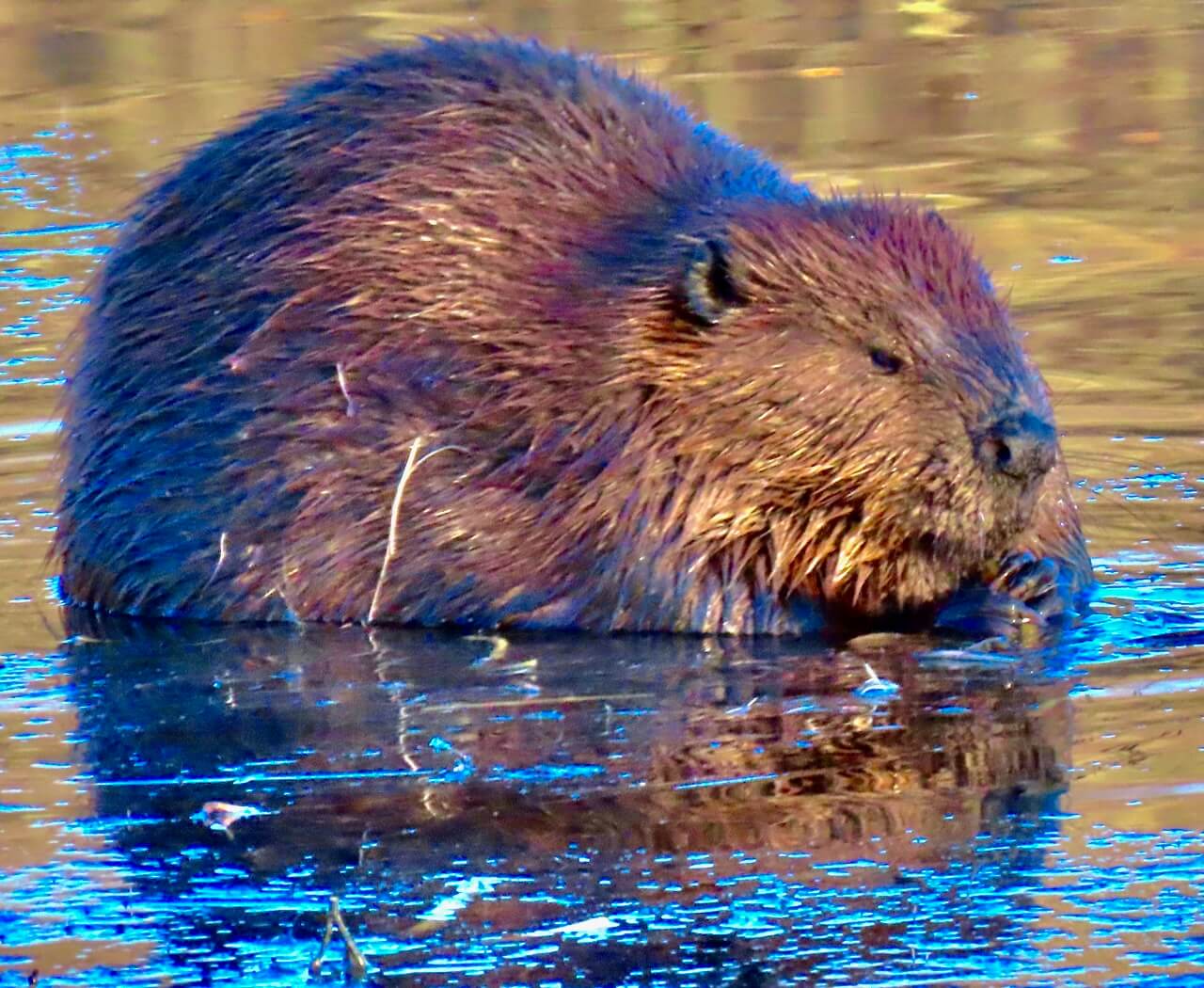
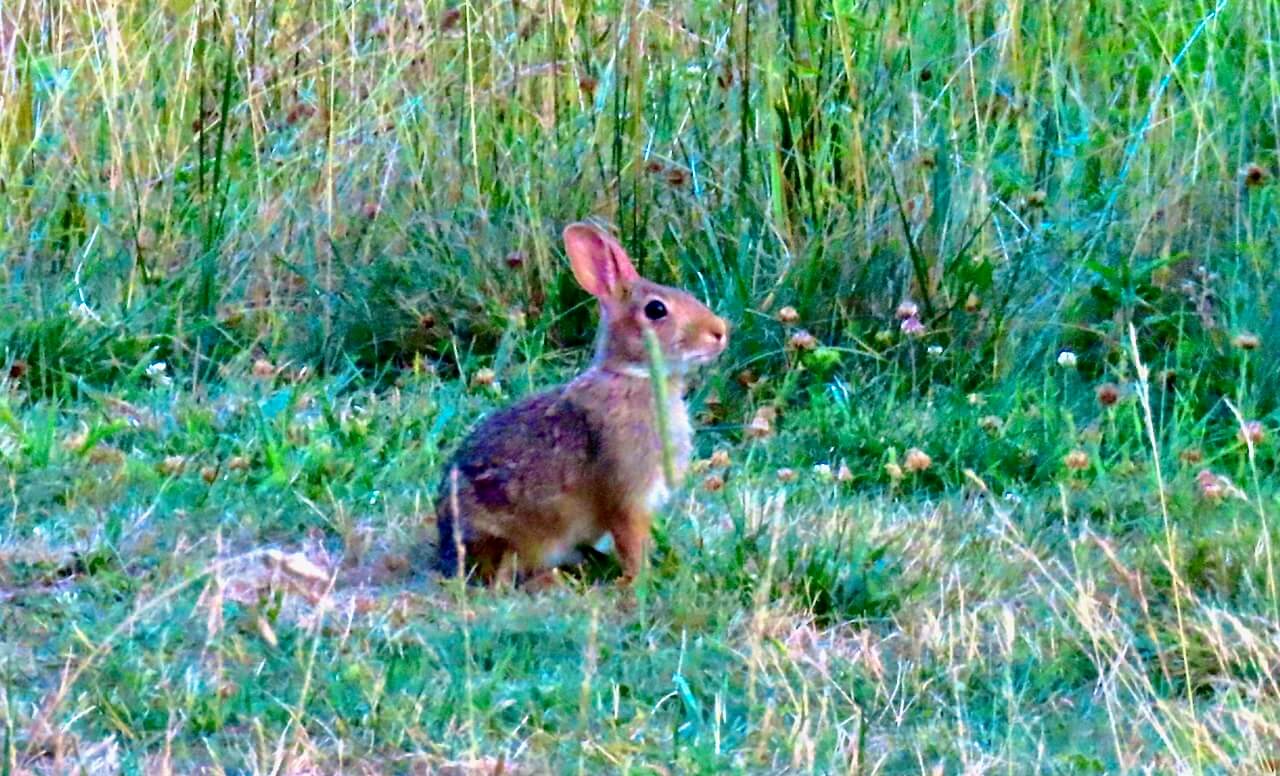
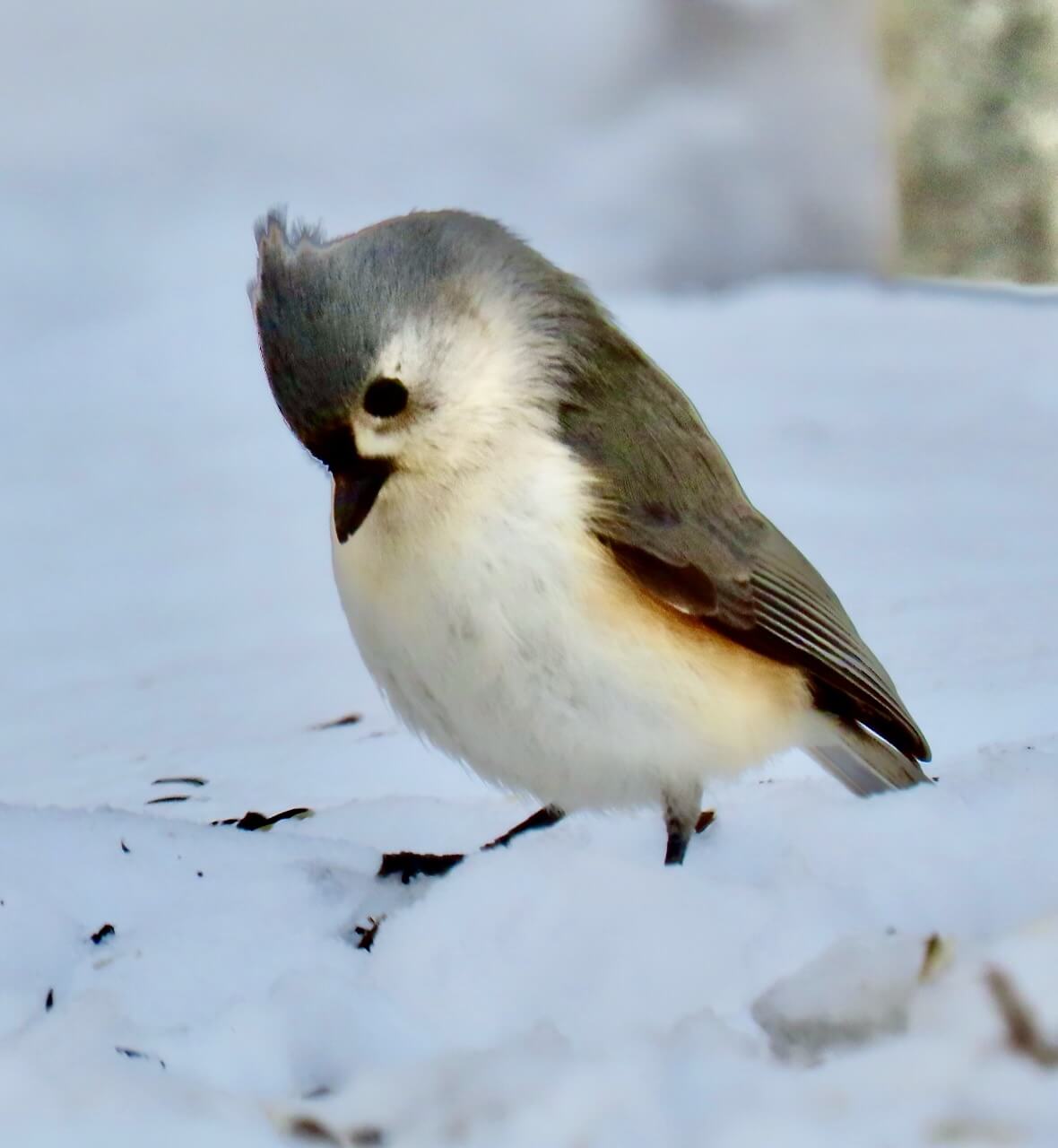
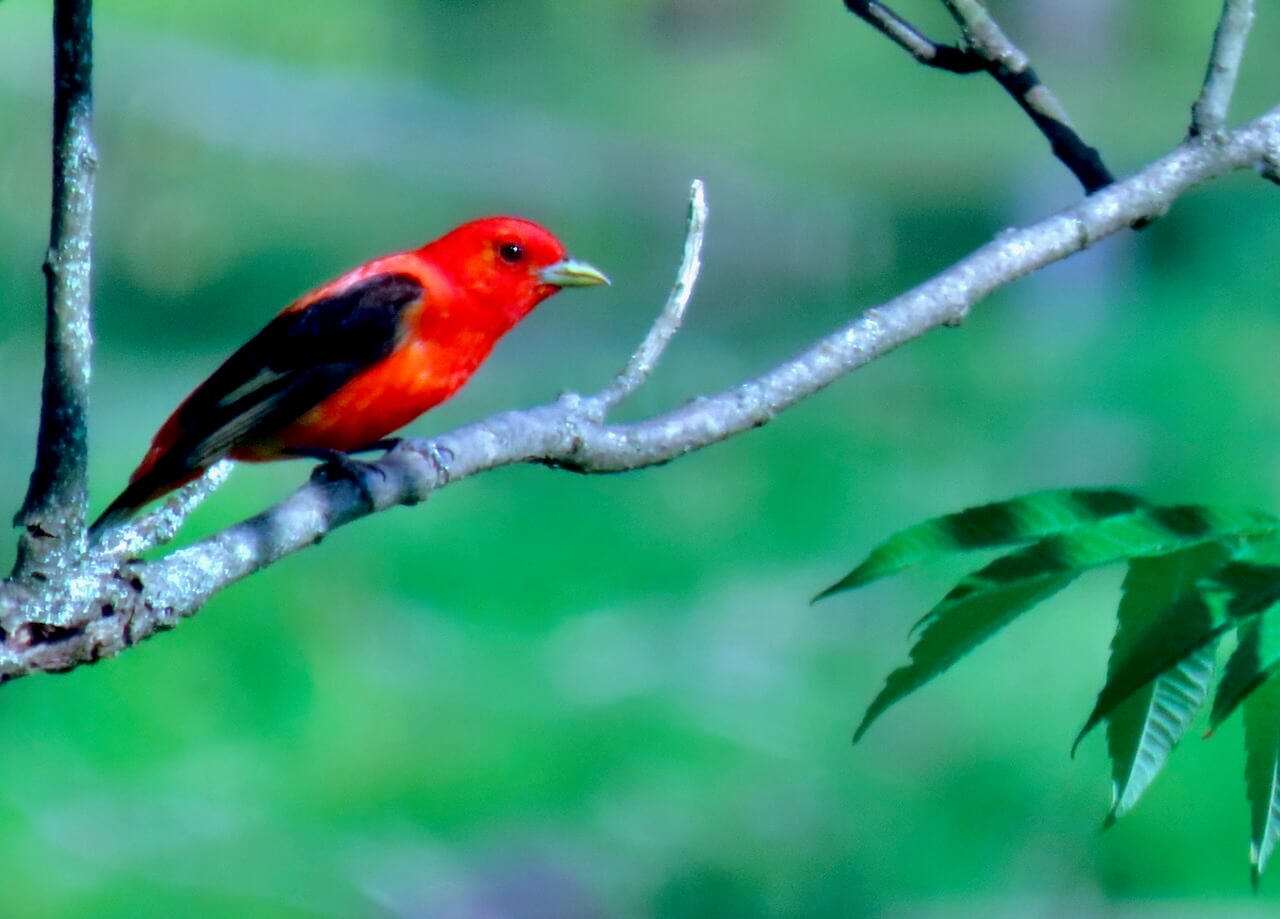
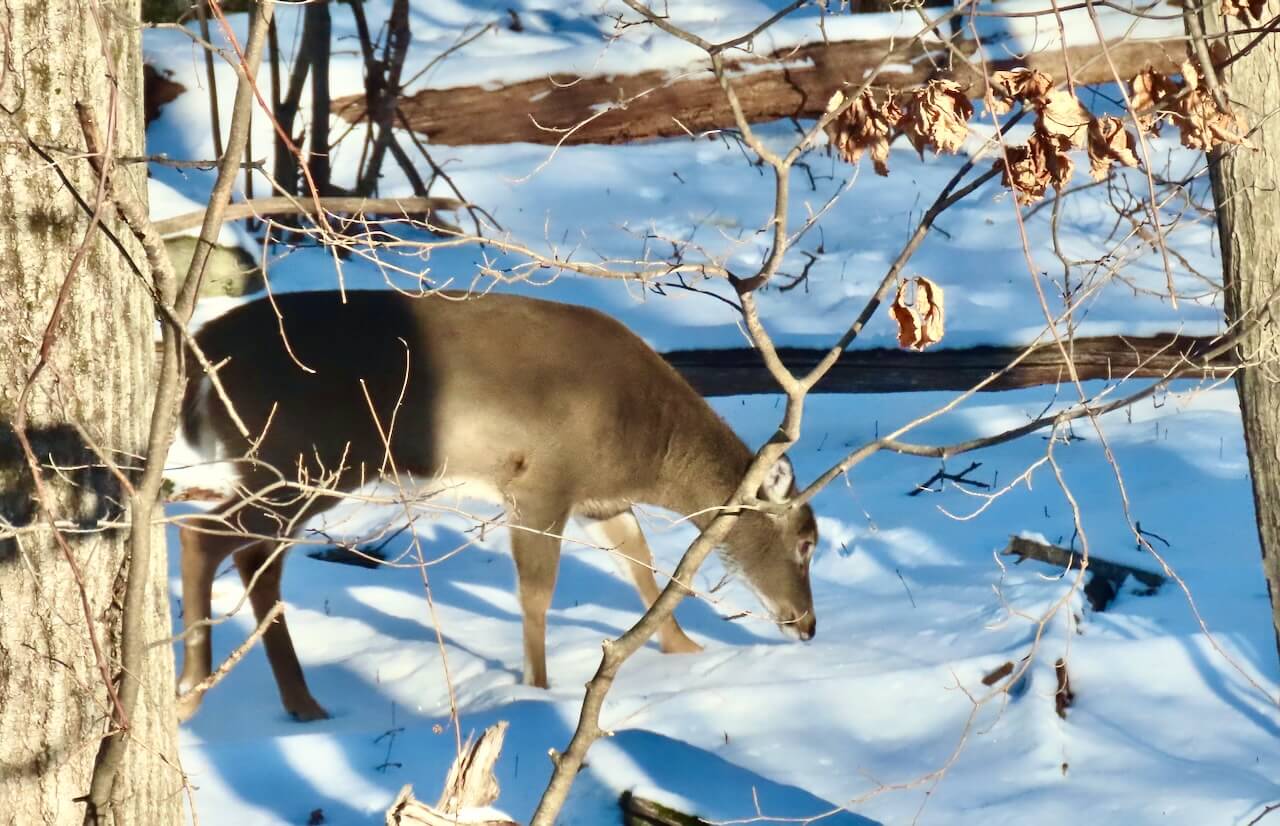
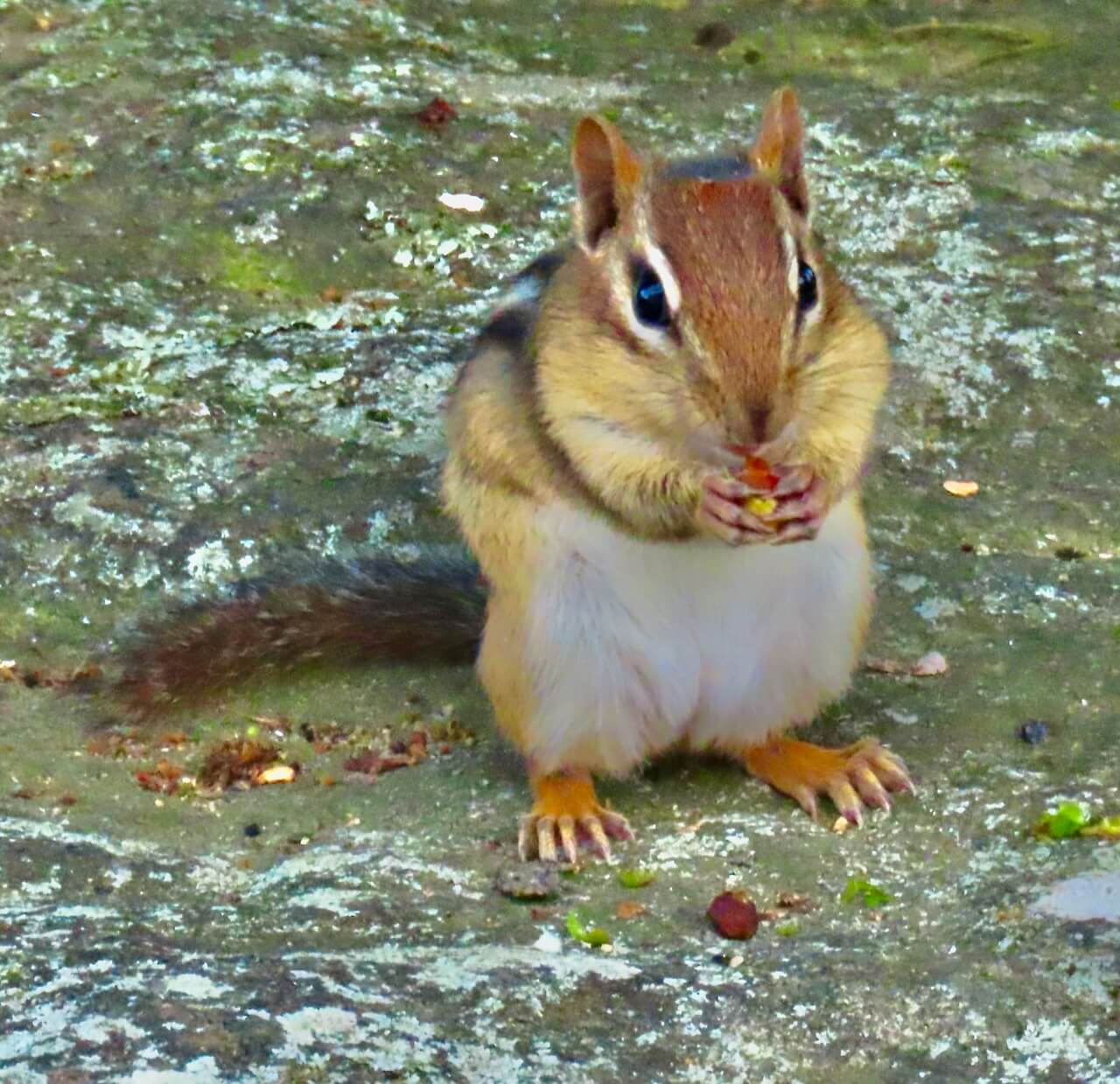
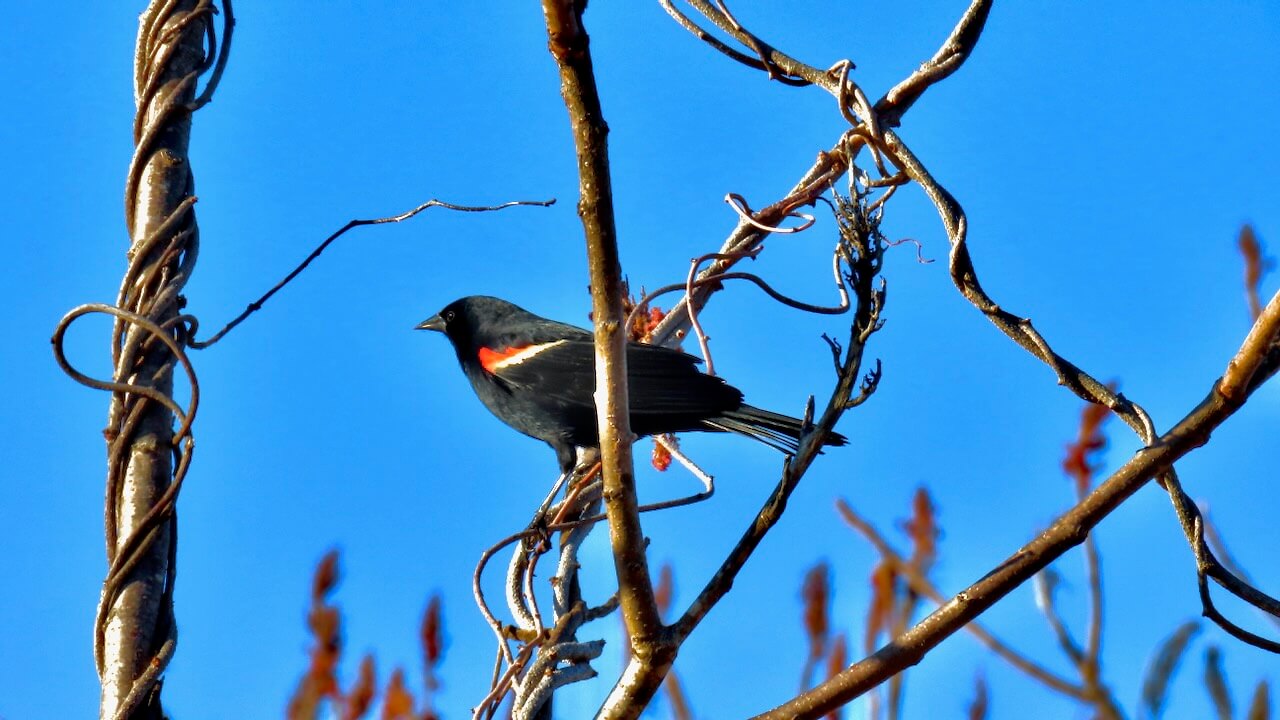
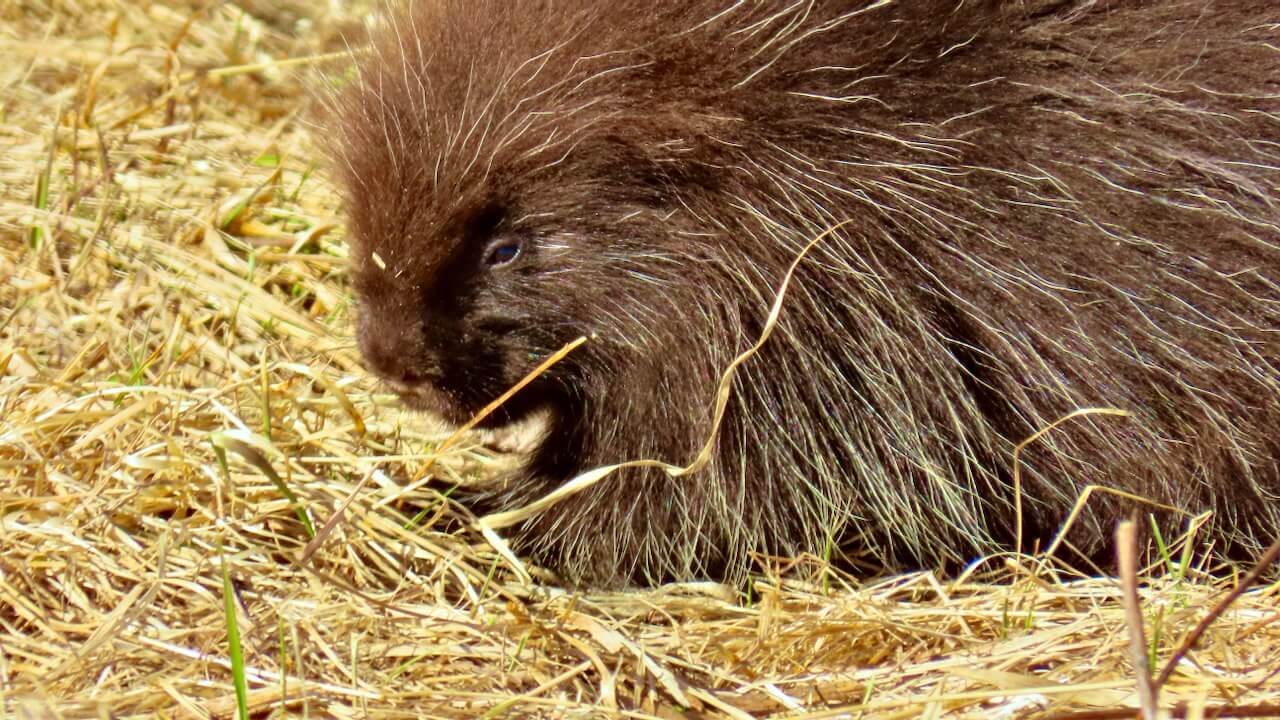
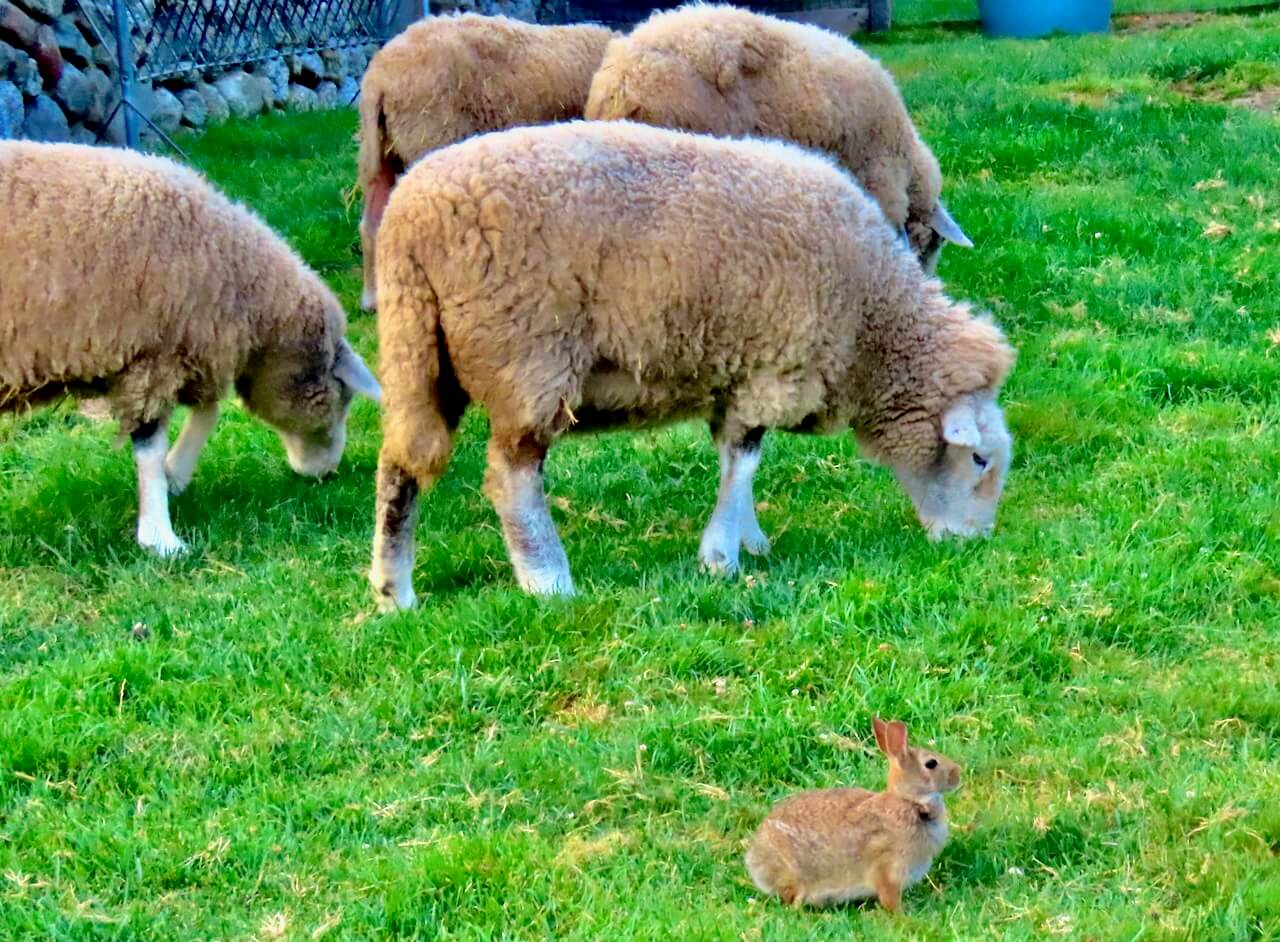
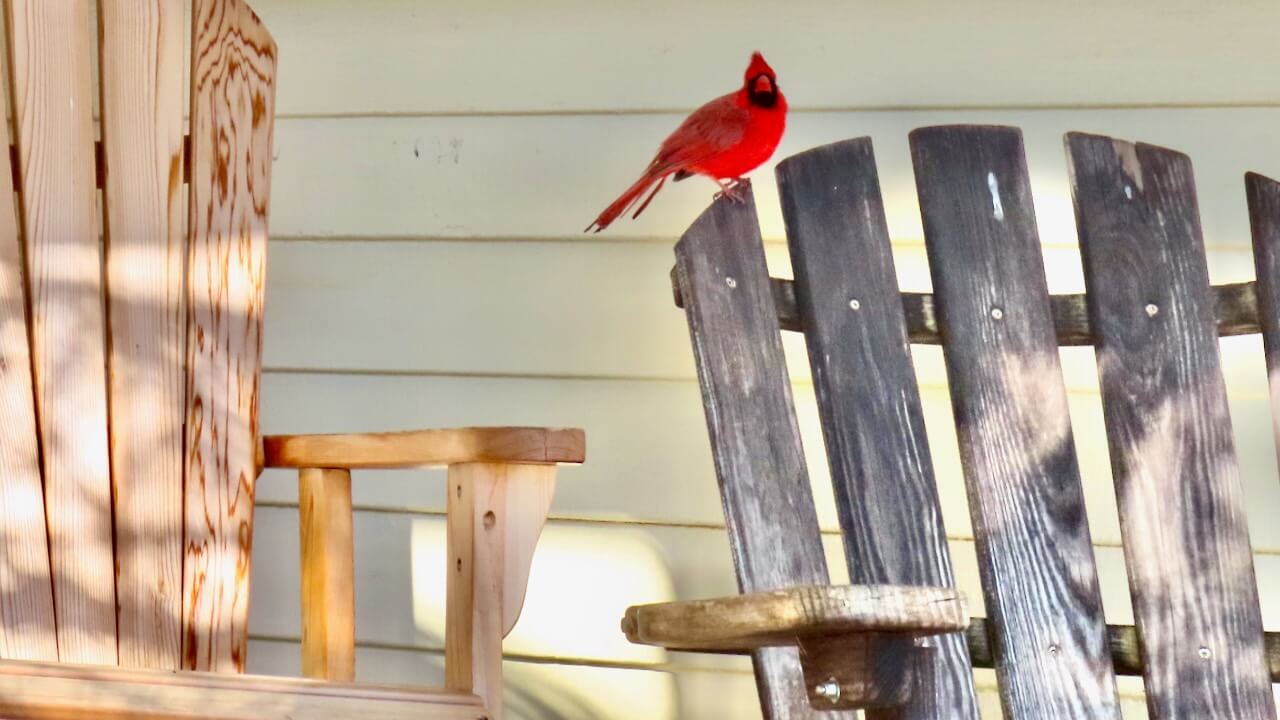
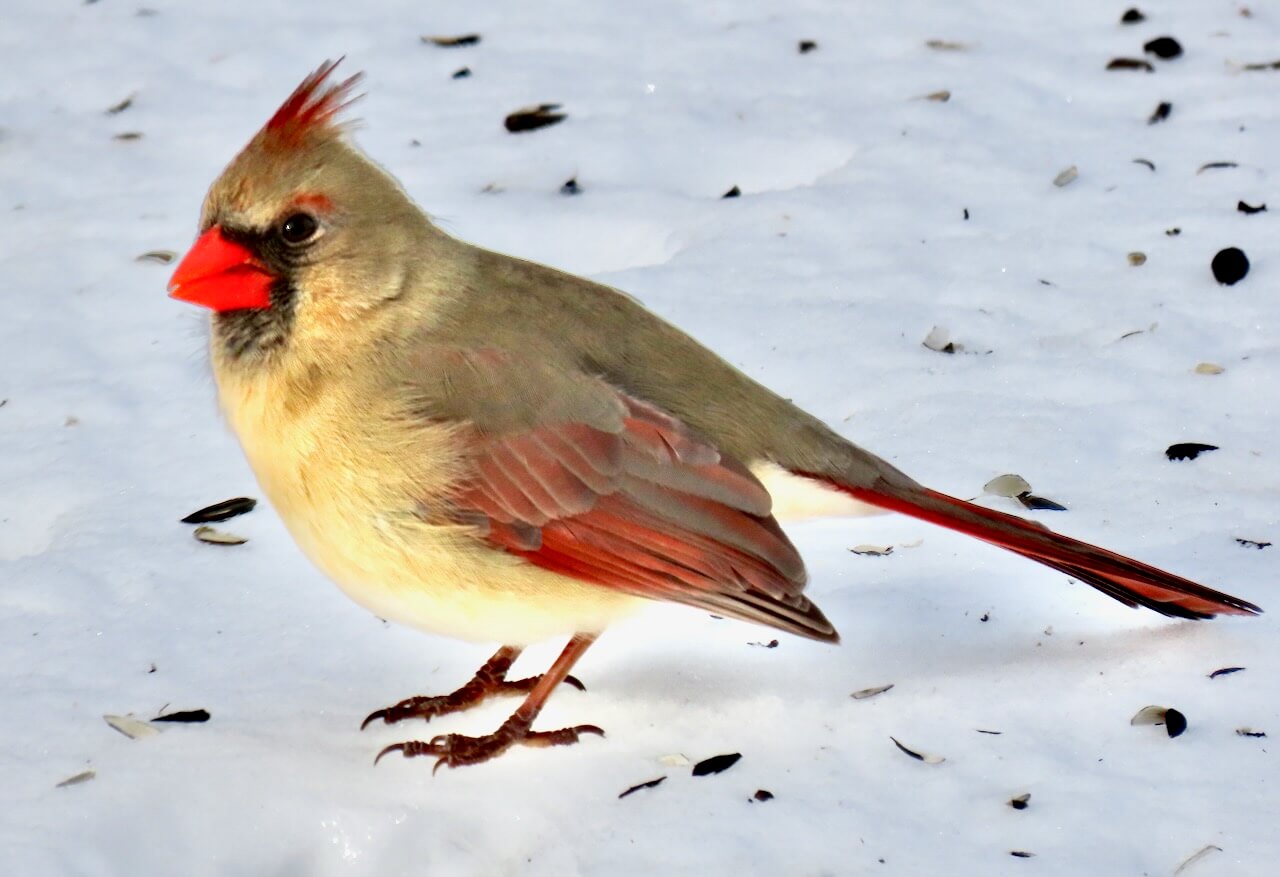
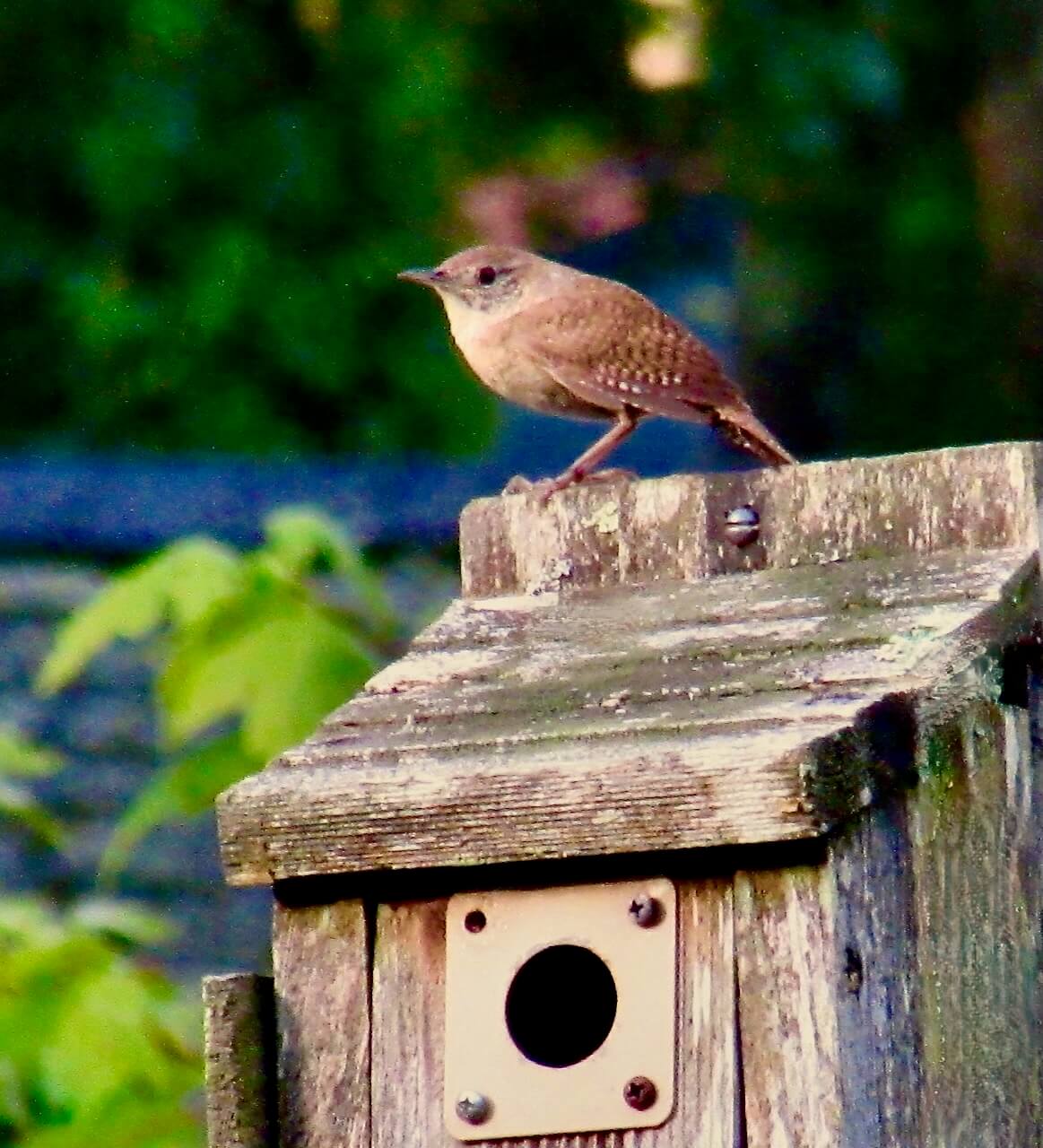
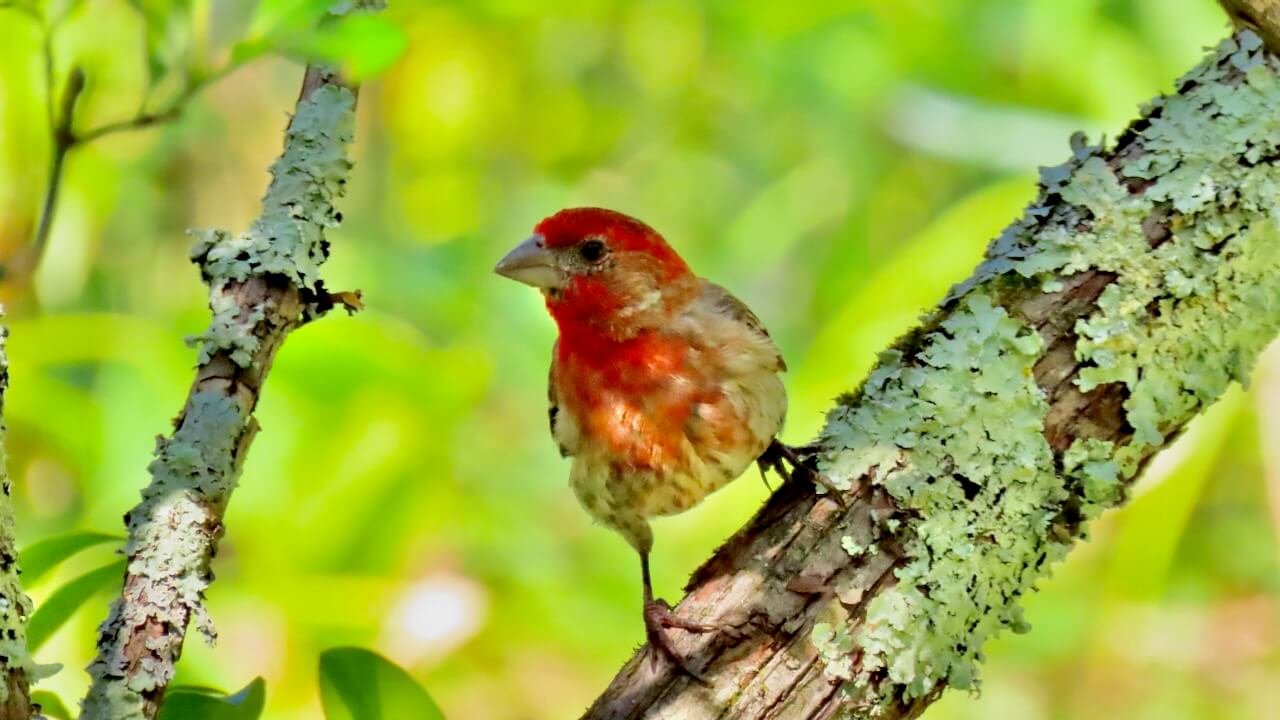
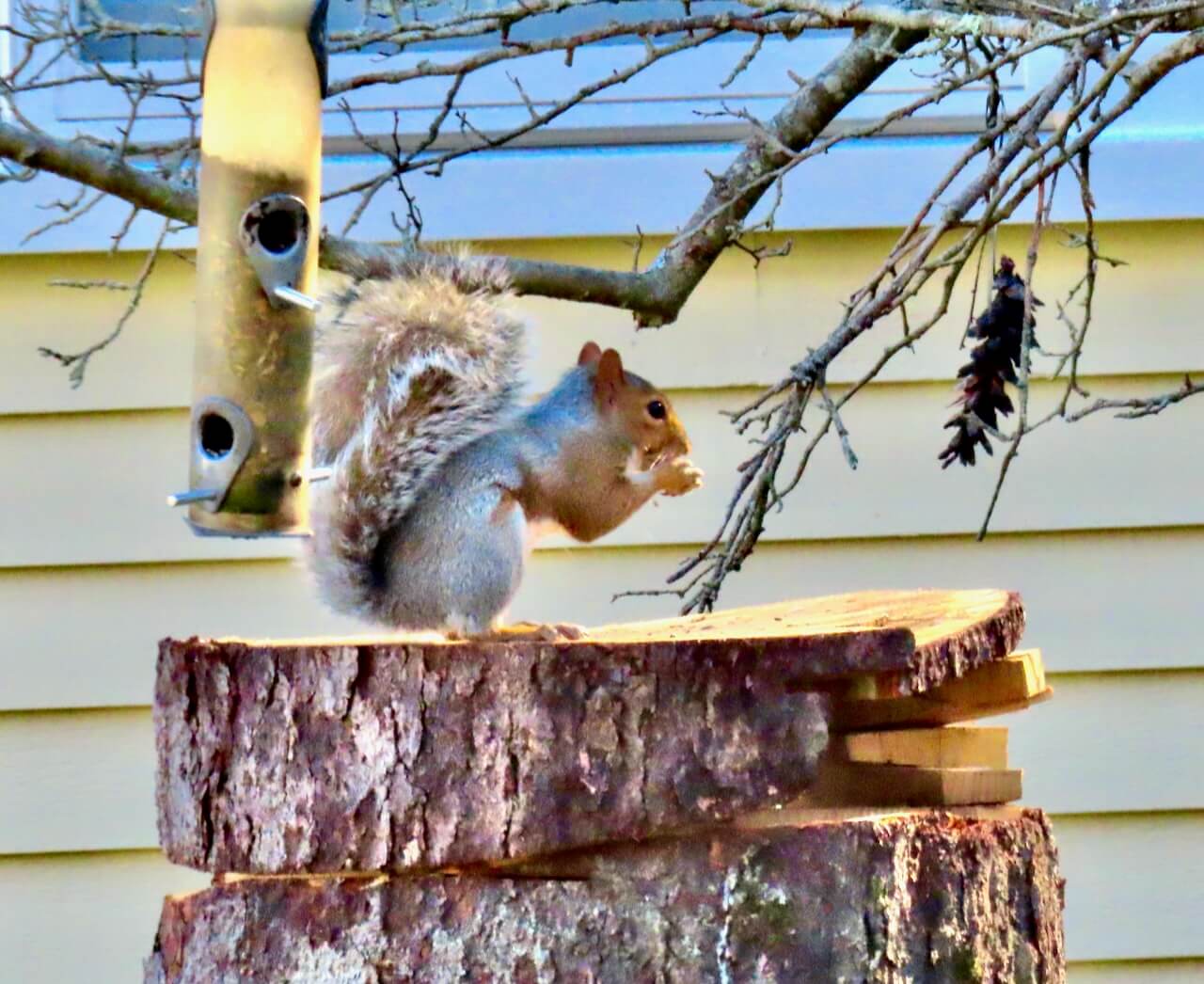
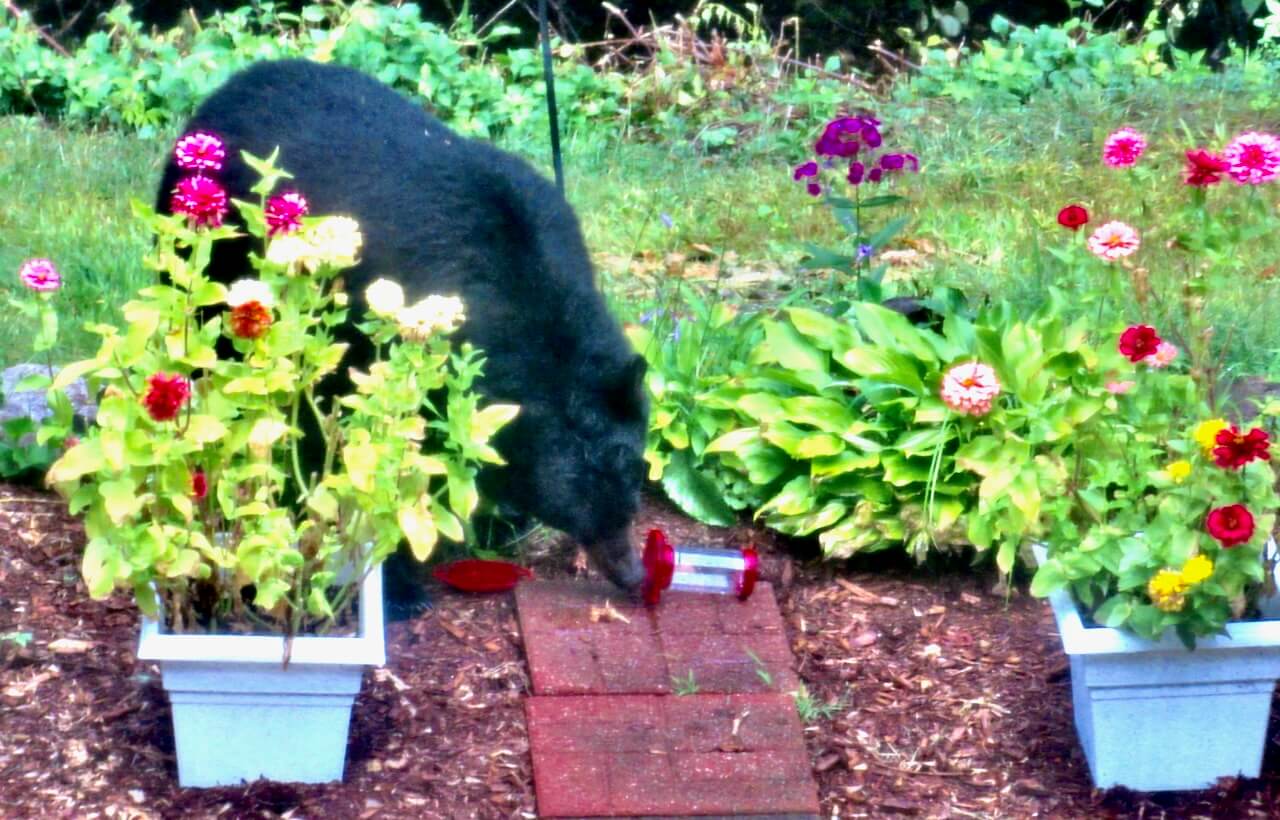
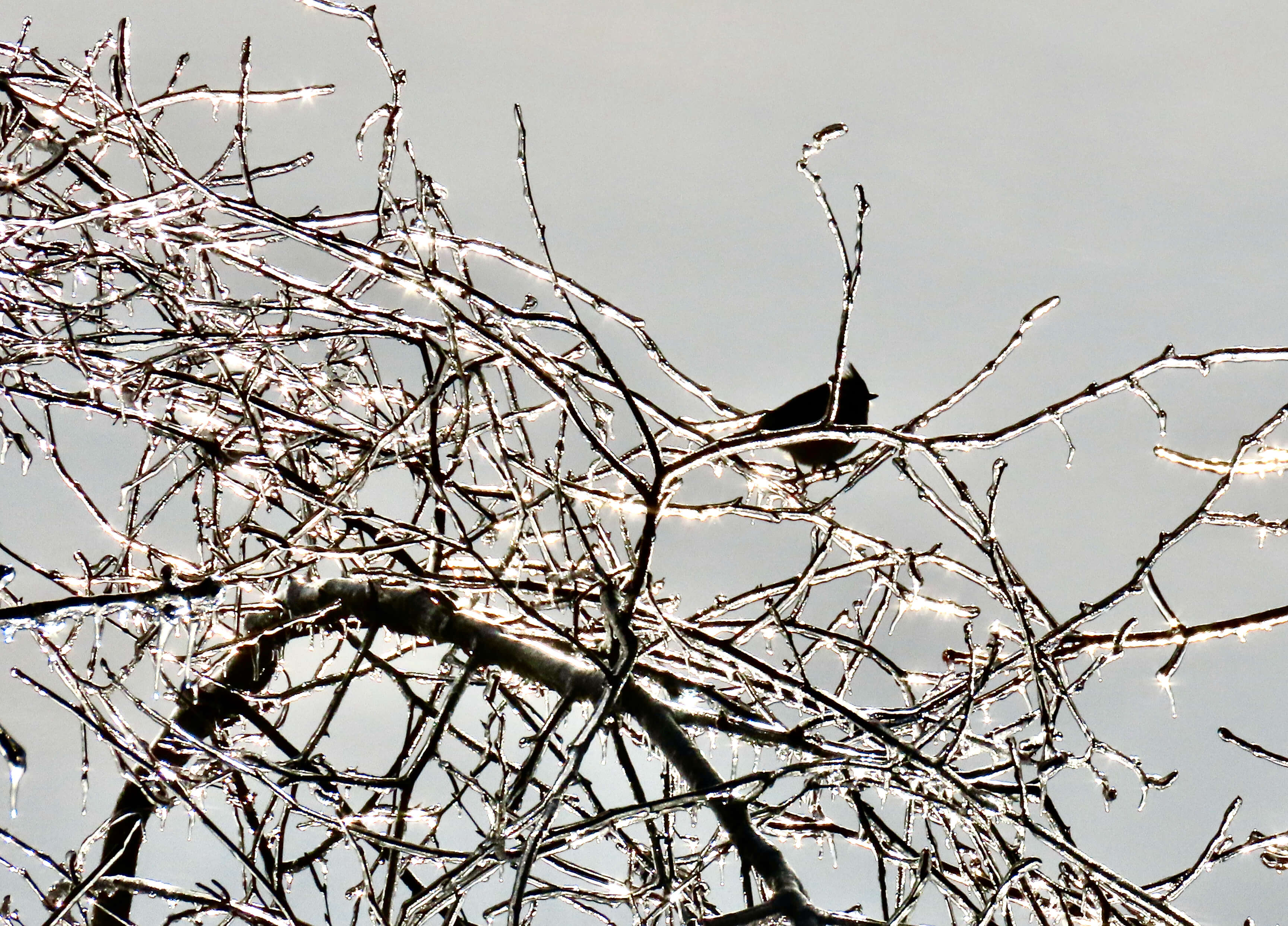
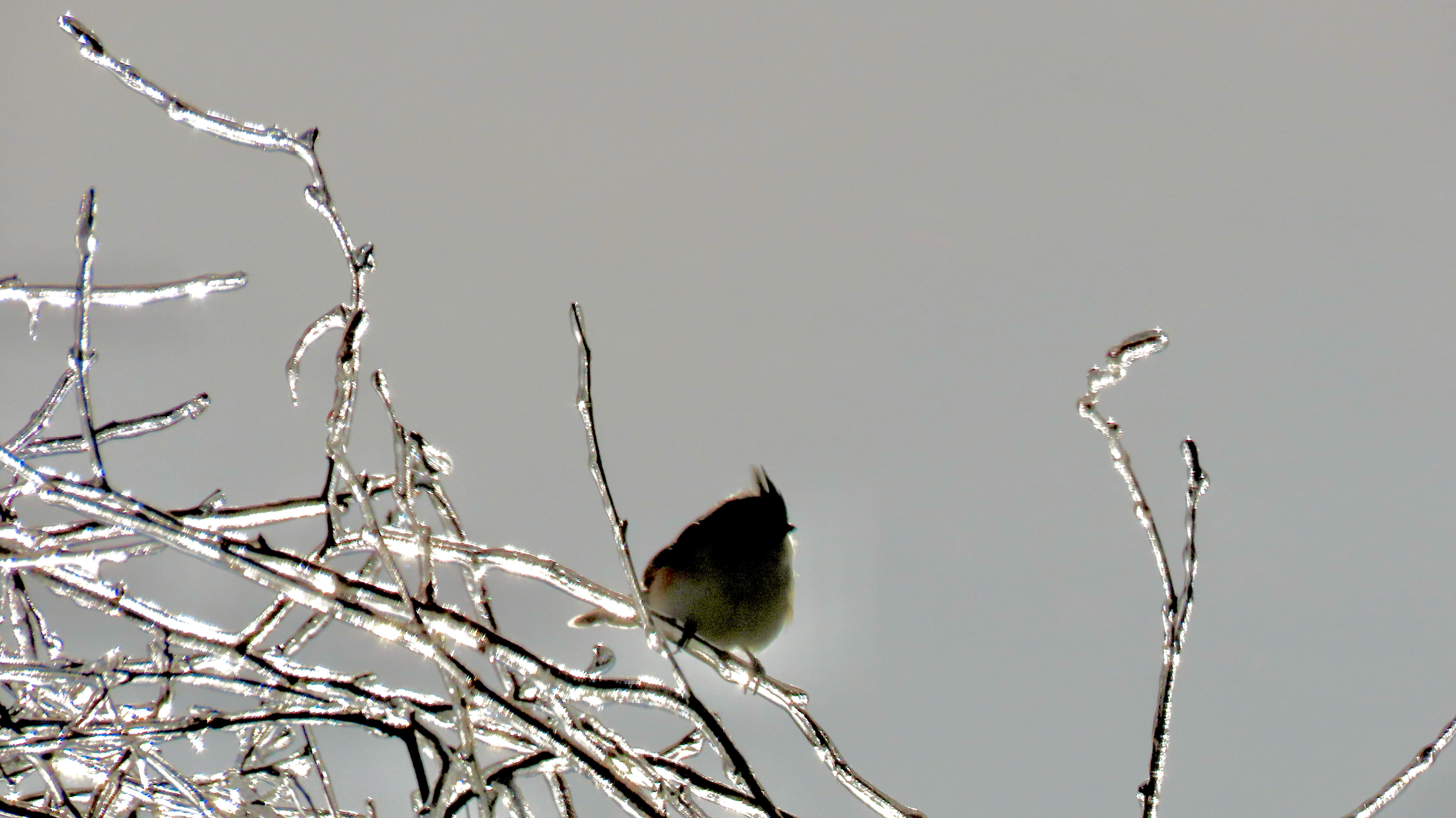
North American BeaverEastern Cottontail RabbitTufted TitmouseScarlet TanagerWhite-tailed DeerEastern ChipmunkRed-winged BlackbirdNorth American PorcupineEastern Cottontail Rabbit (With Herdwick Sheep) Northern Cardinal (Male) Northern Cardinal (Female) Northern House WrenHouse FinchEastern BluebirdGray SquirrelRuby-throated Hummingbird (Female)Ruby-throated Hummingbird ( Juvenile Male) American Black Bear (seen in my back yard and photographed from a safe distance through the window).
Click on post title to view comments and related posts if they are not visible below.
The bird blind overlooks a section of the 85 Acre Beaver Wetlands. The Observation Platform is a popular stop for photographers.An American tree sparrow blends in perfectly with sumac bushes.
This tree sparrow does not breed in Massachusetts, but is a common winter visitor here.
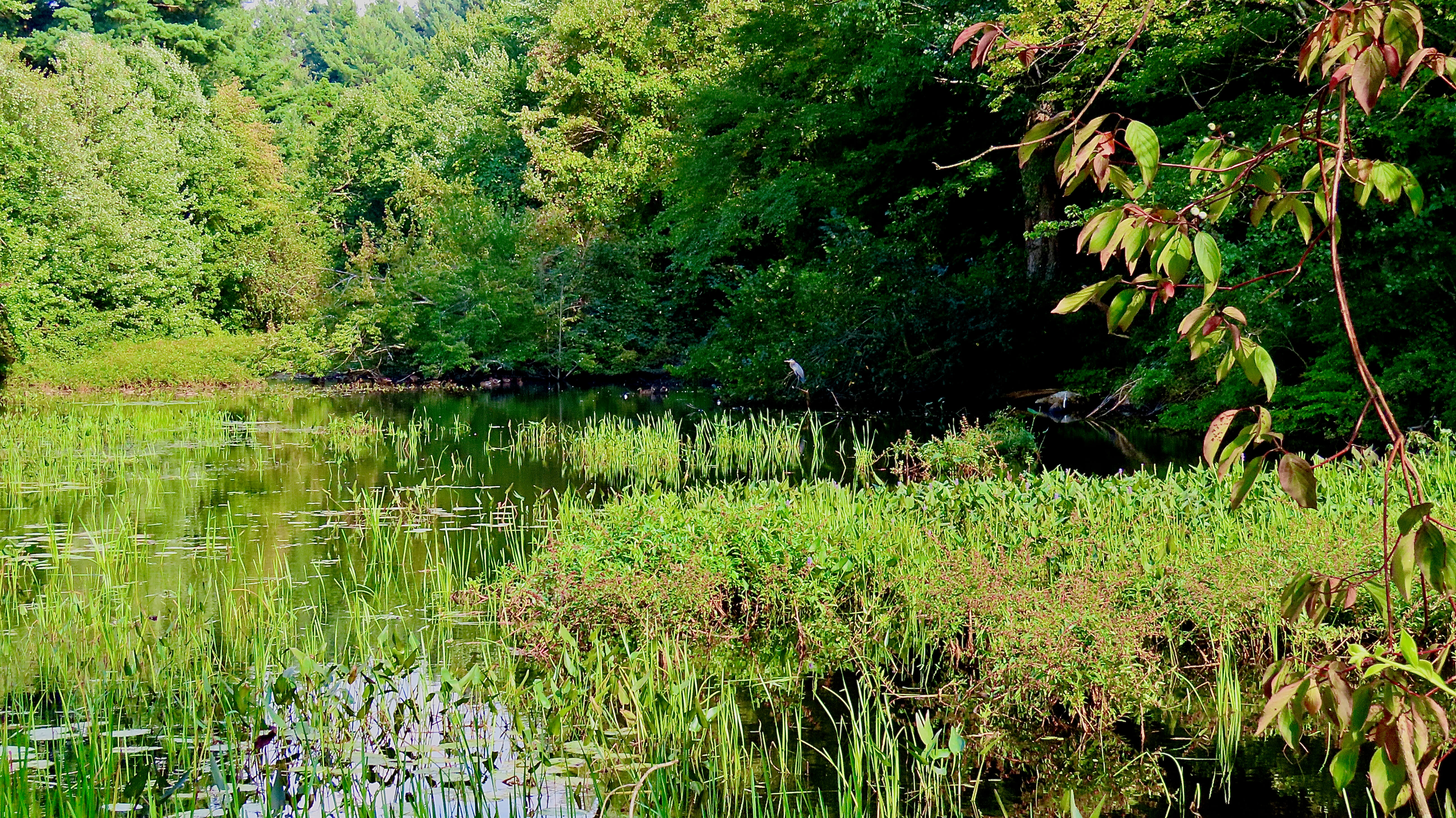
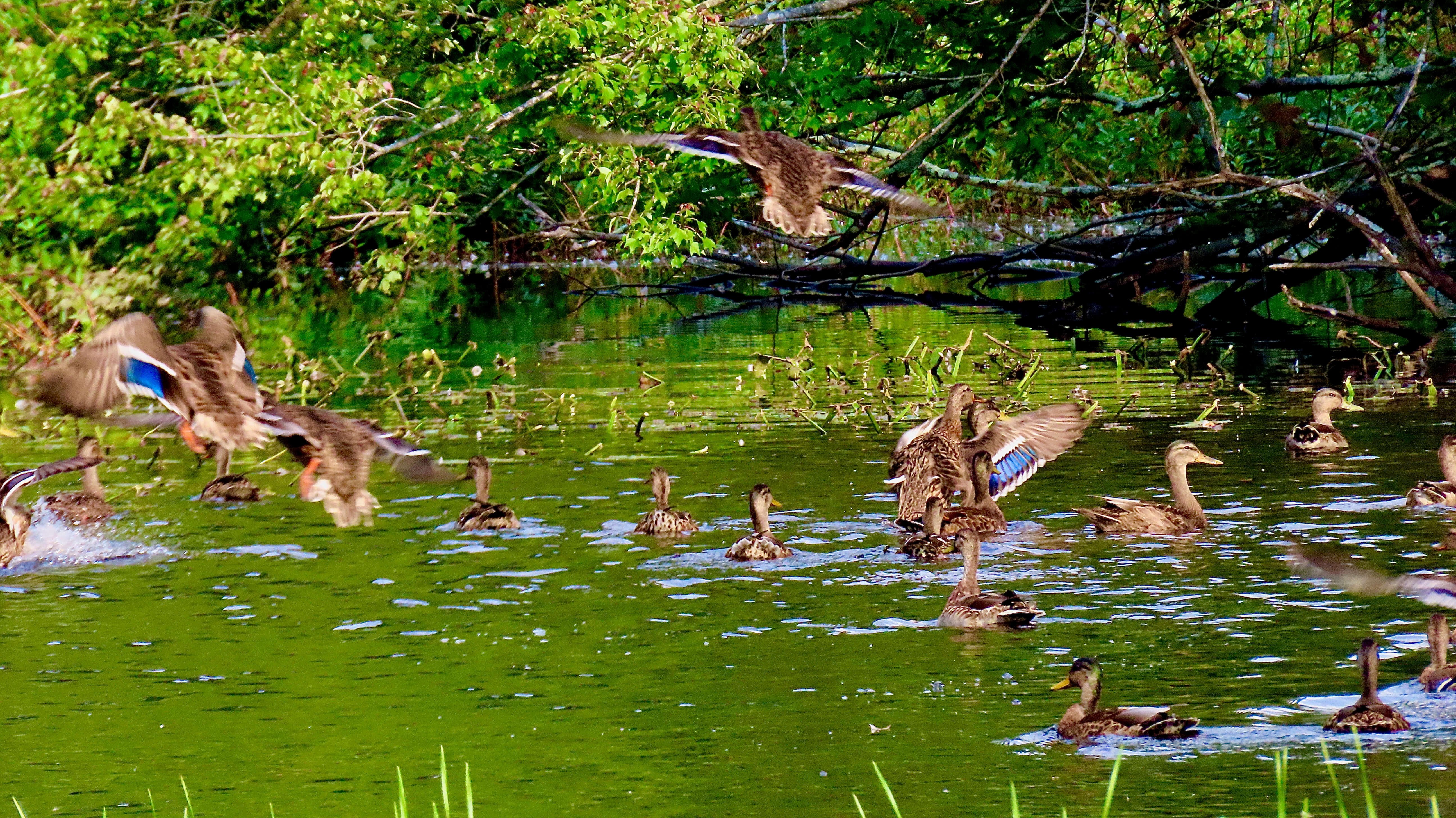
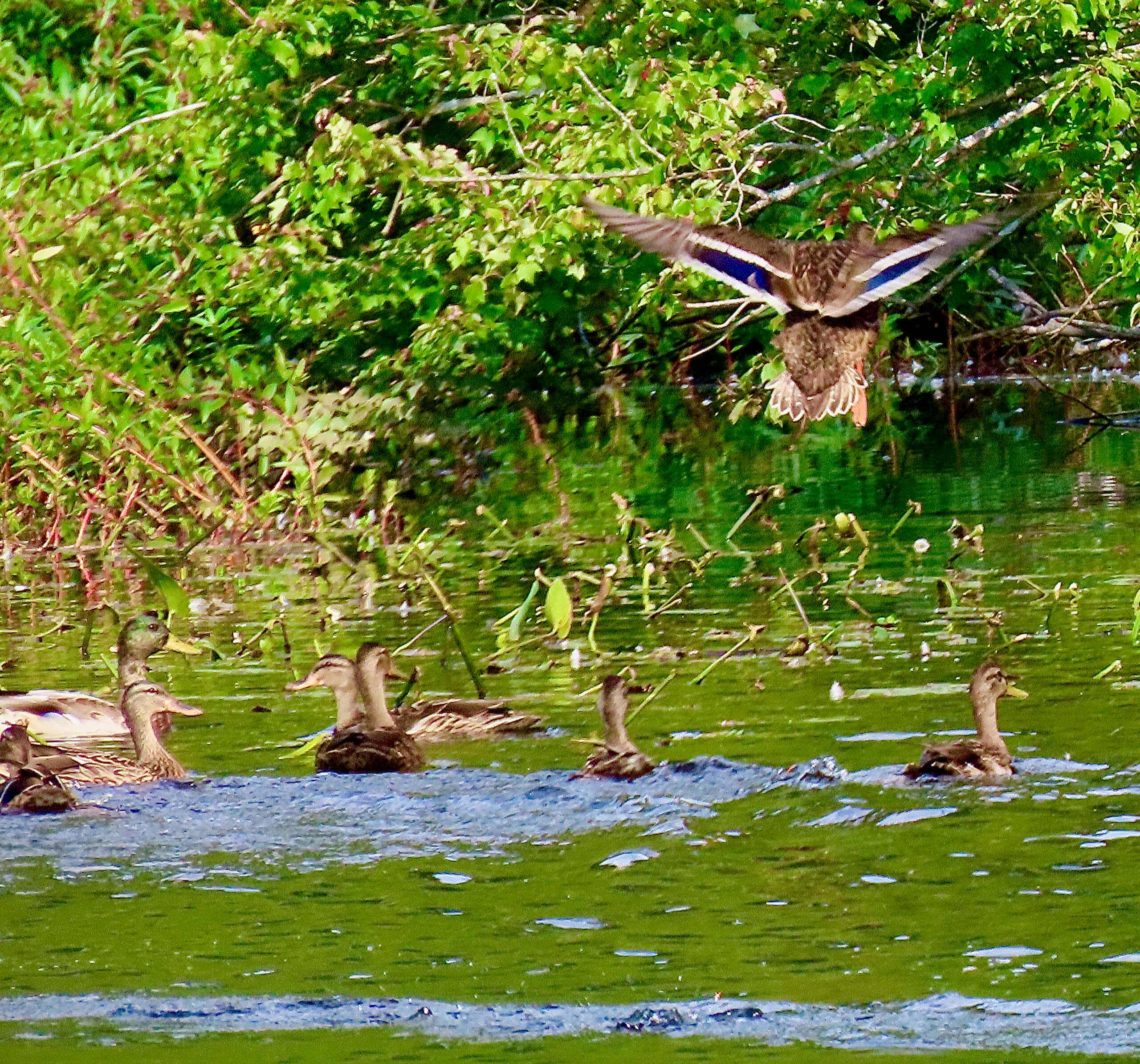
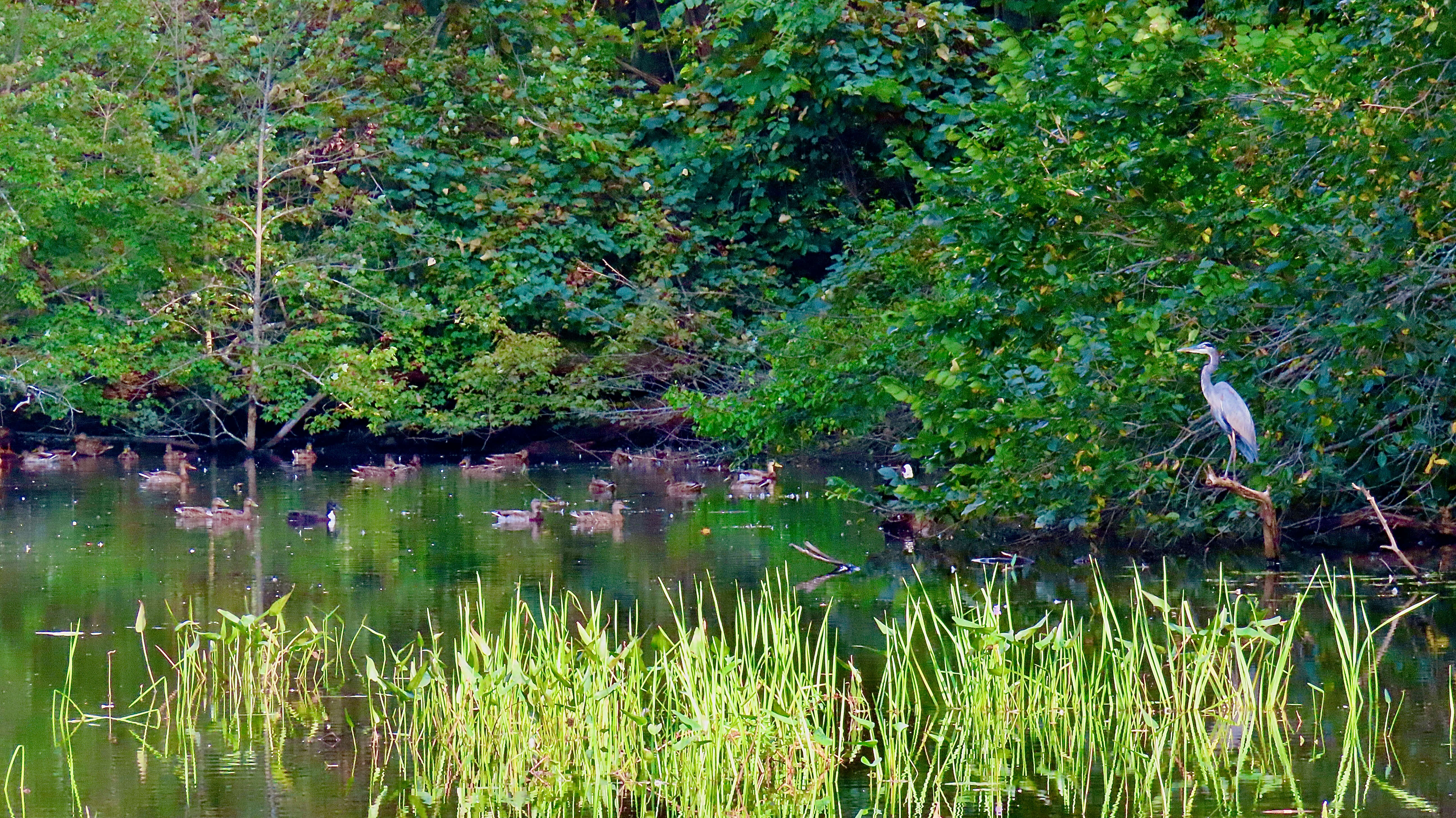
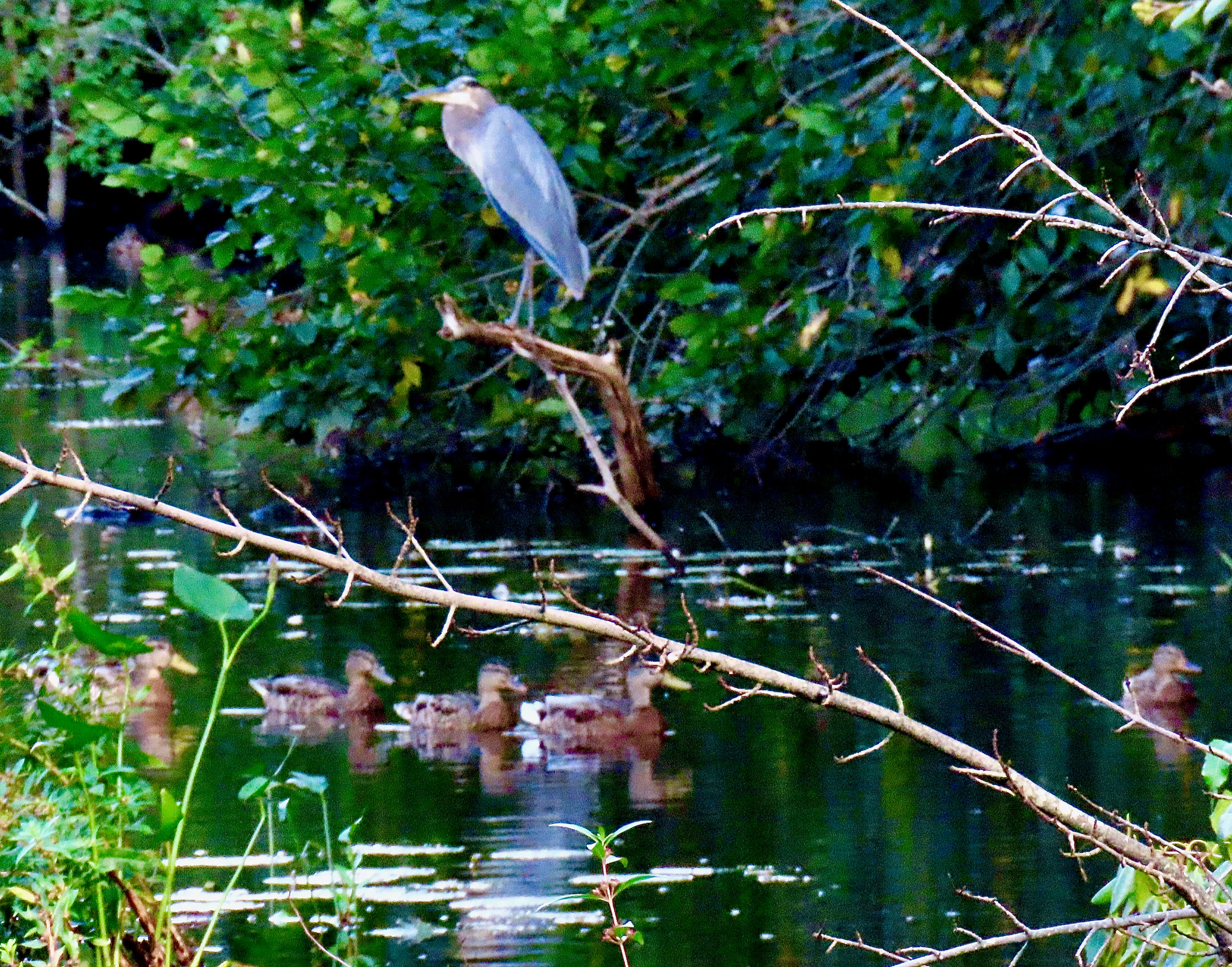
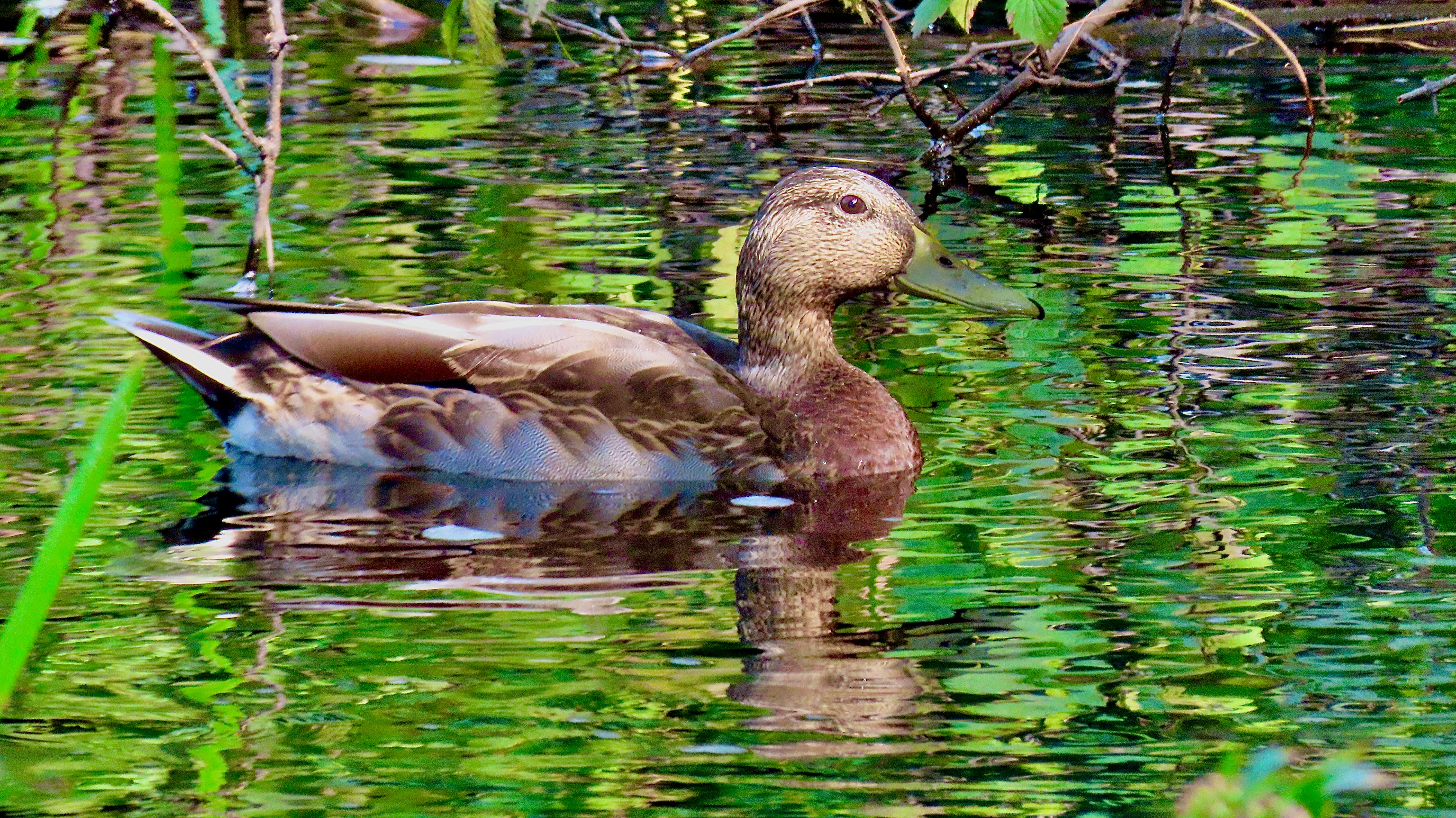
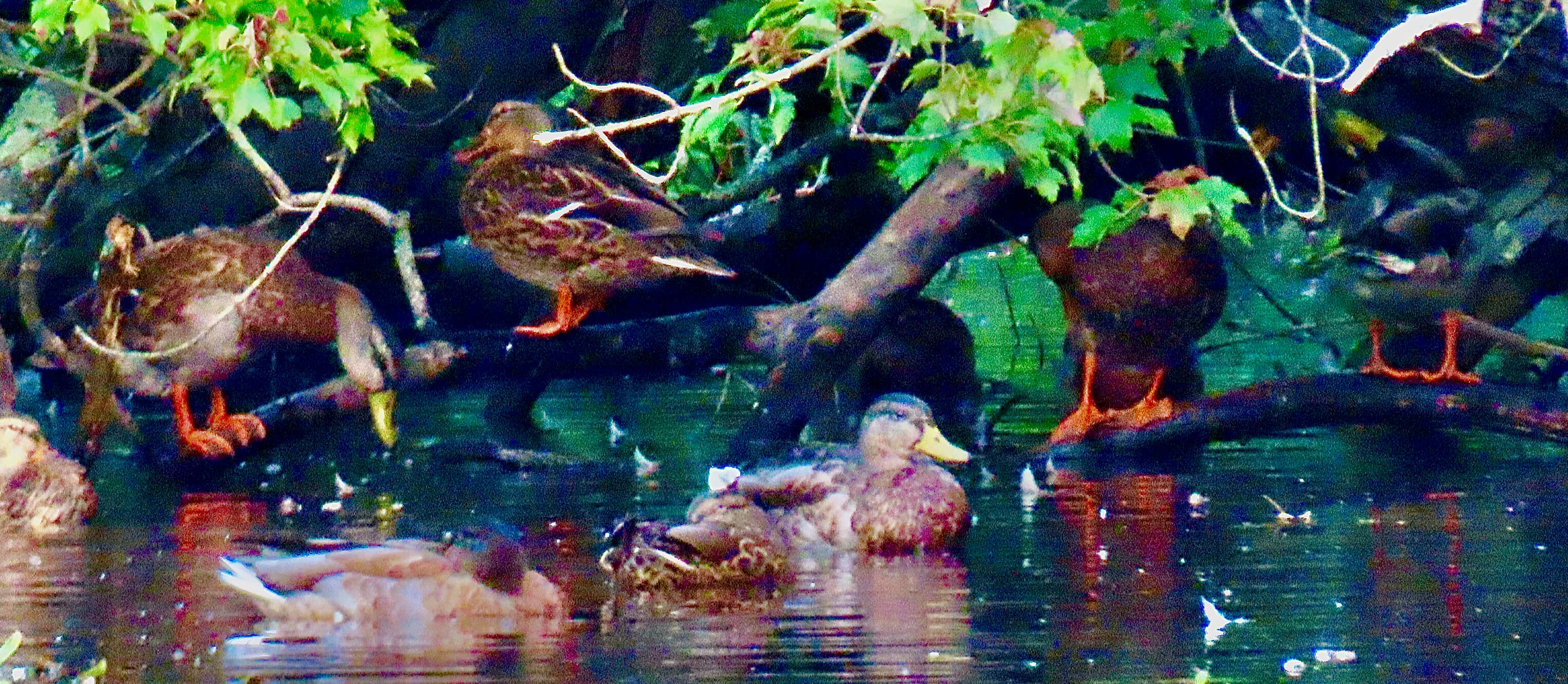
Far across the pond, a Great Blue Heron rests on a branch.Here come the Mallard Ducks! The Great Blue isn’t bothered by this crowd.The Mallards swim closer…And closer.The orange feet brigade rests.
Meeting these common creatures on a short walk never fails to lift my spirits.
View from the All-Persons Ramp at Wachusett Meadow Wildlife Sanctuary.Herdwick SheepFemale House SparrowMourning DoveAmerican Tree SparrowMale House SparrowHouse FinchesEastern Gray SquirrelAmerican Red Squirrel
This spacious field is a favored walking spot for both people and dogs on leashes. However, during the late spring Bobolink nesting season, special care is taken to protect these ground-nesting birds, while still enjoying their bubbly songs and low ground flights.
The Bird Store and More in Sturbridge MA offers hundreds of bird-related items to catch a bird lover’s fancy. The adjoining courtyard features a whimsical crooked house called the Sherwood Forest Stables, which stores birds seed and attracts a host of well-fed creatures.
Something Told the Wild Geese
by Rachel Field
Something told the wild geese
It was time to go.
Though the fields lay golden
Something whispered,—‘Snow.’
Leaves were green and stirring,
Berries, luster-glossed,
But beneath warm feathers
Something cautioned,—‘Frost.’
All the sagging orchards
Steamed with amber spice,
But each wild breast stiffened
At remembered ice.
Something told the wild geese
It was time to fly,—
Summer sun was on their wings,
Winter in their cry.
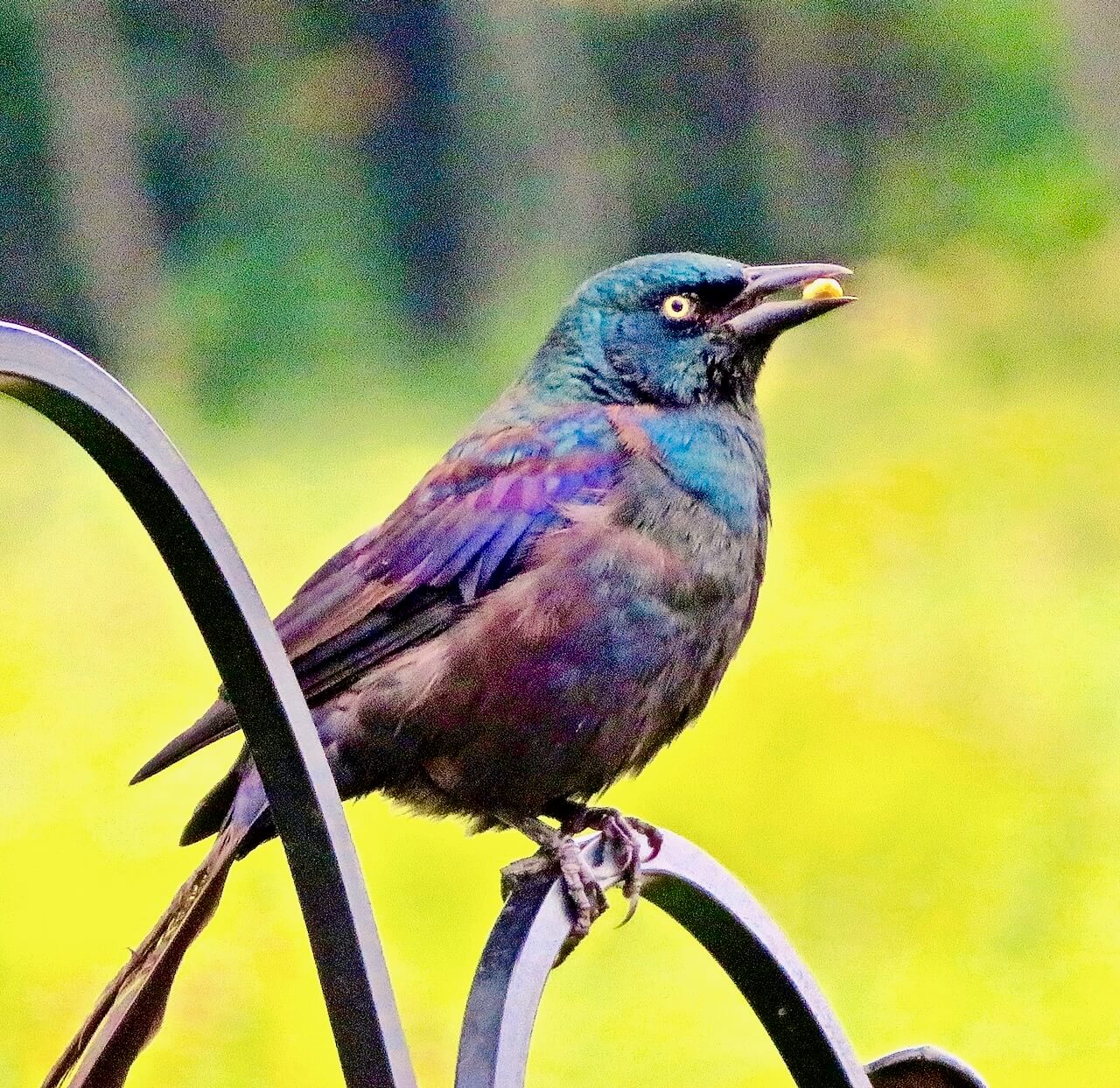
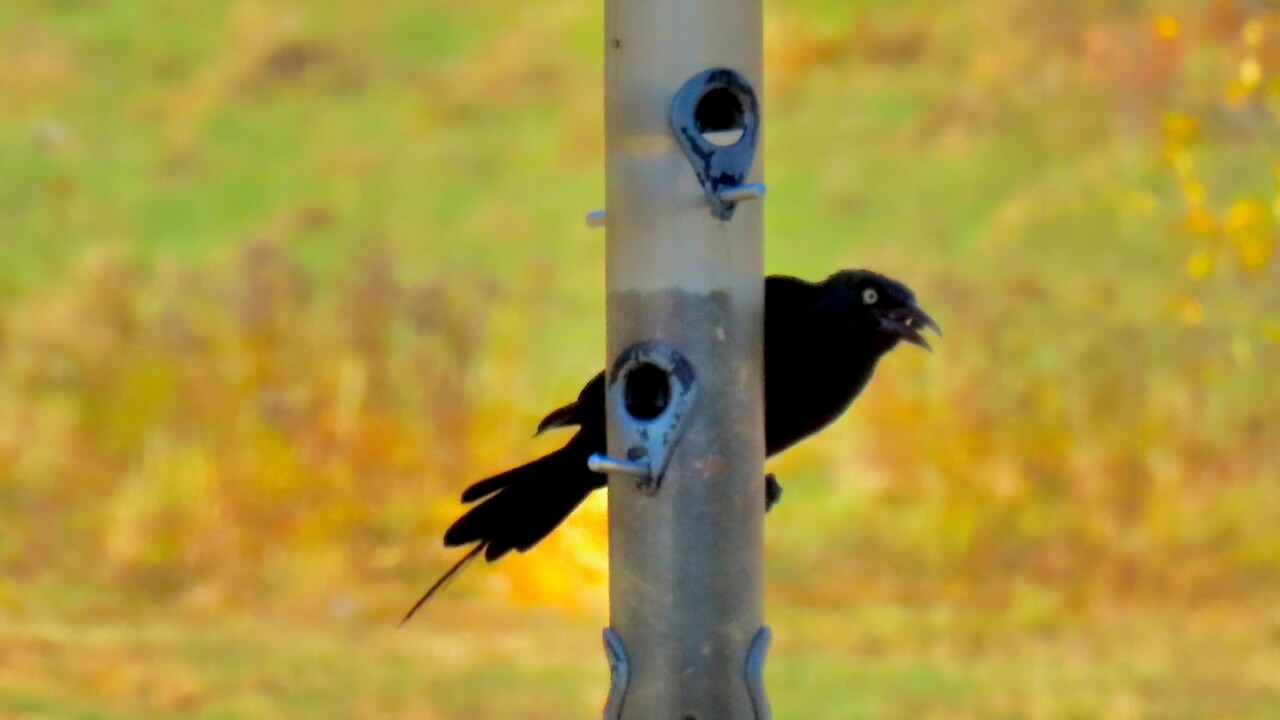
Female, Male and Juvenile Hooded Mergansers on the Wildlife PondBlue Jay and Northern Cardinal Near the Bird FeedersGray Squirrel Swinging in the Copse Near the Bird FeedersCommon Grackle Hunting Seeds on the GroundFemale and Male Mallard on the Far Side of the Wildlife PondEastern Cottontail with a Gray Squirrel and Sparrows Near the Visitor’s CenterEastern Towhee and Blue Jay Under the FeedersEastern Cottontail Close-upEastern Towhee Under the Bird Feeders
Painted Turtles and Canada Geese share a sunny afternoon together at the Wachusett Meadow Wildlife Sanctuary, Princeton, MA.I enjoy experimenting with the continuous shutter setting on my bridge camera.In contrast, I use the built in close-up lens with the turtles sunning on the far side of the pond.
An Eastern Meadowlark, which is becoming rarer in many parts of Massachusetts, visited the Audubon Sanctuary recently.
“There’s a Meadowlark in the South Meadow!”“Heads up, Painted Turtles!”The Red-winged Blackbird, Mourning Dove and Northern Cardinal have a plan.“Let’s go check it out!” The Eastern Meadowlark rests in the grass.
The Northern Mockingbird at Wachusett Meadow didn’t notice me as it busily feasted on sumac. These mockingbirds surveyed the meadow as they perched on bluebird houses. Their coloring and markings puzzled me, as they were slightly different than those in the first photographs. Birding friends: Any thoughts?
Crows observed as they swarmed and cascaded while navigating a change of weather. Special thanks to Babsje Heron for introducing me to the less familiar collective noun “storytelling”.
The party was in full swing at Wachusett Meadow Wildlife Sanctuary today, where the Cedar Waxwings gorged themselves on berries in between relaxing sunbaths.
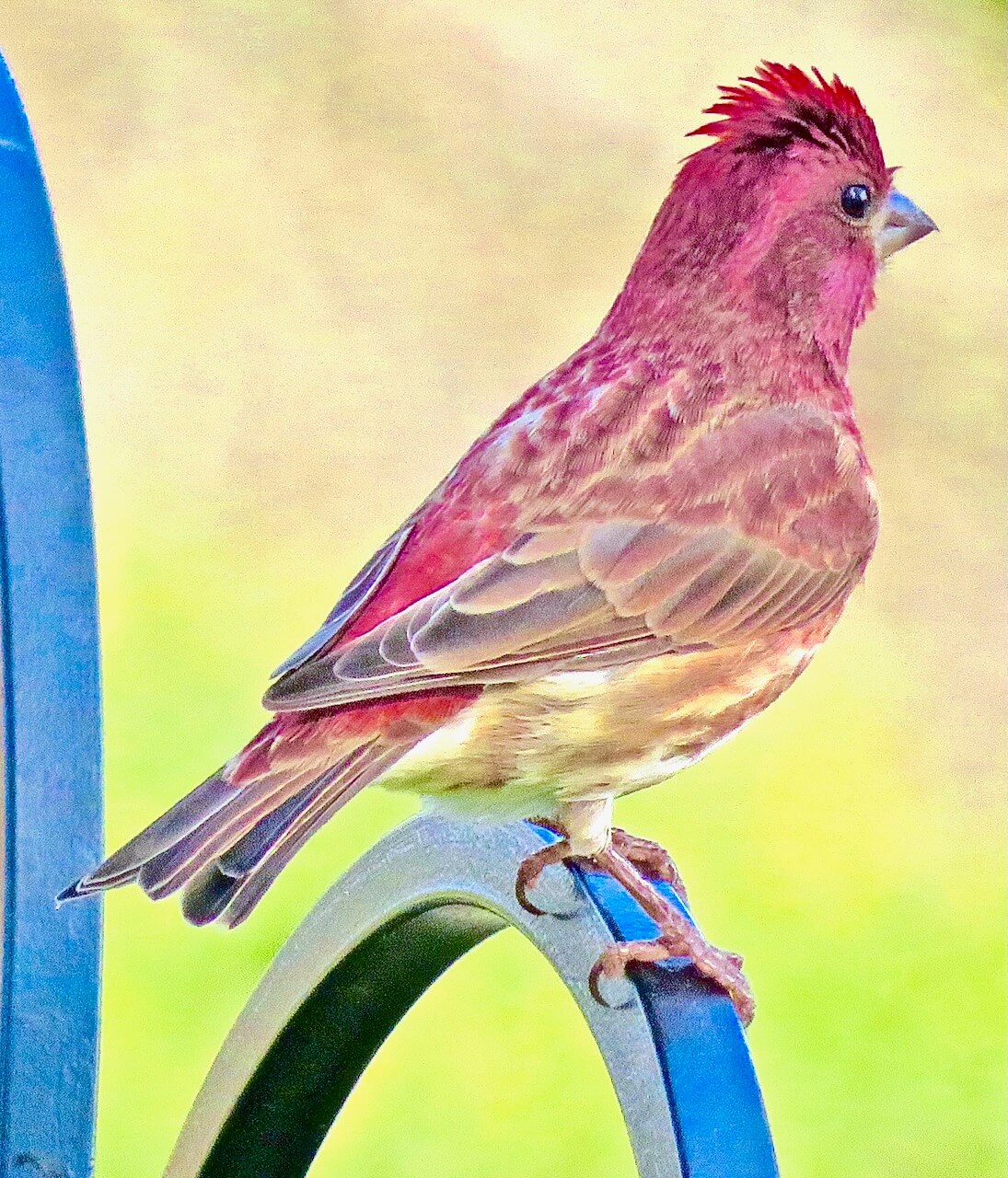
A visiting House Finch brings a touch of warmth to a chilly New England landscape.
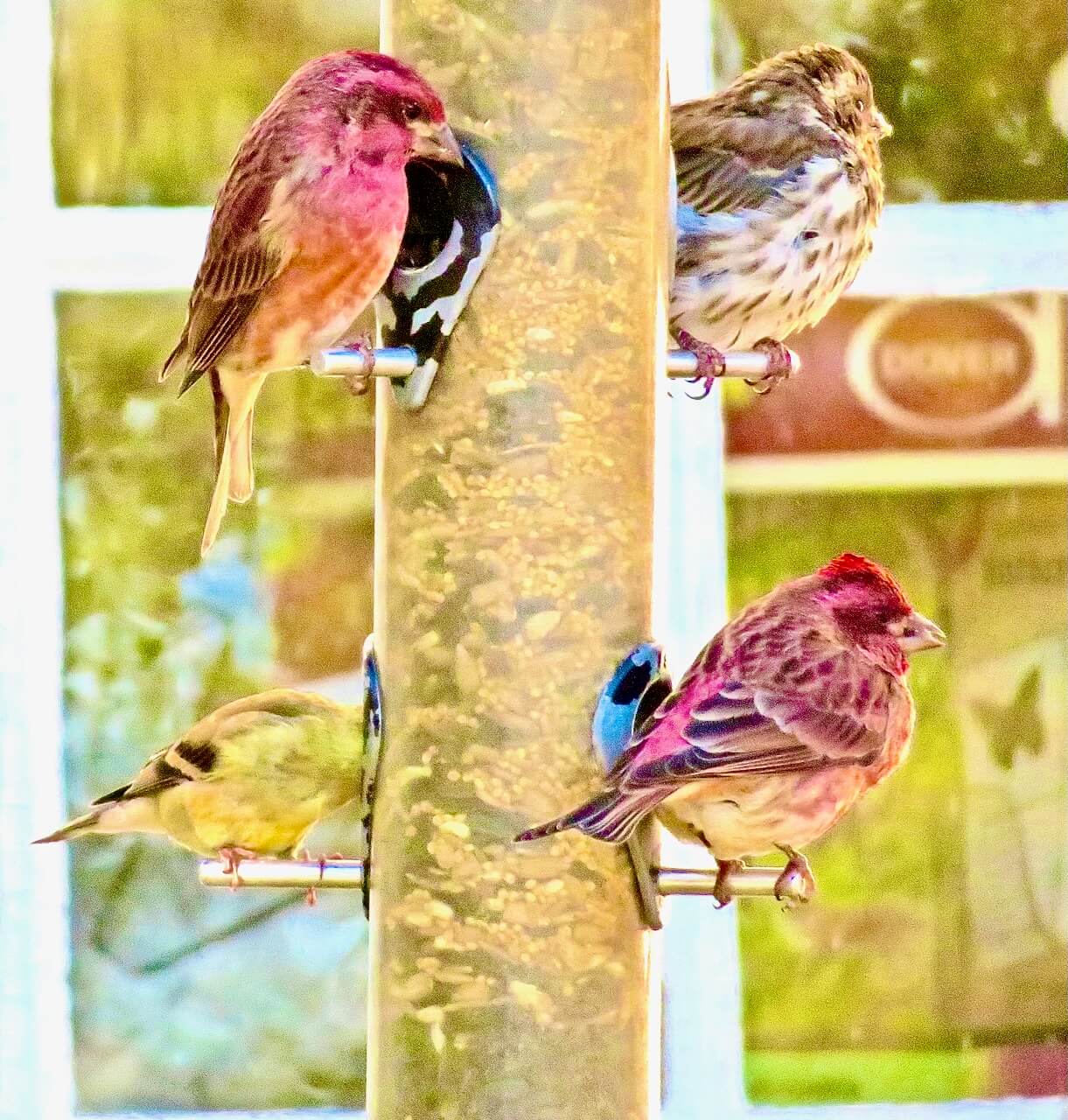
In Native American traditions, finches are associated with celebration and joy. This cheery finch also added a pop of color to my yard when it settled on a lilac branch on this chilly day.Color coordinated with the bittersweet berries and lilac buds nearby, it shared its surroundings with a Dark-eyed Junco. The bird’s carotene based diet, found in orange and red plants, creates the bird’s startling plumage.Being half Irish, I was especially charmed to learn that in Celtic Mythology House Finches foretell good fortune!Good Luck!
Nature can offer consolation during difficult times. I was especially uplifted to see this Eastern Bluebird during this holiday season.
For many years, it was rare to see a bluebird in Massachusetts in the winter, but in the last few years the number of bluebirds staying through the winter has grown.The bluebird is a nearly universal symbol of happiness.
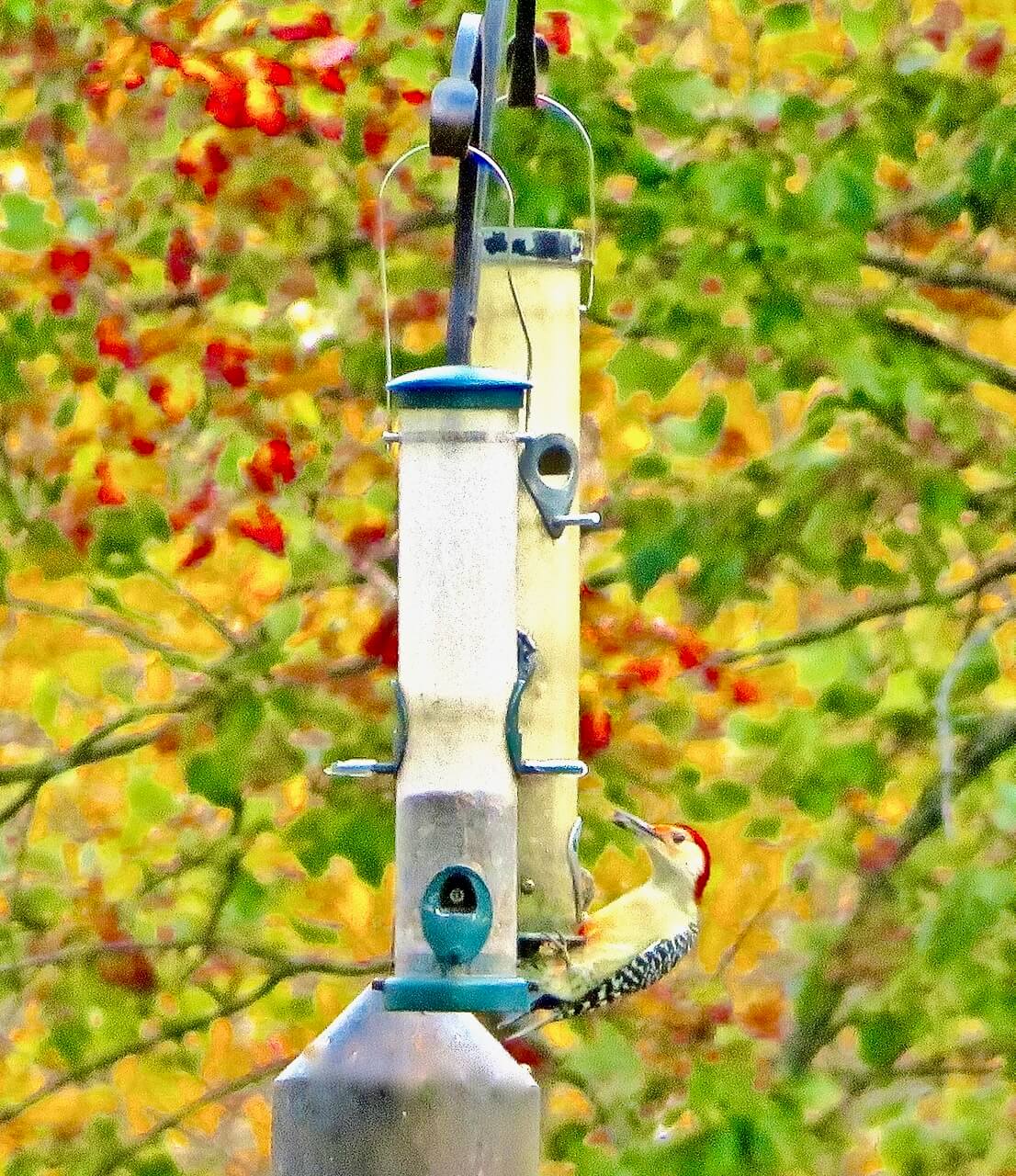
Nuthatches and woodpeckers were engrossed in the suet feeders at Wachusett Meadow today. Meanwhile, the Wildlife Pond glowed with the rusty hues of late fall in Central Massachusetts.
White-Breasted NuthatchDowny WoodpeckerWildlife Pond, Wachusett Meadow Wildlife Sanctuary, Princeton, MA
The foliage in Central Massachusetts is becoming more brilliant each day. Swamp maples surrounding the beaver lodge at Wachusett Wildlife Sanctuary are nearly at peak color.
Meanwhile, the juvenile Great Blue Heron featured in the previous post is still roaming the sanctuary. It seems in no rush to migrate, perhaps because of the warm weather this week.
Beaver Lodge, Wildlife Pond, Wachusett Meadow Wildlife SanctuaryJuvenile Great Blue Heron, South Meadow
Vibrant ponds and the sight of a Great Blue Heron stepping out across the meadow combined to make a memorable fall hike at Wachusett Meadow Wildlife Sanctuary.
Statuary from a local yard sale celebrates the recent surprising visit of a Great Blue Heron to our Zen garden.
A few weeks ago, a Great Blue Heron graced our Zen garden for a few moments before flying into the nearby woods. We began hunting for a heron statue to commemorate that event.Serendipitously, a friend spied a pair of small heron statues at a yard sale shortly after the extraordinary visit. In pride of place, the first heron now stands patiently in the “reeds” of the white stone river .The second heron found a home in the zinnia garden.As another bonus, a pair of wandering ducks was also found at the sale.They are energetic and curious.We never know where the ducks will wander. Hurrah for yard sales!
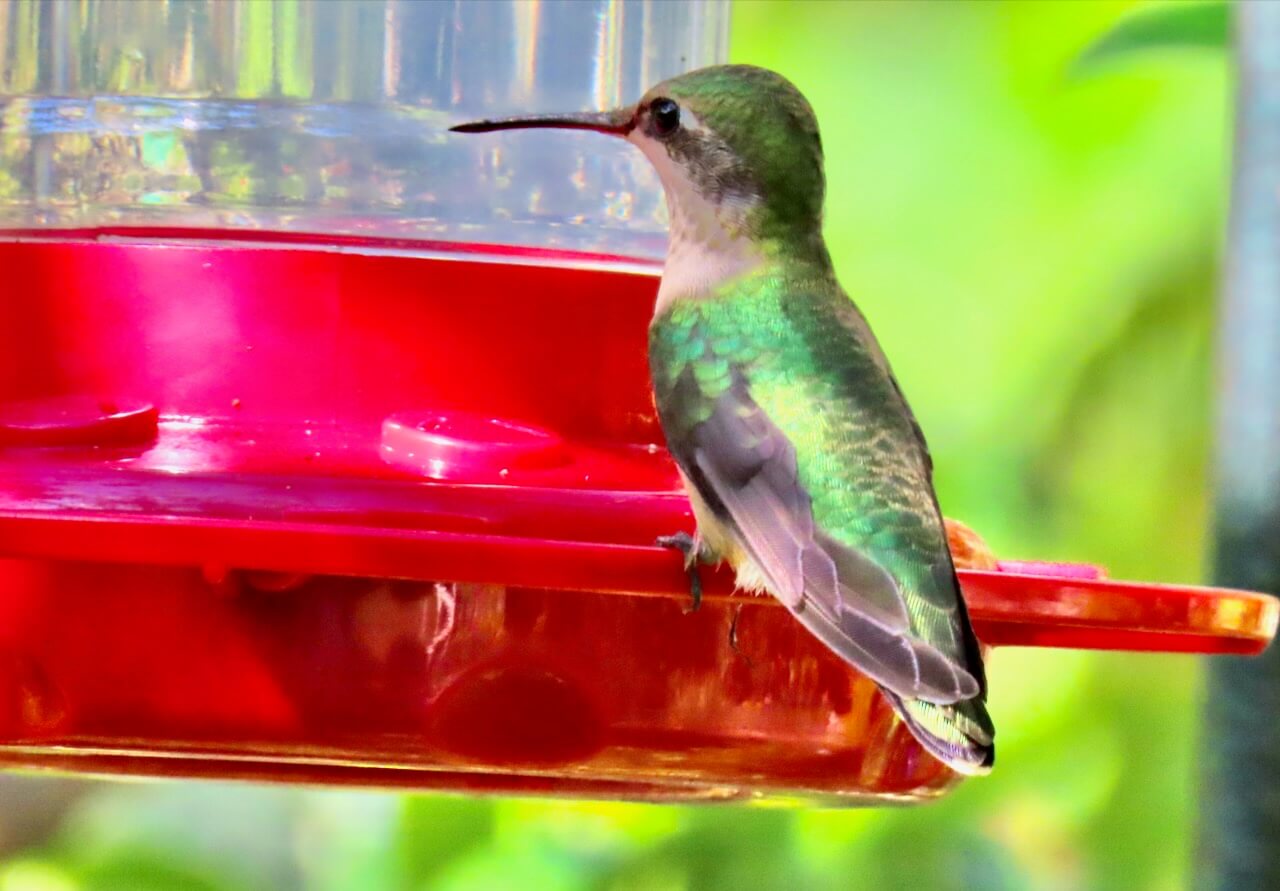
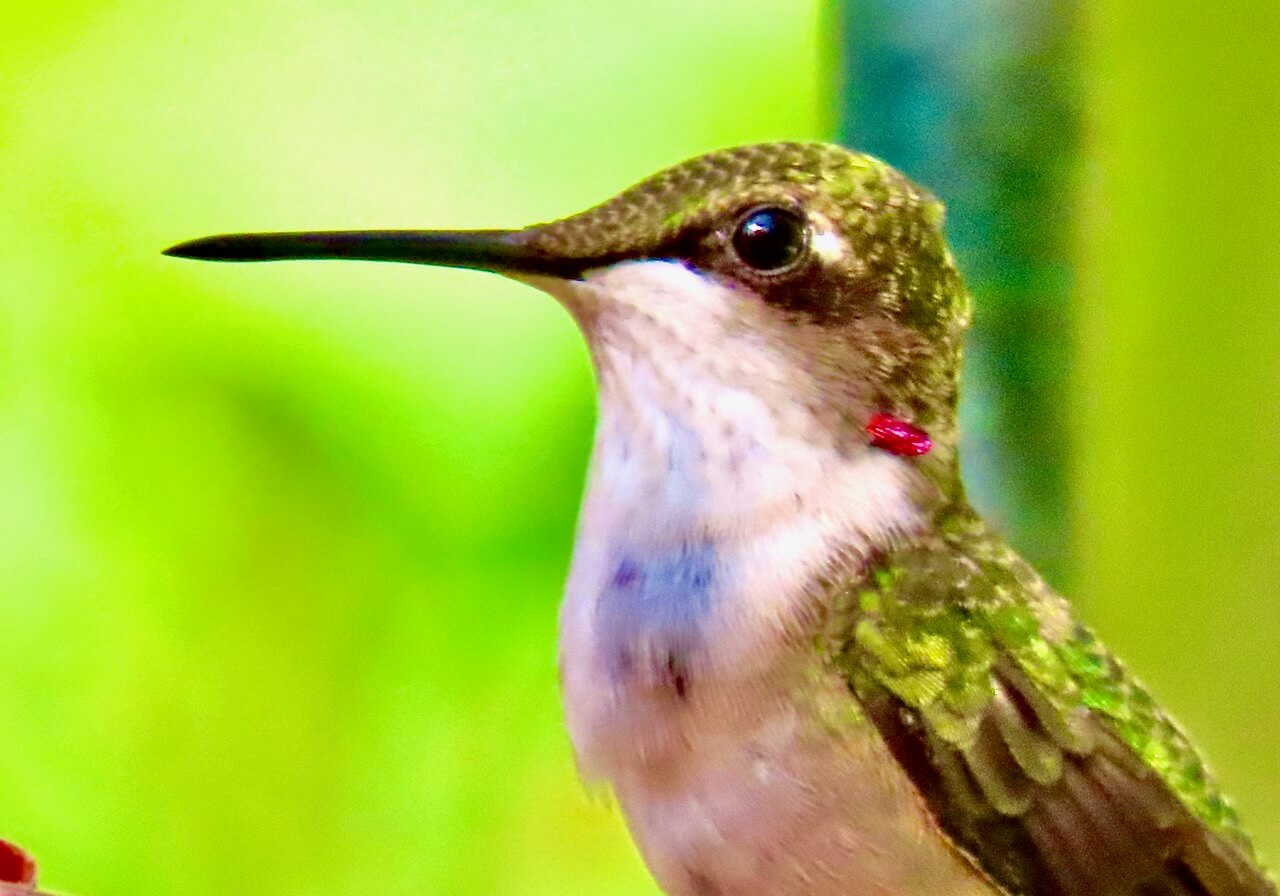
Glistening Ruby-throated hummingbirds will be heading south for the winter soon.
According to the Merriam Webster Dictionary iridescence is:
1 : a lustrous rainbowlike play of color caused by differential refraction of light waves (as from an oil slick, soap bubble, or fish scales) that tends to change as the angle of view changes 2 : a lustrous or attractive quality or effect The Ruby-throated hummingbird is found throughout Massachusetts during the warm months. This female paused on the branch of a nearby apple tree recently, providing me with a close-up of her luminous feathers.