Category: Nature

Colorshift

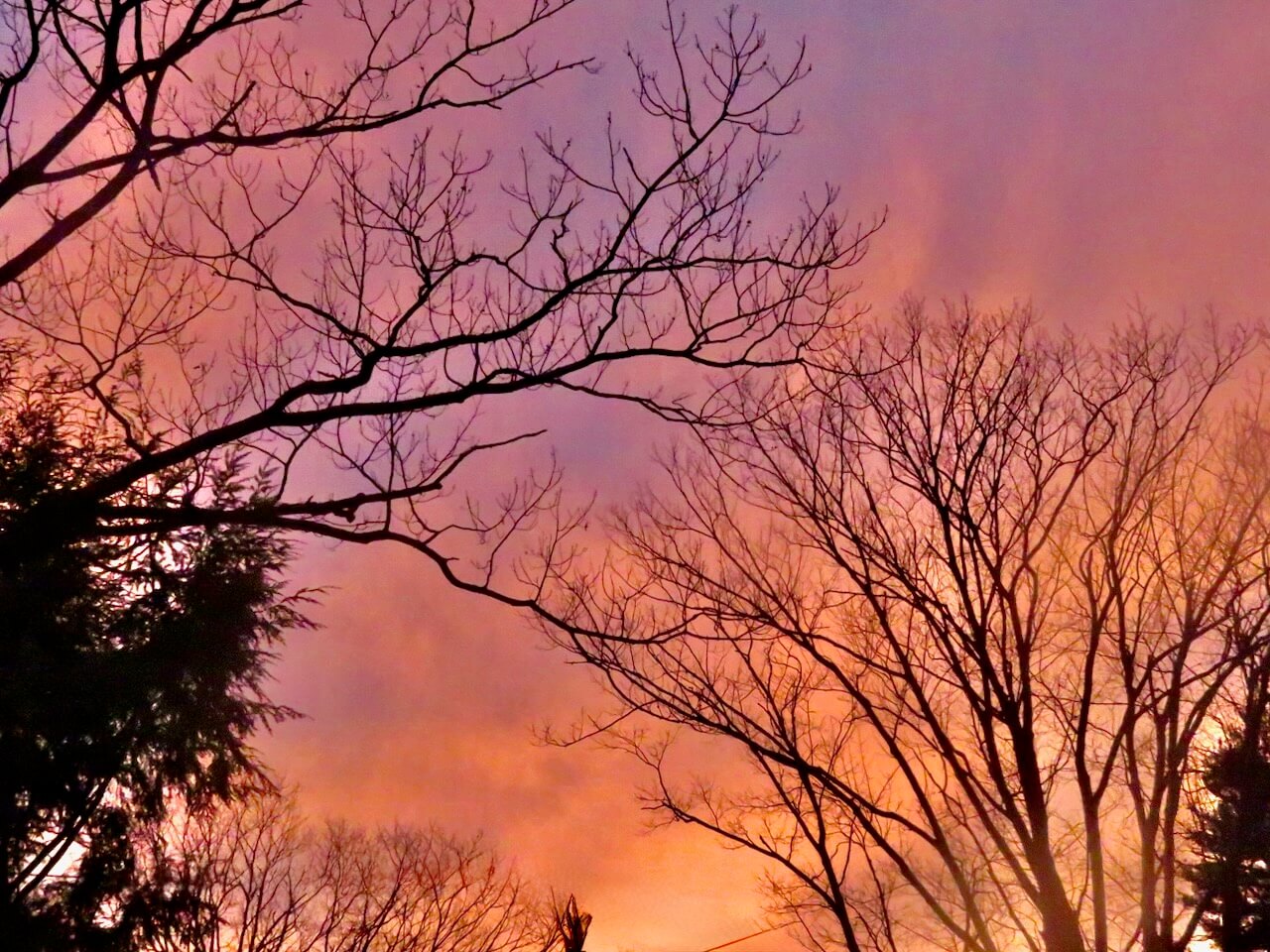
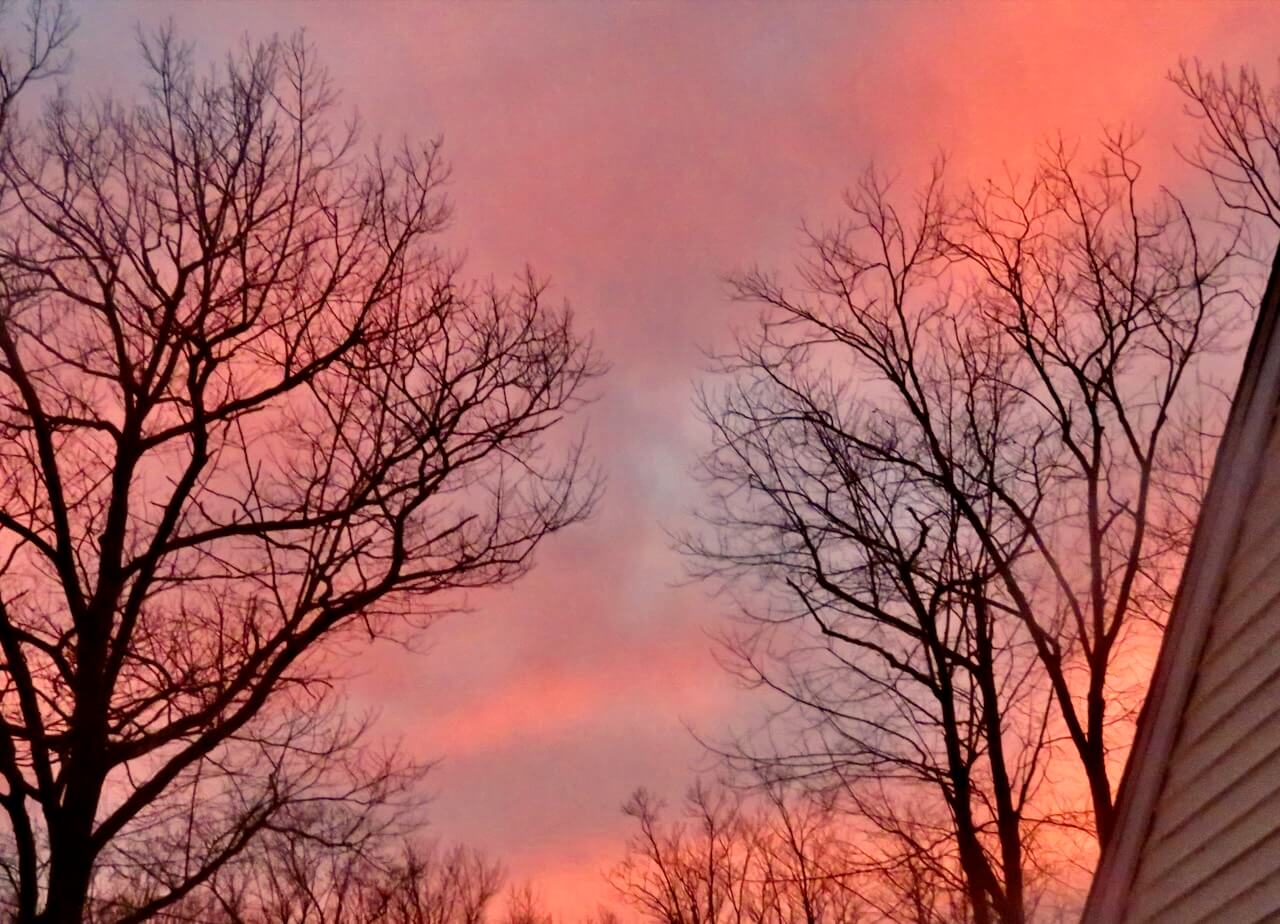
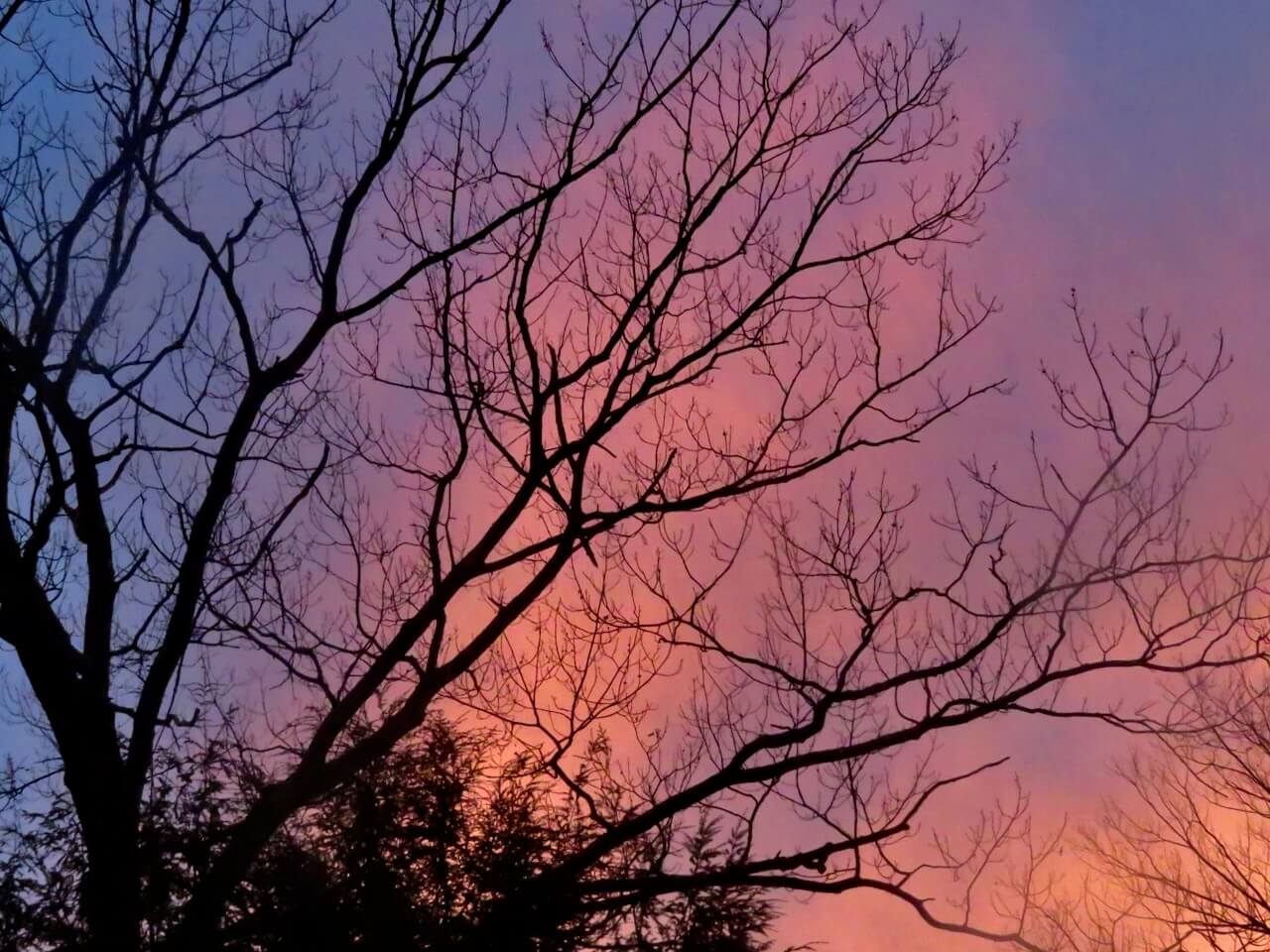
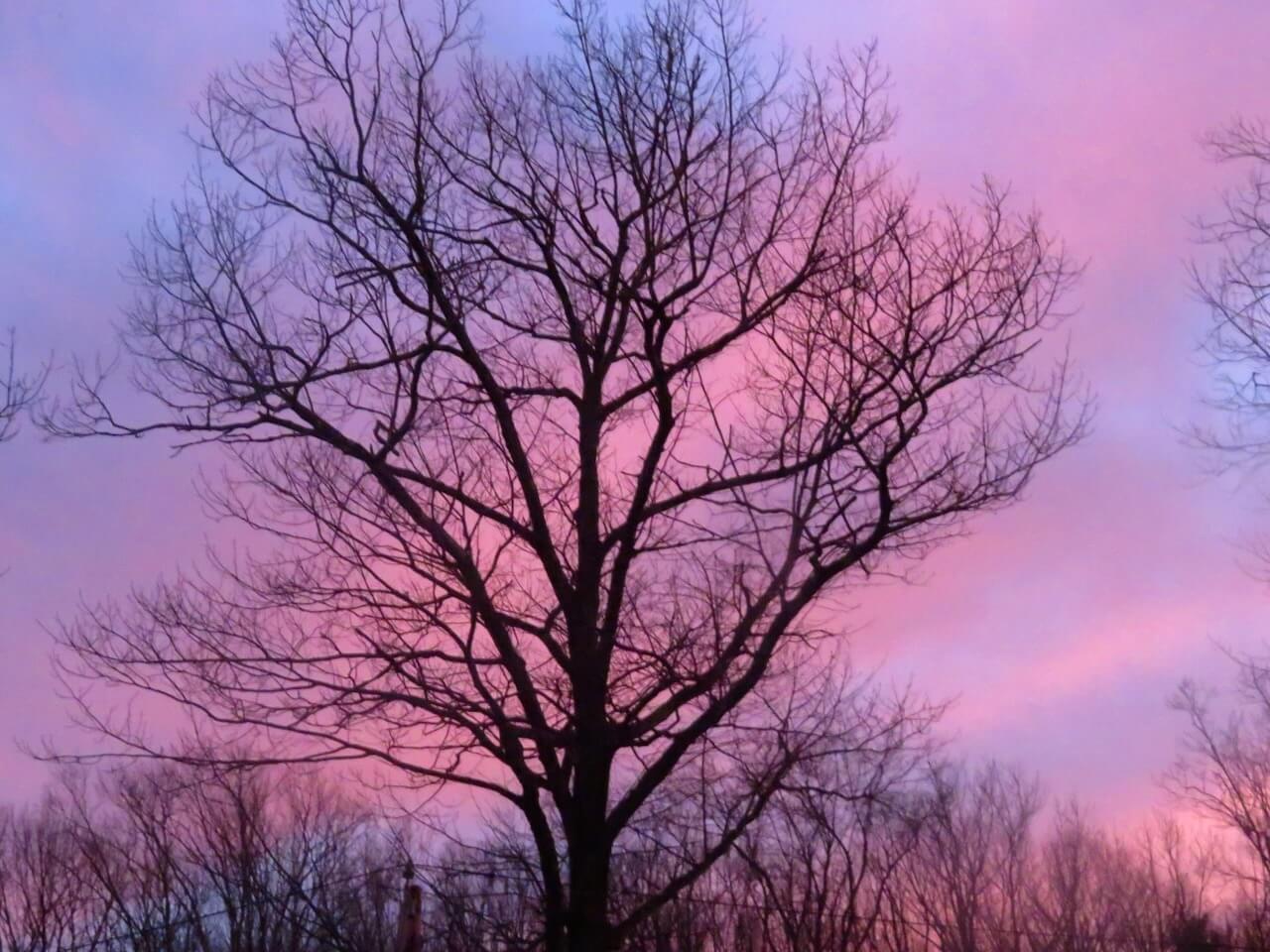
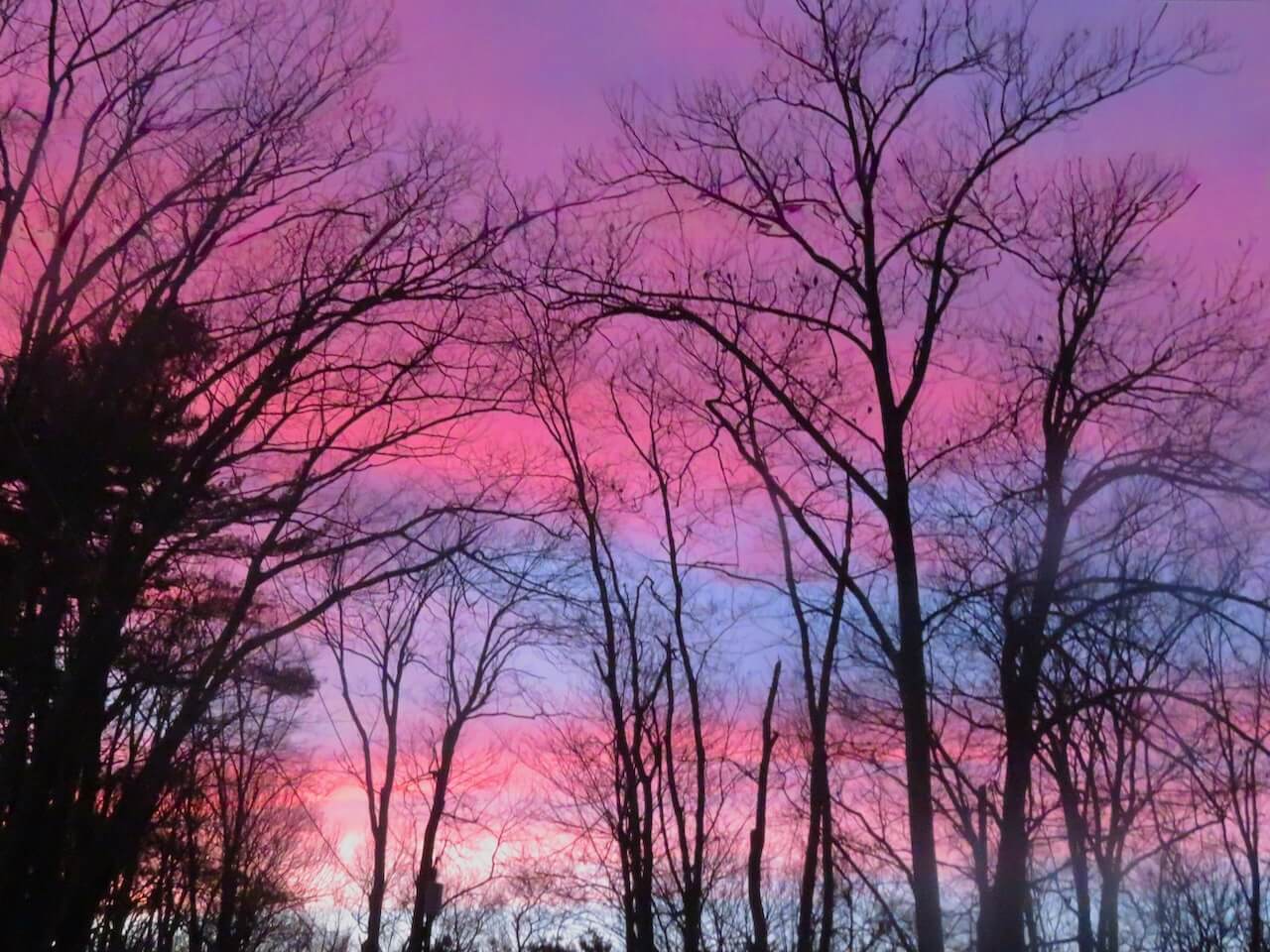
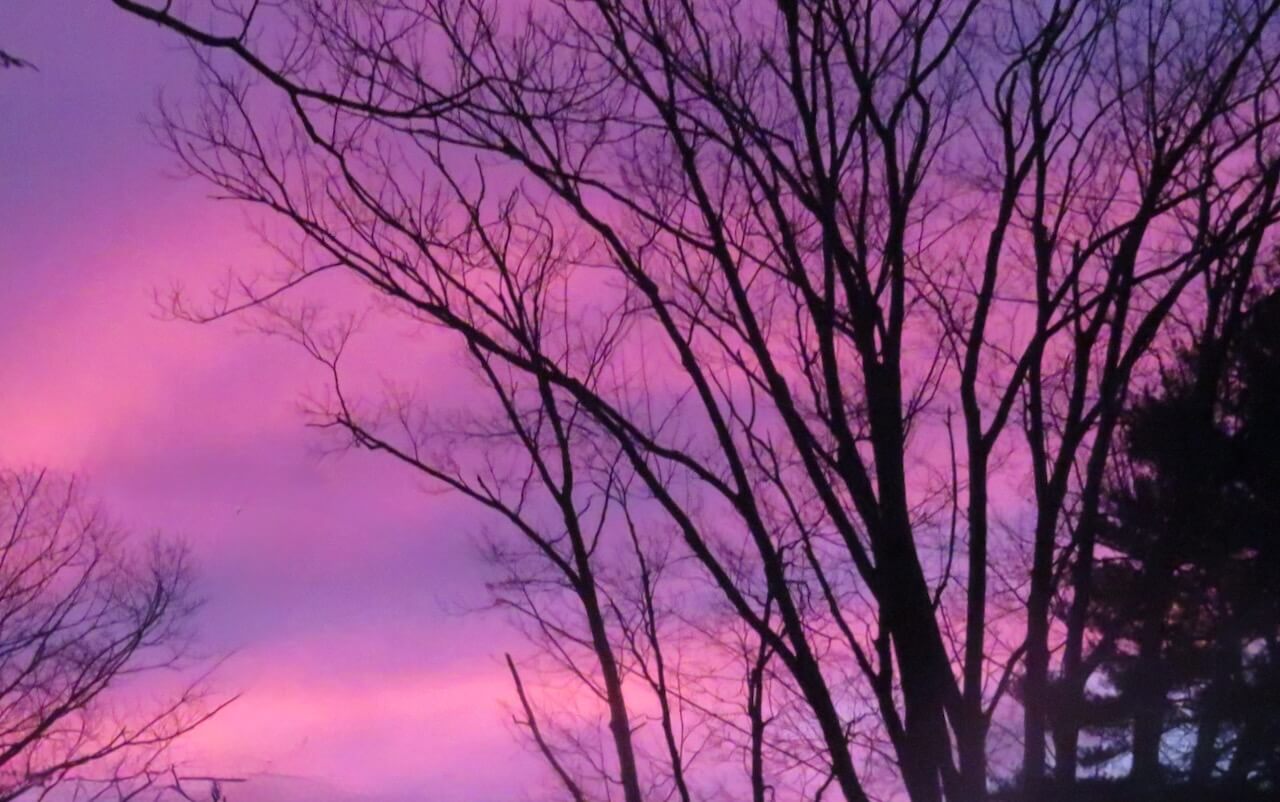
In photography, “colorshift” refers to the time at twilight when the sky transforms in minutes through what is sometimes called a “kaleidoscope” of color. Last evening, the skies above my house colorshifted in a dramatic changing show of orange, pink and blue.

Click on post title and scroll down to view comments and related posts.

The Enchanting Blue Hour

Photographers love the “blue hour”, and I was lucky to capture this phenomenon on Solstice Evening. The blue hour is the period just before or just after the sunset. During this time, the landscape, including frozen ponds like this one, is bathed in deep blue light. In northern climates this phenomena often occurs in the colder months.

Wildlife Pond, Mass Audubon Wachusett Meadow

Beavers have kept a stream of water open. It leads to a water hole on the far left. They use this opening to crawl onto the ice.

A close up of the beaver’s hole. Notice the small sticks and branches left on top of the ice.

Winter Meditation

Zen inspired elements enhance my winter garden.

Zen inspired landscaping offers opportunities for meditation and contemplation in my winter garden. Bamboo is one of the loveliest and most recognizable features.
An invitation to sit is provided by a worn stair step. Below it are smooth hand chosen stones from the Atlantic Ocean.
Rocks suggest mountains, stability…
…and sculptures.
The aged laurel bush, worn by time and weather, is a favorite shelter for native and migrating birds.
A weathered bird feeder ornament intrigues our feathered visitors.

Follow the Fur

Most Eastern Gray Squirrels don’t have the brown face and back stripe that this one, seen under the feeders at Wachusett Meadow, does. That makes it easily identifiable, and a perfect candidate for following this winter. I’ll be noticing how much time it spends under the feeders, how far it travels along the nearby stone walls and trees, its feeding habits, and its social interactions.


“Many Waters”

The Quabbin Reservoir takes its name from the Algonquin word meaning “many waters”.

The Quabbin Reservoir is one of the largest unfiltered water supplies in the United States, providing drinking water for 3 million Massachusetts residents. It covers 39 square miles with 181 miles of shoreline.
“Quabbin” is an Algonquin word meaning “many waters”. The word was used by the Nipmucs, who first inhabited this area of Massachusetts. Built between 1930 and 1939, the reservoir is the largest inland body of water in Massachusetts. It is a primary water supply for Boston, 65 miles to the east.
At the Enfield Lookout, New Hampshire’s Mt. Monadnock can be seen in the distance.

More than 50 access gates surround Quabbin, giving visitors access to the over 200 miles of forest roads throughout the watershed.

Tunnel Vision

A tunnel on the Mass Central Rail Trail provides a surprising sight for both art and nature lovers.

One can walk through the hill on the Mass Central Rail Trail in Rutland, MA.
Brilliant colors and exposed layers of rock vie for attention.

Unexpectedly, hikers spy a tunnel up ahead.
Inside, wanderers find a colorful woodland mural created by local amateur artists of all ages.
Flora and fauna of the nearby woods and fields are depicted on the walls in this work in progress.

Nature artwork blends with the leaf-strewn path at the end of the tunnel.
And it’s off on the open road (or trail) once again.

“Mountain Place”

“Wachusett” is an Algonquin word meaning “mountain place”. Wachusett Mountain in Princeton, MA has been a popular destination for hikers, skiers and sightseers for centuries. Local tribes, such as the Nipmucs, camped here. In the nineteenth century, Henry David Thoreau explored this mountain and described his visit in one of his journals.

Mt. Wachusett reveals an iconic view of New Hampshire’s Mt. Monadnock.
Wachusett’s ski lifts are popular with sightseers in the fall.

The Bicentennial Trail is one of ten trails of varying difficulties frequented by hikers each year.

Heron Hike 2

The foliage in Central Massachusetts is becoming more brilliant each day. Swamp maples surrounding the beaver lodge at Wachusett Wildlife Sanctuary are nearly at peak color.

Meanwhile, the juvenile Great Blue Heron featured in the previous post is still roaming the sanctuary. It seems in no rush to migrate, perhaps because of the warm weather this week.

Beaver Lodge, Wildlife Pond, Wachusett Meadow Wildlife Sanctuary

Juvenile Great Blue Heron, South Meadow

Lunch Break

From apples to zinnias: visitors can choose from a wide variety of tasty treats in my garden this week.

Eastern Cottontail Rabbit/ Scarlet Emperor Greens
Female Ruby-throated Hummingbird/Scarlet Emperor Bean Blossoms
Eastern Chipmunk/Acorns
Downy Woodpecker/Baldwin Apple
Monarch Butterfly/ California Giant Zinnia

Painted (Turtle) Portrait Redux

Out with the old, and in with the new: a turtle sheds its shell.

Last June, I photographed a turtle on this exact log at Mass Audubon Wachusett Meadow. Yesterday, the turtle I saw there was shedding its shell. As a turtle grows larger, the outer portion of the shell, called the scutes, must fall off to make way for the newer, larger scutes.

Meadow Magic Hour

Late August meadows in New England foretell the bold autumn tree colors yet to come.

On a late August evening, Wachusett Meadow in Princeton is awash in gold tones and green shadows. The top of the boathouse rises up mysteriously behind tall wildflowers.
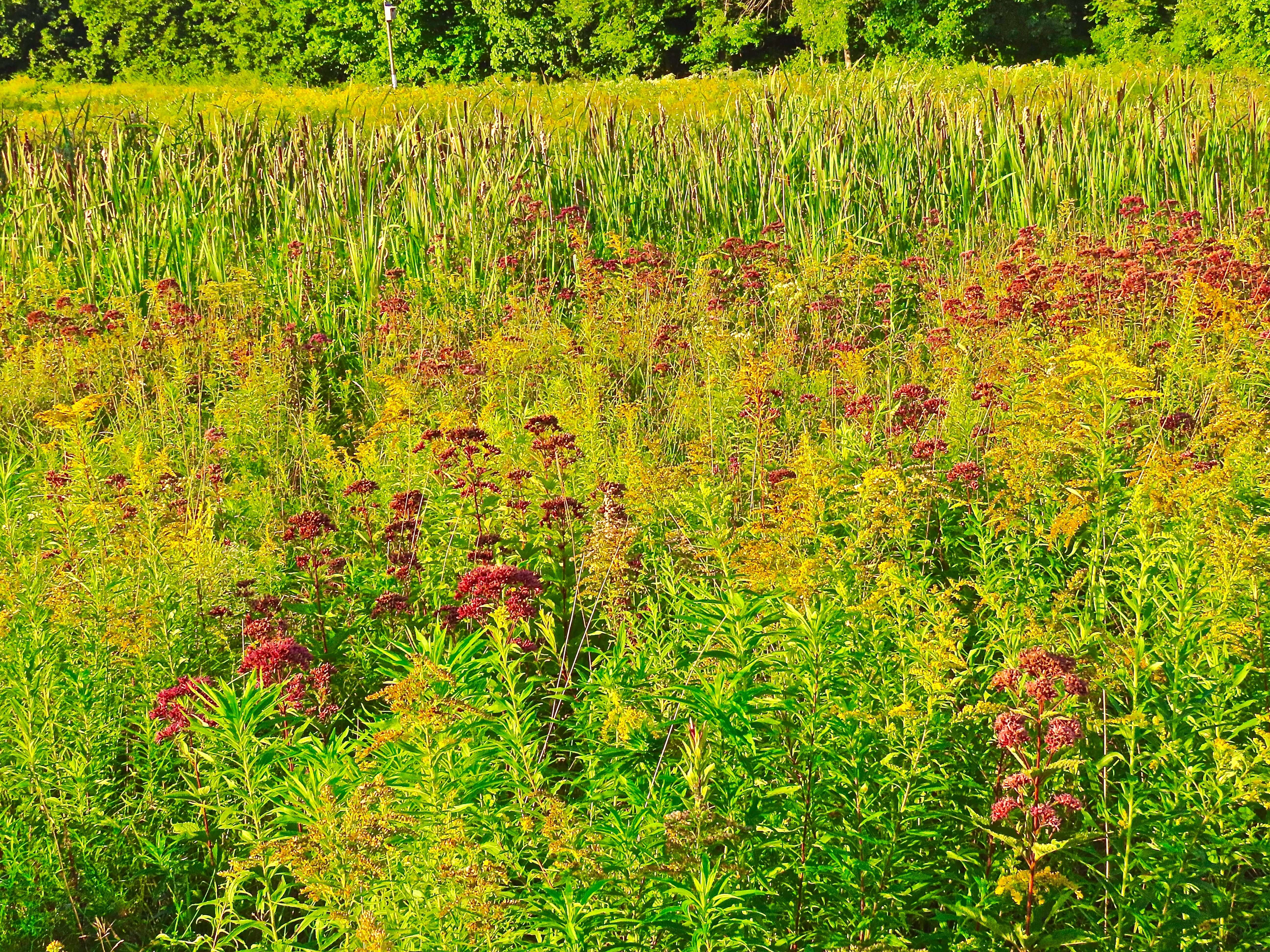
Looking across the stone wall to the North Meadow, raking light accentuates patches of green mown grass that contrast with alternating waves of white asters and goldenrod.
In storybook fashion, a shady path descends into the South Meadow.
Autumnal reds and yellows carpet the landscape.
Corridors of Joe Pye Weed capture the eye.
Wild asters surprise with their spiky yellow globes.
Unsurprisingly, I am not alone in admiring this magical habitat.

Monarch of the Meadow

Increased monarch butterfly activity is a sign of fall at Mass Audubon’s Wachusett Meadow Wildlife Sanctuary.

This thoughtfully placed bench at Mass Audubon’s Wachusett Meadow Wildlife Sanctuary is a perfect place to sit and contemplate monarch butterflies.
The North and South Meadows are ablaze with goldenrod in the late summer. Goldenrod is an important food source for monarchs.
The majestic monarch has a wingspan of three to four inches.
In addition to goldenrod, adult monarchs feed on a wide variety of nectar bearing flowers in preparation for their migration to Mexico.

With their striking orange and black coloring, monarchs are one of the most easily recognized butterflies in North America.

The goldenrod this monarch is feeding on does not cause allergies in humans. Ragweed, which blooms at the same time, is the allergy culprit.

Wachusett Meadow

A meadow is an area with shallow ground water that allows grasses and wildflowers to flourish. Meadows support a wide range flora and fauna that could not thrive in other habitats, including flowers for native bees and other pollinators.

A recent ramble through this habitat at Mass Audubon’s Wachusett Meadow enabled me to study and appreciate the flowers and grasses up close. In turn, three common meadow creatures kept an eye on me as I walked.

Eastern Bluebird
Common Purple Vetch and Other Meadow Grasses
Wild Turkey

Red-winged Blackbird
Common Milkweed

For more information visit: https://www.massaudubon.org/get-outdoors/wildlife-sanctuaries/wachusett-meadow

To learn more about meadow habitats, visit http://www.magnificentmeadows.org.uk/conserve-restore/importance-of-meadows

All Are Welcome

Wachusett Meadow Audubon Sanctuary
A group of thirteen baby turkeys, also called poults, strolled with their mother last evening at the Wachusett Meadow Audubon. Starting at the visitors’ entrance, they ambled across the front porch and over the lawn. Their destination? Bird feeders with fallen seeds underneath.

A Home For All Seasons

A beaver lodge is built for any kind of weather.

A summer evening is the best time to view beavers cruising the Wildlife Pond at Wachusett Meadow Audubon, but the beaver lodge at one corner of the pond is picturesque in all seasons. Canada geese are especially attracted to this home on the water.
Lodge in Summer
Fall
Winter
Spring

Nature’s Stitchwork

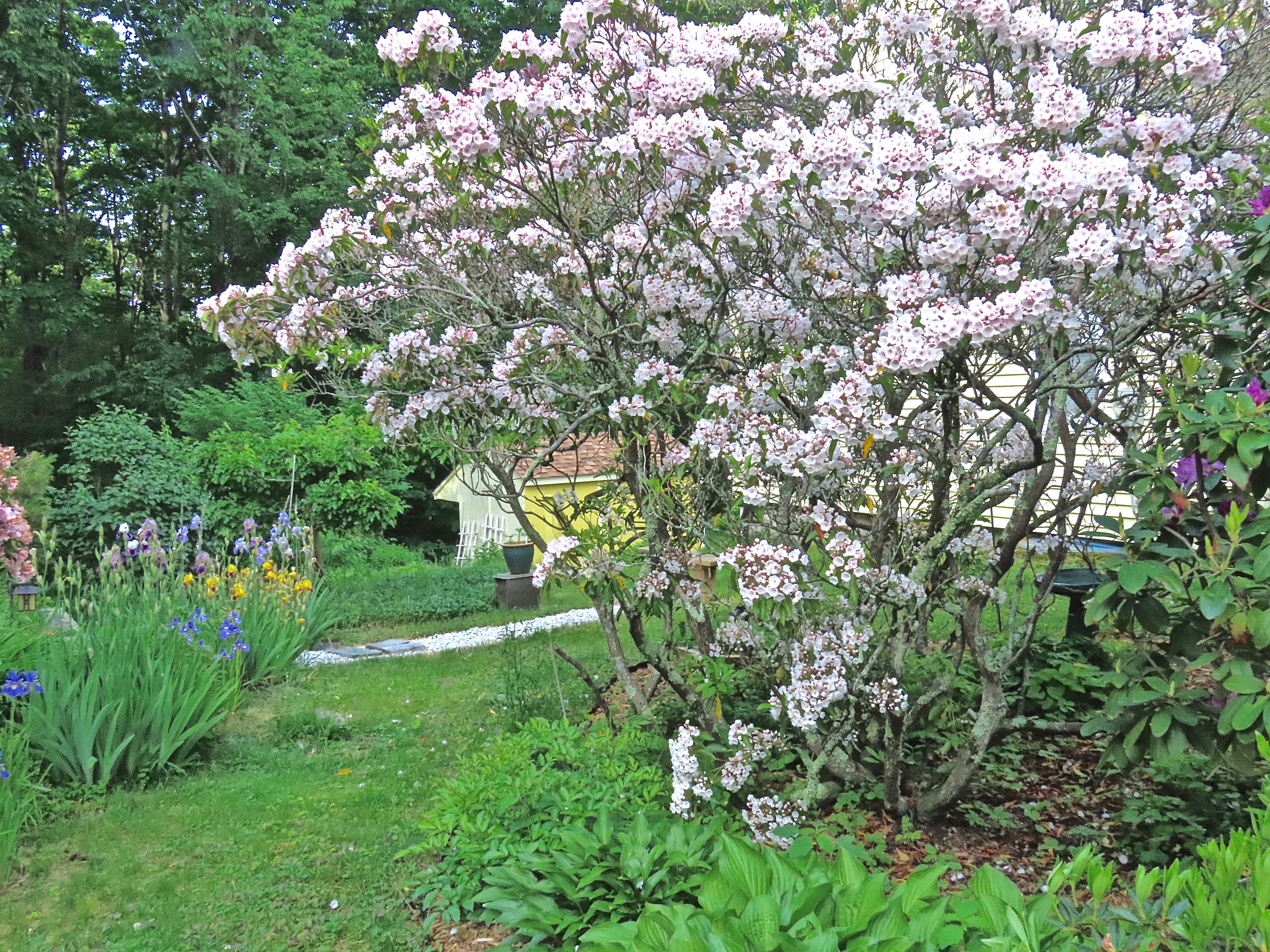
The Mountain Laurel is native to the eastern United States, and was first recorded in America in 1624.

Mountain Laurel is in full bloom in Massachusetts this week.
Cup-shaped buds open up to display tiny blossoms. These blossoms are sometimes said to look like miniature origami rice bowls .
Each blossom has five fused petals that surround ten stamens. Each stamen looks like a tiny half-pulled stitch.
The leaves are evergreen, providing year-round interest to the New England landscape.
The purple tones of a nearby rhododendron contrast with the pinkish laurel blossoms.
Mountain Laurels usually live for fifty to seventy-five years. Happily, this laurel in my yard is at least seventy years old, and is still going strong.

Bringing Cheer

American Robins are known to run a few steps, then stop abruptly, both to listen for danger and watch for worm movement in the ground.
Robins usually hop through tall grasses; this robin is hopping through the last of the snow.

Winter Garden

Tomato supports overlooking the herb and vegetable beds.
A bench to rest on between the morning glories and cucumber bed.
The sturdy butterfly bush still holding on to some of its leaves.
Stone wall with hydrangea in the distance.
Squirrel party!
Leaves on their way to becoming next year’s mulch.
Mainly oak leaves here, which take a bit longer to decompose.
The Zen garden was formerly a spot for outdoor grilling in the 1950s.
This bench overlooking the Zen garden was fashioned from recycled stair steps.
Stones gathered from the Rhode Island beaches.
The laurel trees are popular with birds, squirrels and rabbits.
Little creatures find the amaranth left in the circle enticing.

Winter Wolf Tree

This singular tree overlooking the wetlands at Wachusett Meadow Audubon Sanctuary in Princeton, MA is delightful in any season, but especially distinctive in Winter, when the details of its shape and the complex structure of its branches are on full display. I’m pleased that this photo was chosen as the current cover photo for Wachusett Meadow Facebook page.

https://www.facebook.com/MassAudubonWachusettMeadow/

A New Year In New England

December brought snow, ice and temperature fluctuations, lending itself to a variety of seasonal photo opportunities.
Happy New Year from New England!

Wachusett Meadow Audubon, Princeton, MA
Tower Hill Botanic Garden, Boylston, MA

Tower Hill Botanic Garden, Boylston, MA
Old Sturbridge Village, MA
Tower Hill Botanic Garden
Wachusett Meadow Audubon, Princeton, MA